News Trending

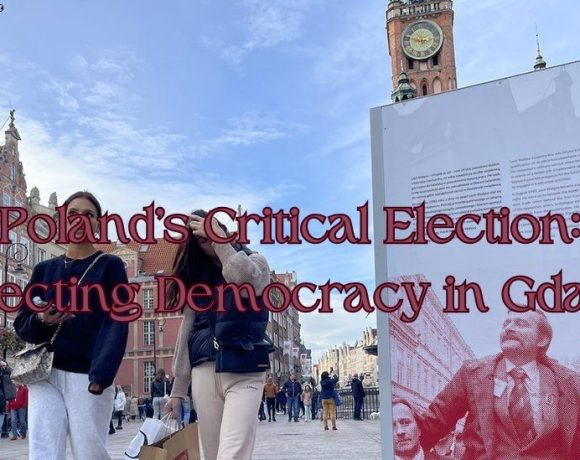
In the old Lenin shipyard in Gdansk, where striking workers were once the catalyst for major political change, young Poles now debate how to protect democracy in their country.

They worry that the rights and freedoms won by the Solidarity movement over three decades ago are at risk, as the ruling right-wing Law and Justice party, or PiS, campaigns to secure a record third term in office.

“It’s a very important election. We’re deciding whether we’re going back to being a democratic country,” was student activist Julia Landowska’s stark take on this weekend’s vote.

“This is our last call, to go to the election and fight for a better future in Poland.”

The event she helped organise was held under the slogan In My Day, Things Will Be Better.

A mixture of discussions and live music topped off with a silent disco, it was designed to encourage reluctant younger voters to the polls.

The activist’s worries are echoed by others in Gdansk, who point to the shrinking independence of the courts under a PiS government and backsliding on women’s rights, including a near-total ban on abortion.

There is also concern about media freedom – publicly-funded TV becoming a government mouthpiece – as well as acrimonious wrangling with Brussels on issues from judicial reform to migration.

That is why many Poles are now hailing the election on 15 October as the most important since 1989, when Solidarity candidates swept the board in the first partially-free vote since communist rule.

Freedom City The story of Poland’s struggle for freedom dominates the northern port city of Gdansk.

There is a Solidarity museum in the shipyard once occupied by strikers and billboards through the city centre that recount the momentous changes brought by their protest, led by an electrician named Lech Walesa.

This year, his son is running for re-election.

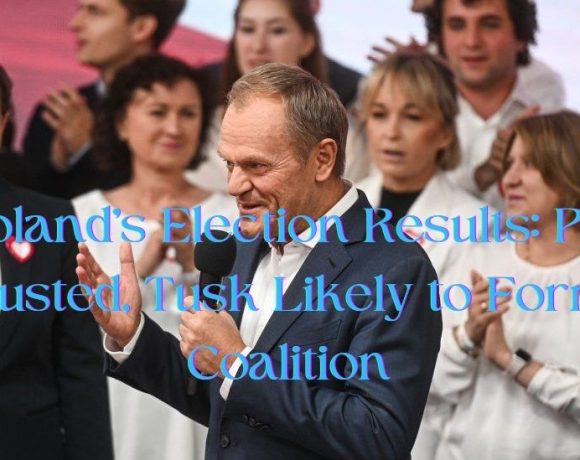
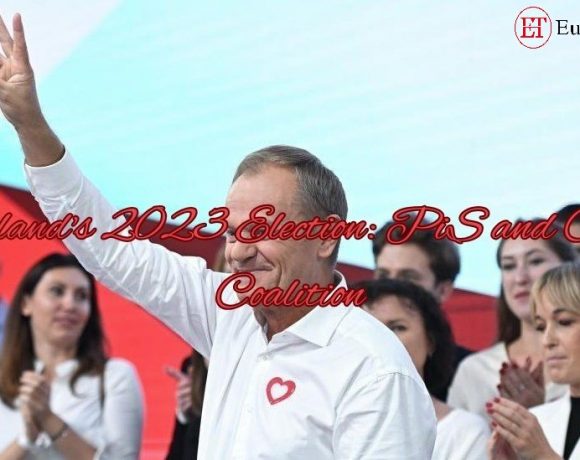
“We have to make sure we win, to reform all that has been destroyed in eight years,” Jaroslaw Walesa explained, referring to the two terms PiS have held office so far.Representing the opposition Civil Coalition, like fellow Gdansk-native and party leader Donald Tusk, he is most worried by Poland’s increasingly antagonistic relations with the EU.

Like Brussels, he is also concerned about the politicisation of Polish courts.

“If you look at what has been done to our democracy, we took a huge step backwards. That’s definitely not what my father fought for,” Mr Walesa told the BBC this week, wandering the paths of the handsome Oliwki park, greeting voters with leaflets and a promise of change.

The 1989 slogan – Don’t sleep, or they’ll outvote you! – has been resurrected in Gdansk for this election, all part of pitching it as another critical moment for Polish democracy.

The city is expected to vote solidly for the opposition, as usual.

But opinion polls put the governing Law and Justice Party ahead nationwide, although probably without a big enough majority to form a government.

So the last-minute battle for votes is intense.

PiS and Security In the town of Elblag, a short drive from Gdansk, campaigners spent Saturday canvassing for the governing party at a food market.

Between piles of potatoes and giant pumpkins, they dished out bags printed with the PiS logo and leaflets promoting the city’s main candidate, who didn’t show up.

“PiS have a good programme for us young people and for my children. I have twins and they’ve got a good programme for our future,” party activist Monica explained, referring to the 500 zloty (£95) monthly child benefit the government now pays.

It is set to rise to 800 next year if PiS win.

“In Poland, this amount can solve many things,” her husband added.Neither accepted the opposition’s fears for the future of democracy in Poland. “Democracy is good for us,” Monica said – and she wants to stay in the EU.

The pair both talked about security, including the government’s slogan that it is “protecting the future of Poles”.

“We’re not ready to accept immigrants. Muslims,” Monica clarified, adding that Poland had already taken in “a lot of Ukrainians”, meaning those who came in 2022 as refugees.

The Russian exclave of Kaliningrad is nearby and there is a new barbed-wire fence along its entire length.

The activists’ pro-government message was not universally welcomed by marketgoers, even though the Elblag regional vote was strongly pro-PiS at the last election.

Several shoppers thrust the free bags back when they realised which party logo was printed on them. Others retorted that PiS had been so good for Poland that their children had moved abroad for better opportunities.

Picture Courtesy: Google/images are subject to copyright

News Trending

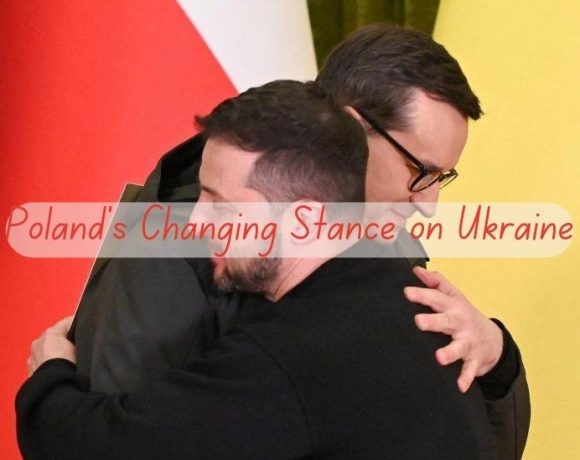
Since the outset of Russia’s full-scale invasion, Poland has been a staunch supporter of Kyiv, providing military aid and making a passionate case for this support as crucial to Poland’s own defense against Russian aggression. However, there has been a notable shift in the Polish government’s stance on Ukraine.

Recently, a change in tone has emerged, raising questions about Poland’s commitment to Kyiv. Some Polish officials have suggested that Ukraine should show more gratitude for Poland’s support. Poland’s prime minister even hinted at the possibility of ending weapons transfers to Ukraine, though others in his party tried to backtrack on that message.

Polish President Andrzej Duda made a particularly controversial statement, likening Ukraine to a drowning man who could potentially pull down his rescuers. Moscow seized upon these remarks with enthusiasm.

The downturn in relations between the two neighboring countries began over a dispute about grain imports that remains unresolved. Ukraine needs to export its harvest, and land routes are vital since Russia has been deliberately targeting ports on the Black Sea and the Danube River. However, Poland, in a bid to protect its own farmers, has restricted cheaper Ukrainian grain from entering its domestic market, only permitting it to transit to the rest of the European Union.

This shift in Poland’s stance is not occurring in isolation, as “Ukraine fatigue” is looming over election campaigns in various countries. Poland’s governing Law and Justice party (PiS), which is leading in the polls but faces tight margins, is positioning itself as the defender of Polish interests. PiS aims to attract conservative voters who may be sympathetic to the idea that Ukraine is not showing enough gratitude for Polish support.

Despite criticism from opposition politicians who label this shift as dangerous nationalism, Poland’s changing tone reflects a broader trend. Ukraine is concerned about maintaining strong Western support as it faces Russian forces, making this shift in Poland’s stance a cause for worry. However, Poland emphasizes that international aid will continue to reach Ukraine’s frontlines through Rzeszow in the east, a critical transit hub for military supplies. Talks between Ukraine and Poland regarding the grain dispute are ongoing.

Picture Courtesy: Google/images are subject to copyright
News Trending

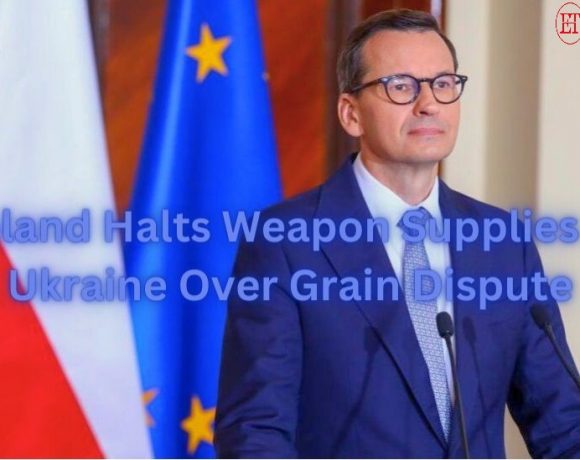
One of Ukraine’s steadfast supporters, Poland, has declared that it will cease its weapon supplies to its neighboring country, Ukraine, citing a diplomatic dispute regarding Ukraine’s grain exports as the primary reason. Prime Minister Mateusz Morawiecki emphasized that Poland’s current focus is on bolstering its own defense capabilities with more modern weaponry.

Poland had already provided Ukraine with significant military assistance, including 320 Soviet-era tanks and 14 MiG-29 fighter jets. However, their willingness to continue such support has dwindled, coinciding with escalating tensions between the two nations.

The recent diplomatic rift was triggered when Poland, along with Hungary and Slovakia, extended a ban on Ukrainian grain imports. Ukrainian President Volodymyr Zelensky’s comments at the United Nations, characterizing their actions as political theater, added fuel to the fire. Poland viewed these remarks as unjustified, given their longstanding support for Ukraine.

In his interview, Prime Minister Morawiecki underlined that while Poland remains committed to assisting Ukraine in its struggle against Russian aggression, it could not allow its own markets to be destabilized by Ukrainian grain imports. He pointed out that Poland was already replacing its depleted military hardware, which had been significantly reduced through transfers to Ukraine, with modern Western-produced equipment.

While arms exports to Ukraine will not cease entirely, only previously agreed deliveries of ammunition and armaments, including those from existing contracts with Ukraine, will be fulfilled. This decision reflects Poland’s commitment to its own security and stability, while the future of its assistance to Ukraine remains uncertain.

The ongoing grain dispute arises from Ukraine’s need to find alternative overland routes for grain exports due to Russia’s full-scale invasion, which nearly closed the main Black Sea shipping lanes. Consequently, large quantities of grain flowed into Central Europe, leading the European Union to temporarily ban grain imports into several countries. Despite the EU lifting the ban, Poland, Hungary, and Slovakia have maintained it, leading to Ukraine’s WTO lawsuits against these nations. Poland has signaled its intention to uphold the ban, while also hinting at the possibility of expanding the list of banned products should Ukraine escalate the grain dispute. However, diplomatic channels remain open, with discussions ongoing to seek a mutually beneficial solution.

Picture Courtesy: Google/images are subject to copyright
News Trending

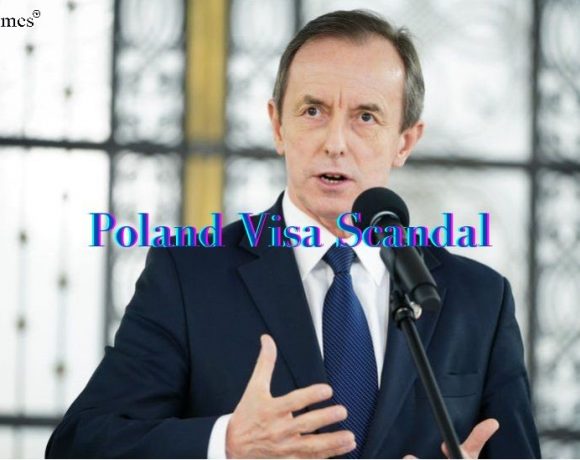
The Speaker of Poland’s upper house of parliament, Tomasz Grodzki, has urged the government to disclose its knowledge regarding an escalating scandal involving cash for visas. Grodzki expressed concern that the issue was damaging Poland’s international image as a responsible democracy.

Reports suggest that migrants paid substantial sums, up to $5,000 (£4,000) each, to expedite their work visa applications. While seven individuals have been charged in connection with the scandal, none of them are public officials.

The Deputy Foreign Minister of Poland, Piotr Wawrzyk, was dismissed last week in the wake of these allegations. His removal coincided with a search of the foreign ministry conducted by Poland’s Anti-Corruption Bureau (CBA). The director of the ministry’s legal service was also terminated.

In response to the scandal, the foreign ministry announced the termination of all contracts with outsourcing companies responsible for handling visa applications since 2011. Opposition MPs allege that as many as 250,000 visas for individuals from Asia and Africa were irregularly issued through these outsourcing companies, a claim disputed by the government, which maintains that only several hundred were involved.

Donald Tusk, the leader of the opposition Civic Platform party, criticized the government’s migration policy, stating that anyone seeking to travel from Africa to Poland could easily obtain a visa at the embassy. Prime Minister Mateusz Morawiecki dismissed these allegations, asserting that there is no widespread issue.

Speaker Grodzki characterized the scandal as the most significant Poland has faced in the 21st century, with corruption reaching the highest levels of government, posing a direct threat to the country. Justice Minister Zbigniew Ziobro downplayed the scale of the problem in an interview with state-run news channel TVP Info.

The Anti-Corruption Bureau (CBA) became aware of the matter in July 2022 and has been conducting investigations since then. This scandal has the potential to cast a shadow over the Law and Justice party’s (PiS) anti-immigration stance ahead of parliamentary elections scheduled for the next month. While PiS currently leads in polls, it remains uncertain whether they can secure the outright majority required to continue governing for a third term.

Picture Courtesy: google/images are subject to copyright
News Trending

In Poland, a beatification Mass ceremony was held to honor a Catholic family killed by Nazis for hiding Jews during World War II. Over 30,000 pilgrims and Poland’s president attended the outdoor service, led by an envoy of Pope Francis. This marked the first time an entire family has been beatified, a significant step toward sainthood.

The Ulma family, consisting of Jozef and Wiktoria Ulma and their six children, hid eight Jews in their farmhouse in Markowa, southeastern Poland, driven by their Christian values during late 1942. Among those sheltered were Saul Goldman and his sons, Baruch, Mechel, Joachim, and Mojzesz, as well as Golda Grunfeld, Lea Didner, and her daughter Reszla, as documented by Poland’s Institute of National Remembrance.

Contrary to Nazi-occupied western Europe, aiding Jews in occupied Poland carried a penalty of immediate execution. In 1944, it is believed that a Polish police officer betrayed the Ulma family, leading to their capture. German gendarmes killed the Jews hidden in the attic and then executed the Ulma family, including Wiktoria, who was seven months pregnant, in front of their young children, the eldest of whom was eight, and the youngest, just 18 months old. Subsequently, members of the Polish underground resistance executed the police officer responsible for the family’s betrayal.

The outdoor Mass on Sunday was presided over by Pope Francis’ envoy, Cardinal Marcello Semeraro. During the ceremony in Markowa, the Pope referred to the Ulma family as a “ray of light” amid the darkness of war and called for applause in St. Peter’s Square. President Andrzej Duda expressed gratitude to Pope Francis for the extraordinary beatification of the entire family, highlighting the importance of acknowledging the historical truth about that era.

In 1995, Israel’s Yad Vashem recognized Jozef and Wiktoria as “Righteous Among the Nations,” and the beatification process began in 2003. Beatification is a significant step in the Catholic Church toward canonization or sainthood, signifying that those beatified are deemed “blessed” and deserving of public veneration.

Poland was home to Europe’s largest Jewish community in 1939, and more Poles (over 7,000) have been honored by Israel for aiding Jews during the war than any other nationality. However, it’s important to note that some Poles also participated in the persecution and murder of Jews under the brutal Nazi occupation. Approximately six million Polish citizens lost their lives during the war, with half of them being Jews.

Prominent members of the Polish government, including Prime Minister Mateusz Morawiecki, attended the Mass. The government has faced accusations of attempting to reshape historical narratives by emphasizing Polish suffering at the hands of the Nazis and the aid provided to Jewish neighbors while suppressing research into cases of Poles who committed crimes against the country’s Jewish population.

picture courtesy: google/images are subject to copyright
News Trending

Amid growing concerns about the presence of Wagner forces in the region, Poland is making preparations to deploy approximately 10,000 troops to its eastern border with Belarus. The Wagner troops, affiliated with Russia and stationed in Belarus, were reportedly involved in a brief rebellion. Poland’s Defense Minister, Mariusz Blaszczak, revealed that out of the total troop count, 4,000 soldiers will directly support border guards, while the remaining 6,000 will be in reserve.

Blaszczak cited alleged instances of Polish airspace violations by Belarusian military aircraft as a justification for the deployment. Belarus dismissed these accusations, labeling them as unfounded. Blaszczak emphasized the significance of such airspace violations and termed them a provocative act.

Blaszczak further asserted that events in Belarus are closely coordinated with Russia’s actions. Additionally, Russian Defense Minister Sergei Shoigu discussed plans to bolster Russian forces along its western borders, attributing the decision to increased militarization in Poland.

Poland has recently raised concerns about Wagner forces within Belarus. Notably, heightened activity has been observed in the Suwalki gap, a narrow land strip between Poland and Lithuania. Wagner forces appear to be moving in that direction, possibly to exert pressure on NATO and EU member states. Polish Prime Minister Mateusz Morawiecki even warned about the possibility of Wagner fighters disguising themselves as migrants to cross the border.

Lithuania, another neighboring country of Belarus, has also fortified its borders, citing the threat posed by Wagner fighters.

Picture Courtesy: Google/images are subject to copyright
Global Climate News Trending

Italy is currently experiencing extreme heat, leading to red alerts being issued for 15 cities, including Rome, Florence, and Bologna. This heatwave is part of a larger trend of increasing temperatures and longer heatwaves globally due to global warming.

The European Space Agency (ESA) predicts that Italy, Spain, France, Germany, and Poland may face extreme conditions, with potential record temperatures. Greece has already been experiencing temperatures of 40°C or higher, leading to the closure of tourist attractions like the Acropolis. There are concerns about the increased risk of wildfires in Greece and other areas with high winds.

Central parts of Europe, including Germany and Poland, are also affected by high temperatures. In contrast, the UK is experiencing heavy showers and cooler weather due to the southern shift of the jet stream. The current heatwave in Italy, named Cerberus, is expected to be followed by another heatwave called Charon, pushing temperatures above 40°C.

Heatwaves are also occurring in other parts of the world, including the US, China, North Africa, and Japan. The increasing frequency and intensity of extreme weather events due to global warming have become the new normal, according to the World Meteorological Organization.

Picture Courtesy: Google/images are subject to copyright
News Trending War

Poland has become increasingly cautious of its neighbor Belarus due to the possibility of Russian Wagner group mercenaries relocating there as part of a deal to end their mutiny. In response, Poland has fortified its border with miles of fencing, thermal cameras, and spotlights, which were initially installed after Belarus encouraged migrants to cross into Poland.

Poland is deploying extra officers as reinforcements ahead of the NATO summit, expressing concerns that the Wagner forces could instigate further trouble. The unpredictability of Belarus is seen as the biggest threat, with uncertainties surrounding the motives and preparations of the Wagner group. Despite the intended disbandment and exile of the mercenaries to Belarus, there are indications that the group is still operating within Russia.

Online contacts with Wagner revealed that recruitment was ongoing, and detailed instructions were provided to find the mercenaries’ training camp in southern Russia. However, the whereabouts and future plans of the Wagner group remain unclear. While some Belarusians express concerns about the group’s potential arrival, others see their recent mutiny as a sign of weakness within the Kremlin, fueling hopes for change.

There are doubts that Wagner will relocate to Belarus in large numbers or that their leader, Yevgeny Prigozhin, would settle there due to potential scrutiny from the Russian FSB security service. Polish worries and warnings about Wagner’s presence in Belarus could be influenced by domestic politics, with some suggesting it as a political tool to enhance the government’s security credentials ahead of upcoming elections.

The situation surrounding the Wagner mutineers remains shrouded in mystery, leading Poland to maintain heightened border patrols and surveillance.

Picture Courtesy: Google/images are subject to copyright
News Trending

During the Nazi occupation of Poland in World War Two, numerous valuable artworks were stolen. Among them was Madonna with Child, a 16th-century painting attributed to Alessandro Turchi. Recently, the painting was discovered in Japan and returned to Polish authorities in a ceremony held in Tokyo. This is part of Poland’s ongoing effort to retrieve looted artworks, with Madonna with Child being one of the 600 successfully recovered so far. However, there are still over 66,000 war losses yet to be found. Poland has launched a campaign to seek the return of hundreds of thousands of missing artworks and cultural items, as well as reparations from Germany for the damages caused by the occupying Nazis.

Art experts anticipate that more looted artworks will be uncovered as time passes, especially as heirs attempt to sell these pieces without awareness of their history. Madonna with Child was believed to have been transferred to Germany in 1940 during the Nazi occupation, as the Nazis frequently looted art from Jewish families before their execution. The painting appeared again in the 1990s when it was sold at an auction in New York. However, the sale was halted in January last year after Polish authorities identified the artwork, and it was subsequently agreed upon by the auction house and the owner to be returned to Poland. The official handover ceremony took place in Tokyo.

The return of masterpieces like Madonna with Child helps restore pride in Poland’s art heritage and highlights the significance of Polish collections. Polish art historian Natalia Cetera stated that reclaiming these artworks showcases the country’s focus on remembering its cultural heritage and rebuilding its strength in art. There has been a shift in recent years towards recognizing cultural heritage as a common good. As looted artworks are inherited by the next generation, the unaware heirs may unknowingly sell these pieces, leading to their discovery.

Efforts to locate stolen artworks from Poland involve recording them in international databases and the work of art historians who are researching looted artworks and identifying them. The advancement of technology and online platforms used by auction houses allow for increased visibility and more eyes searching for looted objects. Furthermore, there seems to be a generational shift in attitudes toward stolen masterpieces, with some individuals willingly returning the artworks rather than facing legal issues.

The return of Madonna with Child is a source of pride for Poland, but it remains uncertain whether the passion for retrieving stolen artwork will continue with future generations. The digitization of art collections may impact the interest in physical artworks, as access to digital versions becomes more prevalent. While the successful retrieval of physical artworks is currently important, the advancement of technology might reduce the necessity of physically reclaiming artworks in the future.

Picture Courtesy: Google/images are subject to copyright
International Relations News Trending

After Polish lawmakers established a new commission that might prevent persons with ties to Russia from holding public office, the EU threatened to take action against Poland.

The committee, which was approved by Poland’s parliament last week, will look into alleged Russian meddling between 2007 and 2022. However, detractors assert that the panel, which will be predominated by members of the administration, is meant to criticise opposition leader and former prime minister Donald Tusk.

Didier Reynders, the EU’s justice commissioner, stated that the panel was of “special concern.”

Anyone found guilty of acting under “Russian influence” will be subject to a 10-year ban from managing public finances, effectively preventing them from holding public office.It will look at gas agreements made with Russia in particular since the government claims they made the nation unduly dependent on Moscow.

According to sources, the 10-member panel might present its initial report as early as September and is predicted to be controlled by lawmakers from the ruling Law and Justice Party (PiS).

The EU Commission “will analyse the legislation and will not hesitate to take measures if it is needed,” Mr. Reynders told reporters in Brussels.

Without actual access to justice, including the ability to challenge an administrative decision before an impartial court, he continued, “it is impossible to agree on such a system.”

MPs from the opposition Civic Platform Party are concerned that the probe, which will focus on their party’s final period in office from 2007 to 2015, will try to undermine support for Mr. Tusk, who was prime minister at the time.

Despite not being a member of parliament, Mr. Tusk is now the party’s chairman and leader. He is anticipated to run against Prime Minister Mateusz Morawiecki in elections later this year.

Krzysztof Brejza, the parliamentary leader of Civic Platform, referred to the new committee as a “Soviet-style idea” and charged that the administration had “organised a witch hunt against Donald Tusk and eliminated him” prior to the election.

Mark Brzezinski, the US ambassador to Poland, expressed his concern that the commission would “reduce voters’ ability to vote for those they want to vote for” on Monday. However, Mr. Morawiecki has defended the bill and charged Mr. Tusk with harbouring a secret.

Nothing should be feared, Mr. Morawiecki remarked, adding: “Why is this valued opposition of ours, especially Mr. Tusk, so terrified of a commission to verify Russian influence?

An ongoing dispute between Warsaw and the EU over judicial reforms resulted in the suspension of billions of euros in aid to Poland in January. Additionally, PiS has been charged with curtailing other civil liberties, including as press freedom, and opposition lawmakers claim Poland risks becoming an authoritarian state if the government is re-elected.

Picture courtesy: Google/images are subject to copyright