News Trending

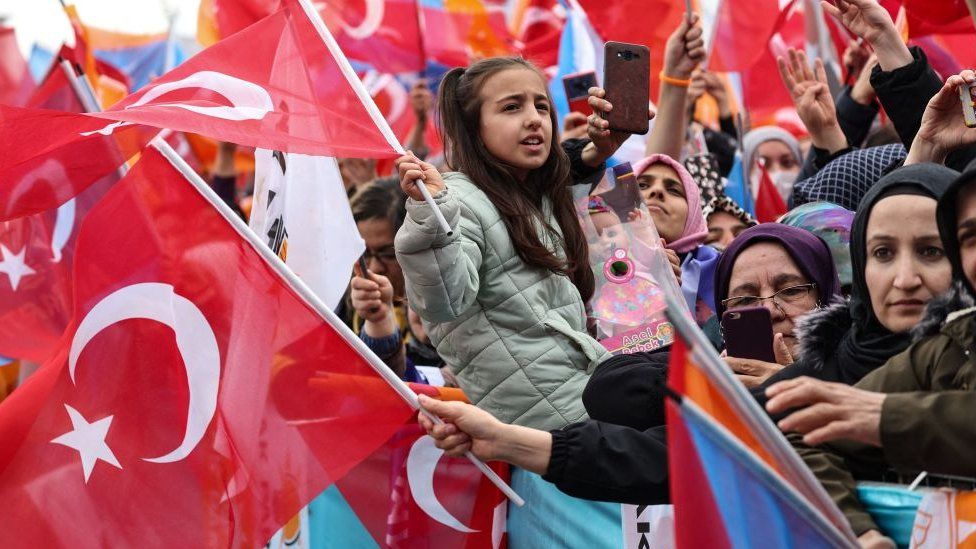
Turkey stands at a critical juncture as its citizens must choose between two leading contenders for the presidency, each offering distinct visions for the future of the country.

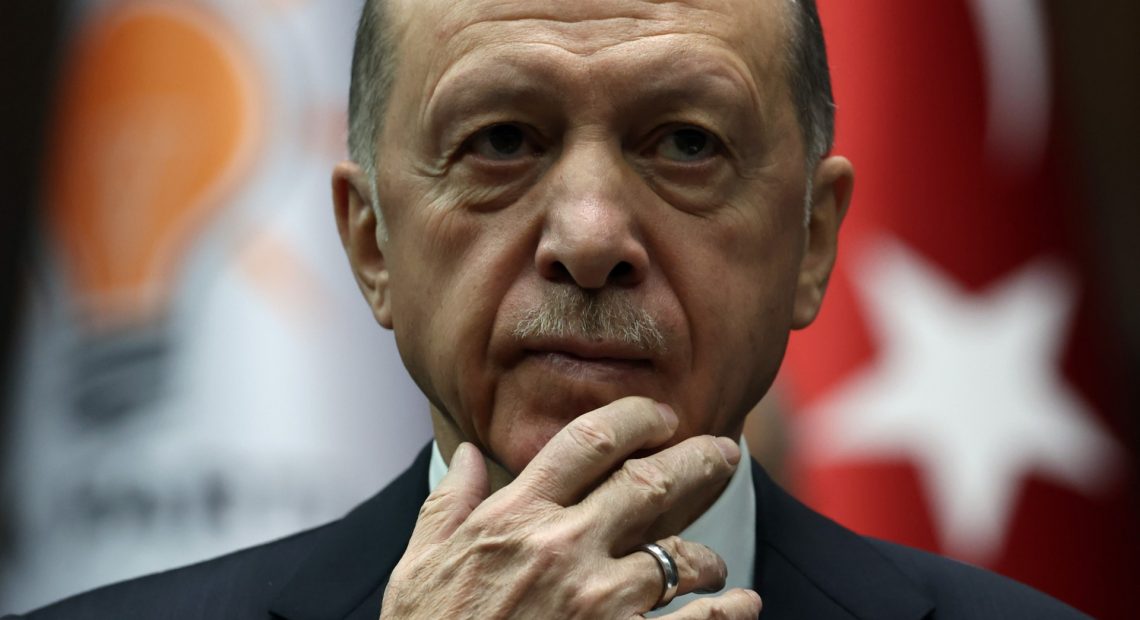
Recep Tayyip Erdogan, who has held power for over 20 years, pledges to establish a robust and collaborative Turkey, aiming to generate six million job opportunities. Erdogan also accuses the Western world of attempting to undermine his leadership. His political party, rooted in Islamism, aligns itself with traditional family values, while he portrays his opponents as “pro-LGBT.”

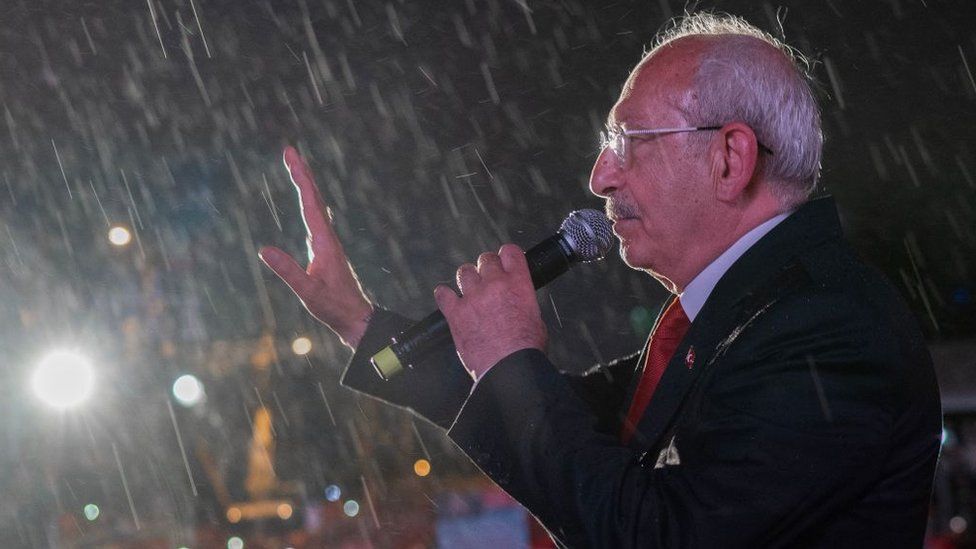
Kemal Kilicdaroglu, Erdogan’s main rival, enjoys broad support from the opposition and advocates for steering Turkey towards a more democratic and pro-Western position. He plans to revert the country, which is a NATO member, to a parliamentary system with a prime minister at the helm. Kilicdaroglu seeks to restore the independence of the judiciary, promote a free press, and position himself as an impartial leader, detached from any political party.

Erdogan currently wields extensive presidential powers, having governed under a state of emergency since 2017. Some believe that if he secures another term, there may not be significant changes as his authority is already substantial, and he may not seek to expand it further. Conversely, Kilicdaroglu aims to dismantle the presidential system and adopt a more impartial leadership approach, prioritizing the interests of all 85 million Turkish citizens.

These elections have far-reaching implications for Turkey’s trajectory, with Erdogan championing a strong and multilateral Turkey, while Kilicdaroglu advocates for a return to pro-Western policies, bolstered democracy, and independent institutions such as the judiciary and media.

In addition to Recep Tayyip Erdogan and Kemal Kilicdaroglu, there are five other parties in Kilicdaroglu’s alliance, each of which would have a vice president. Furthermore, Erdogan’s party colleagues who serve as mayors of Ankara and Istanbul would also hold vice presidential positions.

Before completely abolishing the powerful presidency, Kilicdaroglu’s coalition might need to utilize the presidency’s extensive powers to implement reforms if they lack sufficient control over the parliament.

Both parliamentary and presidential elections are scheduled to take place on May 14th. While Turkey is a member of NATO, Erdogan’s presidency has pursued close relationships with China and Russia. This includes the procurement of a Russian S-400 air defense system and the inauguration of Turkey’s first Russian-built nuclear plant, signaling closer ties with Russia ahead of the elections.

Erdogan advocates for a multilateral approach, positioning Turkey as a “haven of peace and security.” He also presents Ankara as a potential mediator in the ongoing Russian-Ukrainian conflict. On the other hand, Kilicdaroglu and his allies aim to revive Turkey’s EU accession process and restore military ties with the United States while maintaining relations with Russia.

Should Erdogan remain in power, Selim Koru believes that he will continue to steer Turkey away from the West while retaining its NATO membership. Erdogan envisions a future where Turkey’s NATO affiliation becomes less relevant in the medium to long term.

Picture Courtesy: Google/images are subject to copyright

News Trending

Turkish President Recep Tayyip Erdogan has halted election campaigning after falling ill during a live TV interview. The broadcast abruptly ended, and after a 20-minute break, he returned to explain that he had contracted a serious stomach flu after two days of intense campaigning.

Erdogan, who is 69 years old, is facing a challenging election campaign, with main opposition leader Kemal Kilicdaroglu being selected to run for a group of six political parties.

The latest polls show a close race between the two men, with Kilicdaroglu having a good chance of winning the election on May 14, with a possible presidential run-off two weeks later. On Wednesday, Erdogan cancelled three appearances in central Anatolia on the advice of doctors.

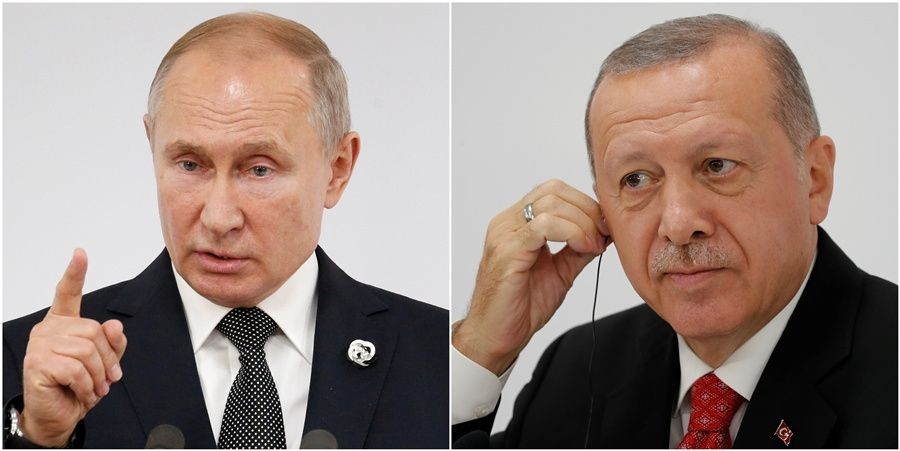
Turkish President Recep Tayyip Erdogan cancelled his scheduled events on Thursday, including the opening of Turkey’s first nuclear power station at Akkuyu, due to his illness. The nuclear power station’s inauguration was supposed to coincide with the upcoming election, but Erdogan and Russian President Vladimir Putin will now attend online instead. During a live broadcast on Tuesday, Erdogan fell ill, causing the screen to go blank.

He returned after a break to explain that he had a serious stomach flu. There were speculations on social media that Erdogan had suffered a heart attack, but his head of communications, Fahrettin Altun, rejected the baseless claims and posted screenshots of the accounts spreading the allegations on social media.

Picture Courtesy: Google/images are subject to copyright

News Trending

After thousands of people killed in two devastating earthquakes on Monday, anger in Turkey is building over what many see as the government’s lack of preparation. President Recep Tayyip Erdogan said that the official death toll in Turkey has increased to 9,057 while visiting one of the worst-affected areas.

He is to blame for the extent of the destruction, according to the main opposition leader. Mr. Erdogan retaliated, claiming it was “impossible” to be ready for such a significant tragedy.

The Turkish Disaster and Emergency Management Authority’s (AFAD) response was criticised by many in the worst-affected districts as being too delayed. Others claim that the government wasn’t adequately ready in advance.

“If there is one person responsible for this, it is Erdogan,” said Kemal Kilicdaroglu, the leader of Turkey’s main opposition party.

The president disagreed with this. Additionally, he called “provocateurs” individuals who claimed that security officers had not been present at all in certain locations.

“This is a time for cooperation and support. I can’t stand it when people run smear campaigns for political gain during this time “He told the Hatay reporters.

He recognised some initial issues, but said the situation was now “under control” during another stop on his tour of sites in the disaster zone earlier today.

Tuesday, Arzu Dedeoglu said that two of her nieces were buried beneath the debris in the port city of Iskenderun in the southern region of Turkey. She claimed that although her family had arranged a digger using their own funds to remove the rubble, officials did not permit them to utilise it.

A “tax” imposed by the Turkish government in the wake of a devastating earthquake that claimed more than 17,000 lives in 1999 is also causing increasing outrage.

The estimated 88 billion lira ($4.6 billion; £3.8 billion) was intended for spending on emergency services improvement and disaster prevention.

Every time Turkey experiences an earthquake, questions concerning the “special communication tax,” as the authorities refer to it, are raised. However, the government has never made the money’s use public.

And Mr. Kilicdaroglu claimed that the government of Mr. Erdogan “had not made an earthquake preparation in 20 years.”

Picture Courtesy: Google/images are subject to copyright

News Trending War

According to Turkish President Recep Tayyip Erdogan, a “major move” will be taken to put an end to the war that Russia’s leader started in Ukraine. He claimed that based on recent conversations with Vladimir Putin, he intended to “finish this as quickly as possible.”

This month, Ukraine has reclaimed large portions of its land. The Turkish president said that Russia was facing “quite a dilemma.” At a summit in Uzbekistan last week, Mr. Erdogan mentioned having “extremely deep discussions” with Mr. Putin.

The Turkish president claimed in an interview with US channel PBS that he had the idea that the Russian president wanted the war to finish quickly.

He is genuinely demonstrating to me his willingness to put a stop to this as quickly as possible, Mr. Erdogan remarked. That was my impression because of how bad things are now going.

He added that the two sides would shortly exchange 200 “hostages.” He did not elaborate on who would be involved in such a prisoner exchange.

Mr. Erdogan has often attempted to negotiate during the conflict, advocating for Turkey as a Nato member to take a “balanced” approach while rejecting Western sanctions against Russia. He stated last week that he was attempting to set up direct ceasefire talks. He assisted the UN in mediating the restart of food exports from Ukraine.

Meanwhile, Ukraine has regained some of the area that Russian soldiers had taken two months earlier in the eastern region of Luhansk. Serhiy Haidai, the mayor of Luhansk, claimed that although Russian forces had left the settlement of Bilohorivka, they were still making every effort to fortify their positions elsewhere.

Along with taking back a large portion of the northeastern Kharkiv region, Ukrainian forces have started a counteroffensive in Kherson in the south, forcing the territory’s Russian-installed governor to postpone a referendum on joining Russia.

When asked by PBS if a peace agreement should include any area that Russia had seized since February, Mr. Erdogan responded, “No, and without a doubt no.”

He added that Ukraine would receive its seized regions back. It was unclear if he also mentioned areas controlled by separatists backed by Russia since 2014.

When asked if Russia should be allowed to retain control of Crimea, which it acquired in 2014, Mr. Erdogan responded that since then, Turkey had been in contact with Mr. Putin regarding this.

Picture Courtesy: Google/images are subject to copyright