News Trending

France is poised to implement a ban on disposable e-cigarettes, known locally as ‘puffs,’ due to concerns about their impact on the environment and public health. Prime Minister Élisabeth Borne announced this move as part of a broader anti-smoking plan developed by the government, with the ban expected to take effect by year-end. Similar bans have been announced in several other European countries, including Germany, Belgium, and Ireland, with the UK also reportedly considering such a prohibition.

These disposable vapes, available at tobacconists in France for approximately €9 (equivalent to £7.70), claim to provide around 600 puffs, roughly equivalent to 40 traditional cigarettes. However, France’s National Academy of Medicine has criticized them as a ‘deceptive lure for children and adolescents,’ arguing that they instill smoking-related behaviors in young users.

Critics accuse manufacturers, many of which are based in China, of deliberately targeting teenagers with colorful designs and a variety of flavors reminiscent of a candy store, such as marshmallow, chocolate, hazelnut, watermelon, and ice candy. According to the Alliance Against Tobacco (ACT), 13% of 13-16-year-olds in France have tried disposable e-cigarettes at least once, with most starting around the ages of 11 or 12.

Campaigners argue that the ban is a significant victory, as disposable e-cigarettes serve as a gateway to smoking for young people. Loïc Josseran, ACT president, emphasizes the tobacco industry’s role in this trend, describing it as a deliberate effort to entice children.

Environmental concerns have also been raised, as disposable e-cigarettes contribute to ecological damage. In the UK, a study by the environmental organization Material Focus found that over one million of these devices were discarded weekly. French doctors and environmentalists have called disposable e-cigarettes an ‘environmental plague,’ citing their plastic construction, non-removable lithium batteries, nicotine content, and traces of heavy metals.

Picture Courtesy: Google/images are subject to copyright

News Trending

Since Brexit, the postal service in the Republic of Ireland reports a 68% decrease in parcels from the United Kingdom.

The problem has been made worse by stricter EU regulations intended to stop tax evasion in e-commerce.

A Post claims that because of Ireland’s trade with the UK, no other EU nation experiences the same volume of non-EU shipments.

The UK Post Office’s intention to implement “the necessary IT for customs” has been hailed as “excellent news”

Prior to this, An Post said that well-known British retailers like M&S and River Island had partnered with them to offer a clear and straightforward “duty paid” option at the online checkout where customers could pay all VAT and customs fees up front.

However, it claimed that small businesses and private individuals were having problems because they were not aware of the “new complex data and tax requirements” that were in effect as of July 2021.

With regard to the new regulations, “An Post has no simple way of advising the personal customers or small businesses posting parcels to Ireland from outside the EU,” the corporation stated. “In contrast to parcels which are posted in bulk from large non-EU retailers, An Post can advise and assist with the new rules.”

Under the Northern Ireland Protocol, Northern Ireland would have had comparable issues, but because of a grace period, EU regulations were never applied to GB-NI shipments.

This grace period is basically made permanent by the Windsor Framework, albeit there will be some obligations for logistics businesses.

To monitor and control any risks of smuggling into the EU market, authorized parcel operators will be required to exchange data with the government.

By September 2024, such data-sharing procedure need to be established.

Picture Courtesy: Google/images are subject to copyright

News Trending

The Republic of Ireland is expected to allow the publication of a report prepared by a commission on mother and baby homes.

The shocking report has already leaked to a leading newspaper based in the continent of Europe.

The victims have expressed their disappointment in the leakage. The information published by the newspaper has sent shockwaves across the continent.

The commission was appointed to investigate the allegations levelled against the mother and baby homes which were established to home women and girls who became pregnant outside marriage.

The issue came to limelight when a local historian discovered that around 769 children had been buried in a site controlled by the home.

The commission was constituted initially as an attempt to save the government from the ire of the victims.

The sad reality is that it took decades to unearth the crime. Another sad element is that at that time not many were bothered about the crime happening in the home.

Photo Courtesy: Google/ images are subject to copyright 

News

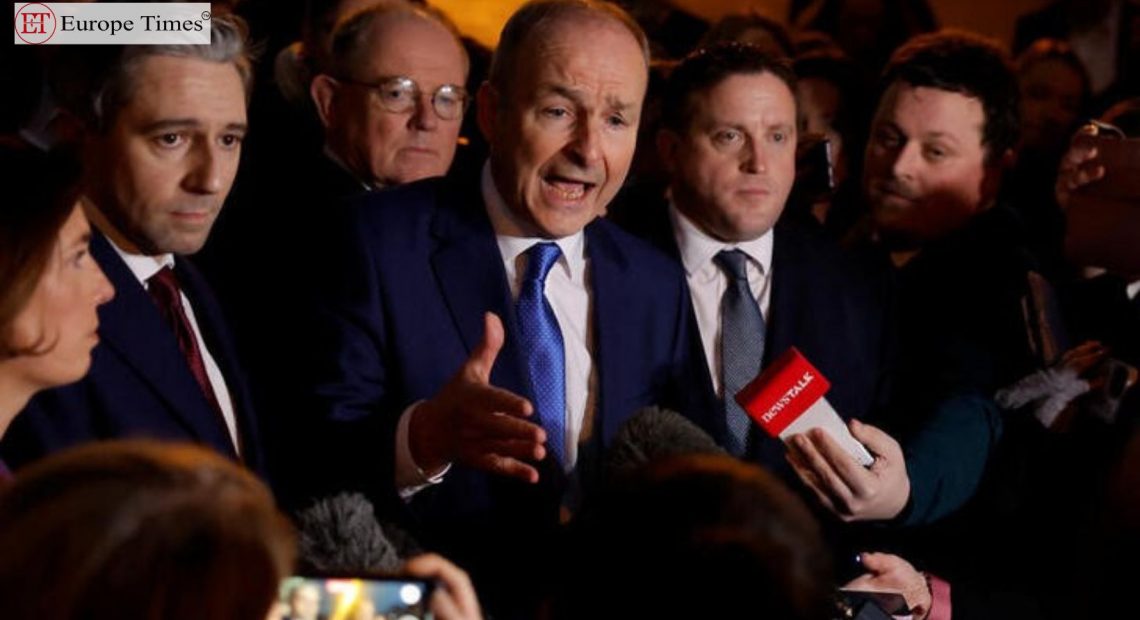
The European country of Ireland to get a new Prime Minister. Fianna Fáil leader Micheál Martin has been elected as Irish prime minister at a special meeting of the Irish parliament.

A coalition of Fianna Fáil, Fine Gael and the Green Party has been created. The formation of the coalition has paved the way for the induction of Mr. Martin as the PM  

It was in last February the country witnessed election last. In the election, no party secured majority to rule the country.

This development has led to the formation of this unusual coalition. The present coalition is the outcome of several months long discussion.  

The two larger parties needed the support of the Greens to have a working majority in the Irish parliament.

Photo Courtesy: Google/ images are subject to copyright 

News

Ireland began search for a new central bank governor, following the departure of Philip Lane to the European Central Bank. The government will be launching national and international search for the new central bank governor.

The candidates to be participated should submit an expression of interest to the Minister for Finance. The search for the central bank governor will be an extensive national and international executive search to identify suitably qualified candidates in Ireland and abroad, says the Department of Finance.

The President will be appointing the Governor on the advice of the government for a term of seven years. The person will also be a member of the Governing Council of the European Central Bank.

Image courtesy: irishtimes. com / images are subject to copyright