Entertainment News Trending

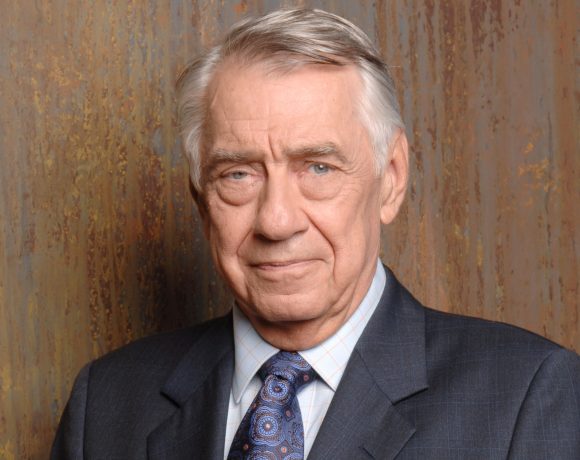
Philip Baker Hall, a popular US character actor who appeared on the sitcom Seinfeld in a memorable guest role, has died at the age of 90. In a classic 1991 episode, Hall played a huffy librarian who accused Jerry Seinfeld of not returning a long-overdue library book.

The actor’s performance was so well received that he returned for the show’s finale. Hall also appeared in The Truman Show, Rush Hour, Magnolia, and Boogie Nights, all directed by Paul Thomas Anderson.

In Ben Affleck’s Oscar-winning film Argo, he portrayed a CIA detective, and he also appeared in Lars von Trier’s Dogville, Bruce Almighty, and The Talented Mr Ripley. Modern Family, The West Wing, and Curb Your Enthusiasm are among his other TV credits.

Holly Wolfle Hall, Hall’s widow, claimed the actor died in Glendale, California, surrounded by his family. Hall’s talent would be valued, according to the official Seinfeld Twitter account.

When he was cast in Paul Thomas Anderson’s first feature picture, Hard Eight, he began working with him. Hall was born in 1931 in Toledo, Ohio, and is survived by his wife, four kids, four grandsons, and brother.

Mark Ruffalo, who co-starred with him in the film Zodiac, tweeted: “Philip Baker Hall, rest in peace. One of the all-time greats. It’s been a pleasure to observe you. It was a pleasure to work with you on Zodiac. Kindness, compassion, humility, and remarkable talent are all qualities that stand out “.

Picture Courtesy: Google/images are subject to copyright

News Trending

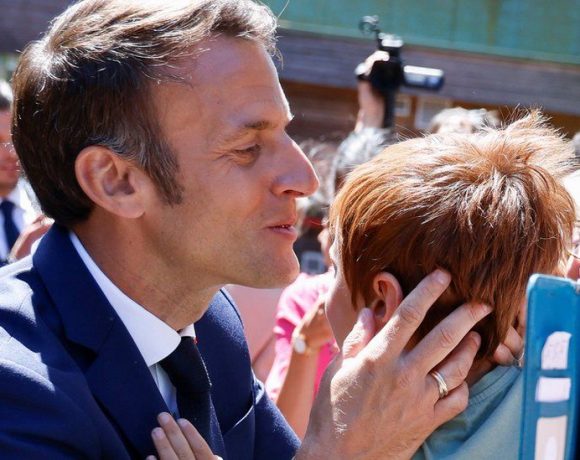
Following a strong challenge from a coalition of left-wing parties in National Assembly elections, French President Emmanuel Macron faces losing his outright majority. In the first round of voting on Sunday, Mr. Macron’s Ensemble (Together) and Jean-Luc Mélenchon’s left-green coalition finished neck and neck.

Next week’s second round will be a challenge for the president to win 289 seats and preserve his majority. The turnout was an all-time low of 47.5 percent. Within half an hour of the initial projection, a sombre Jean-Luc Mélenchon claimed that his alliance had taken the lead: “The truth is that the presidential party is battered and lost at the end of the first round.”

He urged voters to show out in large numbers next Sunday “to definitively reject Mr Macron’s majority’s terrible ideas.” Emmanuel Macron, a centrist, won a second term in April, but he will struggle to push through changes without a majority in the Assembly. He wants to progressively raise the retirement age from 62 to 65, but Mr Mélenchon wants it to be lowered to 60.

Ensemble received 25.75 percent of the vote, just ahead of the left’s 25.66 percent, and was expected to control the National Assembly. Ensemble has 275 to 305 seats, according to TF1 pollster Ifop, with the green-left alliance having 175-205 seats. According to Ipsos for France Télévisions, Mr Macron’s alliance will win 255-295 seats in the lower house and 150-190 seats on the left.

The lowest turnout in contemporary French history. Many voters apparently decided to take advantage of the warm weather in France, which reached 27 degrees in Paris. However, the election campaign has so far been mainly dormant.

Mr Mélenchon has been an outlier, running a ferocious campaign since finishing third in the presidential race. With the motto “Mélenchon Prime Minister,” he has formed the Nupes alliance, which includes his own far-left party, France Unbowed, the Socialists, Communists, and Greens.Until 2002, the two elections were held separately, which meant that the government was sometimes led by a party other than the president’s, a practise known as cohabitation. If Mr Macron’s majority is lost, he may be forced to work with the left.

Picture Courtesy: Google/images are subject to copyright

News Trending

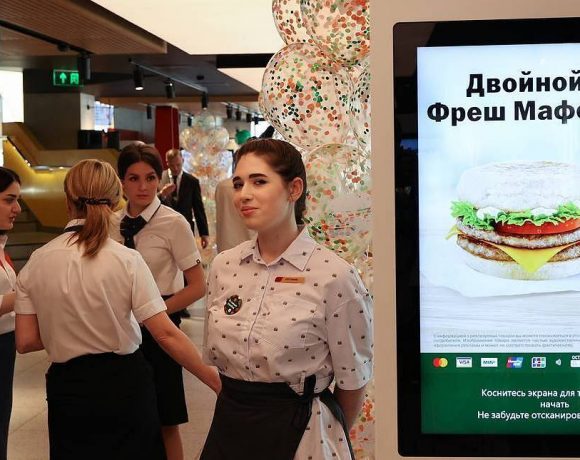
McDonald’s withdrew from Russia in protest of the invasion of Ukraine, selling more than 800 of its restaurants to Russian businessman Alexander Govor. The first rebranded restaurants in Moscow are reopening today. “Vkusno I Tochka,” which means “tasty and that’s it,” is the new name. The Golden Arches have been replaced with a stylized letter M made of two French fries and a dot (or perhaps a burger?) The Big Mac and McFlurry are no longer available.

Customers, on the other hand, should not notice too many differences, according to the new owners. They held a press conference in the flagship restaurant on Pushkin Square, which opened 32 years ago as the first McDonald’s in Moscow. “Our goal is for our guests to notice no difference in quality or ambience,” said Vkusno I Tochka CEO Oleg Paroyev. One male protester, however, disrupted the event by shouting, “Bring back Big Mac!” I was in the long line in 1990, and it took me three hours to get in and be served. I recall being ecstatic. McDonald’s’ arrival was a symbol of Soviet Russia’s embrace of Western ideas, culture, and cuisine.

McDonald’s announced last month that it would leave Russia due to the war’s “humanitarian crisis” and “unpredictable operating environment.” Last year, Russia and Ukraine accounted for about 9% of McDonald’s global sales.

Since the invasion of Ukraine on February 24, international brands such as Starbucks, Coca-Cola, Levi’s, and Apple have left or suspended sales in Russia. Wide-ranging international sanctions have been imposed on Russia, disrupting its supply chains and raising unemployment.

Picture Courtesy: Google/images are subject to copyright

News Trending

Vladimir Putin’s admiration for Peter the Great is well-known, but he now appears to have his own notions of “Greatness.”

He has openly compared himself to the Russian tsar, equating Russia’s invasion of Ukraine today with Peter’s expansionist wars three centuries ago, and admitting that his own war is a land grab in his strongest statement yet. Mr Putin’s apparent empire-building ambitions are bad news for Ukraine, and his comments have enraged other neighbours, including Estonia, which called them “completely unacceptable.”

When the remarks were made, Russia’s president was meeting with young scientists and entrepreneurs. Prior to discussing IT and tech development, he discussed politics and power, specifically the new battle for geopolitical dominance that he sees. He told his small audience that Peter the Great was a role model in that speech.

“You might think he was fighting with Sweden, seizing their lands,” Mr Putin said, referring to Peter’s Northern Wars, which he launched as he forged a new Russian Empire at the turn of the 18th century. “But he didn’t seize anything; he reclaimed it!” he argued, pointing out that Slavs had lived in the area for centuries.

Mr Putin concluded, “It appears it has fallen to us, too, to reclaim and strengthen,” with a near-smirk that made it clear he was referring to Ukraine and his goals there. He claimed that Peter’s rule was proof that Russia had grown stronger as a result of its expansion.

Mr Putin has been citing Russia’s past a lot lately, and it’s always been carefully curated to suit his current cause. He wrote a massive essay several months before launching his attack on Ukraine in which he essentially argued against the country’s historical right to exist. When Russia invaded Ukraine on February 24, Putin falsely claimed that the invasion was a “special operation” limited to the eastern Donbas region in order to “de-Nazify” Ukraine and reduce the perceived threat to Russia.

Putin is selective in his use of history. Though a ruthless autocrat, Peter the Great was a huge admirer of Western ideas, science, and culture, famously constructing St Petersburg as a “window on Europe” and travelling the continent in search of knowledge to aid Russia’s modernization.

Putin’s increasingly repressive rule gradually shut that window to the West, and the war in Ukraine has slammed it shut completely. The idea of a Russian leader visiting Holland or Greenwich in search of ideas and inspiration, as the Tsar did in the past, now seems implausible. A series of words flashed up behind them as Putin lectured the young entrepreneurs on an 18th century tsar: ‘future,’ ‘confident,’ and ‘victory.’

In the face of Western condemnation and sanctions, Russia is determined to project defiance, and Putin himself appeared relaxed rather than threatened. However, history may have taught us something else.

From the Baltics to the Black Sea, Peter the Great eventually conquered land. Russia, on the other hand, had been fighting its Great Northern War for 21 years.

Picture Courtesy: google/images are subject to copyright

News Trending

As it prepares to reopen its restaurants on Sunday, the Russian fast food chain that was formerly known as McDonald’s in the country has unveiled its new logo.

A circle and two lines appear in the new branding, which are said to represent a burger and two French fries. Although a number of options have reportedly been considered, the company has not yet revealed the name of the chain. McDonald’s announced in May that it would leave Russia due to the conflict in Ukraine.

According to Russian state-owned news agency TASS, which cited Sistema PBO, the firm that manages the business previously owned by McDonald’s, the Russian chain is set to reopen 15 restaurants this weekend.

“The logo’s green background represents the high quality of products and service that our guests have come to expect,” a Sistema PBO spokesperson told TASS.

The new logo, according to social media users, still looks like a “M.” Others speculated that the new logo was inspired by Bangladesh’s flag, which has a dark green background and a red circle in shades similar to the new logo. Sistema PBO has submitted eight potential names for the new chain to Rospatent, the Russian government agency in charge of intellectual property, according to the newspaper Izvestia.

“Tot Samyi,” which means “the same,” and “Svobodnaya Kassa,” which means “available cash register,” are among the names reportedly being considered. McDonald’s, Sistema PBO, and Rospatent did not respond to requests for comment from the BBC right away.

Picture Courtesy: google/images are subject to copyright
News Trending War

According to the head of the World Trade Organization, a food crisis sparked by the Ukraine war could last for years if no action is taken. Wheat and fertiliser shortages could be particularly damaging to African countries, according to WTO Director General Ngozi Okonjo-Iweala.

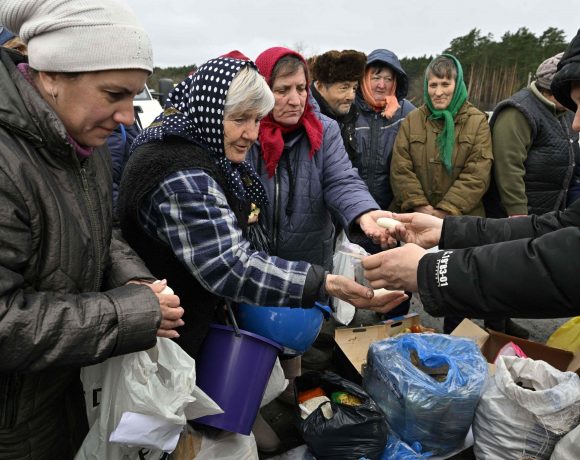
Because of the war, millions of tonnes of grain are sitting in warehouses and Ukrainian ports, unable to be exported. As grain prices rise, she described it as “really sad.” Ukraine is a major global wheat exporter, accounting for 9% of the global market. It also controls 42 percent of the global sunflower oil market and 16 percent of the global maize market.

Between 20 and 25 million tonnes of wheat are stuck in Ukraine due to gridlock caused by a Russian blockade of Black Sea ports and Russian and Ukrainian mines along the coast, while global grain prices continue to rise. Wheat prices were up 59 percent from last year, sunflower oil was up 30%, and maize was up 23 percent, according to Ms Okonjo-Iweala.

The UN is leading efforts to establish a “grain corridor” for tankers leaving Odessa and other Ukrainian ports, with a Turkish naval escort. Russian Foreign Minister Sergei Lavrov, on the other hand, has stated that Ukraine must clear mines from its Black Sea ports.

Meanwhile, Ukraine has stated that it requires “effective security guarantees” before it can begin shipments, citing concerns that Moscow could use the potential corridor to launch a sea attack on Odessa. Ukraine produces enough food to feed 400 million people on a regular basis, but Russia is accused of turning it into a stealth missile, with blockaded ports reducing exports to a trickle.

Several countries in the Middle East and Africa, in particular, will be affected by supply shortages. Libya and Eritrea import more than 40% of their wheat from Ukraine, while Lebanon imports more than 60%.

Picture Courtesy: google/images are subject to copyright
News Trending War

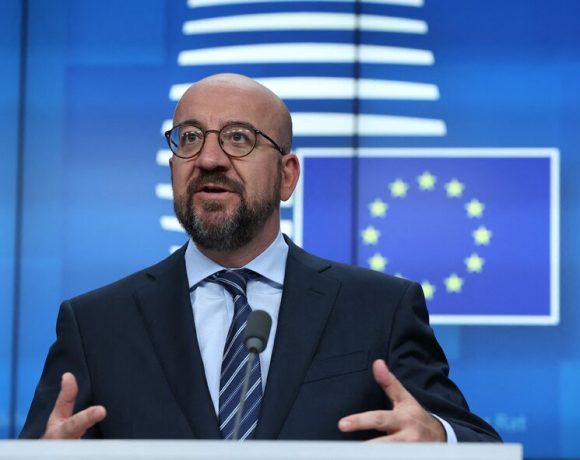
After the European Council president blamed Russia’s invasion of Ukraine for causing a global food crisis, Russia’s UN ambassador stormed out of a UN Security Council meeting. Russian food supplies are being used as a “stealth missile” against the developing world, according to Charles Michel, forcing people into poverty.

Mr Michel was accused of spreading lies by Russian envoy Vassily Nebenzia. Food has become stranded at Ukrainian ports as a result of the conflict. Ukraine exports a lot of cooking oil as well as grains like maize and wheat. Russia also exports a large quantity of grains and fertiliser. Because of the lack of these exports, the cost of alternatives has skyrocketed.

“Let’s be honest, Mr. Ambassador of the Russian Federation, the Kremlin is using food supplies as a stealth missile against developing countries,” Mr Michel said during a meeting of the UN Security Council in New York.

“The devastating effects of Russia’s war are reverberating around the world, raising food prices, pushing people into poverty, and destabilising entire regions.” “Russia is solely to blame for the current food crisis.”

He went on to say that he had seen for himself the millions of tonnes of grain stuck in the Ukrainian port of Odesa due to a Russian naval blockade.

Because of its military activities in Ukraine, Mr Michel also accused Russia of stealing grain and preventing crop planting and harvesting.

Mr Nebenzia stormed out as a result of his remarks. “You may leave the room,” Mr Michel said as he walked away. “Perhaps it’s easier not to listen to the truth. Mr Nebenzia told Reuters that he couldn’t stay because “Charles Michel came here to spread lies.”

In a separate meeting, US Secretary of State Antony Blinken said Russia was preventing Ukrainian grain exports from leaving the country and accused Russian forces of destroying agricultural infrastructure in Ukraine.

“There’s somewhere around 20 million tonnes of wheat trapped in silos near Odesa, and in ships literally filled with grain that are stuck in the Odesa port because of this Russian blockade,” Mr Blinken said during a virtual roundtable with philanthropists, non-governmental organisations, and private sector entities.

He agreed with Mr Michel that there were credible reports that Russia was “pilfering” Ukraine’s grain to sell for profit.

Picture Courtesy: Google/Images are subject to copyright
News Trending

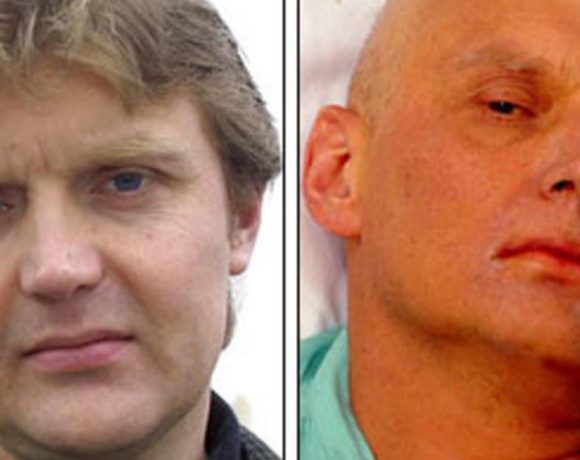
Covid-19 has claimed the life of one of the main suspects in the assassination of former Russian spy and Kremlin critic Alexander Litvinenko.

Mr Litvinenko was fatally poisoned in London in 2006, according to UK authorities. Dmitry Kovtun was one of two men accused of poisoning him. Mr Kovtun died on Saturday at a hospital in Moscow, according to the Russian state news agency Tass.

Andrei Lugovoi, another suspect in the murder, posted on social media that his “faithful friend” had died.

Mr Litvinenko, a former KGB officer turned British citizen and outspoken critic of Russian President Vladimir Putin, was poisoned with a radioactive substance at a London hotel where he met the two men.

Shortly after the meeting, he became ill and was admitted to the hospital. His condition deteriorated, and he died on November 23, a few weeks later. The killing was “probably approved” by Russian President Vladimir Putin, according to a UK public inquiry conducted ten years later. Mr Litvinenko accused President Putin of ordering his assassination from his deathbed. Russia has consistently denied any involvement in the assassination.

Mr. Kovtun was born in 1965 and attended Moscow’s Soviet command academy before joining the KGB’s protection unit. As the Soviet Union fell apart, he was serving in East Germany and fled to Hamburg with his first wife to seek political asylum. Mr Kovtun later returned to Russia, where Mr Lugovoi is said to have recruited him.

Mr Kovtun told the Interfax news agency after the UK report was released: “I had nothing to do with the death of Litvinenko. On the basis of the falsified and fabricated evidence, the outcome of the public inquiry published in London could not have reached any other conclusions.”

Picture Courtesy: Google/Images are subject to copyright
News Trending

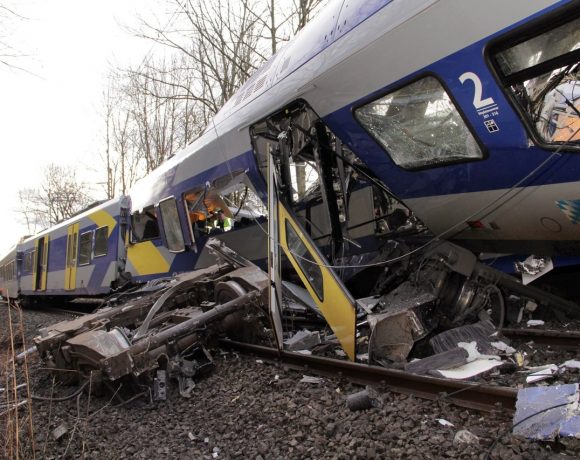
According to police, a train derailed in Germany’s south-eastern state of Bavaria, killing at least three people and injuring about 60 others. Three carriages of the train, which was carrying a large number of students, came off the tracks near Garmisch-Partenkirchen.

According to a police spokesperson, the cause of the accident is unknown. Several crumpled train carriages lie on their sides, according to images published by local media. A spokesperson for the Garmisch-Partenkirchen local authority told reporters that sixteen of the injured were in critical condition.

As rescue efforts continue, six helicopters have been dispatched to the scene, including three from the Austrian region of Tyrol. “People are being dragged through the windows,” according to police. It is not impossible, according to police, that a number of students celebrating the start of the summer vacation were among those injured.

The train had just left Garmisch-Partenkirchen for Munich when the accident occurred around 13:15 local time (11:15 GMT). According to Deutsche Bahn, a section of the route between Munich and Garmisch-Partenkirchen has been closed and traffic has been diverted.

When the train derailed, a US soldier stationed at a nearby air base was driving by. He told local media that the accident was “just awful – the train overturned suddenly.”

In 1998, a high-speed train derailed in Eschede, Lower Saxony, killing 101 people, making it Germany’s deadliest rail accident in modern times. The country’s most recent fatal crash occurred in February, when two trains collided near Munich, killing one person and injuring 14 others.

Picture Courtesy: Google/Images are subject to copyright

News Trending

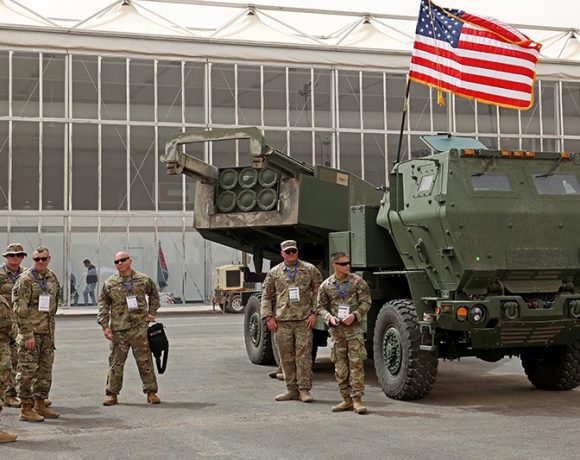
After President Joe Biden announced that his administration would supply Kyiv with new long-range missiles in the coming weeks, Russia accused the US of purposefully prolonging the war in Ukraine.

Mr. Biden wrote in the New York Times that the lethal aid would strengthen Ukraine’s negotiating position against Russia and increase the likelihood of a diplomatic solution. Dmitry Peskov, a Kremlin spokesman, accused the US of wanting to “fight Russia to the last Ukrainian” and said the move discouraged Kyiv officials from seeking a peaceful resolution to the conflict.

The weapons, which Ukraine has long requested, will help strike enemy forces within Ukraine more precisely and from a greater distance, according to President Biden.

Ukraine had promised not to use the new missiles to strike inside Russia, according to US Secretary of State Antony Blinken, who warned of a long conflict ahead.

The intervention comes as fighting in the eastern Donbas region heats up, with President Volodymyr Zelensky accusing Russia of “madness” after striking a chemical factory in the city.

Picture Courtesy: Google/Images are subject to copyright