News Trending

French President Emmanuel Macron faced a risky situation while attempting to persuade the country to accept an unpopular pension age increase. During a walk with his wife Brigitte, Macron joined a group of young Parisians who were singing a traditional song his grandmother used to sing.

The singers were part of a Parisian choir performing on a street in the sixth district of Paris, and one of them asked Macron to join in singing an old Pyrenees song called “Le Refuge.” However, the sing-song was reportedly shared by a far-right Facebook group.

The men were using a mobile phone app to read the lyrics of the song created by the Canto project. Macron had given a TV address expressing regret that no consensus could be found on the pension reform earlier that day.

Last October, a left-leaning newspaper called Libération revealed that the Canto project, which aimed to promote traditional songs, had been set up and run by far-right activists. Some of the songs included French classics and nursery rhymes, while others had a questionable past, including songs linked to the Spanish fascist Falange of the 1930s and Nazi Germany.

Macron and his team are aware of how viral videos can distract from important issues, particularly pension reforms. After his TV address, Macron joined a group of singers who were performing a Pyrenean song he knew and liked. His team said that he couldn’t have known the background of each individual singer. Last month, a viral video showed Macron’s watch disappearing during a TV interview, but it was later revealed to be a non-issue.

Similarly, the narrative that Macron was supporting the far right by singing with the Saint Longin choir has gained traction, but his team maintains that he simply joined in singing a song he knew and liked.

The only link between the choir Macron sang with and the far right is that the founder of the app they used to read the lyrics was close to the National Rally opposition party. The app was created to encourage communal singing and received funding from the culture ministry.

It included revolutionary songs, including ones dear to the far-left, such as “Ah ça ira,” which features the line “Aristocrats to the gallows!” The Saint Longin choir appears to be from the Catholic right, but one member stated that their only connection to the Canto project was that they shared an interest in the music it featured. The Élysée also noted that Macron could not control who he met while walking with his wife at night.

The video of Macron singing with the choir has given the story significant traction, particularly as his approval ratings are currently low. This situation only compounds his difficulties as he attempts to restore his reputation. Despite this, he signed the pension reforms into law, which increase the retirement age from 62 to 64, and has given the Prime Minister Élisabeth Borne the responsibility of leading a hundred days of action with a roadmap of significant projects aimed at benefitting France.

Following the reforms, Macron’s impromptu sing-song in Paris was his first public appearance, and he planned to relaunch his second term in office in the Alsace town of Muttersholtz. However, given the protests and criticism against his pension reforms, security was expected to be tight during his visit.

Picture Courtesy: Google/images are subject to copyright

News Trending

French President Emmanuel Macron has signed the controversial pension reforms into law, increasing the state pension age from 62 to 64. The move came after the Constitutional Council approved the changes, rejecting opposition calls for a referendum but also removing some aspects of the reforms due to legal flaws.

The reforms have faced strong opposition, with protests and strikes occurring for twelve days since January. The approval of the reforms has led to further protests and unrest in Paris, with 112 people arrested.

Unions have vowed to continue their opposition, calling for more demonstrations on 1 May. President Macron has defended the reforms as necessary to prevent the pension system from collapsing, and the government used special powers to implement the changes in March.

Trade unions made a final appeal to President Macron not to sign the pension-age increase into law following the Constitutional Court’s ruling. They argued that the rejected concessions made the reforms even more unbalanced.

The court struck down some of the reforms, including the “senior index” which encouraged companies to employ workers over 55. In response, Olivier Dussopt, Minister Delegate in charge of Public Accounts, promised to improve employment rates for those over 50 to ease concerns about the financial impact of the raised retirement age.

Despite a ban on protests outside the Constitutional Council building, demonstrators gathered nearby and jeered at the ruling.

Following the signing of the pension reforms into law, protesters expressed their intent to continue their demonstrations until the changes were withdrawn. Riots broke out in Paris, with several fires being set across the city, and police using tear gas to control the situation.

The police arrested 112 people. There were also protests in Rennes and Nantes, with fires being lit during the demonstrations. In Lyon, there were tense standoffs between protesters and police.

A protester named Lucy, aged 21, expressed her disappointment, saying that no one is listening to them despite their efforts to raise their voices. She vowed to continue protesting.

French Prime Minister Élisabeth Borne tweeted that there were no winners or losers following the signing of the pension reforms into law. While the Constitutional Council rejected an initial bid for a referendum on the reforms, it will consider another proposal for a national vote by the left next month.

According to French political analyst Antoine Bristielle, the protests that have taken place across France for the past three months are unlikely to end soon. He noted that despite the expected approval of the reforms, there is still significant opposition to the changes, with 70% of the French population against them. Bristielle predicted that there will be more riots and strikes in the country in the coming hours and over the weekend.

Picture Courtesy: Google/images are subject to copyright

News Trending

In Marseille, a city in southern France, a four-story apartment building was completely destroyed by an explosion. Two bodies have since been discovered. Six individuals, according to local police, are still missing and rescue operations are ongoing.

The explosion happened in the La Plaine neighbourhood on Sunday around 00:49 local time (23:49 BST on Saturday). Investigators are investigating into the likelihood of a gas leak even if the source is yet unknown.

Almost 200 people had to be evacuated from their houses after the explosion caused minor injuries to five persons from nearby structures. A few hours later, two adjacent buildings partially fell without any further injuries.

Benoit Payan, the mayor of Marseille, issued a warning on Monday that surrounding structures were at danger of collapse.

A fire that had been smouldering beneath the debris all day Sunday was put out by about 100 firefighters who arrived on the scene.

Despite the fact that authorities reported on Sunday evening that the fire was showing signs of dying down, the fire slowed down rescue efforts and made it challenging for search and rescue teams to use sniffer dogs.

The building is thought to have had one flat on each floor, and city officials had stated that a “young couple” was among the missing.

With the use of a crane and lighting, rescue efforts proceeded into the early hours of Monday.

In a brief statement announcing the discovery of the bodies, the fire department said that “given the difficulties of intervention, the extraction [of the bodies from the site] will take time”.

A local gymnasium and two schools have been opened to accommodate the people who have had to leave their homes. Psychological support is also being offered.

French President Emmanuel Macron said on Twitter that he was “thinking of those affected and their loved ones” and thanked the emergency workers for their efforts.

Mayor of Marseille Benoît Payan said rescuers remained “determined” to find people alive. “Hope must hold us,” he said.

With the collapse of two old houses in the working-class neighbourhood of Noailles, which left eight people dead, Marseille’s housing regulations came under fire in 2018.

After that tragedy, charities calculated that 40,000 city residents were residing in subparly constructed homes, but on Sunday, officials seemed to rule out structural problems as the root of the most recent collapse.

Local authority chief in the Bouches-du-Rhone region Christophe Mirmand claimed there was no risk notice on the structure and that it was not located in an area known for having subpar housing. Mr. Payan reaffirmed the remarks.

Picture Courtesy: Google/images are subject to copyright
News Trending

Emmanuel Macron, the president of France, has pleaded with Xi Jinping, the leader of China, to assist in ending Russia’s war in Ukraine.

He told Mr. Xi in Beijing, “I know I can count on you to bring Russia to its senses, and bring everyone back to the negotiating table.” China and France, according to Mr. Xi, have the “capacity and obligation” to preserve world peace.

Moscow, meanwhile, declared that the onslaught will carry on since there were currently “no prospects for a peaceful conclusion.”

After years of deteriorating relations between the West and China, which has hesitated to denounce Russia’s invasion of Ukraine, Mr. Macron is in China on a state visit that is being closely watched.

Also, Mr. Macron wants to improve business connections. He is joined by a sizable business group as well as Ursula von der Leyen, president of the European Commission, who he asked to participate in meetings with the Chinese leadership.

In the late afternoon on Thursday, Mr. Macron was treated to a lavish military display in Beijing before meeting Mr. Xi for private talks that were described as “frank” and “warm” by Chinese and French officials.

Following the meeting, Mr. Xi addressed the media and urged “reasonable restraint” from the international community, stating that China “advocates for peace talks and wants a political settlement.”

He also reaffirmed the prohibition against using nuclear weapons in the conflict. Earlier this week, Russia declared its intention to station tactical nuclear weapons in Belarus, close to the ally’s western border with Nato countries.

Mr Macron said “we can’t have a safe and stable Europe” as long as Ukraine remained occupied, and that it was “unacceptable” that a member of the UN Security Council had violated the organisation’s charter.

The French president addressed Mr. Xi directly throughout the press conference, striking a friendly tone throughout his statement. It contrasted with Mr. Xi’s lethargic press conference delivery.

Later, in a different press conference, Ms. von der Leyen emphasised that it would be against international law and “seriously undermine” the relationship between the EU and China if Beijing sent weapons to Russia.

She said that she wanted Beijing to play a role that “promotes a just peace” and that she “firmly” supported Volodymyr Zelensky, the leader of Ukraine, in his peace proposal, which asks for the complete departure of Russian soldiers.

China has released its own peace plan which Western nations have been generally dismissive of, saying it sides too much with Russia. But Mr Zelensky has expressed interest in it and called for direct talks with Mr Xi – who has yet to publicly respond.

Picture Courtesy: Google/images are subject to copyright
News Trending

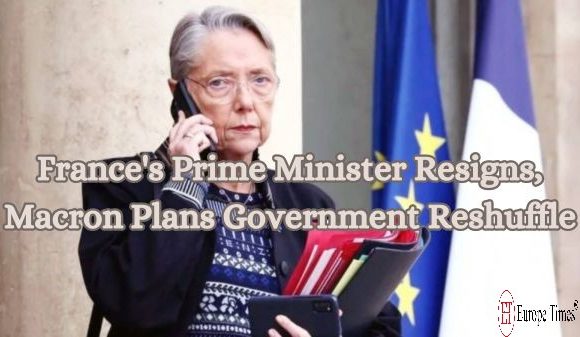
In the face of nationwide protests and two no-confidence votes, French President Emmanuel Macron has defended his decision to push through an increase in the pension age with a resolute attitude.

Radical transformation is a need, he stressed, not a luxury or a pleasure. The government’s use of constitutional authority to drive through reforms without a vote in the National Assembly has emboldened protesters.

On Thursday, there will be a ninth round of nationwide strikes and demonstrations. Several locations have seen hundreds of arrests over the course of six nights of protests.

Bins that were left overflowing by garbage collectors have been set on fire, and 13% of gas stations are out of gasoline as a result of blockades at oil refineries. Nearly half of the pumps in the southern Bouches-du-Rhône region have stopped working.

The upcoming trip to France by King Charles has also been clouded by the demonstrations. Sandrine Rousseau, a Green Party lawmaker, demanded that the trip be cancelled: “Is welcoming Charles III to Versailles truly the top priority? French society is going through something, so it’s important to go and talk to the society that is rising up.”

Mr. Macron made his first public comments on the mounting pensions debate in an interview that was broadcast on two of the major French television networks under pressure to defuse the situation.

He allegedly informed party representatives at the Elysée Palace prior to his appearance that there would be no change in course. He ruled out any drastic action, including a change in the makeup of the government or the dissolution of the legislature.

It was “always a good thing if you want to be respectful to our institutions,” Mr. Macron told his colleagues, adding that he had no regrets about pushing through the reforms.

He and the prime minister have maintained that 175 hours of parliamentary debate had been spent on the measures. Mr. Macron emphasised that several parties had supported the change during its passage through the legislature but then sponsored a motion of no confidence that narrowly failed.

Picture Courtesy: Google/images are subject to copyright
News Trending

After the French administration opted to push through pension reforms without a vote in parliament, police and demonstrators fought in Paris. In response to the retirement age increase from 62 to 64, crowds gathered in Place de la Concorde.

Two months of vehement political debate and strikes had been provoked by the plans. The government may now avoid a vote in the Assembly by using article 49:3 of the constitution, according to Prime Minister Élisabeth Borne.

There was no assurance of securing a majority, therefore the decision was made just minutes before MPs were due to vote on the contentious law. Politicians from the opposition were incensed by the action. At parliament, many booed the prime minister, performed the Marseillaise, and displayed protest signs.

Mathilde Panot, the leader of the left-wing party La France Insoumise (LFI), stated that Mr. Macron has thrown the nation into a government crisis without the support of either the parliamentary or popular parties.

The national anthem was sung and union flags were waved as thousands of people protested the decision in the streets of Paris and other French cities. As dusk fell, several demonstrators and police engaged in combat. The Plaza de la Concorde was set on fire, and police with shields and batons moved to clear the area while firing tear gas into it.

According to the Paris police, 120 persons had been detained by evening.

Despite the fact that Mr. Macron ran for reelection last year on a platform of retirement reforms, his ruling coalition lacks a majority in the Assembly, making Republican support for the pension changes necessary.

In an effort to approve their plan, representatives from Mr. Macron’s Renaissance party spent the morning frantically cajoling lawmakers. Because to the bill’s obvious unpopularity and the knowledge that some of their MPs may abstain, they turned to extraordinary constitutional authorities.

But, whenever a government uses the 49:3, it may be sure that it will be immediately accused of trampling on the people’s will. In fact, it has been used precisely 100 times in the more than 60 years of the Fifth Republic, and by governments of all shades.

Picture Courtesy: Google/images are subject to copyright

News Trending

A week into a waste collectors’ strike, bins are overflowing in several parts of Paris, and hundreds of tonnes of trash are being left on the streets of the French city. One Parisian complained on French radio that it was filthy and attracted rats and bugs.

The Macron administration’s plans to raise the retirement age from 62 to 64 is the reason why the workers are on strike. Le Havre, Nantes, and Rennes are among the other cities that are impacted.

Trash collectors joined the pension strikes a week ago, and according to the Paris authorities, the action has affected half of the city’s municipal worker-served regions. A fourth station that treats garbage has been partially shuttered, while three have been blockaded.

The Paris government reported on Monday that 5,600 tonnes of rubbish still needed to be collected.

One pundit on Europe1 radio compared the scenario to a free-for-all smorgasbord for Paris’ six million rats—more than twice as many as there are people living there.

According to Paris Council, the service was operating almost normally in the 10 districts serviced by private enterprises. According to some reports, activists were attempting to stop collecting from happening.

Additionally, one private business was observed on Monday evening by news station BFMTV picking up trash in the sixth, one of the major central districts, which is typically handled by council workers. On the western outskirts of the city, two more areas had similar bin collecting going on.

Leading council official Emmanuel Grégoire said the situation was complicated but the authority was prioritising intervention for public safety, with a focus on clearing food markets, bin bags lying on the ground and ensuring pedestrian safety.

The upper house or Senate approved the measures on Saturday, and on Wednesday, a joint committee of lawmakers from both houses will deliberate on the final language. The National Assembly and Senate might receive a final vote on Thursday.

The lower house is not controlled by President Emmanuel Macron’s party, thus passage of the law is far from certain.

In order to pass the measures, the government needs 287 votes, and even if it can persuade all 250 of its MPs to support them, it still has to find 37 additional parliamentarians from other parties to support raising the retirement age.

Republicans are anticipated to make up a large portion of those extra votes, therefore the government is determined to avoid rushing the legislation through without their support.

Picture Courtesy: Google/images are subject to copyright

News Trending War

The president of France, Emmanuel Macron, is facing a second wave of strikes and protests over his proposals to raise the retirement age from 62 to 64.

The strike, which has affected schools, public transportation, and oil refineries, is being participated in by eight major unions.  Hundreds of thousands of people are participating in marches around France after the first day of protests drew more than a million participants.

There have been more people in several cities than on January 19. Despite polls showing that two-thirds of French oppose the reforms, which start their journey through the National Assembly next week, the Macron administration is moving on with them.

Without a majority in the legislature, the administration will be forced to rely on the right-wing Republicans just as much as its own legislators from the ruling parties.

Thousands more marchers gathered in Toulouse, Marseille, and Nice in the south, Saint Nazaire, Nantes, and Rennes in the west, hours before the main demonstration in downtown Paris’ Place d’Italie. An estimated 11,000 police officers were stationed to monitor the protests occurring in 200 towns and cities.

Only two of Paris’s driverless metro lines were operating normally, and only one in three high-speed trains were operating. On one of the main overground lines in the capital, there were reportedly large crowds.

The CGT union said at least three-quarters of workers had walked out at the big TotalEnergies oil refineries and fuel depots, although the company said the number was far lower. Power plants reported reduced production after workers went on strike at the main electricity company EDF.

Picture Courtesy: Google/images are subject to copyright

News Trending

France’s first lady, Brigitte Macron, has stated that she thinks requiring kids to wear uniforms could help address social inequalities among French students.  She claimed that by not purchasing branded clothing, students would also save time getting dressed and money.

She made these remarks as the National Assembly of France was debating a law that, if it were to succeed, would require uniforms in public schools.  Pap Ndiaye, the minister of education, declared he would oppose the proposal.

Previously, Ms. Macron worked as a teacher in a school in northern France. The bill’s sponsor, French far-right National Rally member Roger Chudeau, wants all public schools to have branded uniforms.

His suggestion is that a uniform may eliminate the social divides between pupils that can be exacerbated by apparel. However, it also asserts that a mandatory uniform might stop the introduction of religious or ethnic dress in classrooms.

In a tweet, Mr. Chudeau thanked Ms. Macron for supporting his school uniforms bill and asserted that France’s secular education system was coming under increasing attack. He added: “Let’s hope MPs will vote in favour of this legislation approved by two-thirds of French people.”

The first lady was criticised by left-leaning MPs for endorsing the “backward-looking proposal” of the extreme right.

The education minister, however, asserted that he disagreed with the idea of legal uniform requirements. Instead, he asserted that individual institutions could decide to impose uniform requirements.

In France, public schools are free and open to all students, whereas private schools charge tuition, are frequently selective, and may impose uniform requirements on their students.

Smocks were typically worn at school until the 1960s in order to protect children’s clothing from ink stains. When ballpoint pens were introduced, they were gradually phased out.

However, schools in the French Caribbean regions of Martinique, Guadeloupe, and French Guiana, as well as a few military high schools, continue to require uniforms.

Ms. Macron has been outspoken about the need to end cyberbullying and online bullying, and one of her videos urging immediate action on the issue will start a meeting of the Unesco in 2021.

Picture Courtesy: Google/images are subject to copyright

News Trending War

At a session in Brussels on Thursday, the European Commission is expected to accept Ukraine as a candidate for membership in the EU. Days after the Russian invasion in February, Ukraine submitted an application, and the procedure has since advanced at a record pace. According to its envoy to the EU, it would provide Ukrainians a psychological lift.

However, Vsevolod Chentsov acknowledged that “true integration” couldn’t begin until the conflict was done. The first official step toward EU membership is candidate status, and France stated last week that there was “complete accord” on Ukraine. However, joining can take a long time, and success is not guaranteed.

Albania, North Macedonia, Montenegro, and Serbia are Western Balkan nations that have been candidate nations for years—in some cases, for more than a decade. Bosnia and Herzegovina submitted a candidacy application in 2016, but has yet to be accepted.

Edi Rama, the prime minister of Albania, said it was good that Ukraine was granted candidate status as he arrived for an EU summit with Western Balkan leaders, but Kyiv should not be deceived: “North Macedonia is a candidate [for] 17 years if I have not lost count, Albania eight, so welcome to Ukraine.” Although it is not anticipated, several member states are lobbying for Bosnia to receive candidate status.

In exchange for prerequisites being met before accession talks can start, including as judicial and anti-corruption reforms, some EU member states have agreed to support Ukraine’s candidacy.

Picture Courtesy: Google/images are subject to copyright