International Trade News

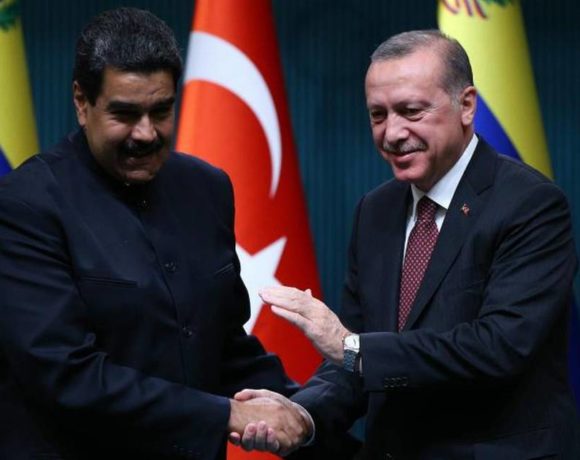
Venezuela’s oil economy has almost died due to the US sanction. Now, it relies almost solely on its gold trade for its sustenance. The United Arab Empire, Russia and Turkey are the biggest importers of the Venezuelan gold. Of these three, Turkey’s trade with the socialist Latin American is the one which worries the European Union and the United States the most. It is alleged that the gold reaches Turkey from Venezuela ostensibly for the purpose of refinement is shipped to Iran. The US is of the belief that the network of the Venezuela-Turkey-Iran gold trade is what enables the embattled Venezuelan President, Nicolas Maduro, who is on an ultimatum, to keep the loyalty of his country’s soldiers intact. The west now knows that the best way to topple the aggressive Venezuelan socialist is to cut off his revenue channels. The EU and US’ latest combined attempt to force Turkey to stop its engagements with Venezuela, particularly its gold trade, is regarded as the part of that strategy. The US has reportedly served an ultimatum to Turkey to cease its gold trade with Venezuela.

If Russia and the others does not increase their gold and oil import with Venezuela, Mr Maduro will be toppled as soon as the EU and the US find success in forcing Turkey to withdraw its backup –by all possibility that would not take more than few weeks.

It is not clear from where Iran has come to the picture. There is evidence that Turkey has brought in several tonnes of gold from Venezuela in the name of refinement and none of the imported has been returned. But, there is nothing to assume that what has been imported by Turkey has been exported to Iran. The possibility that Iran has been purposefully brought into the narrative to increase the strength of those against the Venezuelan trade cannot be ruled out blindly.

Vignesh. S. G
Photo Courtesy: Google/ images are subject to copyright
International Trade News

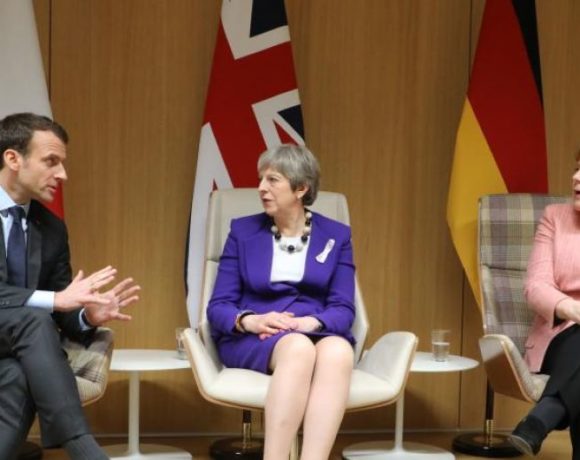
The three major western powers, such as Germany, the UK and France, have established a new payment channel to evade the United States’ economic sanction on the Middle Eastern country of Iran.

The new payment channel, the Instrument for Supporting Trade Exchanges (INSTEX), shares no links with the US-linked payment channels the west presently uses widely.

It is this detachment from the popular payment channels that helps the new channel evade the sanction imposed by the US on Iran.

Iran is one of the most important trading partners of the three major European powers. The countries see the Shia-dominated nation not only as a source of cheap oil but also as a potential market for their goods and services.

It was the US’ belief that Iran involved in the destabilisation of some of its prime allies in the region such as Israel and Saudi Arabia that promoted the world’s most powerful country to impose an economic sanction against the Arab country.

The three important western countries were not in the favour of the sanction. It even urged the US to withdraw the sanction.

The latest move is capable to provoke the US. The US’ present regime is already unhappy with the European powers’ attitude against its long standing demand that the European countries should step up their defence spending to pay justice to their financial obligation to the NATO force.

Vignesh. S. G
Photo Courtesy: Google/ images are subject to copyright

News Politics

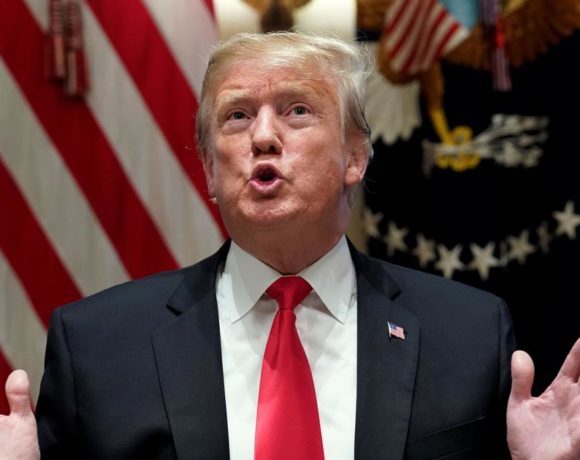
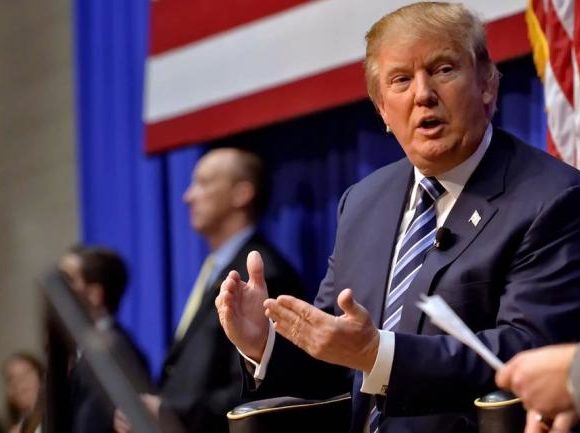
The longest shutdown in the US history comes to an end. U.S. President Donald Trump announces a deal with congressional leaders to temporarily reopen the government for three weeks, ending the longest shutdown in U.S. history. The shutdown over the president’s demand for the the border wall finding is now into its 35th day. Trump spoke regarding the deal from White house.

“We have reached a deal to end the shutdown and reopen the federal government” – Donald Trump

Trump warns of emergency if no border deal with democrats. Donald Trump on Friday signed bill to reopen the government. The government is opened by Trump for 3 weeks. An estimate of 800,000 federal employees will return to work now. Trump had demanded congress to give him money for building border wall. Trump says that he will resume discussion after February 15th.

Sunaya Paison
Photo Courtesy: Google/ images are subject to copyright

Crime News

The European Court of Human Rights has ordered the Italian government to pay a huge sum of 18,400 Euro as compensation to Amanda Knox, the US citizen mistakenly arrested for the murder of her collage mate Meredith Kercher with whom she shared her room when she reached Italy as part of a student exchange program several years ago.

The court has not been completely convinced that she suffered ill-treatment when she was in the custody of Italian police, but it has found that the lady was not allowed to contact her lawyer and not granted the service of an interpreter.

Her main allegation is that she was badly beaten by the police officials in the initial days of the interrogation and was subjected to extreme mental and physical stress.

During the course of the trial, the case has gone through several twists and turns: initially, she was convicted; while she was servicing her third year in prison, she was acquitted and deported to her home country; within a year post her acquittal, a higher court found her acquittal wrong; anyway, when the final judgment of the top court came in the year 2015, she was acquitted of all charges related to the murder.

It was a few months ago that she was allowed by the ECHR to approach them against Italy. Then, there was allegation that it was the pressure from the US that forced the court to accept the lady’s case against Italy.

Most US citizens consider her as the victim of the improper judicial system of Italy. The world media has closely followed each and every development in the case.

Meanwhile, the other part of the story is that the international interference has badly affected the case. Though a person has been arrested in connection with the case, the police have not found answers to all questions necessary to unfold the mystery of the case.

Vignesh. S. G
Photo Courtesy: Google/ images are subject to copyright

News Politics

In a blow to US president Donald Trump, the Senate has rejected two bills to end the US shutdown. Trump demands down payment for wall to end shutdown. The US shutdown enters almost 34 days with no end in sight. This is the longest partial government shutdown in the US history.

About 800,000 of federal workers struggle to cover their bills. The senate rejects the bills to open Government. On Monday, the Senate has released a bill flashing an offer that Trump had made to reopen the unfunded quarter of the government. As the chamber plans to take up the measure later this week, it will definitely fail to meet the 60-vote threshold.

The chamber desides to take up that proposal on Thursday afternoon. If this fails, Senate will take up a Democratic-backed bill to fund the government through February.

Sunaya Paison
Photo Courtesy: Google/ images are subject to copyright
News Politics

From Italy and Spain to the Brexit-affected UK, many European countries have already succumbed to the destructive wave of populism. The economic principle of protectionism, which has come as a part and parcel of the political ideology of modern populism, has clandestinely infiltrated into the economic structure of the populism-affected countries, weakening their present economic structure rooted in the economic principle of liberalism.

Definitely, the European Union is worried about this development. It has almost lost one of its arms to this development. It may not sustain another loss.

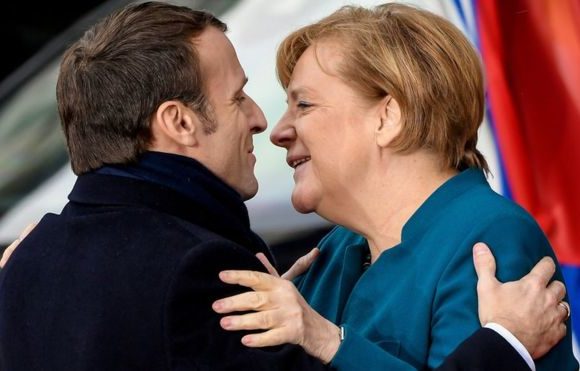
It is in this backdrop that Germany and France have come together to act. The role they play is the role of a defender, the defender of an economic structure which once gifted life breadth to the embattled European continent.

The latest agreement both has signed means that henceforth Germany and France will not think differently in their internal and external security, economic and political affairs.

Their decision to develop a European army is capable to irritate many, especially the United States and the United Kingdom. To them, the more irritating one will not be the agreement for economic corporation, political corporation and/or defence corporate, but the understanding for cultural corporation.

It is noteworthy that the measures for the increased cultural corporation has been doubled by Germans and France at the time many of their friends are researching on how to segregate people on the basis of culture.

The developments indicate that the France-Germany agreement attempts to launch attacks on the concepts of protectionism and populism from all the four fronts –political, economic, security and cultural- on which these dangerous concepts are pivoted.

Will the new European defenders of liberalism win? How better they execute their plan decides what answer the aforesaid question deserves.

Vignesh. S. G
Photo Courtesy: Google/ images are subject to copyright