featured News Trending

Global airline and travel industries are unlikely to see immediate relief despite the U.S.-Iran ceasefire, as jet fuel supply disruptions and refinery damage continue to strain operations. Aviation leaders warn that even if the Strait of Hormuz reopens, it could take months for jet fuel supplies to stabilize due to ongoing disruptions in Middle East refining capacity.

Airlines are already facing rising operational costs, with fuel prices more than doubling since the conflict began. Carriers are cutting flights, increasing fares, and adjusting routes to manage higher expenses, while major airlines expect billions in additional fuel costs in the coming months. Fuel remains the second-largest expense for airlines, making recovery slower despite falling crude oil prices.

Although airline stocks surged on hopes of improved supply and safer travel routes, the broader travel and tourism sector will take longer to recover. Cruise ships remain stranded in key Middle East ports, and experts say tourism sentiment could take several months to return as safety perceptions gradually improve.

Pic courtesy: google/ images are subject to copyright

featured News Trending

The ongoing Iran conflict has begun to impact tourism in Cyprus and Greece, with rising cancellations and a slowdown in new bookings ahead of the crucial summer season. The situation escalated after military strikes in late February and subsequent counterattacks, including a drone strike near a British base in Cyprus, triggering concerns among travellers and leading to a sharp drop in visitor interest.

In Cyprus, cancellations for short-term rentals surged dramatically, at one point reaching nearly 100% in the days following the escalation, before easing to around 45% by late March. The country’s hospitality sector has reported significant declines in bookings for March and April, prompting the central bank to cut its 2026 economic growth forecast. Airlines and travel operators have also noted reduced demand, with tourists shifting preferences to destinations like Spain.

Greece has also seen a slowdown, particularly in pre-bookings, although the impact has been less severe. Major carriers report declining demand from key markets such as Israel and Gulf countries, while tourism officials remain cautiously optimistic. Industry stakeholders warn that if the uncertainty continues into peak summer months, it could pose a serious risk to economies heavily reliant on seasonal tourism.

Pic courtesy: google/ images are subject to copyright

featured News Trending

A famous natural rock formation known as “Lovers’ Arch” collapsed into the sea on Valentine’s Day after days of heavy rain and strong winds in southern Italy. The arch, located at Sant’Andrea in Melendugno, Puglia, was a popular landmark on the Adriatic coast and a favored spot for wedding proposals and photos.

Melendugno’s mayor, Maurizio Cisternino, described the collapse as “an unwanted Valentine’s Day gift,” calling it a heavy blow for local tourism. Authorities believe the severe weather brought by Storm Oriana accelerated long-term erosion, leading to the sudden failure of the rock formation, which passers-by noticed missing on Sunday morning.

Regional president Antonio Decaro said the loss marked the disappearance of a symbolic feature of the coast and highlighted the urgent need to slow coastal erosion. The arch stood in the Salento, one of Italy’s most visited tourist areas, underscoring concerns about how extreme weather is increasingly reshaping vulnerable coastal landscapes.

Pic courtesy: google/ images are subject to copyright

featured News Trending

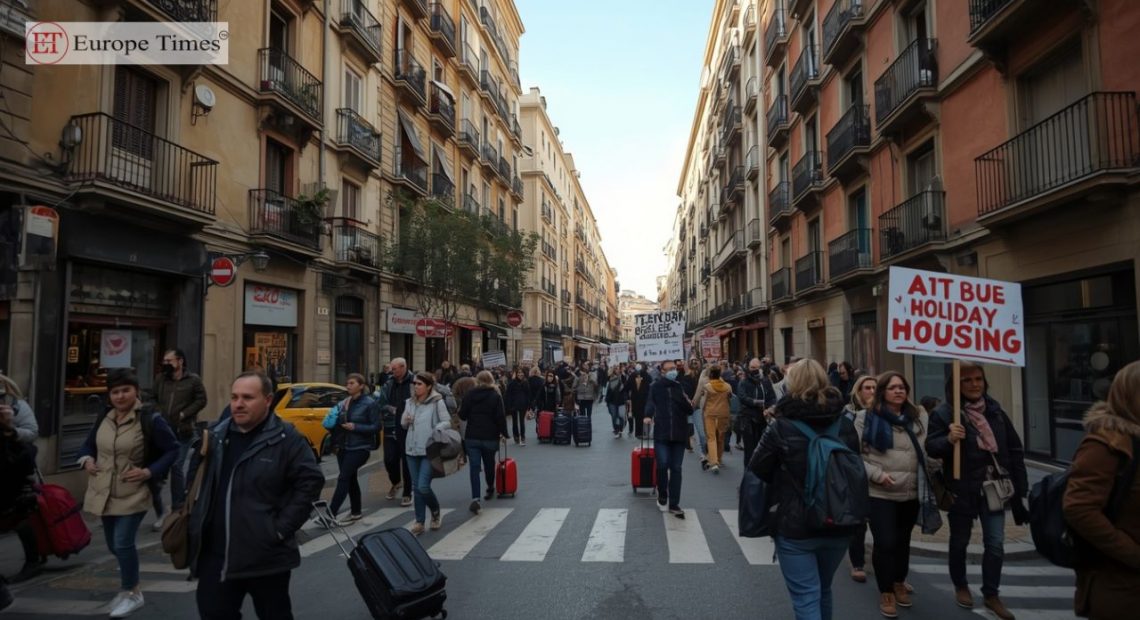
Spain’s government will introduce tougher rental rules in the coming weeks, including caps on room rents and stricter limits on seasonal leases, as it tries to rein in soaring housing costs. Prime Minister Pedro Sánchez said the new decree will deepen state intervention in the rental market, which has come under strain from a severe housing shortage and a booming tourism sector.

The plan includes a 100% income tax rebate for landlords who renew leases without increasing rents, alongside rent controls in areas classified as under heavy pressure. It will also limit the total rent charged for individual rooms so it cannot exceed the price of renting a whole apartment, a move aimed at stopping landlords from inflating prices through shared housing.

Seasonal rental contracts will face tighter conditions and penalties if they are used to replace long-term leases, a practice critics say worsens housing insecurity. While regions will be responsible for enforcing most of the measures, some, such as Catalonia and major cities like Madrid, have already begun imposing similar limits as Spain grapples with a housing deficit estimated at about half a million homes.

Pic courtesy: google/ images are subject to copyright

featured News

The Louvre Museum in Paris will raise ticket prices by 45% for most non-EU tourists starting 14 January, increasing the standard entry cost to €32. Visitors from countries such as the US, UK, and China will be affected, with guided group visitors paying €28. The measure aims to generate €15m–€20m annually to support major upgrades, including modernisation and improved visitor facilities.

The decision follows growing concerns over the museum’s outdated security and infrastructure, highlighted after a €102m jewellery heist in October that exposed serious vulnerabilities. An official audit revealed insufficient maintenance investment, despite the museum heavily prioritising art acquisitions in recent years.

With nearly 9 million visitors last year—many rushing to the Mona Lisa—crowding and long queues have long been a challenge. President Emmanuel Macron has backed plans to revamp the museum, move the Mona Lisa to a new space, and expand amenities such as restrooms and restaurants. Renovations will continue alongside closures of ageing sections, including a gallery of Greek ceramics flagged for structural issues.

Pic Courtesy: google/ images are subject to copyright

featured News Trending

Tourists will be rewarded with free food and activities in exchange for participating in eco-friendly tasks while visiting Copenhagen, the city’s tourist board has announced. Starting on July 15, this pilot scheme will encourage visitors to engage in activities such as litter-picking, using public transport, or biking around the city in return for rewards like free lunches, coffees, glasses of wine, and kayak rentals.

The “CopenPay” initiative aims to counterbalance the environmental impact of tourism, as stated by Rikke Holm Petersen, the communications chief of the Copenhagen tourist board. She emphasized that travel, especially by plane or car, contributes to pollution, and this initiative seeks to promote sustainable behavior at the destination.

Acknowledging that the plan is a modest step towards a green transition, Ms. Petersen noted that the project is based on trust. While some attractions may require proof of the green activities, such as a photo of biking or a public transportation ticket, most will not.

The government is not compensating the participating attractions, which include museums, rooftop bars, and kayaking organizations. So far, 24 organizations have joined the pilot. Last year, Copenhagen saw over 12 million overnight stays.

Ms. Petersen expects only a small percentage of visitors to participate in the trial, which will run until August 11. Othy Jasper, a 25-year-old Londoner traveling to Copenhagen for work in August, commented on his awareness of the environmental impact of air travel. While he appreciates the climate-focused initiative, he expressed reluctance to collect litter for rewards, finding it somewhat effortful.

If successful, the scheme may be extended throughout the year. Ms. Petersen hopes that visitors will adopt a greener mindset as a lasting souvenir from their trip to Copenhagen.

Picture Courtesy: Google/images are subject to copyright

News Trending

The mayor of Barcelona, Jaume Collboni, has announced plans to phase out short-term tourist rentals in the city within five years. He stated that no renewals will be granted for the 10,101 tourist licenses currently in place when they expire by November 2028. These apartments, commonly listed on platforms like Airbnb, will instead be reserved for local residents.

Collboni argued that this measure, equivalent to creating 10,000 new homes, aims to address skyrocketing rents, which have risen by 70% over the past decade, making housing unaffordable. Barcelona faces a housing shortage exacerbated by high tourism rates and its emergence as a tech hub, without sufficient new construction to meet demand, thereby inflating prices.

While some politicians and groups support the move as a way to alleviate housing pressure, others criticize it for infringing on property rights and argue that waiting until 2028 is too long for residents facing immediate displacement. Right-wing critics likened the policy to property expropriation seen in regimes like Venezuela’s, while tourist apartment associations claimed it would drive illegal rentals.

The debate reflects broader tensions in Spain over the impacts of mass tourism on local communities and housing affordability.

Picture Courtesy: Google/images are subject to copyright

News Trending

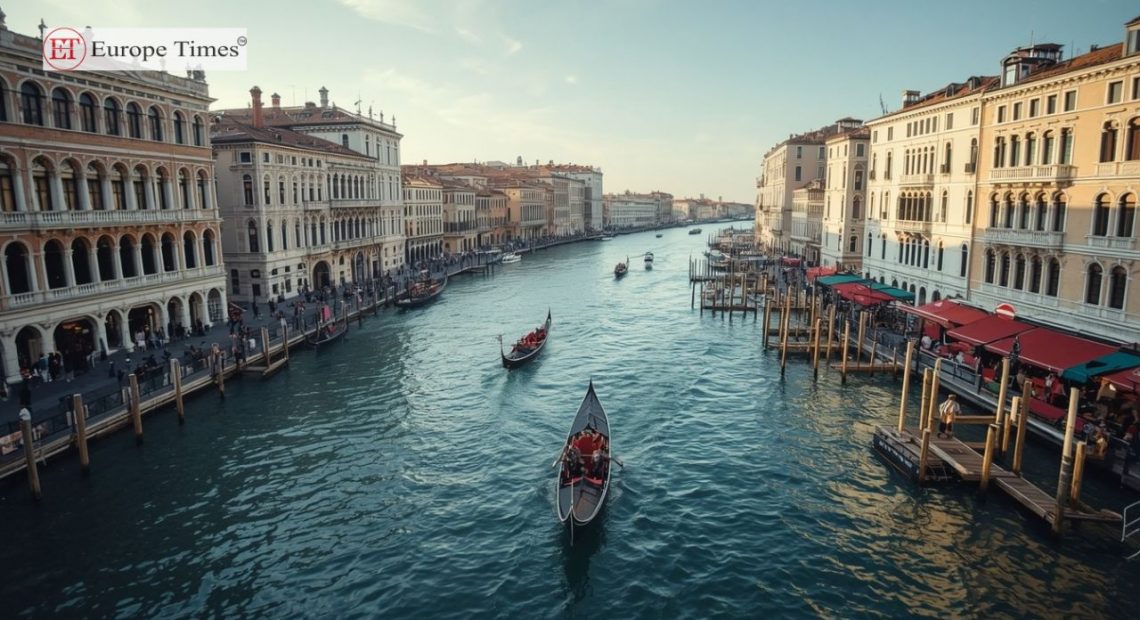
New regulations have been implemented in Venice, banning the use of loudspeakers and restricting tour group sizes to a maximum of 25 people. Officials state that these measures aim to mitigate the effects of over-tourism on the Italian city. Venice’s historic canals make it one of Europe’s most popular destinations. Earlier this year, Venice introduced a €5 (£4) daily entry fee, following a 2021 ban on cruise ships docking in the historic area.

Over-tourism is a critical issue for Venice, a city with a population of approximately 250,000 that welcomed over 13 million visitors in 2019. Although visitor numbers have declined since then, they are projected to surpass pre-pandemic levels soon. Many local residents have left the historic island city due to concerns about being overwhelmed by tourists.

According to Ocio, a citizen association monitoring housing in Venice, the historic quarter now has about 49,000 tourist beds—exceeding the number available for residents. These new tourism rules follow warnings from Unesco experts last year, suggesting Venice could be added to the list of world heritage sites in danger due to climate change and mass tourism. The UN cultural body ultimately decided not to add Venice to the list, acknowledging efforts to address these issues through an anti-flooding system and measures to curb the impact of mass tourism.

Picture Courtesy: Google/images are subject to copyright

News Trending

A desperate search for survivors is underway after a two-storey restaurant collapsed on Majorca, killing four people and injuring 16, according to local emergency services. Several individuals are believed to be trapped under the debris at the Medusa Beach Club, a popular beachside restaurant in Palma de Majorca, the regional capital.

Among the victims are a Spanish man, two German women, and Abdoulaye Diop, a Senegalese man known for rescuing a swimmer in 2017. The collapse occurred around 20:30 local time (19:30 BST) on Thursday, causing people to fall into the basement where other patrons and staff were present.

Authorities attribute the collapse to the terrace giving way due to “excessive weight,” although investigations are ongoing. Emergency workers are urging for silence to hear potential survivors. A firefighter described the scene as “nightmarish,” with people crying and screaming amid the rubble.

Raúl Pursnami, owner of Moda Meena, a nearby fashion store, witnessed the event and expressed his shock. Diop, 44, had just left a gym and was having coffee at the restaurant when it collapsed, according to friends. In 2017, Diop was celebrated for rescuing a struggling swimmer in Playa de Palma despite freezing water temperatures.

Psychology experts have been called to help those traumatized by the incident. The UK Foreign Office stated that there are no reports of British nationals involved, though they remain in contact with Spanish authorities. A man was rescued from the rubble with a broken arm, and efforts continue under the assumption more people are trapped.

The Palma City Council has declared three days of mourning. Spanish Prime Minister Pedro Sánchez and Balearic Islands President Marga Prohens sent condolences to the victims’ families and expressed gratitude to the emergency services. Majorca, the largest of Spain’s Balearic Islands, saw over 17 million visitors last year.

Picture Courtesy: Google/images are subject to copyright

News Trending

Protests are set to erupt across the Canary Islands this Saturday, with demonstrators calling for a reevaluation of the region’s tourism industry and a halt to the influx of tourists. The movement, named “Canarias tiene un límite” (The Canaries have a limit), is supported by various environmental organizations such as Greenpeace, WWF, and Friends of the Earth.

The protests are fueled by concerns that the current tourism model, which has been in place for decades, is financially burdensome and environmentally unsustainable for locals. Víctor Martín, a spokesperson for the coordinating collective “Canarias se Agota” (The Canaries Have Had Enough), highlighted the strain on resources and the rise in poverty and social exclusion among locals.

Martín emphasized that the focus on tourism persists despite challenges like water scarcity and housing crises. He noted that low wages and high living costs exacerbate the situation, leaving many workers struggling to make ends meet. Martín stressed that the issue lies with the tourism model itself and not with the tourists, many of whom are warmly welcomed by locals.

The protestors demand an immediate halt to large-scale luxury developments and a reassessment of tourism’s impact on the islands. They call for a comprehensive study to determine the carrying capacity of each island and advocate for a transition towards sustainable tourism practices. Martín believes that addressing these issues could position the Canary Islands as a global example of sustainable tourism development.

In response, Fernando Clavijo, the regional president, stated that the government is already taking steps to address the concerns. He acknowledged the need for refinement in the tourism model but defended its overall success.

Overtourism has become a pressing issue not only in the Canary Islands but also in various Spanish cities and regions, prompting protests and discussions on sustainable tourism management.

Picture Courtesy: Google/images are subject to copyright