featured News Trending

Israeli Prime Minister Benjamin Netanyahu said the war against Iran would be decisive and not drag on for years, describing it as potentially lasting weeks rather than becoming an “endless war.” Speaking in a televised interview, Netanyahu stressed that while the conflict may take some time, it would not mirror the prolonged wars of the past. The joint U.S.-Israeli air campaign began over the weekend, with Donald Trump initially suggesting a timeline of four to five weeks, though later remarks signalled a broader and open-ended approach.

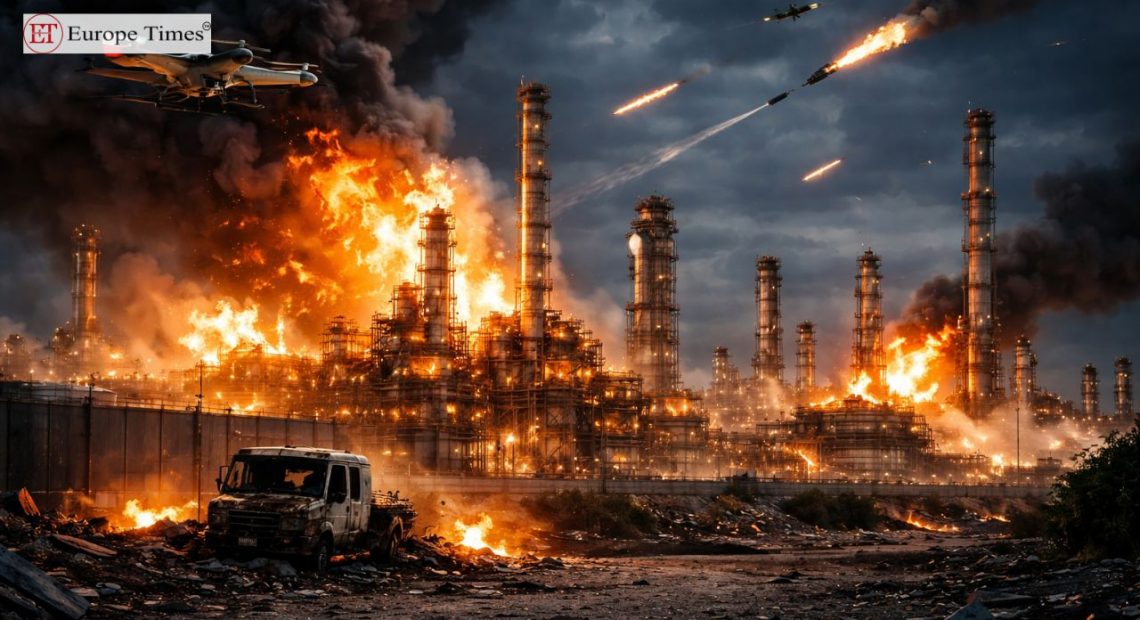
The conflict has rapidly expanded beyond Iran and Israel, with Tehran launching missile and drone strikes targeting Israel, U.S. forces, and Gulf states hosting American bases. Israel has struck Iranian-linked targets in Lebanon, including Hezbollah positions, and reinforced troop deployments along its northern border. Iranian attacks have reportedly hit U.S. facilities in the region, including drone strikes near Riyadh and claims of damage to a U.S. base in Bahrain. Casualties have mounted across Iran, Israel, Lebanon and neighbouring states as exchanges intensify.

The escalating war has disrupted global aviation and energy markets, with thousands of Gulf flights cancelled and major hubs such as Dubai temporarily shut. Shipping through the Strait of Hormuz — a key artery for global oil trade — has been severely affected, driving oil prices and tanker rates sharply higher. Washington has ordered non-essential personnel to leave several regional countries, while U.S. Secretary of State Marco Rubio warned that stronger American military action could still follow. Diplomatic tensions remain high as global powers react to one of the most significant Middle East escalations in decades.

Pic courtesy: google/ images are subject to copyright

featured News Trending

The European Union’s 27 member states have called for “maximum restraint” and full adherence to international law amid escalating hostilities involving Iran. In a statement issued after an emergency meeting of foreign ministers, EU foreign policy chief Kaja Kallas stressed the need to protect civilians and uphold the principles of the UN Charter and international humanitarian law. The appeal followed U.S. and Israeli strikes on Iran and Tehran’s retaliatory attacks on Israel, U.S. forces and Gulf countries, which the EU described as inexcusable violations of sovereignty.

The bloc also voiced concern about the broader regional and economic fallout of the conflict, warning against escalation that could destabilize the Middle East and beyond. It highlighted the importance of keeping critical waterways such as the Strait of Hormuz open, citing risks to global energy supplies and supply chains. Disruptions to oil flows could have significant economic consequences for Europe, which is already grappling with geopolitical uncertainty.

The joint statement reflected differing views within the EU over the U.S.-Israeli military action. While German Chancellor Friedrich Merz signaled caution against criticizing allies, Spanish Prime Minister Pedro Sánchez rejected the strikes as contributing to global instability. Diplomats acknowledged that Europe has limited leverage over the unfolding crisis, despite the potential for serious regional and economic repercussions.

Pic courtesy: google/ images are subject to copyright