featured News Trending

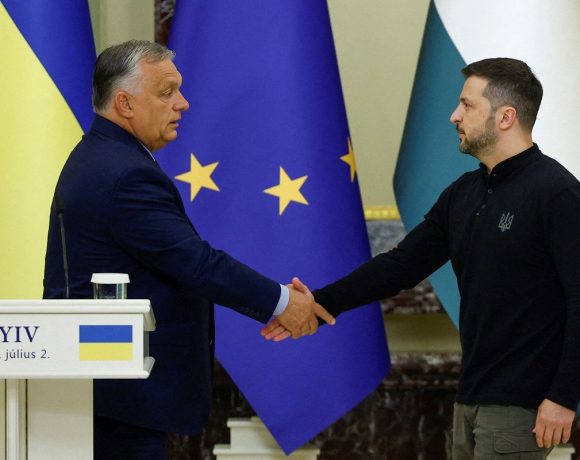
Viktor Orban arrived in Ukraine on Tuesday for an unannounced visit shortly after assuming the role of rotating president of the European Union. While in Kyiv, the Hungarian prime minister suggested that a ceasefire between Russia and Ukraine could expedite negotiations to end the ongoing conflict, which began with Russia’s full-scale invasion in 2022.

Orban, known for his critical stance on Western support for Ukraine and close ties with Russian President Vladimir Putin, has not visited Ukraine in 12 years but has met with Putin several times. During his joint appearance with Ukrainian President Volodymyr Zelensky, their body language was notably reserved, and neither took questions from the media.

Orban previously delayed the agreement on a €50 billion EU aid package meant to support Ukraine against Russia. However, his new role as head of the European Council for the next six months grants him significant influence as a European figurehead. He emphasized the need to resolve past disagreements and focus on future cooperation during his discussions in Ukraine.

Zelensky stressed the importance of maintaining Europe’s support for Ukraine and fostering meaningful, mutually beneficial cooperation among European neighbors. Orban highlighted the necessity of collaboration and proposed a ceasefire to hasten peace negotiations with Russia, expressing gratitude for Zelensky’s candid responses.

Orban stated that his visit underscored the importance of peace not just for Ukraine but for all of Europe, acknowledging the war’s profound impact on European security. Zelensky did not publicly respond to Orban’s ceasefire comments but later posted on X, emphasizing the significance of European unity and collective action. He described their discussion as focused on achieving a just, lasting, and fair peace.

Many Ukrainians view a ceasefire as potentially solidifying Russia’s control over seized territories and prefer negotiations from a position of strength. Ukrainian Foreign Minister Dmytro Kuleba expressed openness to working with all parties to solve problems, acknowledging the challenges but emphasizing the potential for tangible results.

During Orban’s visit, he and Zelensky also addressed bilateral issues, including the status of the 100,000 ethnic Hungarians living in Ukraine. Orban expressed optimism about progress on the rights of ethnic Hungarians and wished Ukraine success. The EU had initiated membership talks for Ukraine just before Hungary assumed the EU Council Presidency.

Picture Courtesy: google/images are subject to copyright

News Trending War

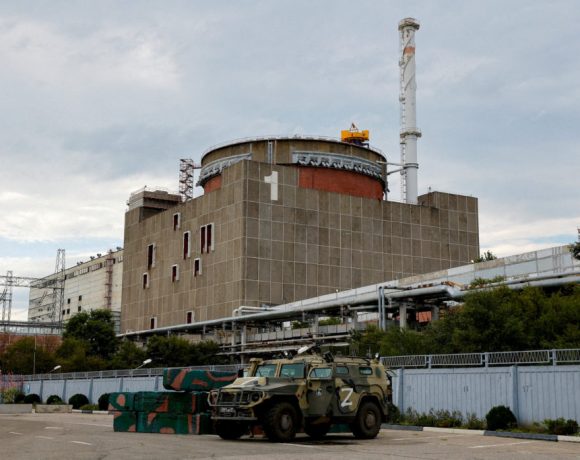
Since Saturday night, more than a dozen significant explosions have been noted close to a sizable nuclear power facility in south Ukraine that is under Russian occupation.  Rafael Grossi, the chief of the UN’s nuclear watchdog, issued an urgent plea for an end to the violence at Europe’s largest nuclear power station, Zaporizhzhia.

“Whoever is behind this, it must stop immediately,” he said. “You’re playing with fire!” On the front lines of the conflict, the factory is located beside the River Dnipro.

The military of Russia said that Ukrainian soldiers on the other side of the river had shelled the territory it controlled. The Ukrainians, who have previously indicated that Russian soldiers shell the area itself despite having their own troops there, have not yet responded.

Before the latest explosions this weekend, which persisted until Sunday morning, the area surrounding the facility, including the nearby Russian-occupied town of Enerhodar, had been subject to constant attack for months.

From their windows, observers from Mr. Grossi’s company, the International Atomic Energy Agency (IAEA), saw some of the explosions.

The IAEA team reported damage to various buildings, systems, and equipment at the site, but none that was “essential for nuclear safety and security” at this time, according to information provided by officials at the plant under Russian administration. There were no casualty reports.

“The news from our team yesterday and this morning is extremely disturbing,” Mr Grossi said. “Explosions occurred at the site of this major nuclear power plant, which is completely unacceptable.”

He called once again for the two warring sides to agree and implement a nuclear safety and security zone around the plant as soon as possible.

“I’m not giving up until this zone has become a reality,” he said. “As the ongoing apparent shelling demonstrates, it is needed more than ever.”According to a Rosenergoatom official reported by Russian state media, 15 rounds were fired at the plant’s facilities, landing close to a building that stores recently used nuclear fuel and a facility for storing dry nuclear waste, but no radioactive emissions were found.

Picture Courtesy: Google/images are subject to copyright
News Trending War

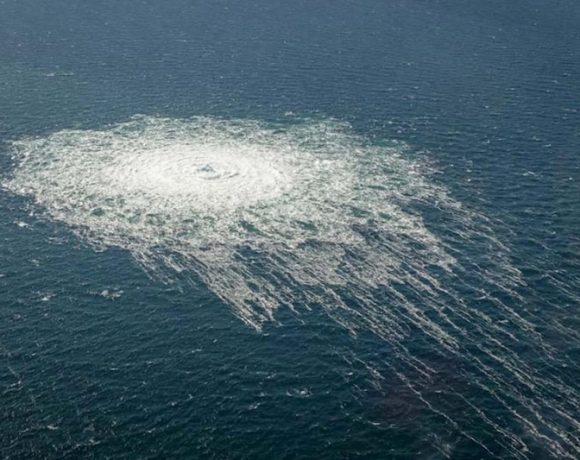
The fourth leak this week has been found, this time in Sweden, in a significant undersea pipeline supplying Russian natural gas to the EU. This week, gas leaks in the Nord Stream 1 and 2 pipelines were reported by Sweden and Denmark.

The events, according to Nato, were caused by “deliberate, careless, and negligent acts of sabotage.” Suggestions that Russia had attacked its own pipelines were brushed aside as “predictable and stupid.” The explosions, according to the Russian foreign ministry, happened in “zones controlled by American intelligence.”

It was obvious that a non-state actor could not have been behind the incidents, meaning that a country must have been to blame, according to Miguel Berger, the German ambassador to the UK. The fourth leak on Nord Stream 2 was discovered, according to the Swedish coast guard, very close to an earlier, larger leak on Nord Stream 1.

In retribution for the West’s support for Ukraine, the EU has accused Russia of using gas supplies as a weapon against it on numerous occasions. Without going into any detail, Fatih Birol, the head of the International Energy Agency, stated that it is “quite evident” who is responsible for the damage.

The leaks, said to Kremlin spokesman Dmitry Peskov, have him “very concerned,” and he added that it was impossible to rule out a planned strike. The energy infrastructure of the continent would be subject to the “strongest possible response,” according to EU leaders.

While this was going on, Norway, a non-EU country, declared it would send troops to guard oil and gas facilities. Despite the fact that they both contain gas, Nord Stream 1 and 2 are not currently delivering any gas.

Picture Courtesy: Google/images are subject to copyright