featured News Trending

Pavel Durov, the founder and CEO of Telegram, said he has received a legal summons in Russia that labels him a “suspect” in a criminal case. The notice was reportedly sent to an apartment where he lived two decades ago, raising questions about the intent and timing of the move.

Russian authorities have intensified pressure on Telegram in recent months, including claims—reported in state media—that Durov is being investigated over alleged links to terrorism-related activity. Officials have also accused the platform of enabling criminal misuse and posing “hybrid threats,” citing materials attributed to the country’s security services.

Durov dismissed the accusations, suggesting the case may be tied to his defense of constitutional rights such as freedom of speech and privacy of communication. Telegram, which has over a billion users globally and remains widely used in both Russia and Ukraine, has repeatedly denied allegations of wrongdoing while resisting efforts by Moscow to promote a state-backed alternative.

Pic courtesy: google/ images are subject to copyright

featured News Trending

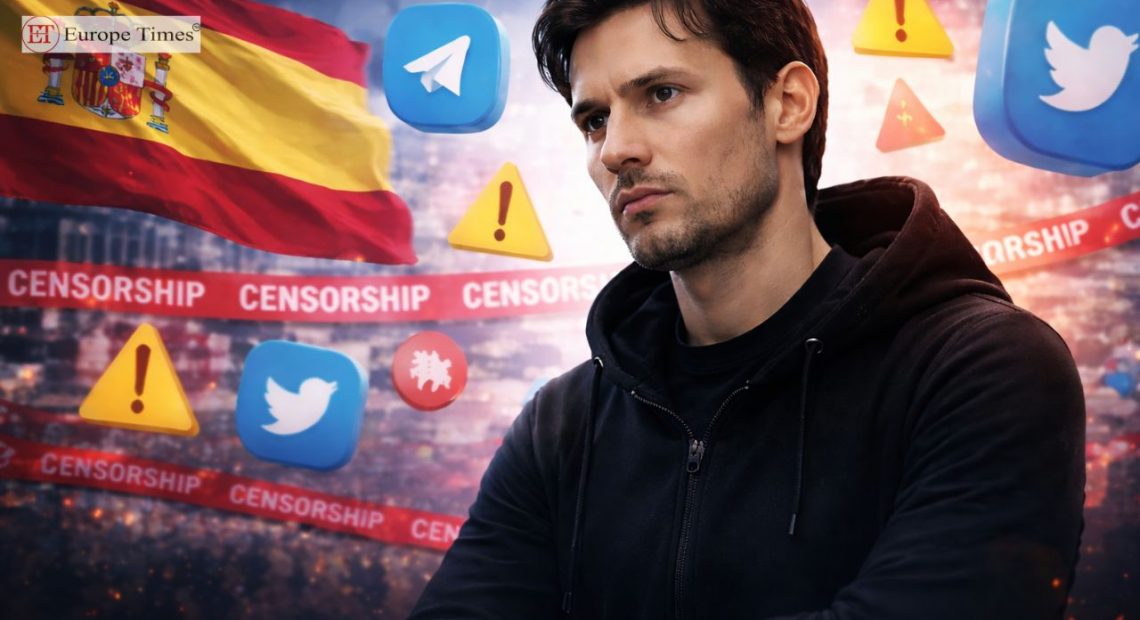
Telegram founder Pavel Durov has criticised proposed social media restrictions in Spain, saying they amount to censorship and excessive state control. In a message to Telegram users, Durov warned that plans by Prime Minister Pedro Sanchez to restrict access for under-16s and tighten hate speech laws would force platforms to collect user data and remove content to avoid prosecution.

Durov said the proposed legislation, which would criminalise algorithms seen as amplifying harmful content, could allow governments to control what users see online. Calling the measures a step “toward total control,” he accused authorities of using safety concerns as a pretext to silence critics. His remarks echoed criticism from Elon Musk, who has also condemned the Spanish government’s proposals.

Spain’s government defended the plans, arguing they are needed to protect minors and curb misinformation. Sanchez’s office accused Durov of abusing his control over Telegram by sending mass messages to Spanish users and spreading propaganda. The proposals are part of a broader European push to regulate social media, following similar debates in countries such as Britain, France and Greece, and Australia’s recent ban on social media use for children under 16.

Pic courtesy: google/ images are subject to copyright

featured News

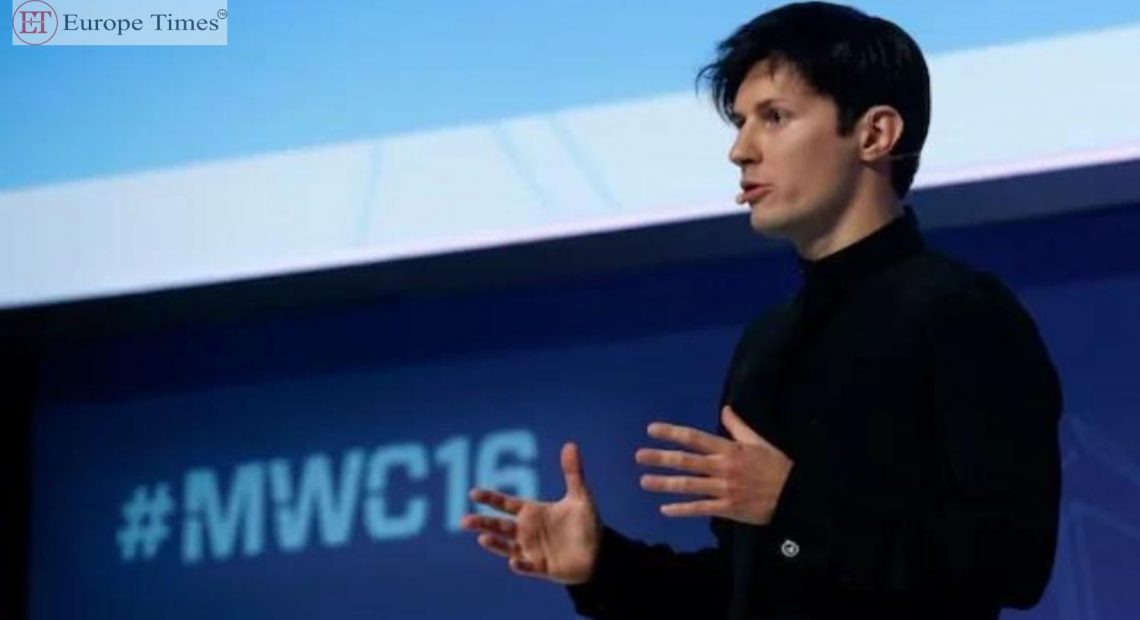
The surprise arrest of Pavel Durov, co-founder of the messaging app Telegram, in Paris last Saturday has intensified scrutiny on the platform. The arrest follows a French investigation into serious allegations including organized crime, child sex abuse images, fraud, and money laundering. This development has put Telegram, known for its massive user base and minimal regulation, under an unprecedented spotlight.

The arrest has raised questions about the effectiveness of the European Union’s Digital Services Act (DSA), which aims to regulate large online platforms and ensure the removal of illegal content. Although the European Commission has distanced itself from the French investigation, the charges against Durov underscore the pressure on EU regulators to enforce the DSA effectively. Critics argue that if Telegram’s content moderation issues are serious enough to warrant criminal investigation, it should be addressed under the DSA’s provisions.

Telegram, which has close to a billion global users but reports only 41 million active users in the EU, is now facing potential direct oversight by EU authorities. As the European Commission reviews the platform’s user figures and compliance with DSA regulations, the call for greater transparency and accountability grows louder. Digital rights advocates emphasize that platforms of Telegram’s scale must operate with more openness to ensure regulatory oversight and public trust.

Pic Courtesy: google/ images are subject to copyright