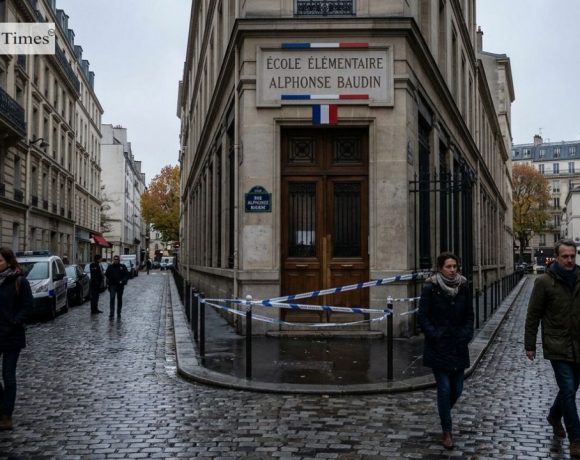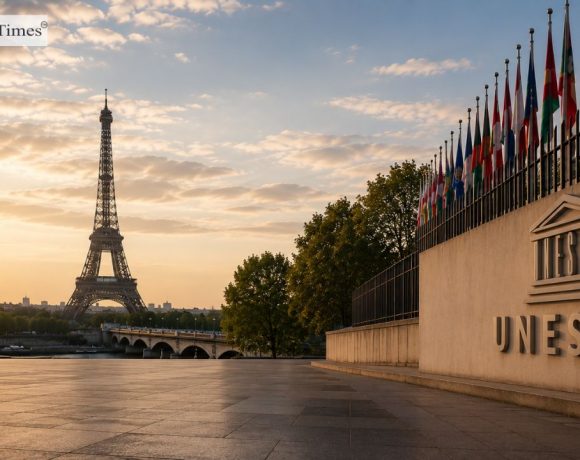
featured News

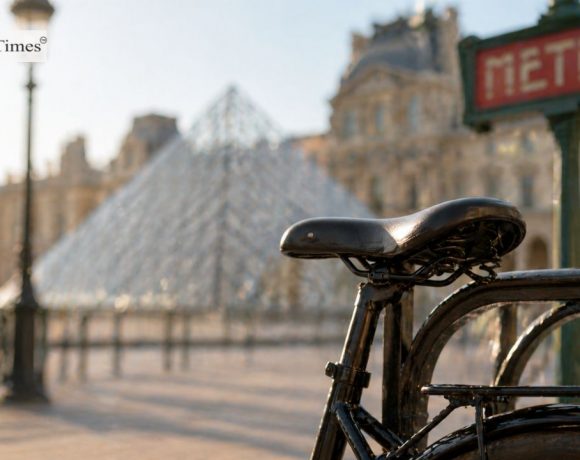
The Louvre Museum in Paris will raise ticket prices by 45% for most non-EU tourists starting 14 January, increasing the standard entry cost to €32. Visitors from countries such as the US, UK, and China will be affected, with guided group visitors paying €28. The measure aims to generate €15m–€20m annually to support major upgrades, including modernisation and improved visitor facilities.

The decision follows growing concerns over the museum’s outdated security and infrastructure, highlighted after a €102m jewellery heist in October that exposed serious vulnerabilities. An official audit revealed insufficient maintenance investment, despite the museum heavily prioritising art acquisitions in recent years.

With nearly 9 million visitors last year—many rushing to the Mona Lisa—crowding and long queues have long been a challenge. President Emmanuel Macron has backed plans to revamp the museum, move the Mona Lisa to a new space, and expand amenities such as restrooms and restaurants. Renovations will continue alongside closures of ageing sections, including a gallery of Greek ceramics flagged for structural issues.

Pic Courtesy: google/ images are subject to copyright
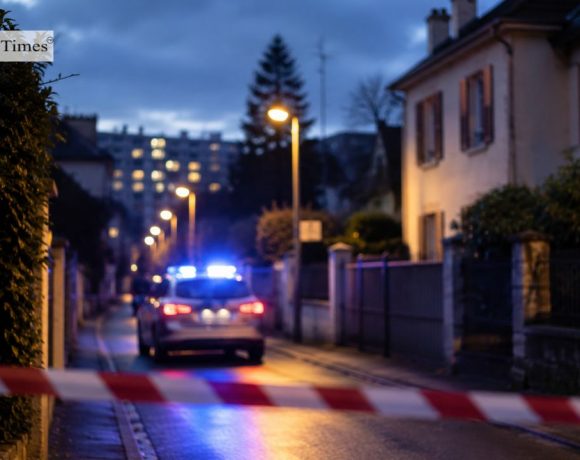
featured News

France’s Louvre Museum has closed its Campana Gallery after a structural assessment revealed severe weaknesses in beams supporting the Sully wing. The gallery, which showcases Greek vases and includes office spaces, dates back to the 1930s and was shut less than a month after a high-profile daylight heist exposed security vulnerabilities at the world-famous museum.

According to the Louvre, the technical report made it necessary to immediately close the first-floor gallery and relocate 65 staff members working above it. Union representatives said employees had long raised concerns over the ageing building, but were surprised by the extent of deterioration now confirmed.

The closure comes as the museum faces scrutiny over its management practices. A recent auditor’s report criticised the prioritisation of art acquisitions and post-pandemic projects over infrastructure and security upgrades. The investigation into last month’s $102 million jewel theft—carried out using a lift, broken windows, and motorbike escape—remains ongoing. The Louvre, originally a royal palace built in the 12th century, continues to grapple with balancing heritage preservation and modern safety demands.

Pic Courtesy: google/ images are subject to copyright
featured News

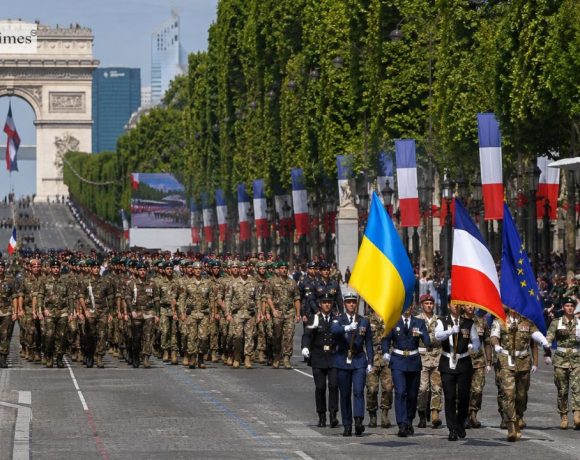
As France marks ten years since the deadly Bataclan attacks, the nation faces renewed reminders of the enduring jihadist threat. Authorities have arrested Maëva B, a 27-year-old French convert linked to Salah Abdeslam, the only surviving attacker from November 2015, on suspicion of plotting a violent act. The arrest underscores the persistence of home-grown extremism, even as large-scale terror plots have diminished following the fall of the Islamic State.

The coordinated Paris attacks on 13 November 2015 killed 130 people and wounded hundreds more, becoming a defining moment in France’s modern history. Since then, intelligence agencies have strengthened counter-terror capabilities, yet experts warn of “ambient jihadism” — a decentralized, ideology-driven threat fueled by social networks, political polarization, and global conflicts like the Israel-Gaza war.

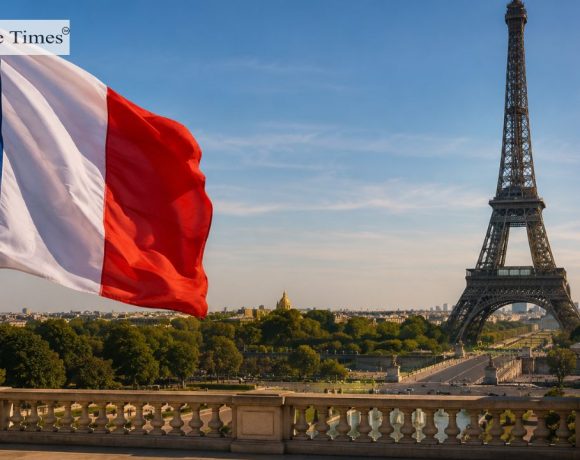
Thursday’s national commemorations include tributes at attack sites, the opening of a memorial garden, and the illumination of the Eiffel Tower in France’s tricolour. Survivors continue to share how their lives were forever altered, while Abdeslam’s offer to participate in “restorative justice” has drawn outrage from victims’ families, who insist terrorism cannot be treated as an ordinary crime.

Pic Courtesy: google/ images are subject to copyright
featured News

A concert by the Israel Philharmonic Orchestra in Paris was disrupted multiple times on Thursday night when protesters set off flares in the auditorium. Four people were detained after clashes broke out in the Pierre Boulez hall, forcing the performance led by conductor Lahav Shani and pianist Sir Andras Schiff to be temporarily halted due to smoke and commotion.

The event had already faced criticism from a French performing arts union and calls for a boycott by pro-Palestinian activists. While French ministers condemned the disturbances and defended artistic freedom, some political voices argued the protest was justified due to their opposition to the Israeli state.

Despite the chaos, the venue confirmed the troublemakers were removed and legal action will follow. The concert eventually resumed and concluded peacefully, with authorities stressing that violence and threats to public safety have no place in cultural spaces.

Pic Courtesy: google/ images are subject to copyright
featured News Trending

Three weeks after a daring daylight robbery saw €88m worth of crown jewels stolen from the Louvre’s Apollo Gallery, France’s prestigious museum is facing harsh criticism for neglecting security. A Court of Auditors report — completed before the heist — revealed that museum management prioritized new acquisitions and exhibitions over essential safety upgrades, despite repeated warnings. Culture Minister Rachida Dati and art experts have accused the Louvre of underestimating the threat and mismanaging funds intended to protect priceless heritage.

The report found that between 2018 and 2024, the museum invested more than €105m in new artworks and €63m in exhibition spaces, while spending far less on maintenance and security systems. These findings have cast doubt on the museum’s ambitious New Renaissance project, which includes a new entrance and a separate gallery for the Mona Lisa. Already over budget — rising from €700m to €1.15bn — the initiative is now being questioned for lacking proper feasibility and financial planning.

Meanwhile, the investigation into the theft continues, with four suspects arrested and the stolen jewels still missing. Among those detained is 39-year-old Abdoulaye N, a former Pompidou Centre guard known locally for viral motocross stunts, who reportedly did not even realise he was breaking into the Louvre. Authorities believe the suspects may have been petty criminals hired by a wealthier mastermind, making security lapses at the world’s most visited museum an even more alarming concern.

Pic Courtesy: google/ images are subject to copyright
featured News

Chinese fast-fashion giant Shein opened its first permanent physical store on Wednesday inside the historic BHV Marais department store in Paris, drawing large crowds of eager shoppers — and equally strong opposition. Protesters gathered outside carrying signs reading “Shame on Shein,” criticizing the retailer’s low-cost business model and its impact on the environment, workers, and local businesses. Police were deployed to manage tensions as the store launched its promotional offer allowing customers to receive vouchers to spend at other BHV outlets.

The move has sparked backlash from lawmakers and retailers who argue that Shein’s practices undermine France’s textile industry and high streets. Paris Mayor Anne Hidalgo and other officials have condemned the partnership, describing it as a “provocation,” especially as France pushes forward a fast-fashion law that could ban Shein from advertising and impose fees on items sold in the country. The retailer also faces scrutiny after regulators fined it €190 million, with new investigations underway into inappropriate content allegedly sold on the platform.

Despite the controversy, Société des Grands Magasins — owner of BHV — sees the collaboration as a lifeline to attract younger shoppers and revive struggling department stores. Shein has rapidly grown its presence in France, reporting 27.3 million average monthly users earlier this year. As concerns over affordability persist, the French government acknowledges the challenge consumers face in accessing fairly priced clothing while maintaining pressure on Shein to comply with national standards.

Pic Courtesy: google/ images are subject to copyright

featured News

French police are investigating a reported gang rape involving an Australian woman in central Paris. The 25-year-old sought refuge in a kebab shop in the Pigalle district early Saturday morning, with her dress partially torn. Local media indicated that no arrests have been made so far, but prosecutors confirmed the case is being treated as a gang rape.

The incident occurred just days before the 2024 Olympics are set to begin in Paris. According to French newspaper Le Parisien, restaurant staff called for assistance upon seeing the woman’s condition. Firefighters attended to her, and she was later taken to Bichat hospital for medical examination. The Paris Prosecutor’s Office stated that police are investigating the allegations and reviewing CCTV footage.

The investigation into the alleged gang rape, which is believed to have occurred between the night of July 19 and 20, has been assigned to the second judicial police district. With the Olympics starting on Friday, Paris is experiencing a heightened police presence to ensure public safety. Security measures include increased patrols, armed guards around the River Seine, and designated security zones requiring special passes to enter, including areas around the Eiffel Tower.

Picture Courtesy: Google/images are subject to copyright
News Trending

French President Emmanuel Macron has raised serious concerns about the growing threat of antisemitism in schools after a 12-year-old Jewish girl was raped in what police have classified as a hate crime. According to French media, the girl reported being in a park in Courbevoie, north-west of Paris, with a friend last Saturday when three boys, two aged 13 and one aged 12, approached her. She knew at least one of them. The boys dragged her to an isolated location, where they hurled antisemitic abuse at her and raped her.

The boys were arrested on Monday, and two of them were charged with gang rape, antisemitic insults and violence, and issuing death threats. One of the attackers reportedly threatened to kill the girl if she went to the police. In response to the attack, people took to the streets on Wednesday to protest against antisemitism, carrying banners with messages such as “It could have been your sister.”

Macron addressed the attack during a Council of Ministers meeting on Wednesday. He asked the Minister of Education, Nicole Belloubet, to ensure that schools hold discussions on racism and antisemitism in the coming days to prevent “hateful speech with serious consequences” from “infiltrating” classrooms. Belloubet later condemned the crime on social media, stating that “every part of this crime is revolting.” Prime Minister Gabriel Attal called the attack “absolutely despicable, unbearable, and unspeakable,” noting that antisemitism has been on the rise in France since October 7.

Chief Rabbi of France Haim Korsia expressed horror at the incident and called for the perpetrators to be firmly punished. He emphasized that no one can be excused from the current surge in antisemitism. A January 2024 report by the Council of Jewish Institutions in France (CRIF) highlighted a 284% increase in antisemitic acts between 2022 and 2023, with nearly 13% occurring in schools. The report noted a significant spike in such incidents following the October 7 Hamas attacks against communities in Israel.

The attack and the rise in antisemitism come amid a heated election campaign in France, after President Macron called a snap parliamentary election two weeks ago. Politicians from various parties quickly condemned the incident and vowed to combat antisemitism.

Picture Courtesy: Google/images are subject to copyright

featured News Trending

French film star Anouk Aimée, renowned for her work with many of Europe’s most influential directors, has passed away at the age of 92. Aimée, whose career spanned eight decades, starred in numerous films, including Claude Lelouch’s “A Man and a Woman,” which earned her an Oscar nomination. She died at her Paris home on Tuesday, as confirmed by Sébastien Perrolat of the TimeArt agency to the AFP news agency. Her daughter, Manuela Papatakis, shared that she was by her mother’s side at the time of her death. Papatakis expressed her grief on Instagram, posting a black-and-white photograph of Aimée and mentioning that she, her daughter Galaad, and her granddaughter Mila, were deeply saddened by Aimée’s passing.

French Culture Minister Rachida Dati paid tribute to Aimée on X, praising her as a world-famous icon and a prominent figure in French cinema who worked with major directors like Jacques Demy, Claude Lelouch, and Federico Fellini.

Born Nicole Françoise Florence Dreyfus in Paris in 1932, Aimée’s father was Jewish, though she was raised Catholic. After the German occupation of Paris in 1940, her family sent her to the countryside and changed her name for safety. Aimée debuted on screen as a teenager in the 1946 film “La Maison Sous La Mer” and adopted her character’s name, Anouk. French poet and screenwriter Jacques Prevert suggested she change her surname to Aimée, meaning “loved.”

Aimée was in high demand for Italian and French films. Her career took off with Fellini’s acclaimed 1960 film “La Dolce Vita” and continued with “8½” in 1963. However, it was her role in Lelouch’s 1966 film “A Man and a Woman” that cemented her status as an icon of romantic cinema. This performance earned her a Golden Globe, a BAFTA, and an Oscar nomination, making her the first actor nominated for an Oscar for a French-language performance. Although she did not win, the film received the Oscar for Best Foreign Language Film.

Throughout her career, Aimée starred in 70 films and received an honorary César Award in 2002. In 2019, she attended the Cannes Film Festival for the premiere of Lelouch’s sequel to “A Man and a Woman,” where she reunited with her co-star Jean-Louis Trintignant.

Renowned for her beauty and acting talent, Aimée was named one of the “100 sexiest stars in film history” by Empire magazine in 1995. She had one daughter, Manuela, with film director Nico Papatakis, one of her four husbands. She was also married to composer Pierre Barouh and British actor Albert Finney. Aimée spent her later years in the Montmartre district of Paris.

Picture Courtesy: Google/images are subject to copyright

News Trending

An invasive species of mosquito has established itself in 13 EU countries, including France, Spain, and Greece, leading to a rise in dengue fever cases in Europe. The European Centre for Disease Prevention and Control (ECDC) attributes this spread to climate change, which has created favorable conditions for the Asian tiger mosquito (Aedes albopictus). This species, considered the most invasive mosquito globally, is now spreading northwards, even reaching Paris, where authorities are actively monitoring and trapping the insects ahead of the Olympic Games in July.

The ECDC warns that international travel will likely increase the risk of further outbreaks in Europe. To mitigate this, it advises people to remove stagnant water from gardens and balconies, use insect repellent, and install screens on windows and doors. The tiger mosquito, which transmits diseases like dengue fever, chikungunya, and Zika virus, has become prevalent in countries such as Austria, Bulgaria, Croatia, France, Germany, Greece, Hungary, Italy, Malta, Portugal, Romania, Slovenia, and Spain, and has been reported in Belgium, Cyprus, Czechia, the Netherlands, and Slovakia.

Another mosquito species, Aedes aegypti, which spreads yellow fever, has been found in Cyprus and poses a significant threat to other parts of Europe due to its preference for biting humans and its disease transmission capabilities. Dengue fever, which can escalate from flu-like symptoms to severe, sometimes fatal conditions, has seen increasing outbreaks in Europe. Last year, multiple infections were recorded in France, Italy, and Spain, with a total of 130 locally-acquired cases, up from 71 the previous year.

The West Nile virus, also transmitted by mosquitoes, is now more widespread in Europe, with a case reported in southern Spain as early as March, indicating that climate conditions are becoming suitable for mosquitoes much earlier in the year. ECDC Director Andrea Ammon emphasizes the need for personal protective measures, early case detection, timely surveillance, further research, and awareness-raising activities in high-risk areas. With dengue fever endemic in over 100 countries and malaria posing the deadliest mosquito-borne threat, concerns are growing about potential increases in malaria incidents in Europe if conditions remain favorable.

Picture Courtesy: Google/images are subject to copyright