featured News Trending

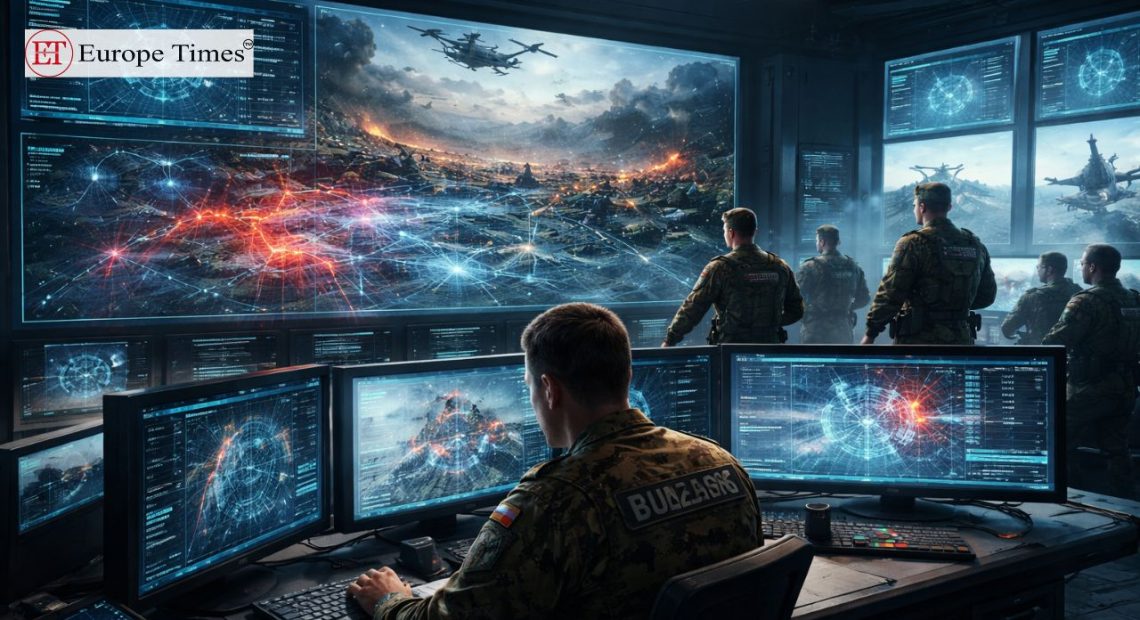
Ukrainian President Volodymyr Zelenskyy met with Alex Karp in Kyiv as Ukraine accelerates the use of artificial intelligence and advanced data analysis in its war against Russia. The discussions focused on expanding technological cooperation in both military and civilian sectors, with Kyiv increasingly relying on AI-driven systems to improve battlefield operations and national defense capabilities.

Ukraine has partnered with Palantir Technologies on the “Brave1 Dataroom” initiative, which uses combat data collected since Russia’s 2022 invasion to develop AI tools capable of detecting and intercepting Russian drones. Ukrainian Defence Minister Mykhailo Fedorov said more than 100 companies are currently training dozens of AI models aimed at improving aerial threat detection and battlefield intelligence analysis.

Officials said the partnership has already helped Ukraine create systems for detailed analysis of air strikes and integrate AI solutions into deep-strike mission planning. Zelenskyy described Palantir as a key global technology partner with strong potential to support the defense capabilities of Ukraine, the United States and allied nations as the role of AI in modern warfare continues to expand.

Pic courtesy: google/ images are subject to copyright

featured News Trending

Germany’s military is advancing plans to integrate artificial intelligence into wartime operations, aiming to process battlefield data faster and improve decision-making. Army chief Christian Freuding highlighted lessons from Ukraine, where drones and sensors generate vast amounts of data. AI systems can analyze this information to predict enemy behavior and recommend responses, significantly reducing the time and manpower traditionally required.

Freuding stressed that AI will remain a support tool rather than replacing human judgment. While the technology can enhance speed and efficiency, final decisions will always rest with soldiers. The German army also plans to train these systems using data from both Ukrainian combat experience and its own military exercises, ensuring compatibility with operational doctrines.

Germany intends to align its AI development with NATO standards and is considering both European and U.S. technologies. Freuding noted that American solutions, such as tools developed by Palantir Technologies, may offer quicker deployment advantages. However, concerns around data security and sovereignty will remain key factors in selecting the final system.

Pic courtesy: google/ images are subject to copyright