featured News Trending

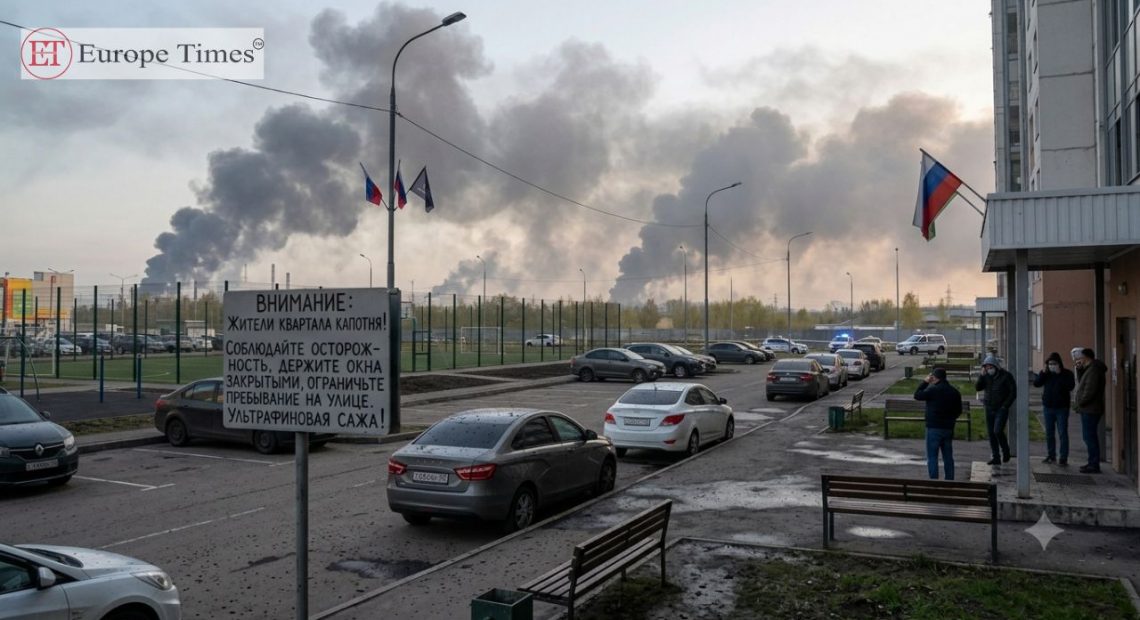
A major Ukrainian drone attack on the Moscow region has brought the realities of the war closer to Russia’s capital, striking an oil refinery and causing visible disruption across parts of the city. Thick black smoke rose over the skyline following the attack, while reports indicated that residential buildings and commercial properties were also affected. Local authorities said an eight-year-old girl was killed in a fire linked to the strikes.

The attack is being described as one of the largest aerial assaults on the Moscow region since the start of Russia’s full-scale invasion of Ukraine. While many residents have grown accustomed to periodic drone attacks and security incidents, the strike underscored the increasing reach of the conflict into Russian territory. Some residents expressed shock at the scale of the attack, while others viewed it as part of a new normal created by the prolonged war.

Russian officials and state media sought to downplay the impact, emphasizing that Russia’s military operations in Ukraine remain more extensive and effective. However, repeated attacks on energy infrastructure, including oil facilities, have raised concerns about economic pressure, fuel shortages, and rising costs. Despite the growing frequency of such incidents, the Kremlin has signalled no change in its military strategy and remains committed to continuing the conflict.

Pic courtesy: google/ images are subject to copyright

featured News Trending

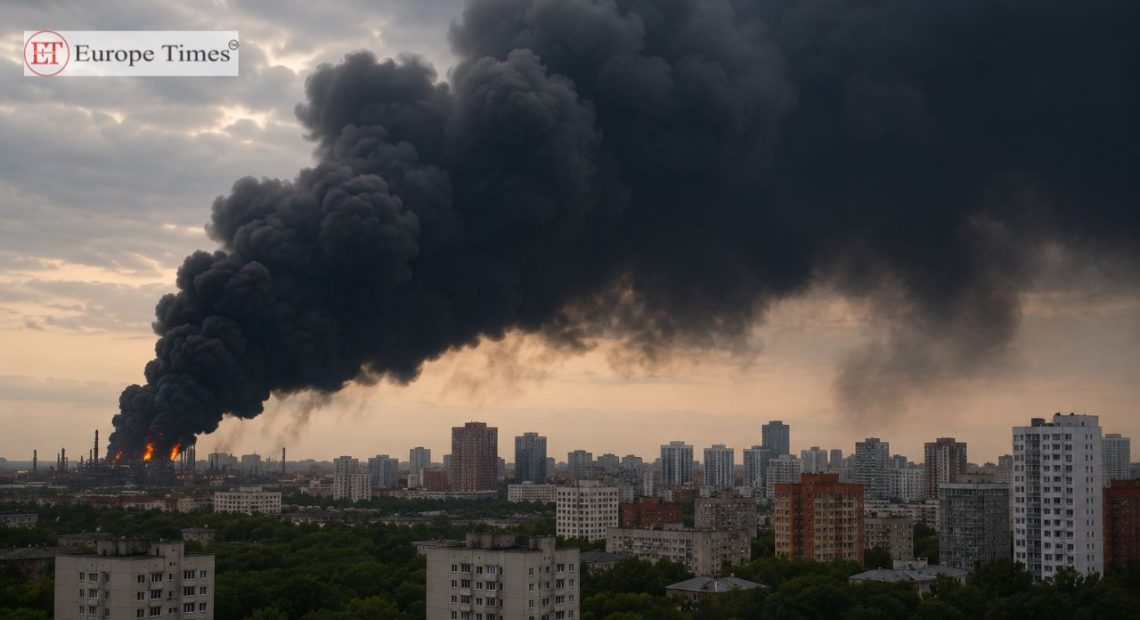
A massive Ukrainian air assault involving nearly 200 drones targeted the Russian capital, triggering a major fire at the Kapotnya oil refinery and prompting Moscow residents to report a fine, oily “black rain” coating their clothes and vehicles. The unprecedented strike, described as Kyiv’s largest drone offensive since the start of the full-scale war, wounded at least 17 people in the wider Moscow region, set ablaze a nearby shopping center, and forced the temporary closure of the city’s four major airports. While municipal authorities denied the existence of toxic fallout, the city’s official Telegram channels paradoxically warned vulnerable residents, the elderly, and families with children to urgently evacuate the affected southeastern districts and keep all windows tightly sealed.

The catastrophic bombardment caused massive explosions at the refinery—marking its third strike this month—with verified footage capturing the dramatic moment an oil silo roof was blown dozens of meters into the air. Ukrainian President Volodymyr Zelensky explicitly framed the operation as direct retaliation for a recent devastating Russian attack on Kyiv that desecrated the historic Pechersk Lavra monastery, warning, “If Ukraine burns, your Moscow will burn too.” In response, Russian Foreign Minister Sergei Lavrov threatened immediate, mass-scale military reprisals, while Russia’s defense ministry claimed to have intercepted nearly 1,000 drones and four cruise missiles across the country over a 24-hour window, including an attack in the Rostov region that left one person dead.

The sophisticated multi-wave assault bypassed extensive anti-air networks by utilizing hundreds of reconnaissance decoy drones to exhaust local defenses before the primary explosive payloads struck. The scale of the breach has raised serious domestic questions regarding the defense capabilities protecting Russia’s most critical infrastructure, shattering the illusion of safety for ordinary Muscovites living 500 kilometers from the border. As the war of attrition intensifies, Ukrainian Foreign Minister Andriy Sybiha addressed the panic on social media, telling bewildered Moscow residents that the strikes are the direct consequence of their state’s ongoing aggression and urging them to demand an end to the conflict from Vladimir Putin.

Pic courtesy: google/ images are subject to copyright