featured News Trending

Europe’s retail industry is bracing for renewed pressure as rising energy prices linked to the ongoing U.S.-Israeli conflict with Iran threaten to push operating costs higher. Retail stocks, including Zara owner Inditex and Britain’s Marks & Spencer, fell as investors warned that higher fuel and gas prices could hurt an already fragile sector. The industry has barely recovered from the inflation shock caused by soaring energy costs following Russia’s invasion of Ukraine, while consumer demand across the euro zone and the UK remains weak.

Retailers are particularly vulnerable because energy costs directly affect supply chains and store operations. Transport expenses, which account for about 5% to 10% of a retailer’s operating costs, are expected to rise as fuel prices climb. Supermarkets and shopping centres also face higher electricity expenses for refrigeration, heating, air conditioning and lighting. At the same time, rising oil prices are pushing fertiliser costs higher, adding further pressure on food producers and ultimately driving up prices across the supply chain.

Analysts warn that the sector may struggle to pass on higher costs to consumers because household spending power has already been weakened by years of inflation. Clothing retailers could be especially exposed, as fashion spending is often the first to be cut when essential costs rise. With Europe’s retail and consumer goods sector already among the most financially distressed industries, industry groups are calling on governments to limit additional inflationary pressures and protect consumers from further cost increases.

Pic courtesy: google/ images are subject to copyright

featured News Trending

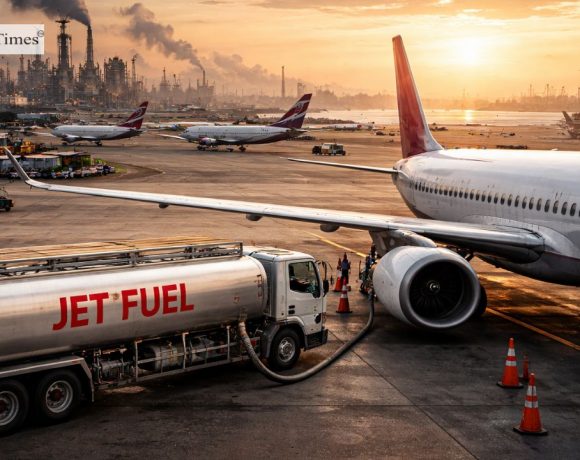
Airline shares across Asia tumbled on Monday as soaring oil prices and the escalating U.S.-Israeli war with Iran disrupted travel and raised operating costs. Crude oil jumped 20% to its highest level since July 2022, driving up jet fuel prices and intensifying financial pressure on carriers already struggling with limited airspace and supply chain challenges. Analysts warned that uncertainty for airlines has surged further amid the geopolitical crisis.

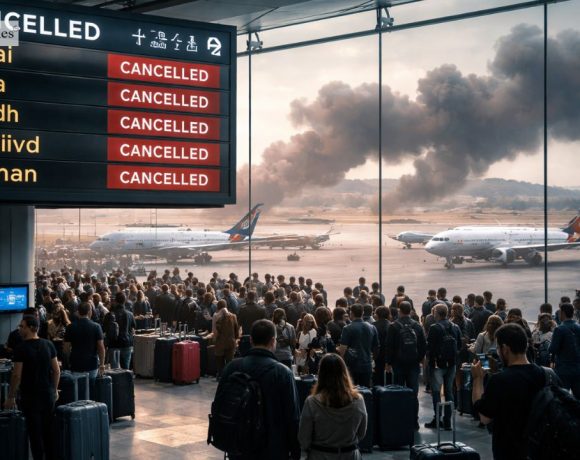
Travel disruptions have left tens of thousands of passengers stranded, with many paying premium rates for last-minute flights, overland journeys, or private charters. Since February 28, more than 37,000 flights to and from the Middle East have been cancelled. Airlines such as Qantas, Cathay Pacific, Japan Airlines, Korean Air, China Southern, and China Eastern saw share declines ranging from 4% to over 10%, while Indian carriers IndiGo and SpiceJet fell 7.5% and 5.6%, respectively.

Airlines are forced to reroute flights, carry extra fuel, and make additional refueling stops to navigate the restricted airspace safely. Governments and airports, including Australia, Oman, and Turkey, have issued travel advisories and restricted certain flights. Meanwhile, pilots report increased mental stress due to prolonged conflicts, shrinking air corridors, and military drone threats, compounding operational challenges for carriers across the region.

Pic courtesy: google/ images are subject to copyright

featured News Trending

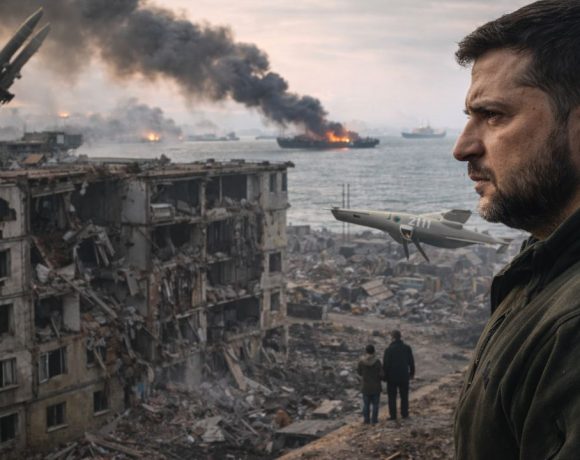
Ukrainian President Volodymyr Zelensky has cautioned that escalating conflict in the Middle East could undermine Ukraine’s ability to secure vital air defence systems as it battles Russia’s invasion. He warned that allies, particularly the United States, might divert critical weapons such as Patriot missile systems to protect their own interests or support partners in the Gulf. Zelensky also expressed concern that global attention could shift away from Ukraine, risking reduced political and military backing at a crucial stage of the war.

Kyiv fears that soaring demand for interceptor missiles in the Gulf could create shortages and drive up costs worldwide, complicating Ukraine’s efforts to defend its skies from Russia’s nightly drone and missile strikes. Zelensky recalled that during previous tensions involving Iran, deliveries of air defence systems to Ukraine slowed. At the same time, he acknowledged a potential upside: strikes on Iranian military facilities could limit Tehran’s capacity to supply drones and missiles to Russia, although Moscow now produces modified Shahed drones domestically.

Analysts suggest Russia could benefit from rising global oil prices triggered by instability in the Gulf, potentially strengthening its war finances. Some argue President Vladimir Putin is carefully avoiding deeper involvement in the Middle East to maintain relations with Washington and gain leverage in negotiations over Ukraine. In Kyiv, however, concerns are mounting that prolonged conflict elsewhere may deepen war fatigue among allies, adding to a sense of uncertainty and strain as Ukraine enters another year of full-scale war.

Pic courtesy: google/ images are subject to copyright
featured News Trending

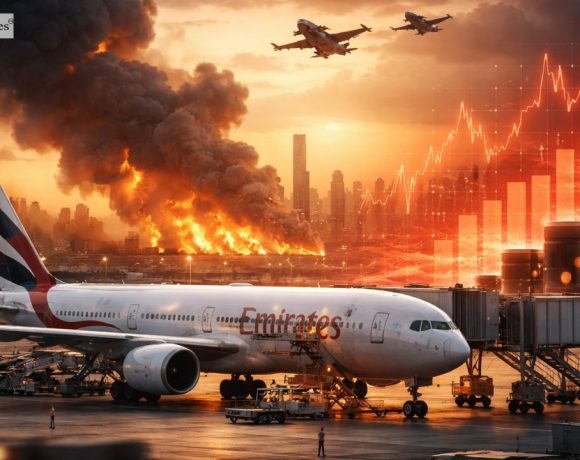
Global travel markets tumbled on Monday as escalating tensions between the U.S., Israel, and Iran forced closures of key Middle Eastern airports, including Dubai and Doha, leaving tens of thousands of passengers stranded. European travel giants such as TUI, Lufthansa, Air France-KLM, and IAG saw shares drop between 7–9%, while U.S. airlines fell around 5% in pre-market trading. Analysts cited flight cancellations, rerouting costs, and rising fuel prices as major pressures, despite hedging strategies.

Asian carriers were also affected, with airlines including Cathay Pacific, Singapore Airlines, Japan Airlines, Air China, and ANA Holdings suspending flights to the Middle East. Air India canceled routes to Europe, the U.S., and the Gulf, while Chinese airlines reported 26.5% of Middle East flights canceled for the week. Experts warned that disruptions could last for weeks, though broader schedule adjustments were still being monitored.

Passengers faced chaotic travel changes as Dubai and Doha airports, major international hubs, shut down. Travelers scrambled for alternatives, often with little guidance from airlines like Qatar Airways and Virgin Australia. The situation highlights the global ripple effect of geopolitical conflicts on aviation, travel demand, and logistics.

Pic courtesy: google/ images are subject to copyright