

featured News Trending

Germany, Austria, Greece, Denmark and the Netherlands have agreed on steps toward deals with non-EU countries to establish facilities for migrants who no longer have legal residency in the European Union. The five nations aim to reach agreements with host countries by the end of this year.

The countries, known as the Group of Five, have been working together on measures to reduce irregular immigration. Germany’s Interior Minister Alexander Dobrindt said the group wants to establish return hubs outside the EU, although no potential host countries have been named. Denmark expects to begin sending migrants to such a facility by the end of 2027.

The plan has drawn criticism from human rights organisations, which warn that offshore return centres could create serious risks for migrants and asylum seekers. The Council of Europe has also raised concerns, while the Danish Refugee Council said the focus should instead be on implementing the EU’s existing migration and asylum framework.

Pic courtesy: google/ images are subject to copyright

featured News Trending

Denmark expects to begin sending migrants without legal residency to a return hub outside the European Union by the end of 2027, Immigration and Integration Minister Morten Bodskov said on Friday. Denmark is working with Germany, Austria, the Netherlands and Greece to develop the bloc’s first partnership arrangement of this kind with a non-EU country.

The five countries are preparing concrete plans for the proposed return-centre system, although Denmark has not disclosed which country or countries could host the facilities. Bodskov said negotiations had moved closer to establishing the arrangement, which is intended to facilitate the return of migrants who do not have legal grounds to remain in the EU.

The European Parliament approved changes to EU migration rules in June aimed at speeding up deportations and allowing member states to establish detention centres abroad. Critics have warned that such arrangements could weaken protections for asylum seekers, while the Council of Europe has raised concerns over potential human rights violations, including ill-treatment and arbitrary detention.

Pic courtesy: google/ images are subject to copyright

featured News Trending

A Dutch health institute has issued a red alert over ecstasy pills shaped like US President Donald Trump after several tablets were submitted to testing centres in August. The Trimbos Institute said the pills contained a very high amount of PMMA, a substance that can cause potentially fatal overheating, and warned people not to take them.

PMMA is chemically similar to MDMA, the active ingredient in ecstasy, but its effects can take longer to appear and may lack the typical stimulating sensation associated with MDMA. The delay can increase the risk of overdose, with users potentially experiencing nausea, a rapid heart rate and convulsions hours after taking the drug. No deaths or serious illnesses linked to the pills have been reported so far.

The pills feature an image of Trump on one side, while the other is marked with “Trump” and “NL”. Although ecstasy is illegal in the Netherlands, it remains a popular recreational drug. The Trump-shaped design is also not new: German police seized around 5,000 similarly shaped ecstasy tablets in 2017.

Pic courtesy: google/ images are subject to copyright
featured News Trending

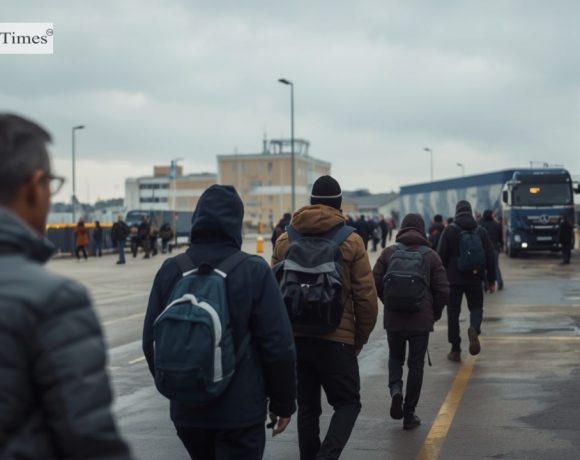
A coach carrying more than 50 high-school students from Germany crashed in the eastern Netherlands early Monday, injuring 16 people, Dutch police said. The accident occurred near Wezep, about 100 km east of Amsterdam, at around 4 a.m. local time.

Eight people sustained severe injuries, while the remaining eight suffered minor injuries and were taken to hospital. The coach was registered in Austria, according to a police spokesperson. The driver of a delivery van involved in the collision was also among those injured.

The crash caused the A28 motorway to be closed in both directions as emergency services responded at the scene. Police said the accident followed a collision between the coach and the delivery van. Further details about the cause of the crash were not immediately available.

Pic courtesy: google/ images are subject to copyright

featured News Trending

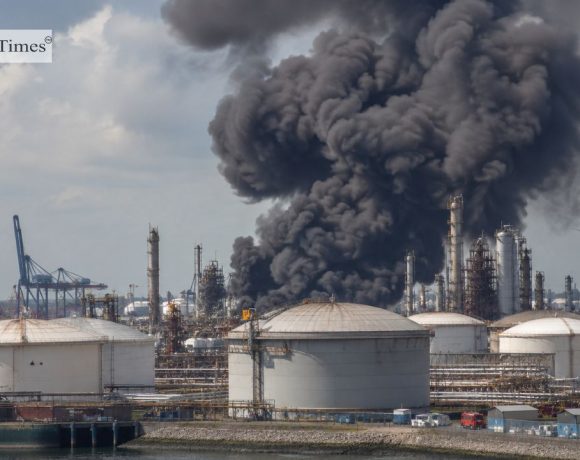
A blast at a petroleum-products storage facility in the Netherlands’ Rotterdam port killed one person and injured several others on Thursday, local officials said. The explosion occurred at around 11:30 a.m. local time, with the cause still under investigation.

Energy commodities trader Gunvor said the incident happened during maintenance work on a storage tank and that it was cooperating with authorities. Police said there was no immediate indication of sabotage, while investigators continued to examine all possible scenarios.

The blast did not affect Shell’s operations or the port’s LNG terminals. ExxonMobil temporarily shut all units at its 191,000-barrel-per-day Rotterdam refinery following a separate power outage. Rotterdam Port said there was no connection between the explosion and the power disruption.

Pic courtesy: google/ images are subject to copyright

featured News Trending

The River Rhine has fallen to record low levels in parts of Germany and the Netherlands as prolonged heatwaves and drought continue to grip Europe. Other major rivers, including the Danube and Italy’s Po, have also recorded historically low water levels, raising concerns over transportation, agriculture, and industrial operations across the continent.

The Rhine, one of Europe’s busiest commercial waterways, is facing severe navigation challenges as low water levels restrict cargo shipping. Authorities have warned that lighter vessel loads, higher transport costs, and potential supply chain disruptions could impact businesses, while the Danube’s shrinking water levels have also affected power generation in countries such as Serbia, Romania, and Hungary.

Experts say persistent high temperatures driven by climate change are increasing evaporation and making droughts more severe. The worsening conditions are threatening freshwater supplies, farming, ecosystems, and energy production, highlighting the growing economic and environmental impact of extreme weather across Europe.

Pic courtesy: google/ images are subject to copyright
featured News Trending

The Netherlands has agreed to join Pax Silica, a U.S.-led initiative aimed at strengthening and coordinating artificial intelligence supply chains among allied nations. The move marks a significant boost for Washington’s technology diplomacy efforts, even as the two countries continue to disagree over certain chip equipment exports to China.

The announcement comes as Dutch Trade Minister Sjoerd Sjoerdsma visits Washington to discuss trade issues, including concerns over the proposed U.S. Match Act. While both countries support restrictions on exporting advanced semiconductor manufacturing tools used for AI chip production, they remain divided on whether Dutch company ASML should be allowed to sell and maintain some less-advanced equipment in China.

Pax Silica seeks to enhance economic security and cooperation in critical technology sectors. Besides the Netherlands, members include Japan and South Korea, while Taiwan has endorsed the initiative without formally joining. The European Union is also expected to participate in the future, further expanding the alliance’s influence over global AI and semiconductor supply chains.

Pic courtesy: google/ images are subject to copyright

featured News Trending

The European Union has reached a political agreement on new migration rules that would allow member states to send rejected asylum seekers and visa overstayers to “return hubs” located outside the EU. The proposal, aimed at improving deportation enforcement, comes as European governments face growing political pressure to curb irregular migration despite a decline in arrivals over the past year.

Under the new framework, authorities would gain expanded powers, including longer detention periods, the collection of biometric data, searches of premises, and penalties for migrants who do not cooperate with deportation procedures. EU officials argue the measures are necessary because only a small percentage of people ordered to leave the bloc currently do so.

Human rights organizations and opposition lawmakers have strongly criticized the plan, warning it could lead to abuses and undermine migrant rights. Critics say the rules resemble aggressive immigration enforcement practices seen elsewhere and could increase detentions, home searches, and transfers to third countries with limited safeguards. The legislation still requires formal approval from EU governments and the European Parliament.

Pic courtesy: google/ images are subject to copyright

featured News Trending

NATO is set to strengthen its eastern defenses as the combined German-Dutch 1GNC corps prepares to take command of land forces in Estonia and Latvia later this year. Based in Muenster, Germany, the corps will officially become a tactical headquarters for the Baltic region by mid-2026, reinforcing NATO’s preparedness against potential Russian threats.

Currently, NATO operations across the Baltic states and northern Poland are coordinated through a single headquarters in Szczecin, Poland. Military officials say the new structure will improve rapid deployment capabilities and allow NATO to respond faster in the strategically sensitive region.

The move follows key agreements made during the 2025 NATO summit in The Hague and aligns with NATO’s Force Model introduced at the 2023 Vilnius summit. German and Dutch defense ministries stated that the additional command structure will strengthen alliance coordination and enhance regional deterrence.

Pic courtesy: google/ images are subject to copyright
featured News Trending

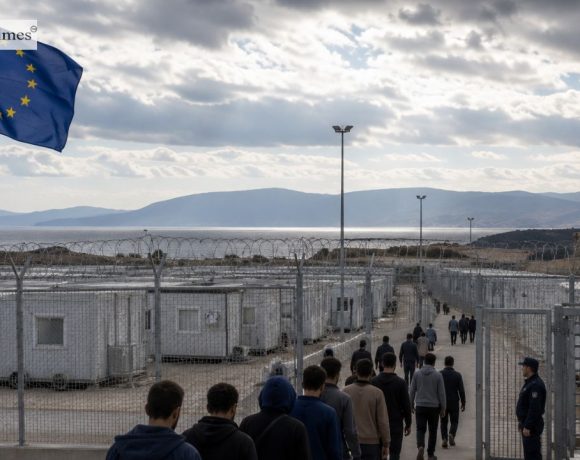
The Dutch-flagged cruise ship MV Hondius arrived at the port of Rotterdam on Monday after being at the centre of a hantavirus outbreak that killed three people. Dutch authorities prepared quarantine arrangements for the remaining 23 crew members and two medical staff still on board, while the vessel was set to undergo full disinfection procedures.

The luxury liner had around 150 passengers and crew from 23 countries when severe respiratory illnesses were first reported to the World Health Organization on May 2. The outbreak later stranded the ship near Cape Verde after passengers were denied permission to disembark. Following an evacuation coordinated through Spain’s Canary Islands, the ship continued to Rotterdam with only a skeleton crew remaining onboard.

Health officials said the outbreak involved the Andes strain of hantavirus, which is primarily spread by rodents but can rarely transmit between humans after prolonged close contact. According to the WHO, 10 cases have been reported so far, including eight confirmed infections and three deaths involving a Dutch couple and a German national. Authorities worldwide have quarantined passengers, crew and close contacts, with high-risk individuals advised to isolate for 42 days after exposure.

Pic courtesy: google/ images are subject to copyright