featured News Trending

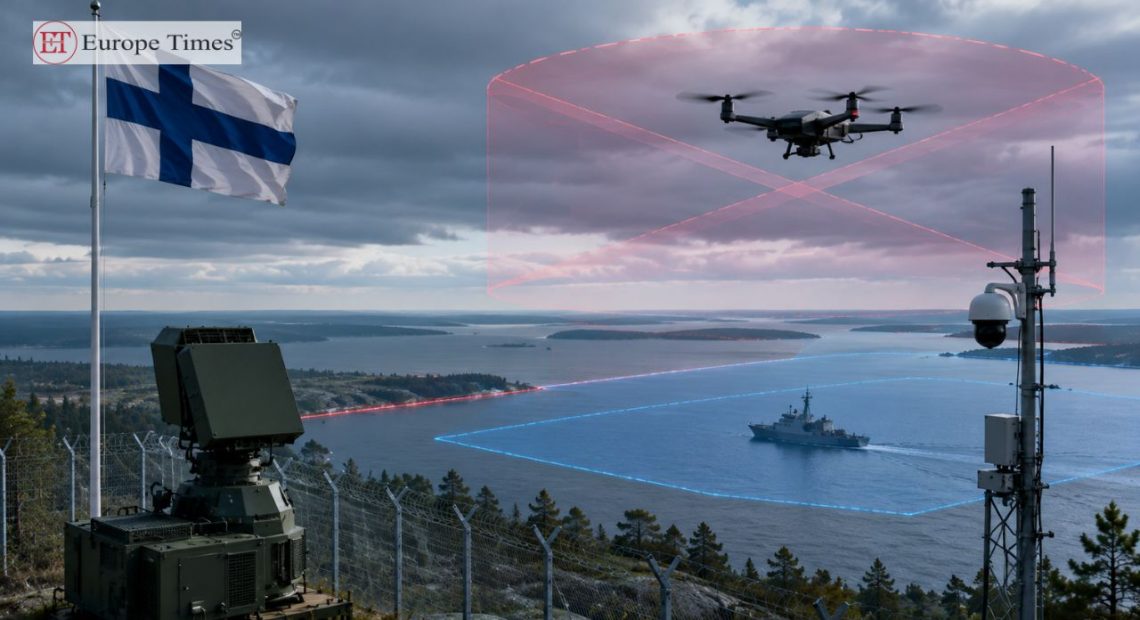
Russia has warned that Finland would become more vulnerable if it allows nuclear weapons to be stationed on its territory. The Kremlin issued the warning after Finland indicated it may lift a long-standing ban on hosting nuclear arms, a move that could enable their deployment during wartime under NATO planning.

Kremlin spokesperson Dmitry Peskov said the decision would escalate tensions in Europe and prompt a response from Russia. According to Moscow, deploying nuclear weapons in Finland would be viewed as a direct threat, forcing Russia to take countermeasures to protect its security.

Finnish President Alexander Stubb said the proposal is not due to an immediate security threat but is meant to allow Finland to participate fully in NATO’s nuclear planning. The shift reflects broader changes in European defense strategy following the war in Ukraine and renewed discussions on nuclear deterrence led by Emmanuel Macron in Europe.

Pic courtesy: google/ images are subject to copyright

featured News Trending

Russia has warned that Finland would become more vulnerable if it decides to host nuclear weapons on its territory, escalating tensions in Europe. The warning came after Finland signaled plans to lift its long-standing ban on hosting nuclear arms, a move that could allow weapons to be stationed there during wartime as part of NATO’s nuclear strategy.

Kremlin spokesman Dmitry Peskov said deploying nuclear weapons in Finland would increase risks and provoke a response from Russia. According to Moscow, such a decision would heighten security threats along their shared 1,340-km border and add to rising tensions across the European continent.

Finnish President Alexander Stubb said the policy change is aimed at allowing Finland to fully participate in NATO’s nuclear planning rather than addressing an immediate security threat. The debate comes as European countries reassess their defence strategies following the war in Ukraine and proposals by Emmanuel Macron to expand Europe’s nuclear deterrence cooperation.

Pic courtesy: google/ images are subject to copyright

featured News Trending

U.S. President Donald Trump has threatened to halt all trade with Spain after Madrid refused to allow American forces to use its military bases for operations linked to strikes on Iran. Speaking during a meeting with German Chancellor Friedrich Merz, Trump said he had instructed U.S. officials to consider cutting off economic dealings with Spain, accusing the NATO ally of failing to support U.S. security objectives and defence commitments.

The dispute follows Spain’s decision to deny the use of the Rota and Moron air bases for Iran-related military missions, prompting the relocation of U.S. aircraft stationed there. Trump also criticised Spain for not meeting proposed NATO defence spending targets and argued that U.S. law could allow trade restrictions or embargoes under emergency powers. However, legal experts noted that imposing a full trade embargo would require declaring Spain an extraordinary national security threat — a move considered difficult to justify.

Spain responded by stressing respect for international law, private business autonomy, and existing European Union trade agreements with Washington. Madrid said it was prepared to manage any economic impact while continuing to support free trade. Spain exports products such as olive oil, auto parts, steel, and chemicals to the U.S., though America currently maintains a trade surplus with Spain, highlighting the broader economic stakes of the escalating diplomatic tension.

Pic courtesy: google/ images are subject to copyright

featured News Trending

Sweden’s armed forces have confirmed that a drone jammed near the French aircraft carrier Charles de Gaulle in Malmö was Russian. The drone was detected about seven nautical miles from the carrier and was seen taking off from a nearby Russian intelligence-gathering vessel in Swedish territorial waters. The Swedish Navy acted quickly to disrupt the drone using jamming technology, which interferes with its control signals. The Kremlin has dismissed the accusation as “absurd.”

The Charles de Gaulle, visiting Sweden for the first time, is set to participate in NATO exercises across the Baltic and Atlantic regions under the La Fayette 26 mission. Swedish Prime Minister Ulf Kristersson described the incident as serious but not unexpected, suggesting it fit a broader pattern of Russian behavior. French Foreign Minister Jean-Noël Barrot called any confirmed Russian involvement a “ridiculous provocation,” while French military officials emphasized that the incident did not affect the carrier’s operations.

The episode comes amid months of reported drone sightings near military facilities across NATO member states, including Denmark and the Baltic countries. Sweden’s coast guard has also launched a separate investigation into a fuel spill in Malmö’s port, though authorities say it is unrelated to the carrier’s visit. The carrier strike group’s deployment signals France’s strengthened military engagement with northern European allies in response to growing tensions with Moscow.

Pic courtesy: google/ images are subject to copyright

featured News Trending

Germany is considering purchasing additional F-35 fighter jets from Lockheed Martin, potentially expanding its fleet beyond the 35 aircraft ordered in 2022. Sources said Berlin is in talks that could lead to buying more than 35 additional jets, which would significantly increase its reliance on U.S. military technology. Each aircraft costs over $80 million, and deliveries from the earlier order are expected to begin later this year.

The move comes as Germany and France face growing uncertainty over their joint Future Combat Air System (FCAS), a €100-billion program launched in 2017 to develop a next-generation fighter jet by 2040. Disagreements and delays have raised the possibility that the project could be abandoned. German officials, including Chancellor Friedrich Merz, have also questioned whether investing heavily in a new manned fighter jet remains practical given evolving military technology.

Expanding Germany’s F-35 fleet would mark a strategic shift toward closer defense integration with the United States and strengthen its role within NATO’s nuclear deterrence framework. The F-35 is currently the only Western aircraft certified to carry modern B61 nuclear bombs, making it essential for replacing Germany’s aging Tornado jets. While the future of the FCAS program remains uncertain, Germany and France are expected to continue cooperating on other defense areas such as drones and digital warfare systems.

Pic courtesy: google/ images are subject to copyright

featured News Trending

Germany’s Chancellor Friedrich Merz has warned that the rules-based world order “no longer exists,” urging Europe to prepare for sacrifices in an era dominated by great-power politics. Speaking at the Munich Security Conference, Merz said Europe’s freedom was no longer guaranteed and acknowledged a “deep divide” between Europe and the United States, citing growing tensions over trade, values, and security.

His remarks came amid strains in transatlantic relations following actions and rhetoric by US President Donald Trump, including threats to annex Greenland and the imposition of tariffs on European goods. Merz rejected protectionism and criticised the ideological influence of the Maga movement, while still appealing for renewed cooperation with Washington. He also revealed confidential discussions with Emmanuel Macron on the possibility of a joint European nuclear deterrent.

The conference, attended by around 50 world leaders, is also focused on the war in Ukraine, relations with China, and questions over US commitment to NATO. Addressing delegates later, Macron urged Europe to accelerate rearmament and become a stronger geopolitical actor, calling Russia’s war against Ukraine an “existential challenge.” Meanwhile, US Secretary of State Marco Rubio described the moment as a “new era in geopolitics,” underlining the scale of global realignment now under way.

Pic courtesy: google/ images are subject to copyright

featured News Trending

U.S. Secretary of State Marco Rubio has described a “defining moment” in global affairs as he arrived in Europe to lead the American delegation at the Munich Security Conference. His visit comes amid heightened transatlantic tensions following President Donald Trump’s renewed remarks about annexing Greenland. Rubio said the world was entering a “new era in geopolitics” that would require allies to reassess their roles and priorities within the evolving international order.

European leaders have responded with a mix of caution and resolve. Emmanuel Macron has urged Europe to prepare for greater strategic independence from the U.S., while NATO Secretary General Mark Rutte stressed that transatlantic ties remain vital. Danish Prime Minister Mette Frederiksen said she would meet Rubio to address U.S. comments regarding Greenland, as concerns grow over Washington’s long-term commitment to NATO and European security.

The conference agenda includes the war in Ukraine, tensions with China and prospects for a renewed U.S.-Iran nuclear deal. Ukraine’s President Volodymyr Zelensky said the gathering could yield “new steps” for shared European security. Meanwhile, German and British leaders, including Chancellor Friedrich Merz and Prime Minister Sir Keir Starmer, are expected to hold key discussions on defence spending and alliance cohesion, as policymakers navigate shifting geopolitical dynamics.

Pic courtesy: google/ images are subject to copyright

featured News Trending

Estonia’s foreign intelligence service has reported that Russia is rebuilding its military forces in response to Europe’s rearmament, though it does not plan to attack any NATO state in the near term. According to the report, Moscow aims to delay and hinder Europe’s ability to conduct independent military action, viewing European rearmament over the next two to three years as a significant concern.

The intelligence service highlighted Russia’s rapid expansion of ammunition production, which allows for stockpiling supplies for potential future conflicts while continuing operations in Ukraine. Any hypothetical attack on Estonia could involve coordinated drone operations across land, air, and sea. Estonia emphasized the need for the continent to invest in defense and internal security to deter potential aggression.

The report also noted Russia’s continued view of the U.S. as its main adversary while attempting to use diplomatic channels to ease sanctions and influence the Ukraine conflict. It highlighted Moscow’s strategic alignment with China, which could use Russian cooperation to challenge Western influence globally, particularly in the context of energy and military technology collaboration.

Pic courtesy: google/ images are subject to copyright

featured News Trending

Danish Prime Minister Mette Frederiksen travelled to Greenland’s capital Nuuk to show support for the Greenlandic people after a turbulent week marked by US President Donald Trump’s threats to take control of the island, followed by a sudden diplomatic climbdown. Trump ruled out military action and tariffs, claiming a vague “framework of a future deal” on Greenland after talks with Nato chief Mark Rutte, though details remain unclear. Frederiksen said the situation remains serious and that Denmark would now pursue a diplomatic and political path.

The visit comes amid continued uncertainty over US intentions. While Trump has spoken of “total access” to Greenland for security purposes and hinted at deploying missile defence infrastructure, he has stopped short of explicitly calling for ownership. Danish and Greenlandic leaders have repeatedly stressed that sovereignty is a red line, even as they signal openness to cooperation on Arctic security within Nato. Frederiksen also held talks with Rutte in Brussels, where both sides agreed to strengthen deterrence and defence in the Arctic.

Despite the softened rhetoric from Washington, Greenlandic leaders remain cautious. Lawmakers say trust has been damaged by Trump’s remarks and insist that decisions over minerals and land rest solely with Greenland. Former Danish officials note a shift toward de-escalation but warn the situation remains fragile, with negotiations likely to focus narrowly on security. Danish officials have underlined that any future arrangements must stay within Nato frameworks, with no transfer of territory or mineral rights on the table.

Pic courtesy: google/ images are subject to copyright

featured News Trending

Denmark and NATO have agreed on the need to enhance security in the Arctic following renewed tensions linked to U.S. President Donald Trump’s comments about Greenland, Danish Prime Minister Mette Frederiksen said on Friday. After talks with NATO Secretary General Mark Rutte, Frederiksen stressed that defence and security in the Arctic are concerns for the entire alliance, not just countries in the region. Denmark and Greenland have firmly stated that Greenland’s sovereignty is not open for discussion, while remaining willing to engage in dialogue on other issues.

Trump said on Thursday that he had secured permanent U.S. access to Greenland following discussions with Rutte, comments that heightened attention on the strategic Arctic region. Rutte later noted that NATO allies would need to intensify efforts to counter growing challenges from Russia and China in the high north. Frederiksen echoed this view, saying NATO must increase its engagement, and Rutte confirmed he was working closely with Denmark to strengthen deterrence and defence measures.

Pic courtesy: google/ images are subject to copyright