featured News Trending

A bureaucratic mishap in Italy has highlighted deeper issues hampering cooperation with China in tackling organized crime. Documents sent by Chinese authorities in response to an Italian legal assistance request were mistakenly rejected by Italy’s Justice Ministry after staff refused to pay a delivery charge, unaware of their importance. The error forced Rome to request the materials again, but they have yet to be resent, delaying progress in a case tied to an attempted murder involving Chinese nationals.

Italian prosecutors say such setbacks are worsening an already fragile relationship with Beijing, limiting efforts to combat Chinese criminal networks operating across Italy. Investigations over the past decade have uncovered activities ranging from money laundering and illegal immigration to drug trafficking and labor exploitation, yet few cases have reached court. Authorities argue that cooperation from China is essential, as many of these networks operate transnationally, but internal disagreements and political caution in Italy have slowed engagement.

Despite initial signs of collaboration—including outreach from Chinese officials and meetings in the city of Prato—progress has stalled due to concerns over jurisdiction, security risks, and cybersecurity threats. Italian officials remain wary of deeper ties, especially following alleged cyberattacks linked to China. While some see cooperation as a critical opportunity to curb organized crime, divisions within Italy’s legal and political system continue to hinder a unified approach.

Pic courtesy: google/ images are subject to copyright

featured News

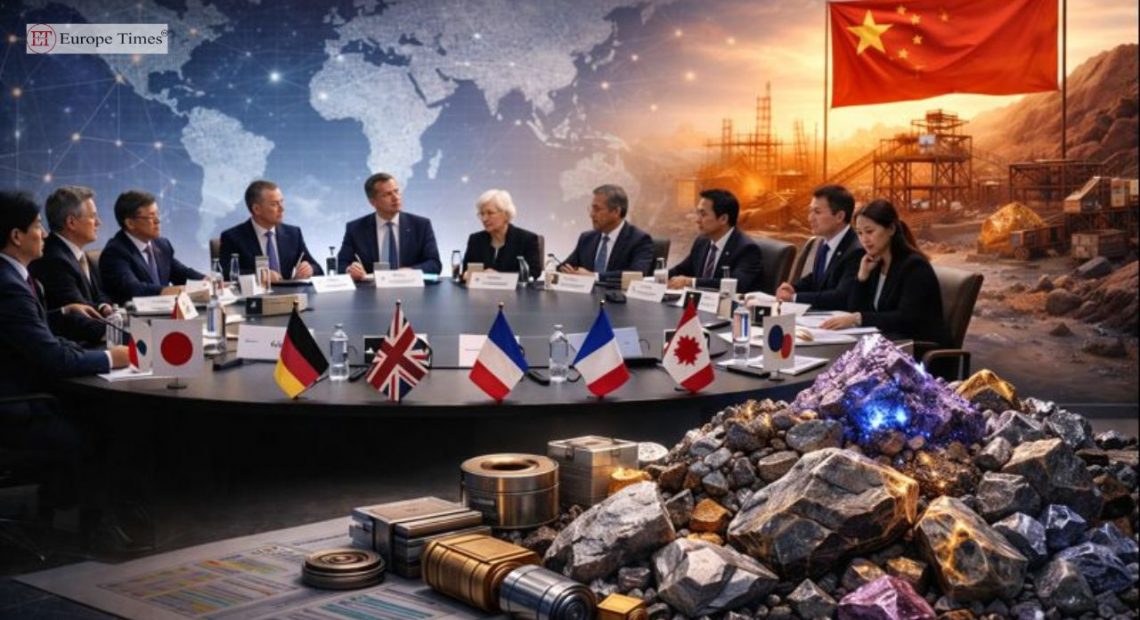
Finance ministers from the G7 countries, along with officials from Australia, Mexico, South Korea, and India, met in Washington on January 12 to discuss strategies for reducing dependence on Chinese rare earths. The meeting, convened by U.S. Treasury Secretary Scott Bessent, focused on securing alternative supply chains for critical minerals through measures such as price floors and new international partnerships. No joint statement was issued, but officials highlighted broad agreement on the urgency of diversifying sources.

Japanese Finance Minister Satsuki Katayama emphasized short-, medium-, and long-term approaches to strengthen non-Chinese rare earth supplies. Proposed measures include promoting labor and human rights standards in mineral sourcing, deploying financial incentives, trade and tariff tools, and minimum price settings. Countries participating in the discussions, along with the EU, represent 60% of global demand for critical minerals, which are vital for defense, semiconductors, renewable energy, and battery technologies.

German Finance Minister Lars Klingbeil and South Korean Finance Minister Koo Yun-cheol stressed the importance of proactive steps, including developing domestic supplies, recycling, and technology collaborations to create resilient supply chains. While participants warned against forming an anti-China coalition, they agreed on the need for urgent action to secure critical minerals and reduce vulnerability to export restrictions, particularly amid China’s recent curbs on materials destined for Japan’s military.

Pic courtesy: google/ images are subject to copyright