News Trending

In an unprecedented turn of events in Paris this weekend, a significant demonstration took place in response to the Israel-Hamas conflict, drawing representatives from major political parties. Notably, the far right, including Marine Le Pen and Jordan Bardella of the National Rally, participated, while the far left, led by Jean-Luc Mélenchon of France Unbowed, boycotted the event, citing it as a gathering for supporters of the Gaza massacre.

This shift is symbolic, considering historical political dynamics in France. Traditionally, the far right was ostracized due to its perceived anti-Republican views, especially on Jewish issues. The far left, on the other hand, despite criticism, remained part of the broader political spectrum. However, the current scenario reflects a shake-up in the political landscape.

The contemporary far right in France, now labeled as “hard right” or “national right,” has shifted focus from past anti-Semitic stances to prioritize issues such as immigration, insecurity, and Islamism, aligning with some Jewish perspectives. Meanwhile, the far left interprets the Gaza conflict through an anti-colonial lens, emphasizing solidarity with the oppressed against perceived superpower aggression.

This unusual alignment sees a party with a history of Holocaust denial, like the National Rally, supporting French Jews openly. Conversely, a party built on human rights and equality, like France Unbowed, faces accusations of antisemitism for not condemning Hamas as a terrorist organization.

While nuances exist, the overall trend shows the National Rally under Marine Le Pen successfully integrating into the mainstream, while France Unbowed under Jean-Luc Mélenchon appears to be distancing itself. Opinion polls reinforce this, with Marine Le Pen leading in presidential election polls, while Mélenchon’s support has declined.

Serge Klarsfeld, a prominent figure in the fight against antisemitism in France, acknowledges the irony. He appreciates the far right’s departure from antisemitism, seeing it align with Republican values, yet expresses sadness over the far left’s perceived abandonment of efforts to combat antisemitism.

Picture Courtesy: Google/images are subject to copyright

News Trending

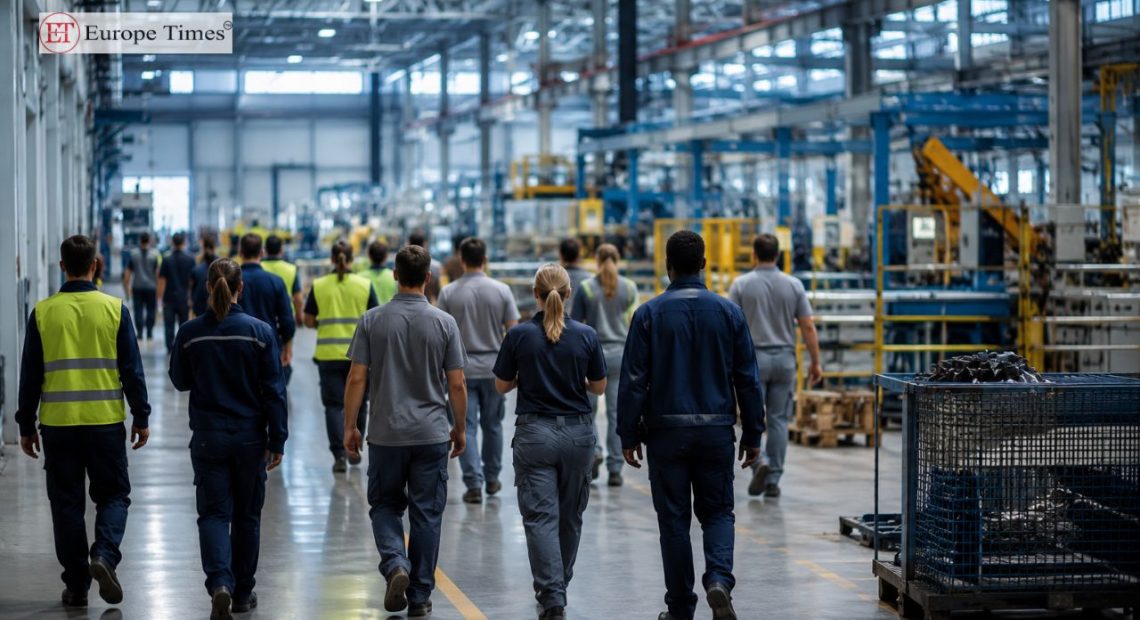
In order to draw qualified individuals to its labour market, the German government has agreed to loosen its immigration regulations. The cabinet wants a points system a la Canada to hire people who speak German or possess the necessary qualifications.

Europe’s largest economy, Germany, requires an additional 400,000 foreign workers annually, according to analysts. According to Interior Minister Nancy Faeser, the changes will result in “the most modern immigration law in Europe.”

Conservative opposition leader Friedrich Merz criticised the measures, claiming that Germany was underutilizing its potential and had more than two million unemployed people.

He claimed that while it already benefited from the EU’s commitment to freedom of movement, individuals did not want to relocate there because “the paperwork is horrendous, the taxes are too expensive.” The workforce in Germany is getting older and there are shortages in the IT, healthcare, and construction industries. Hubertus Heil, the minister of labour, estimated that by 2035, seven million skilled workers will be required.

According to Rainer Dulger of the BDA employers’ confederation, “We need people who will help us to retain our success in this country.” The three-party coalition in power seeks to enact a “opportunity card,” based on a points system, which would be used to evaluate non-EU candidates by taking into account things like education and linguistic proficiency.

The process for recognising foreign qualifications would be simplified and unskilled workers would also be allowed in to fill certain sectors.

The suggestions may not be presented to the Bundestag, the German parliament, for several months, but Robert Habeck, the minister of economics, said there is now a pressing need to address the issue: “We have been aware of the impending demographic issue for years, but not enough has been done.”

The proposed immigration reforms follow closely on the heels of ideas to speed up the citizenship process for immigrants living in Germany. Chancellor Olaf Scholz stated that certain persons might be allowed to become citizens after only three years as opposed to up to eight.

The proposed law would further shorten the five-year waiting period for applicants who can demonstrate integration and German language proficiency.

Additionally, the government intends to amend the constitution to permit dual citizenship, which is currently virtually prohibited in Germany.

This week, Mr. Scholz claimed that immigrants “are bringing Germany ahead” and that Germany had transformed into “a land of hope” for those seeking to start new lives.

Picture Courtesy: Google/images are subject to copyright