News Trending

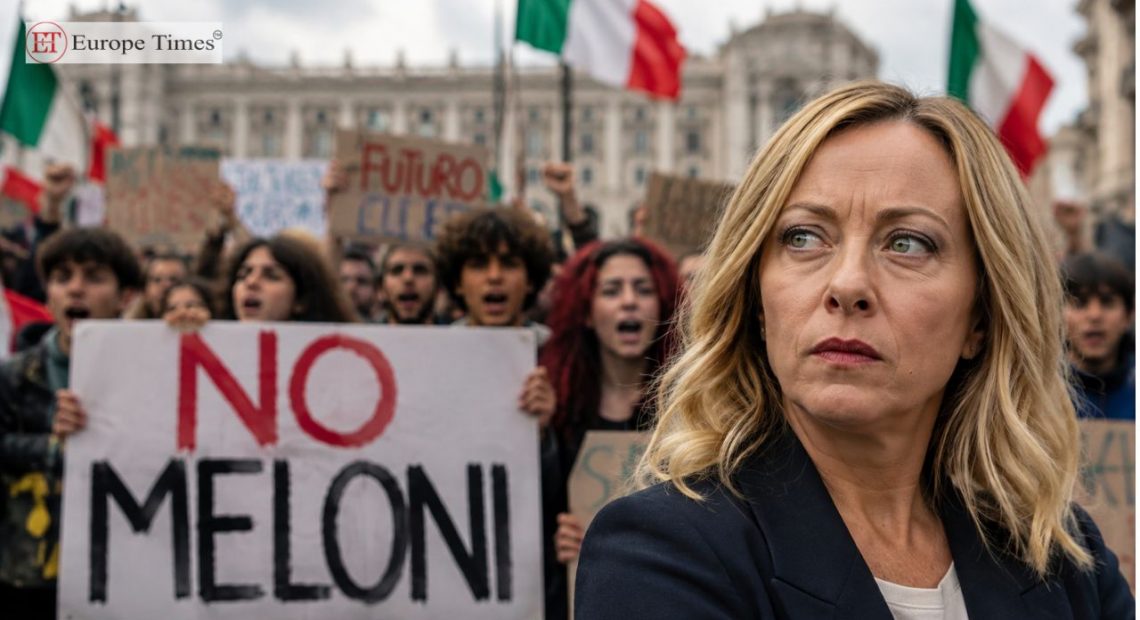
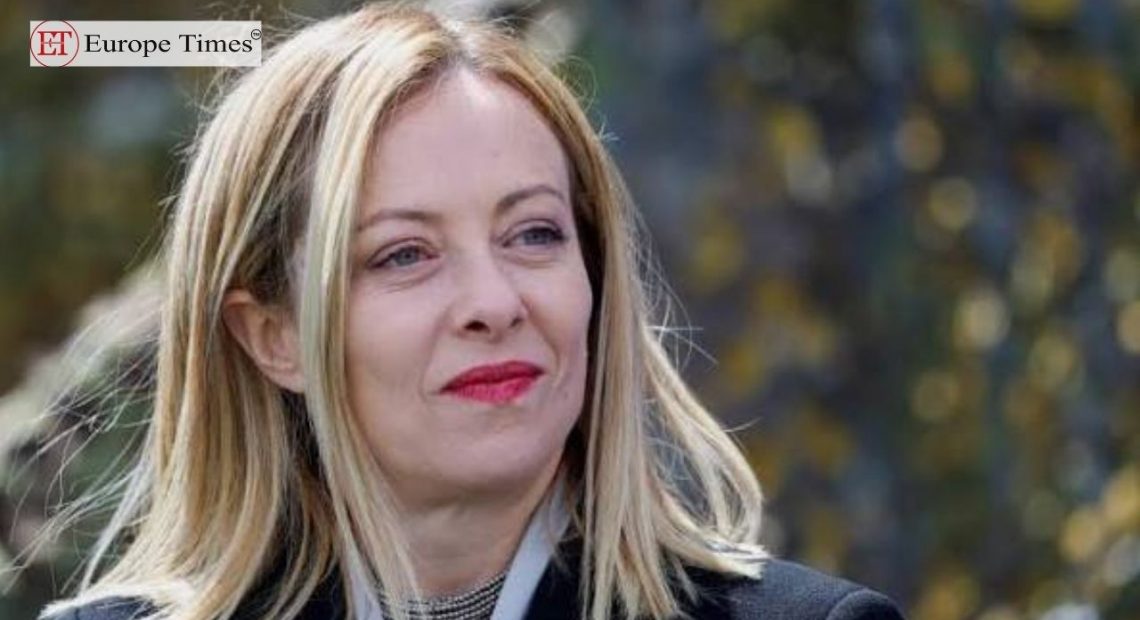
Italian Prime Minister Giorgia Meloni expressed her frustration and disappointment to her Brothers of Italy (FdI) party members following investigative reports showing the party’s youth wing engaging in fascist salutes and using racist and antisemitic language. In a letter, Meloni asserted that there is no place in FdI for racism, antisemitism, or nostalgia for totalitarian regimes, condemning such behavior as detrimental to the party’s mission.

The reports by the investigative outlet Fanpage involved undercover journalists who captured National Youth wing (Gioventù Nazionale – GN) members chanting fascist and Nazi slogans. Subsequent footage revealed members making derogatory remarks about disabled individuals, along with racist and antisemitic comments. Following the exposé, some former GN members came forward to confirm similar behaviors in local branches.

Prominent GN members implicated in the investigation, such as Elisa Segnini and Flaminia Pace, resigned from their positions after their involvement was revealed. Holocaust survivor and Italian senator Liliana Segre condemned the resurfacing of such rhetoric, expressing distress over witnessing it again at her age.

Minister Luca Ciriani of FdI claimed the reports were based on out-of-context, fragmented images taken privately, while Senate President Ignazio La Russa condemned the GN’s language, asserting it contradicted the party’s values. Although Meloni initially criticized Fanpage’s methods and questioned the fairness of targeting only FdI, she acknowledged the incompatibility of racist, antisemitic, or nostalgic ideas with the party’s principles.

Opposition senator Simona Malpezzi argued that Meloni should have praised the journalists for uncovering the serious issues within GN and distanced herself from the implicated members. Meloni had previously lauded GN’s young supporters, describing them as rare and valuable for their political engagement.

Since leading a right-wing coalition and becoming Italy’s prime minister in 2022, Meloni has faced numerous controversies related to the far-right roots of Brothers of Italy, tracing back to the Italian Social Movement (MSI) founded by Mussolini supporters post-World War II. In June, a spokesperson for a key Meloni ally resigned over racist and antisemitic remarks in wiretapped communications.

Picture Courtesy: Google/images are subject to copyright

featured News Trending

EU leaders have nominated Ursula von der Leyen, the current European Commission head, for a second five-year term during a summit in Brussels. Estonian Prime Minister Kaja Kallas has been selected as the EU’s next foreign affairs chief, and former Portuguese Prime Minister António Costa has been chosen as the next chairman of EU summits. All three candidates are from centrist, pro-EU factions.

The European Parliament will vote on the nominations of Ms. von der Leyen and Ms. Kallas. Von der Leyen is from Germany’s centre-right, Costa is a socialist, and Kallas is a liberal. This leadership package represents continuity for the EU amid geopolitical uncertainty, despite a recent surge in support for hard-right parties in the European Parliament elections.

Italy’s Prime Minister Giorgia Meloni has shown resistance, stating that the plans ignore the successes of hard-right parties like her own. Meloni, who heads the right-wing European Conservatives and Reformists (ECR) bloc, abstained from voting for von der Leyen and voted against Costa and Kallas. Despite the ECR becoming the third largest group in the European Parliament, Meloni was not included in the nomination discussions.

Meloni expressed frustration, arguing that European voters had asked for a different direction. Without naming names, she criticized those who believe in oligarchy as the only acceptable form of democracy.

Von der Leyen will need 361 votes from the European Parliament for confirmation. Support from the centre-right European People’s Party, liberals, and social democrats could give her enough backing, but it will be close. Diplomats suggest that von der Leyen might seek Meloni’s support by offering Italy a powerful commission post.

Von der Leyen expressed gratitude for her nomination and highlighted the importance of supporting Ukraine in its conflict with Russia, a task that may become more complex if Donald Trump wins the upcoming US presidential election.

Kallas, known for her strong support of Ukraine and criticism of the Kremlin, acknowledged the significant responsibility of her new role. Some critics are concerned that her firm stance on Russia could pose challenges.

Costa praised his colleagues and emphasized the importance of European unity and resilience. He will replace Belgium’s Charles Michel, and Kallas will succeed Spain’s Josep Borrell.

Picture Courtesy: Google/images are subject to copyright

featured News Trending

Florence has elected its first female mayor, Sara Funaro, who decisively defeated her right-wing opponent. A local councillor from the centre-left Democratic Party (PD), Funaro secured governance of the Italian city with over 60% of the vote. Her opponent, Eike Schmidt, a former director of Florence’s Uffizi Gallery and a candidate backed by Italy’s far-right coalition government, garnered 39%.

This election concluded a series of votes in which centre-left parties claimed victories in five regional capitals. As the vote count progressed, Funaro expressed her excitement and dedicated her victory to her grandfather, Piero Bargellini, known for his leadership during the 1966 Florence flood. Despite his loss, Schmidt, a political newcomer born in Germany, stated that his campaign performed well and remained optimistic.

Funaro’s win is part of a broader success for Italy’s centre-left alliance, led by the PD. In recent votes, the alliance maintained control of Bergamo in Lombardy and Bari in Puglia, and captured Cagliari, Sardinia’s capital, and Perugia in Umbria from Prime Minister Giorgia Meloni’s far-right ruling coalition. This follows significant gains by the right in the recent European Parliament elections.

Picture Courtesy: Google/images are subject to copyright

News Trending

Two contrasting accommodation options were presented for the G7 summit in Puglia, Italy: the luxurious Borgo Egnazia resort, known for hosting celebrities like Madonna and the Beckhams, and a deteriorating ship moored off Brindisi for the 2,600 police officers, criticized for its appalling conditions. The resort houses world leaders, while the ship, costing the Italian government €6m and now under fraud investigation, exemplifies the disparity in treatment.

Italian Prime Minister Giorgia Meloni, buoyed by her party’s success in the European elections, hosts the summit, highlighting Italy’s newfound political stability compared to other G7 nations facing political turmoil. Meloni’s government is portrayed as the strongest amidst leaders like Biden, Sunak, and Trudeau, who are struggling domestically.

Low expectations surround the summit due to the precarious political climate in many G7 countries. However, a significant plan to loan Ukraine $50bn from frozen Russian assets is anticipated. Additionally, Sunak will announce substantial support for Ukraine’s energy and humanitarian needs.

Sessions will address the climate crisis, investment in Africa, the Middle East ceasefire, and AI regulation, with Pope Francis attending for the first time. Efforts to broaden global consensus include inviting leaders from Brazil, Turkey, Saudi Arabia, and Algeria. Locals in Puglia, like ice-cream maker Vincenzo Iannacone, express pride and excitement for the summit, hoping it brings positive attention to their region.

Picture Courtesy: Google/images are subject to copyright

News Trending

France’s President Emmanuel Macron has called a snap parliamentary election after a significant defeat by the far-right National Rally party, led by Marine Le Pen and Jordan Bardella, in the European elections. This unexpected move came as exit polls indicated that the National Rally secured over 30% of the vote, double that of Macron’s centrist Renaissance party. While France’s far-right victory was notable, the broader European election narrative saw the centre-right parties strengthening their hold on the EU Parliament, achieving successes in countries like Germany, Greece, Poland, and Spain.

Ursula von der Leyen, head of the European Commission and a prominent figure in the centre-right European People’s Party (EPP), highlighted that despite gains by both far-left and far-right factions, the centre-right remained a stabilizing force. Von der Leyen reaffirmed the EPP’s commitment to alliances only with the Socialists & Democrats and the liberal Renew group, excluding any collaboration with far-right groups.

Germany’s elections saw the conservative CDU come out on top, whereas Chancellor Olaf Scholz’s SPD experienced its worst-ever European election result, finishing behind the far-right Alternative for Germany (AfD). In Italy, Giorgia Meloni’s far-right Brothers of Italy continued their dominance, while in Austria, the Freedom Party was poised for an unprecedented victory in the European vote.

Elsewhere, Hungary witnessed a new challenge to Prime Minister Viktor Orban’s dominance with the rise of Peter Magyar’s centre-right Tisza party. Spain’s centre-right Popular Party narrowly defeated the Socialists, while far-right Vox came in third. In Denmark, the opposition Green-Left party achieved a surprise victory, and in Slovakia, the liberal Progressive Slovakia party triumphed over the ruling Smer party.

Overall, while the far-right made notable gains in specific countries, particularly France, their surge was less pronounced across Europe than anticipated. The centre-right’s consolidation of power, however, underscores a continuing preference for more moderate political forces in the EU.

Picture courtesy: Google/images are subject to copyright

News Trending

Italians have begun voting on the third of four days of European elections taking place across 27 EU nations. Although these votes are for the next European Parliament, Italian Prime Minister Giorgia Meloni hopes the outcome will strengthen her position in Italian politics. She has even encouraged voters to “just write Giorgia” on their ballots.

Most EU countries are voting on Sunday after several weeks of turmoil during which two European leaders and other politicians were physically attacked. On Friday evening, Denmark’s Prime Minister Mette Frederiksen was assaulted in the street in Copenhagen ahead of Sunday’s Danish vote. She sustained minor whiplash, according to her office, and a suspect has been detained.

European leaders have expressed their shock at the latest attack amid elections involving around 373 million European voters. Last month, Slovak Prime Minister Robert Fico survived an assassination attempt and was only recently discharged from the hospital. Several German politicians have also been targeted.

While these elections are intended to be separate from national politics, the reality is often different, especially in Italy. Meloni, who leads the far-right Brothers of Italy (FdI), was appointed prime minister in 2022. She has taken the unusual step of putting her name at the top of her party’s ballot, despite having no plans to take a seat in the European Parliament.

Since becoming prime minister in 2022, Meloni has enjoyed steady poll ratings, helped by a fragmented centrist and left-wing opposition and the decline of her junior coalition partner, Matteo Salvini’s League party. To counter this trend, Salvini has shifted his party’s rhetoric further to the right. The League’s election posters, which criticize EU-backed initiatives like electric cars and tethered caps on plastic bottles, have drawn both ridicule and attention.

Salvini’s lead candidate, Roberto Vannacci, has also drawn attention. The army general, dismissed after self-publishing a book with homophobic and racist views, has doubled down on these views since becoming a League candidate. His messages are frequently amplified by the media, which could translate into votes for the League. If not, Salvini’s leadership could be in jeopardy.

Similarly, the left-wing Democratic Party (PD) leader Elly Schlein must match the 19% vote share from the 2019 elections to maintain her position. Further to the left, Ilaria Salis, a self-described antifascist activist detained in Hungary since 2023, is running on the Left/Greens platform.

These European elections hold significant importance. While the Netherlands voted on Thursday, with exit polls suggesting a tight race between a left-green alliance and Geert Wilders’ Freedom Party, other countries like Ireland, the Czech Republic, Slovakia, Latvia, and Malta are voting across the weekend. Germany is voting on Sunday, with the center-right CDU/CSU expected to surpass Chancellor Olaf Scholz’s Social Democratic Party.

In France, President Emmanuel Macron’s Renaissance party is competing for second place with the Socialist party, trailing Marine Le Pen’s National Rally (RN). Macron, warning of the threat to Europe from the surge of the right, has called for a high turnout. Slovak Prime Minister Robert Fico, recovering from surgery after an assassination attempt, has recently criticized Slovakia’s liberal opposition. Hungary’s Viktor Orban, opposing EU support for Ukraine, warned that Europe is nearing a point of no return in preventing conflict from spreading beyond Ukraine’s borders.

Italy’s polls will be the last to close at 23:00 (21:00 GMT) on Sunday, with initial projections combining provisional results and estimates expected shortly after.

Picture Courtesy: Google/images are subject to copyright

News Trending

Giorgia Meloni, the Prime Minister of Italy, is pursuing €100,000 (£85,374) in damages after deepfake pornography featuring her was shared online. Scheduled to appear in court in Sassari on July 2nd, Meloni aims to testify against the production of these videos, where her face was digitally imposed onto explicit content. The culprits, a 40-year-old man believed to have created the videos and his 73-year-old father, are currently under investigation and face defamation charges.

Italian authorities tracked down the individuals through the mobile device used to upload the content. The distribution of such material constitutes a criminal offense in Italy. The videos, which circulated widely on a US pornographic website, prompted Meloni’s legal team to pursue damages. If successful, the €100,000 compensation will be directed to a fund supporting women who have suffered from male violence.

Maria Giulia Marongiu, Meloni’s lawyer, emphasized the symbolic nature of the requested sum, intending to encourage victims to come forward and challenge such abuses of power. Notably, the deepfake videos predate Meloni’s appointment as prime minister in 2022. Unfortunately, instances of deepfake pornography have become increasingly prevalent online, causing significant distress to victims whose likenesses are manipulated in explicit contexts.

Picture Courtesy: Google/images are subject to copyright

News Trending

Italy has expressed strong concern and summoned Hungary’s ambassador after images of Ilaria Salis, a 39-year-old Italian woman, shackled in a Budapest court triggered public and political outrage. Salis, accused of participating in violent assaults against neo-Nazi sympathizers in February 2023, faced restraints on her hands and feet during the court appearance. The attacks occurred following a neo-Nazi rally in Budapest, with alleged far-left militants assaulting individuals after the “Day of Honour” rally.

A video showing anti-fascist activists beating a Hungarian person circulated widely in Hungary, leading to Salis’ arrest along with two German nationals. Salis faces charges of conspiracy to commit assault causing grievous bodily harm, with a potential 11-year jail term if convicted. Her case gained attention in October when her father highlighted the harsh conditions of her detention. Images of Salis in shackles during the court hearing sparked further outrage, with an online petition garnering over 90,000 signatures demanding her return to Italy.

Italian Foreign Minister Antonio Tajani summoned the Hungarian ambassador to inquire about the perceived violation of fundamental norms on detainee conditions. While Prime Minister Giorgia Meloni, an ally of Hungarian Prime Minister Viktor Orban, has not commented, there are calls for her intervention. The Five Star Movement leader urged Meloni to prioritize the rights and dignity of Italians over political alliances.

Salis’ lawyer criticized the scenes in court as a clear violation of the European Convention on Human Rights. Allegations of unsanitary conditions in Hungarian prisons were contested by the prison service, emphasizing high hygiene standards. However, human rights groups reported overcrowded and understaffed prisons in Hungary.

The case, dominating Italian headlines, has also attracted attention in Hungary and Europe. Concerns were raised about the use of physical restraints in court and the perceived repressive nature of Hungary’s judiciary system. The president of the European Parliament Committee on Civil Liberties deemed the scene in the EU state’s court as “appalling.” Salis’s lawyer expressed pessimism about the trial’s outcome and called for Salis to serve pre-trial detention in Italy, citing EU law allowing citizens to be held on house arrest in their resident member country.

Picture Courtesy: Google/images are subject to copyright

News Trending

Italian Junior Culture Minister Vittorio Sgarbi is facing accusations of possessing and displaying a stolen 17th-century painting, “The Capture of Saint Peter,” which was reported stolen in 2013. Sgarbi, a well-known art critic and TV personality, is under investigation for laundering stolen goods as he included the painting in a 2021 exhibition. The artwork, by Rutilio Manetti, a follower of Caravaggio, used to be in a castle in Piedmont. Sgarbi is also accused of altering the painting by adding a candle to conceal its origin. He claims to have found the original while restoring a villa owned by his mother over 20 years ago, asserting that the stolen painting was a copy.

The allegations emerged in an investigation by Italian TV broadcaster Rai’s program ‘Report.’ The owner of the castle reported the theft, stating that the canvas was cut from the frame in 2013. It was revealed that a friend of Sgarbi had shown interest in buying the work before the theft. Another friend allegedly sent a damaged painting of “The Capture of Saint Peter” to a restorer, matching the cut piece from the stolen canvas. When displayed by Sgarbi in 2021, the painting had the added candle.

Sgarbi is also facing accusations related to another seized painting attributed to Valentin de Boulogne, valued at €5m (£4.3m), with investigations for illegal export. Sgarbi claims it’s a copy and not his property. Opposition parties are calling for his dismissal, and the Five Star Movement plans to present a motion in parliament. This comes as the second embarrassment for the Italian government this year, following an MP being investigated for taking a handgun to a New Year’s Eve party. Prime Minister Giorgia Meloni suspended the MP. As the European elections approach, political tensions may rise, and scandals could impact Italian politics.

Picture Courtesy: Google/images are subject to copyright

News Trending

Italian Prime Minister Giorgia Meloni recently confirmed her separation from her long-time partner, Andrea Giambruno, following the broadcast of off-air comments made by Giambruno on a TV show. The announcement was made on social media, where Meloni acknowledged the divergence of their paths and expressed gratitude for their time together and for their daughter, Ginevra.

Giambruno, a TV host, faced backlash after his off-air remarks were aired on a satirical program. The comments included flirtatious remarks to a female colleague and explicit references to group sex, causing controversy. Notably, Giambruno previously stirred controversy with remarks about a gang-rape case, implying that certain precautions could have prevented the incident. Meloni defended him then, claiming his words were misinterpreted, and requested not to be held responsible for his comments as he was simply doing his job as a journalist.

Meloni, known for her adherence to traditional Catholic family values and her opposition to same-sex parenting, received support from her allies following the announcement of her separation. Matteo Salvini, her deputy, and Foreign Minister Antonio Tajani both offered their support publicly. The network Mediaset, where Giambruno works, was formerly owned by the late Silvio Berlusconi, who was criticized for perpetuating a culture of sexism and machismo in Italian television.

Picture Courtesy: Google/images are subject to copyright