featured News Trending

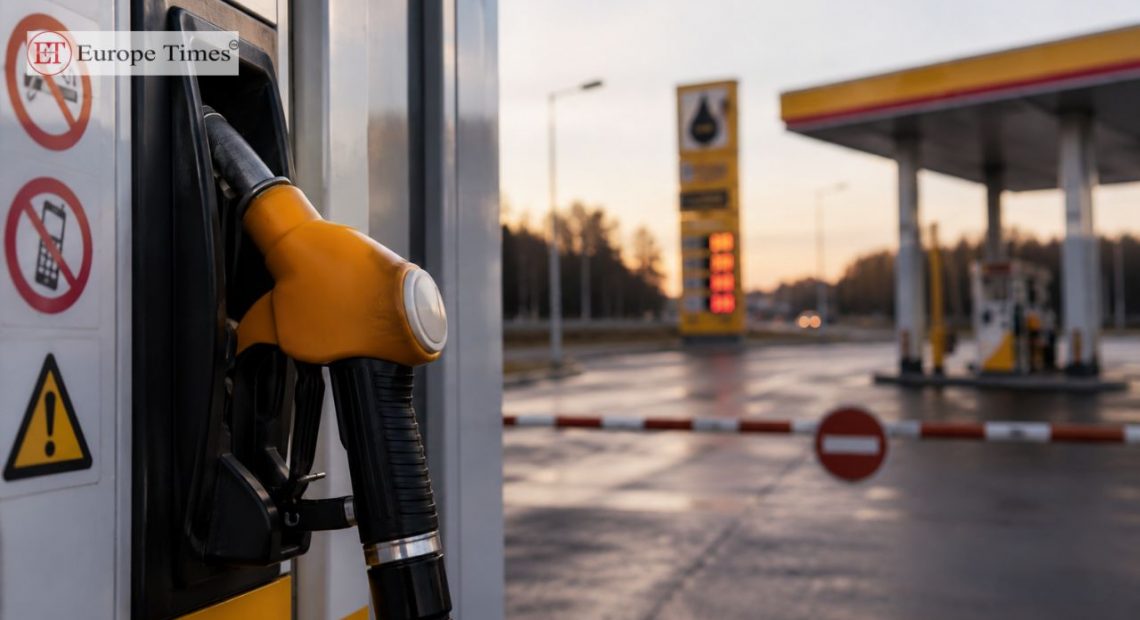
Sweden has issued an early warning about a possible shortage of jet fuel, citing disruptions linked to the ongoing tensions in the Middle East. Energy Minister Ebba Busch said the alert is based on assessments from the national Energy Agency, highlighting growing concerns over fuel supply stability.

Officials warned that in a worst-case scenario, the country could face rationing of aviation fuel if supply constraints worsen. Caroline Asserup noted that the outlook will largely depend on how global markets respond and adjust to the current disruptions.

While no immediate shortages have been confirmed, authorities are closely monitoring the situation as geopolitical tensions continue to impact energy supply chains. The warning underscores the vulnerability of aviation fuel markets to international conflicts and shifting trade dynamics.

Pic courtesy: google/ images are subject to copyright

featured News Trending

Europe could face a severe jet fuel shortage within weeks as disruptions in Middle East supply chains intensify, according to the International Energy Agency. The closure of the Strait of Hormuz has sharply reduced exports, pushing prices to record highs and raising concerns that stocks could hit critical levels by June if alternative supplies are not secured.

The IEA warned that even with increased shipments from countries like the US and Nigeria, Europe may only be able to replace just over half of its lost imports. Since the region typically relies on the Middle East for around 75% of its jet fuel, analysts say shortages could begin to affect airports, potentially leading to flight cancellations, especially during the busy summer travel season.

While officials and industry groups say there is no immediate disruption, they acknowledge growing risks ahead. Airlines and governments are exploring contingency measures as rising fuel costs already impact operations. If supply constraints persist, smaller airports could be hit hardest, even as major hubs are prioritized for limited fuel availability.

Pic courtesy: google/ images are subject to copyright

featured News Trending

Tensions escalated sharply as Iran warned it would retaliate against Gulf ports following the U.S. military’s decision to impose a naval blockade on vessels linked to Iranian ports. The move comes after talks failed to secure a lasting ceasefire in the ongoing conflict, raising fears of renewed escalation. Tehran called the blockade illegal and warned that if its ports were targeted, no port in the Gulf region would remain safe.

The blockade, enforced across Iranian ports along the Arabian Gulf and Gulf of Oman, has already disrupted global oil flows. Iran has restricted passage through the Strait of Hormuz, allowing only controlled transit, while the U.S. has vowed to block ships paying Iranian tolls. Two Iranian-linked tankers departed just before the blockade began, underscoring the urgency among traders and operators.

Global markets reacted swiftly, with oil prices surging above $100 a barrel amid fears of prolonged supply disruption. With the fragile ceasefire at risk and negotiations stalled, both sides remain entrenched, raising concerns of further economic fallout and instability in global energy markets.

Pic courtesy: google/ images are subject to copyright

featured News Trending

The Irish government has announced plans to reduce excise duty on petrol and diesel in an effort to ease pressure on motorists facing sharp fuel price increases linked to ongoing conflict in the Middle East. The temporary measures, expected to take effect from midnight Wednesday until the end of May, will lower diesel duty by 20 cents per litre and petrol by 15 cents per litre, pending cabinet approval.

Fuel prices have surged in recent days, with diesel rising from around €1.80 per litre to between €2.20 and €2.30, while petrol prices climbed close to €2 per litre. In addition to the duty cuts, authorities are preparing a backdated diesel rebate scheme aimed at supporting hauliers and bus operators, along with reductions for agricultural and green diesel users.

The broader support package, estimated to cost €235 million, will also include targeted energy assistance for pensioners, carers, and people with disabilities. Irish Prime Minister Micheál Martin noted that recent diplomatic developments involving the United States and Iran had helped lower crude oil prices but declined to confirm whether the changes would alter the government’s planned relief measures.

Pic courtesy: google/ images are subject to copyright

featured News Trending

Slovenia has become the first EU country to introduce fuel rationing in response to supply disruptions following US-Israeli strikes on Iran and subsequent regional tensions. Private motorists are now limited to 50 litres per day, while businesses and farmers can purchase up to 200 litres. Petrol stations are tasked with enforcing the rules, and stricter limits are encouraged for foreign drivers.

The move comes as “fuel tourism” increases, with drivers from neighbouring Austria crossing into Slovenia to take advantage of lower, regulated prices. While Austria sees petrol prices approaching €1.80 per litre and diesel near €2.00, Slovenian rates remain capped at €1.47 and €1.53, respectively, though an increase is planned.

Reactions among locals are mixed: some view the foreign visitors as a nuisance, causing long queues, while others appreciate the economic boost they bring to shops and restaurants. Prime Minister Robert Golob reassured citizens that Slovenia’s fuel reserves are sufficient and there will be no shortage despite the rationing.

Pic courtesy: google/ images are subject to copyright

featured News Trending

Iran launched drone attacks on Kuwait’s Mina Al-Ahmadi oil refinery, causing fires and further straining global energy supplies, while Israel killed a spokesperson for Iran’s Revolutionary Guards in a targeted strike in Tehran. The ongoing U.S.-Israeli conflict with Iran has already disrupted oil and LNG flows through the Strait of Hormuz, affecting roughly 12% of global demand and sending Brent crude prices to $108 per barrel.

Air raids and missile barrages have shaken cities in Israel and Iran, with Israel targeting Iranian government facilities and Iran retaliating with strikes on multiple energy assets in the Gulf. The conflict has displaced millions and killed thousands, heightening tensions in the region and drawing warnings from European allies who emphasize de-escalation and the protection of international shipping lanes.

Despite U.S. and Israeli efforts to disable Iran’s missile and nuclear capabilities, Iran continues production and attacks, highlighting a complex war with no clear end. The crisis has severe economic implications, as energy disruptions are expected to impact supply chains for months or even years, prompting U.S. considerations for deploying additional troops to the region.

Pic courtesy: google/ images are subject to copyright

featured News Trending

Russia has raised concerns over what it describes as a surge in Ukrainian attacks on key gas infrastructure, particularly compressor stations operated by Gazprom. According to Moscow, these facilities support the TurkStream and Blue Stream pipelines, which transport natural gas across the Black Sea to Turkey and onward to parts of Europe. While recent attacks were reportedly repelled, officials say their increasing frequency poses risks to critical energy routes.

The pipelines in question are among Russia’s last operational gas links to Europe, supplying countries such as Hungary, Slovakia, and Serbia. The warning comes at a time when global energy markets are already under strain due to geopolitical tensions, including conflict in the Middle East that has driven gas prices higher.

Kremlin spokesperson Dmitry Peskov said the attacks threaten both infrastructure and broader energy stability, calling them destabilizing during an already volatile period. Ukraine has not commented on the claims, though it has previously targeted Russian energy assets as part of its strategy, while Russia continues strikes on Ukraine’s power grid.

Pic courtesy: google/ images are subject to copyright

featured News Trending

A Russian drone attack in Bohodukhiv, Kharkiv region, killed three young children and their father, while injuring the pregnant mother, local officials reported. The victims were twin boys Ivan and Vladyslav, aged two, and their one-year-old sister Myroslava, along with their 34-year-old father, Hryhoriy. The mother, Olha, 35, sustained minor burns but survived. The family had recently relocated from a town near the Russian border, seeking refuge from ongoing shelling.

The attack marks a renewed wave of Russian strikes following a short pause, with the Kharkiv region under near-daily assaults. Regional authorities described the incident as “brutal,” noting that tens of thousands of residents face severe power outages and lack of heating, worsened by Moscow targeting energy and transport infrastructure.

In parallel, Russian forces hit other areas including Slovyansk, causing further casualties, while Ukraine launched retaliatory drone attacks on Volzhsky in Russia’s Volgograd region. Ukrainian President Volodymyr Zelensky emphasized the continued strain on civilians and noted ongoing international efforts, including upcoming U.S.-hosted talks, to end the war that began in February 2022.

Pic courtesy: google/ images are subject to copyright

featured News Trending

Kyiv residents are struggling to cope with freezing temperatures after a Russian drone strike ripped open a high-rise apartment building, shattering windows and cutting off basic services. Nataliya Revutska, a 58-year-old resident, said her flat remains partly habitable despite severe damage, but there is no water or electricity. The strike exposed families to harsh January winds as temperatures dropped to around minus 10 degrees Celsius.

The attack was part of a wider overnight assault in which Russia launched 242 drones and 36 missiles across Ukraine, killing four people and further straining the country’s energy system. Ukrainian officials said they were working urgently to restore power to about 500,000 consumers and heating to thousands of buildings in Kyiv. In western Ukraine, a hypersonic missile strike near the EU border added to concerns over escalating pressure on civilian infrastructure.

At the damaged Kyiv building, residents cleared debris amid falling snow and the hum of generators. Twelfth-floor resident Oleg Marasin described chaos and casualties after a second strike hit medics nearby. Despite the destruction and ongoing outages, residents told Reuters they remain determined to endure. “We’ve already survived,” Revutska said. “We’ll continue living somehow.”

Pic courtesy: google/ images are subject to copyright

featured News

Ukraine will begin importing US liquefied natural gas through Greece this winter, using the Trans-Balkan pipeline to help stabilise its energy supply amidst ongoing Russian attacks. The announcement followed a meeting in Athens between Ukrainian President Volodymyr Zelensky and Greek Prime Minister Kyriakos Mitsotakis, who emphasised Greece’s growing role in supplying American LNG to reduce regional dependence on Russian gas.

Zelensky said the first deliveries are expected in January, noting that Ukraine urgently needs external supplies to offset the damage inflicted on its domestic gas infrastructure. Kyiv has allocated close to €2bn—backed by European Commission guarantees and bank financing—to secure gas imports through March. The deal comes as the EU pushes toward a complete halt of Russian gas imports by 2027.

During his European tour, Zelensky also met French President Emmanuel Macron and signed a letter of intent for Ukraine to potentially acquire up to 100 Rafale fighter jets, along with air defence and radar systems. The visit highlighted Ukraine’s dual battlefronts—strengthening its military capabilities while preparing for a harsh winter as Russia intensifies attacks on energy facilities and multiple regions report continued casualties.

Pic Courtesy: google/ images are subject to copyright