featured News

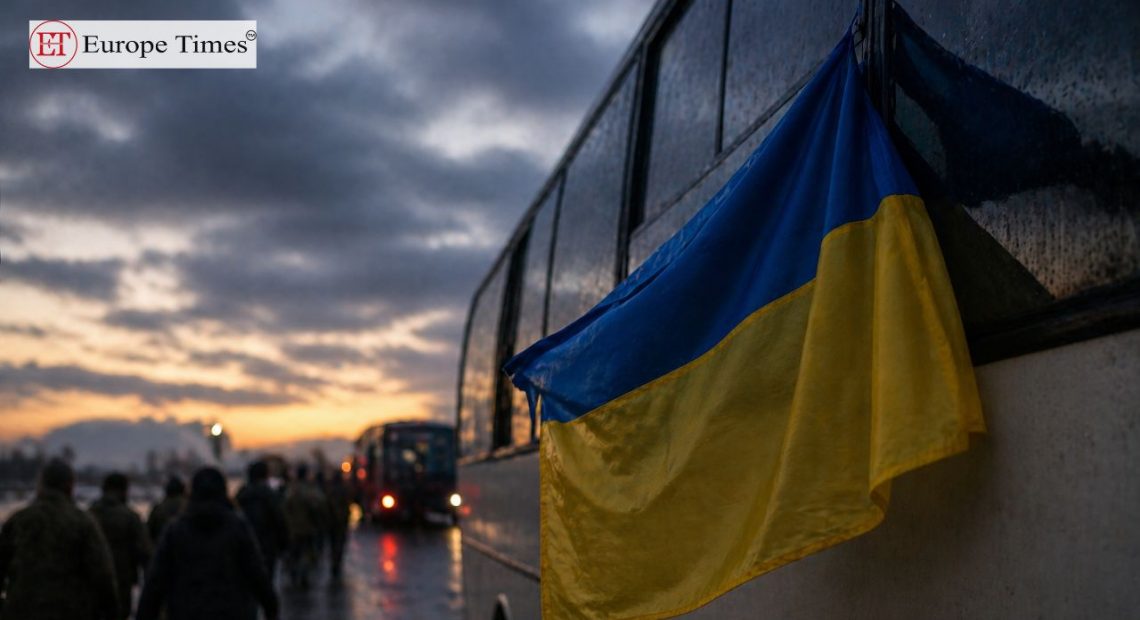
Ukrainian President Volodymyr Zelensky has said he is prepared to work with the United States on what he called “their vision” for ending the war with Russia, following reports of a leaked draft peace proposal shaped during meetings between US special envoy Steve Witkoff and Russian representative Kirill Dmitriev. The plan, which has drawn global attention, suggests Ukraine would cede parts of the Donetsk region still under its control, reduce the size of its military, and commit not to join NATO—terms Kyiv has previously rejected.

The White House insists Ukraine has been included in discussions, pushing back against criticism that negotiations happened behind its back. The draft emerged as Russia reported small territorial gains in eastern Ukraine and as Zelensky faces a domestic political crisis linked to a $100 million corruption scandal. In a televised address, Zelensky confirmed that US military officials had presented points of a peace proposal in Kyiv, stressing that Ukraine seeks a “real peace… one that will not be broken by a third invasion.”

The plan has triggered concern among European leaders, who say they were excluded from early talks. Germany’s foreign minister described the US proposal as only a “list of topics and options” rather than a complete agreement. While Washington claims the draft is balanced and acceptable to both sides, Kyiv maintains that any peace must protect Ukraine’s sovereignty and dignity. The debate unfolds as fighting continues, including recent deadly Russian attacks in Zaporizhzhia and Ternopil, and as the fourth anniversary of Russia’s full-scale invasion approaches.

Pic Courtesy: google/ images are subject to copyright

featured News

Poland announced on Wednesday that it will close Russia’s last remaining consulate on its territory, escalating its response to a railway explosion that Warsaw has blamed on Moscow. The blast, which occurred over the weekend on the Warsaw-Lublin line leading to the Ukrainian border, was allegedly carried out by two Ukrainians working with Russian intelligence. Polish authorities say the suspects fled to Belarus, a close ally of Russia.

Foreign Minister Radoslaw Sikorski said the closure of the Russian consulate in Gdansk is the first step, following earlier closures of Russian consulates in Krakow and Poznan in response to similar sabotage concerns. Calling the railway incident “an act of state terrorism,” Sikorski added that Poland would also pursue non-diplomatic measures. Moscow, which denies any involvement, accused Poland of “Russophobia” and indicated it would restrict Poland’s diplomatic presence in Russia.

Warsaw is now urging its EU partners to curb the movement of Russian diplomats within the Schengen zone, warning that further actions may follow. Poland and other EU states have repeatedly accused Russia and Belarus of destabilizing the region, including by fueling migration at the borders. Polish intelligence officials say several additional people have been detained in connection with the blast, amid a wider surge in sabotage, arson and cyberattacks across Europe since Russia’s full-scale invasion of Ukraine in 2022.

Pic Courtesy: google/ images are subject to copyright

featured News

Azerbaijan has summoned Russia’s ambassador, Mikhail Yevdokimov, to lodge a formal protest after a Russian Iskander missile strike damaged its embassy in Kyiv. The Azerbaijani Foreign Ministry said the blast destroyed part of the perimeter wall and caused significant structural damage to the diplomatic compound.

According to the ministry, the incident occurred during a wave of Russian missile and drone attacks on the Ukrainian capital. Despite the extent of the damage, no injuries were reported among embassy personnel.

Azerbaijan called the situation unacceptable and demanded a clear explanation from Russia. The protest adds a new diplomatic strain as regional tensions continue to escalate amid the ongoing conflict.

Pic Courtesy: google/ images are subject to copyright

News Trending

The European Union has expanded sanctions on Iranian drone and missile producers in response to Iran’s recent attack on Israel. European Council President Charles Michel stressed the significance of further isolating Iran, highlighting the need for decisive action.

These new sanctions build upon existing measures implemented by the EU, including penalties for Iran’s involvement in supplying drones to Russia. The decision to escalate sanctions was reached during a summit in Brussels, marking the first gathering of the bloc’s leaders since the attack on Israel.

In the wake of Iran’s assault, which involved a barrage of over 300 missiles and drones from multiple countries, the international community has urged restraint to prevent the situation from spiraling into a wider conflict. Despite calls for caution, Israel has not ruled out a potential response to the aggression.

German Chancellor Olaf Scholz emphasized the importance of de-escalation following the summit, encouraging Israel to leverage diplomatic channels to strengthen its position in the region. Scholz’s remarks reflect a broader sentiment among global leaders to mitigate tensions in the volatile Middle East.

Meanwhile, Israel has appealed to its allies to take robust action against Iran, advocating for sanctions on Tehran’s missile program and the designation of the Islamic Revolutionary Guard Corps (IRGC) as a terrorist organization. However, the EU and UK have not yet followed the United States in designating the IRGC as such.

In addition to EU sanctions, the United States is also considering imposing new penalties on Iran. US Treasury Secretary Janet Yellen highlighted the potential for disrupting Iran’s terrorist financing and targeting its oil exports as areas of focus. Furthermore, US National Security Advisor Jake Sullivan affirmed that Iran’s missile and drone programs, alongside the IRGC and Iranian defense ministry, would be subject to forthcoming sanctions.

Picture Courtesy: Google/images are subject to copyright

News Trending

Vladimir Putin, known for his reluctance to address his main opponent in Russia directly by name, notably changed his approach following the death of Alexei Navalny. After securing his fifth term as president, Putin acknowledged Navalny’s passing, describing it as a sorrowful event. He also hinted at a potential agreement for Navalny’s involvement in a prisoner exchange.

Navalny’s associates allege he was murdered while in custody in an Arctic jail by Russian authorities, whereas official Russian sources attribute his death to natural causes. US President Joe Biden condemned Putin’s regime, characterizing Navalny’s demise as further evidence of Putin’s brutality.

Putin recently disclosed that prior to Navalny’s death, he had been informed of a proposed swap involving individuals detained in the West. Putin claimed he had agreed to the swap on the condition that Navalny remained outside Russia, but the plan did not materialize due to unforeseen circumstances.

Some observers interpret Putin’s remarks as an effort to distance himself from Navalny’s death, while others see it as a sign that Putin no longer perceives Navalny as a significant threat. Previously, Putin had rarely mentioned Navalny by name, arguing that he was just one among many opposition figures.

Navalny’s associates assert that Putin’s recent acknowledgment of Navalny’s name signifies a shift in his stance, indicating that Putin no longer feels the need to avoid mentioning him. However, critics view Putin’s comments with skepticism, considering them as attempts to downplay his involvement or responsibility in Navalny’s demise.

The circumstances surrounding Navalny’s death are intertwined with discussions of a potential prisoner swap, allegedly involving Navalny and individuals held in the West. Despite Putin’s acknowledgment of the proposed exchange, the Kremlin has not officially confirmed these negotiations. Additionally, Putin has refrained from directly naming Vadim Krasikov, a Russian hitman implicated in a high-profile murder in Germany, despite allusions to his involvement.

Overall, Putin’s remarks and the events surrounding Navalny’s death underscore the complex dynamics of Russian politics and international relations, with lingering questions regarding accountability and justice.

Picture Courtesy: Google/images are subject to copyright

News Trending

Many Swedes are expressing relief and a sense of safety now that Sweden has officially joined NATO after nearly two years of application. The decision to apply for NATO membership was prompted by concerns over Russian aggression in the region, particularly after the invasion of Ukraine.

While there is widespread support for membership, some opposition remains, primarily from the Left and Green parties, who fear being drawn into conflicts and prefer diplomatic solutions.

Despite concerns about potential conflicts, the government and military maintain that NATO membership will enhance Sweden’s security.

However, there are mixed opinions among the public, with some welcoming the decision while others worry about potential repercussions. While there hasn’t been widespread panic, there are discussions about the visible impact of NATO membership, such as increased military cooperation and the presence of foreign soldiers on Swedish soil.

Picture Courtesy: Google/images are subject to copyright

News Trending

The Munich Rule emphasizes engagement and interaction over lecturing or ignoring one another. However, at the 60th Munich Security Conference (MSC), attention was drawn to the absence of two influential figures: former US President Donald Trump and Russian President Vladimir Putin. Their potential impacts on the transatlantic relationship and global stability were significant topics of discussion, especially in light of Putin’s actions regarding Alexei Navalny and Ukraine.

The conference reflected a world characterized by increasing confrontation and diminishing cooperation, as noted by EU’s Josep Borrell. The theme of “lose-lose” dynamics pervaded discussions, highlighting the deepening geopolitical tensions and economic uncertainties.

David Miliband, CEO of the International Rescue Committee, described the conference as emblematic of a disorderly world marked by impunity, exemplified by Navalny’s situation. Navalny’s wife, Yulia Navalnaya, made a powerful statement condemning Putin’s regime, underscoring the personal stakes involved in global politics.

Russia and Iran’s absence from the conference signaled a lack of interest in meaningful dialogue, contrasting with past confrontational speeches by their representatives. Ukrainian President Volodymyr Zelensky stressed the urgency of Western support amid ongoing conflict, especially with US assistance facing obstacles in Congress.

The Israel-Gaza conflict highlighted the international community’s call for a ceasefire and humanitarian aid, but Israeli delegates emphasized the strategic necessity of their actions against Hamas.

The conference, with its record attendance, showcased the diverse array of global stakeholders grappling with shifting notions of security. While historically a platform for diplomacy, this year’s event primarily focused on dialogue and assessment amid heightened global tensions.

Picture Courtesy: Google/images are subject to copyright

News Sports Trending

During a EuroBasket 2025 qualifier in Riga, the Ireland women’s basketball team declined to shake hands with the Israeli team before the match. Israeli player Dor Saar accused the Ireland team of being “quite anti-Semitic,” which Basketball Ireland strongly refuted, calling the comments inflammatory and inaccurate.

Before the game, the Ireland players stood for their anthem beside their bench rather than at the center court, a departure from the usual protocol. Despite concerns expressed by Irish players and pressure to boycott the fixture due to the ongoing conflict in Gaza, the match proceeded. Basketball Ireland reported Saar’s comments to Fiba Europe and explained their decision not to participate in traditional pre-match rituals.

Earlier, Basketball Ireland’s CEO warned of heavy fines and expulsion from the competition if the team boycotted their matches with Israel, stating it would harm women’s international basketball for years. Saar’s remarks were made in an interview on the Israeli Basketball Association’s website, where she suggested that the Irish team’s perceived animosity fueled a desire for a strong performance from Israel.

Picture Courtesy: Google/images are subject to copyright

News Trending War

Russian authorities claim to have thwarted a Ukrainian attempt to attack a border city as the ongoing aerial conflict between the two nations escalates. They reported intercepting a dozen missiles targeting Belgorod, where 25 people lost their lives on Saturday. Ukraine has not provided a response.

This development follows Russia’s largest aerial bombardment on Ukraine, with President Volodymyr Zelensky stating that Russia deployed around 300 missiles and 200 drones over five days. The renewed attacks began last week, prompting a Ukrainian counterattack on Belgorod that resulted in over 100 injuries.

Zelensky revealed in a broadcast that Russia fired nearly 100 strategically chosen missiles on Tuesday, and Ukrainian forces successfully shot down 10 hypersonic ballistic missiles on that day alone. Ukrainian officials reported over 130 casualties from Tuesday’s attacks, including major cities like Kharkiv and Kyiv.

In response, Russia’s air defense system intercepted 12 missiles targeting Belgorod overnight, causing one fatality and five injuries in the region. Explosions were also heard in Sevastopol, the largest city in Russian-occupied Crimea, where a missile was shot down over the port with no reported casualties or damage.

Ukrainian Ambassador to the US, Oksana Markarova, expressed that Ukraine anticipated Russia’s recent bombardment but stressed the need for more weapons to effectively respond and send a clear message to Russia to halt its actions.

Russian President Vladimir Putin has pledged to increase strikes in retaliation for Ukraine’s recent attacks on Belgorod.

Picture Courtesy: Google/images are subject to copyright

News Trending

In early November, 50 opposition MPs in Georgia urged NATO and EU member states to unite against Russia’s plan to establish a permanent naval base in Abkhazia, a breakaway region. The move has raised concerns that it could involve Georgia in Russia’s conflict in Ukraine and disrupt Tbilisi’s plans for a Black Sea port. Abkhazia, though internationally recognized as part of Georgia, has been under Russian and separatist control since the 1990s.

Georgia’s foreign ministry condemned Russia’s plan as a violation of sovereignty, but officials downplayed the immediate threat. Satellite imagery suggests ongoing dredging and construction at the port, indicating potential infrastructure for larger cargo ships. Some fear the base could involve Georgia in a conflict between Russia and Ukraine.

The head of Georgia’s Foreign Relations Committee emphasized the government’s focus on immediate threats, such as Russian forces near the occupation line. Despite assurances, concerns exist that the naval base could impact Georgia’s mega-infrastructure project—a deep-sea port in Anaklia, crucial for the Middle Corridor, a fast route between Asia and Europe avoiding Russia.

The Anaklia project was canceled in 2020, with accusations that the government yielded to Moscow’s interests. The cancellation led to international arbitration. The government maintains plans to revive the deep-sea port.

While Georgia has a pro-EU population, its government has a complex relationship with Moscow. Accusations of a pro-Russian stance were labeled “absurd,” citing EU agreements and aspirations. However, the delicate situation underscores Georgia’s vulnerability due to its history of conflicts with Russia and lack of NATO security.

Georgia alleges Russia is using the naval base to pressure against EU integration. A decision on Georgia’s EU candidate status is expected at a December summit. Officials assert Russia aims to undermine Georgia’s stability and European integration, showcasing its influence in the South Caucasus.

Picture Courtesy: Google/images are subject to copyright