featured News Trending

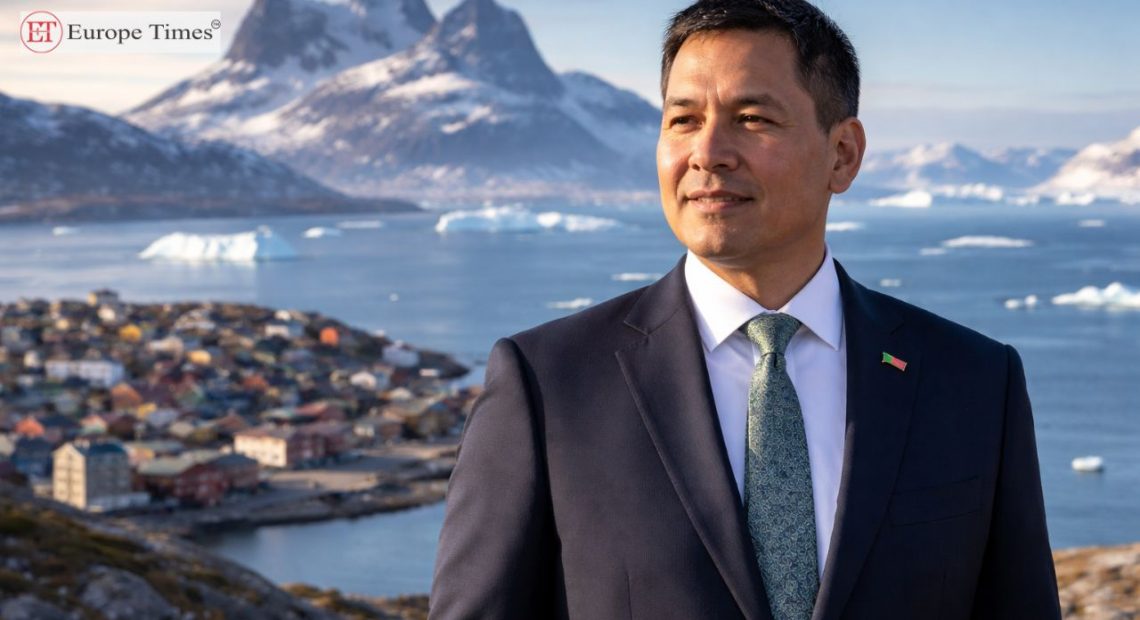
U.S. President Donald Trump told Norway’s prime minister that he no longer feels obliged “to think purely of peace,” citing his failure to win the Nobel Peace Prize, while again pressing his demand for U.S. control of Greenland. The remarks were made in a written response to a message from Norwegian Prime Minister Jonas Gahr Støre and Finnish President Alexander Stubb, who had urged de-escalation and sought talks after Trump threatened tariffs on European allies over the issue.

In his message, Trump complained that Norway had not awarded him the Nobel Peace Prize despite what he described as his role in stopping multiple wars, and said he would instead focus on what is “good and proper” for the United States. Støre responded by reiterating that the Nobel Peace Prize is decided by an independent committee, not the Norwegian government. Trump has openly campaigned for the award, which was last given to Venezuelan opposition leader Maria Corina Machado.

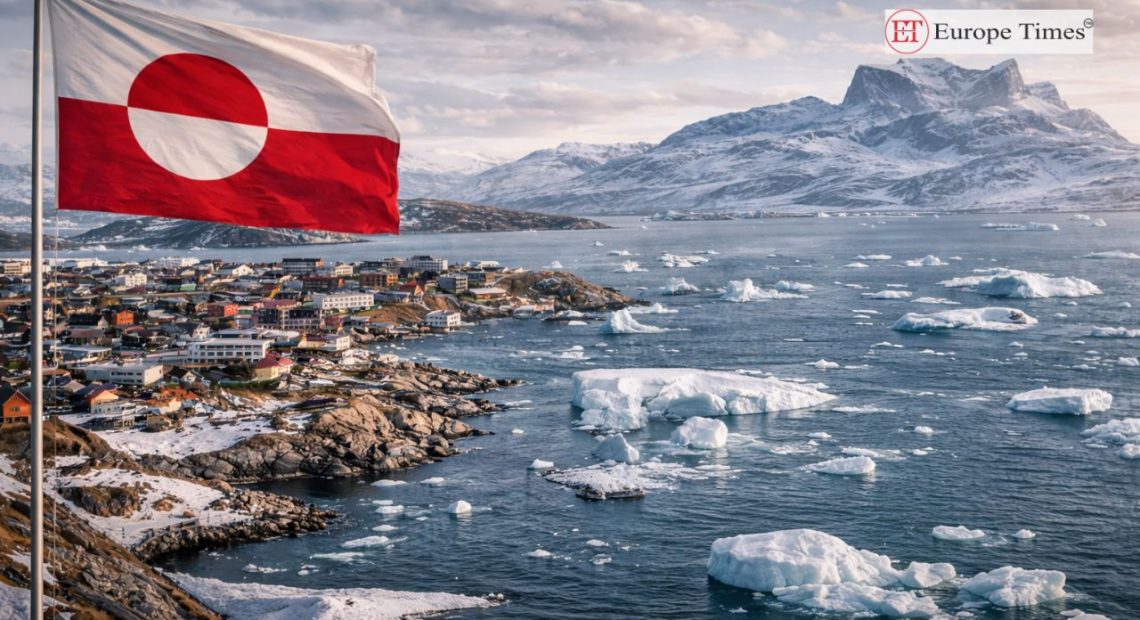
Trump also questioned Denmark’s sovereignty over Greenland, arguing it could not adequately protect the island and disputing its historical claims, despite longstanding treaties and U.S. recognition of Danish authority. He concluded by asserting that U.S. and global security depended on “complete and total control” of Greenland, again linking the issue to NATO burden-sharing and U.S. strategic interests.

Pic courtesy: google/ images are subject to copyright

featured News Trending

Denmark’s Prime Minister Mette Frederiksen declared that “Europe won’t be blackmailed” in response to U.S. President Donald Trump’s threat of tariffs over Greenland. Trump warned that eight U.S. allies—including Denmark, Norway, Sweden, France, Germany, the Netherlands, Finland, and the U.K.—would face new taxes starting February 1 if they opposed his proposed acquisition of the autonomous Danish territory. European leaders emphasized the importance of sovereignty and territorial integrity, issuing joint statements in solidarity with Denmark and Greenland.

Trump has justified his actions by citing Greenland’s strategic significance for U.S. security, and he has not ruled out acquiring it “the easy way” or “the hard way.” The threatened tariffs start at 10% and could increase to 25% until a deal is reached. European nations and NATO members, including the U.K., France, and Germany, condemned the coercive approach, stressing that the Arctic’s security is a shared transatlantic interest and that dialogue should be based on respect for sovereignty.

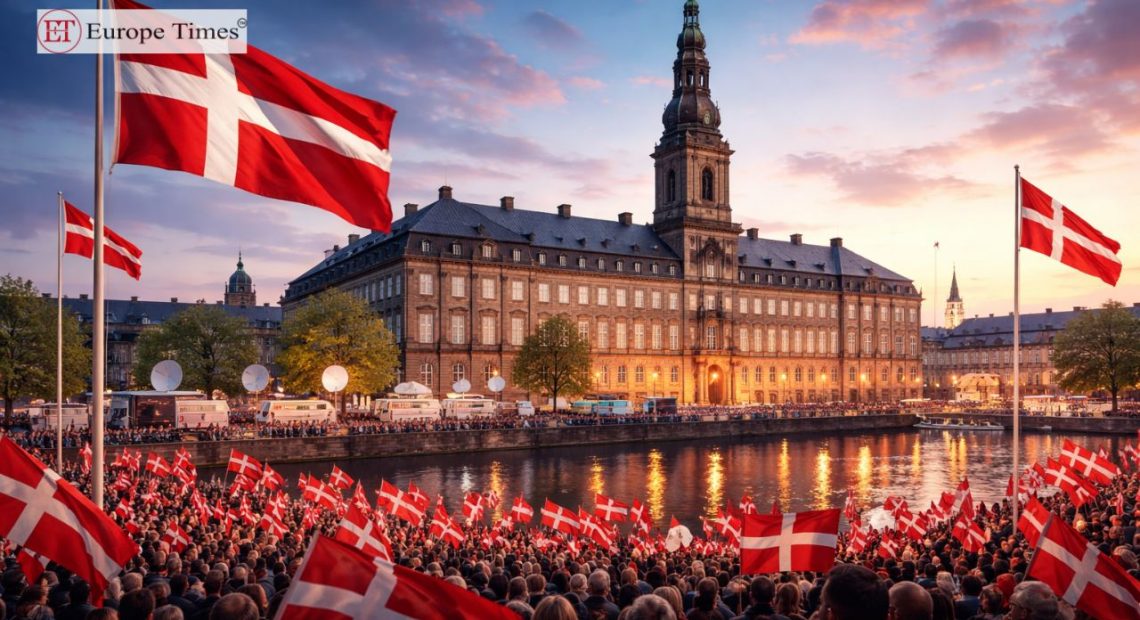
Public opposition in Denmark and Greenland has been strong, with protests calling for Greenland’s right to self-determination. Polls indicate that both Greenlanders and Americans largely oppose U.S. control of the island. European leaders, including French President Emmanuel Macron and German officials, are coordinating their responses and preparing contingency measures, including invoking EU anti-coercion instruments if the tariffs are implemented.

Pic courtesy: google/ images are subject to copyright

featured News Trending

Nordic diplomats have rejected U.S. President Donald Trump’s claims that Russian and Chinese vessels are operating near Greenland, calling the assertions unfounded. According to a report by the Financial Times, two senior Nordic diplomats with access to NATO intelligence briefings said there have been no signs of Russian or Chinese ships or submarines in waters around Greenland in recent years. Reuters said it could not independently verify the report, while the White House and NATO did not immediately respond to requests for comment.

Diplomats cited by the FT said intelligence assessments do not support the narrative of heightened foreign naval activity near the island. One senior official was quoted as saying there were “no ships, no submarines,” while another dismissed claims that the waters around Greenland were “crawling” with Russian and Chinese vessels, noting that any such activity was instead concentrated on the Russian side of the Arctic. Vessel-tracking data from MarineTraffic and LSEG also showed no Chinese or Russian ship presence near Greenland.

Trump has repeatedly argued that the United States must control Greenland—an autonomous territory within the Kingdom of Denmark—to prevent Russia or China from gaining a foothold in the strategically located and resource-rich region. Denmark has disputed these claims, with Foreign Minister Lars Løkke Rasmussen saying the portrayal of foreign ships and large Chinese investments near Nuuk was inaccurate. Greenland’s assembly has since moved up a meeting to discuss its response to U.S. statements, amid growing concern among the island’s 57,000 residents over renewed pressure from Washington.

Pic courtesy: google/ images are subject to copyright

featured News Trending

Denmark is facing a complex geopolitical challenge as it defends Greenland at a time when the Arctic territory is steadily moving towards independence. While recent statements from the Trump administration that “all options are open” for taking control of Greenland have prompted strong European support for Copenhagen, the crisis highlights a paradox: Denmark is expending diplomatic capital to protect a territory whose population increasingly wants self-rule and whose political leaders are open to dealing directly with Washington.

Greenland’s strategic importance — sitting between Europe and North America and hosting key elements of the U.S. missile defence system — gives Denmark significant relevance in Arctic geopolitics. However, that leverage could disappear if Greenland chooses independence, a right formally recognised in 2009. Analysts warn Denmark could end up paying a high diplomatic and financial price to resist U.S. pressure, only to see Greenland eventually chart its own path. Trump’s renewed interest has also accelerated internal debates in Greenland, where all major parties favour independence, differing only on timing and method.

The issue also carries a heavy economic burden. Denmark provides substantial annual funding to Greenland and has announced major new Arctic defence spending, even as Greenland’s economy stagnates. Prime Minister Mette Frederiksen must balance domestic politics, alliance relations with the U.S., and international law, while acknowledging Greenlanders’ right to decide their future. As tensions rise, Denmark is left defending both its sovereignty and its credibility, amid growing uncertainty over how long the union with Greenland will last.

Pic courtesy: google/ images are subject to copyright

featured News Trending

Denmark and Greenland have urged US President Donald Trump to stop making statements about taking over Greenland after he reiterated his interest in the Arctic island in a recent media interview. Danish Prime Minister Mette Frederiksen said such remarks were unacceptable, stressing that the United States has no right to annex Greenland or any part of the Danish kingdom.

Trump said the US “needs Greenland” for defence purposes, comments that came shortly after he claimed Washington would run Venezuela following the capture of its president. The remarks sparked concern in Denmark that Greenland, a self-governing Danish territory, could face similar rhetoric or pressure. Frederiksen said the threats were inappropriate toward a close ally and ignored the clear stance of Greenland’s people that the territory is not for sale.

Greenland’s Prime Minister Jens-Frederik Nielsen also criticised Trump’s comments as disrespectful, particularly references linking Greenland to military intervention. Greenland’s strategic location and mineral resources have long drawn US interest, and Trump recently appointed a special envoy to the island. While Greenland has the right to seek independence, it remains economically reliant on Denmark, which has been working to strengthen ties with the island while increasing Arctic defence cooperation with the US.

Pic courtesy: google/ images are subject to copyright

featured News

The Faroe Islands has voted to legalise abortion up to the 12th week of pregnancy, ending one of Europe’s most restrictive abortion laws. The new legislation, passed in a tight 17–16 vote after intense debate, replaces rules dating back to 1956 that allowed abortions only in exceptional circumstances such as rape, incest, serious fetal abnormalities or risks to the woman’s health.

Supporters of the reform, including MP Ingilín Didriksen Strømm, described the decision as historic, saying it finally ensures women’s autonomy and access to safe healthcare. Human rights groups such as Amnesty International also welcomed the change, noting that many Faroese women previously had to travel to Denmark—where abortion is legal up to 18 weeks—for the procedure due to strict local laws and social stigma.

While pro-choice advocates celebrated what they call a major step forward, conservative opponents argued that fetal rights must be protected and suggested efforts may be made to reverse the law in the future. The reform marks a significant cultural shift for the small, traditionally conservative archipelago of 56,000 people, where past attempts to liberalise abortion policy have repeatedly failed.

Pic courtesy: google/ images are subject to copyright

featured News

Danish Prime Minister Mette Frederiksen is set to visit Greenland on Wednesday for talks with the territory’s incoming government, following recent tensions over U.S. interest in the Arctic island. Frederiksen’s three-day visit comes less than a week after U.S. Vice President JD Vance’s trip to Greenland, which received a frosty response from both Danish and Greenlandic authorities. Incoming Greenlandic Prime Minister Jens-Frederik Nielsen welcomed Frederiksen’s visit, reaffirming Denmark as “Greenland’s closest partner.”

The relationship between Denmark and Greenland has been strained in recent years due to historical mistreatment of Greenlanders during colonial rule. However, growing international competition for influence in the Arctic, including former U.S. President Donald Trump’s past interest in acquiring Greenland, has pushed Denmark to strengthen ties with the island. Nielsen stated that Greenland seeks to maintain strong relations with Denmark while moving toward its long-term goal of sovereignty. He also emphasized the need for a respectful partnership with the U.S., rejecting suggestions of American control over the island.

During his visit to a U.S. military base in northern Greenland, Vance accused Denmark of failing to secure the territory and suggested the U.S. could provide better protection. Frederiksen dismissed his remarks as “not fair,” reiterating that Greenland’s future lies in the hands of its people. Opinion polls indicate that while most of Greenland’s 57,000 inhabitants support independence, many caution against moving too quickly, fearing economic instability and greater U.S. influence over the island’s affairs.

Pic Courtesy: google/ images are subject to copyright

featured News Trending

The first batch of much-anticipated F-16 jets has arrived in Ukraine, according to Lithuania’s foreign minister and a U.S. official on Wednesday. This delivery is expected to aid Ukraine in restoring its weakened air force. The F-16s, manufactured by Lockheed Martin, have long been sought by Ukraine due to their significant firepower and widespread availability. Equipped with a 20mm cannon, these fighter jets can carry a variety of bombs, rockets, and missiles. Lithuanian Foreign Minister Gabrielius Landsbergis remarked on X (formerly Twitter) that “F-16s in Ukraine. Another impossible thing turned out to be totally possible.” A U.S. official, who wished to remain anonymous, confirmed that the delivery has been completed.

Denmark has pledged a total of 19 jets, while the Netherlands has committed to delivering 24 aircraft. Both nations have played a key role in forming an international coalition to supply Ukraine with F-16s. Norway has also announced it will donate six F-16 fighter jets. Ukrainian pilots and ground personnel have undergone training with the help of Western allies for several months.

As Ukraine has fought against Russia’s full-scale invasion that began in February 2022, it has relied on a limited fleet of Soviet-era aircraft. Ukrainian officials consider the addition of F-16s a crucial enhancement for their Air Force. However, analysts and officials indicate that while the F-16s will strengthen Ukraine’s capabilities, they are unlikely to be a decisive factor in the ongoing conflict.

Picture Courtesy: Google/images are subject to copyright

News Trending

Denmark’s Prime Minister Mette Frederiksen has reported feeling “shaken” but otherwise “fine” following an attack in Copenhagen’s old town. On Friday evening, a man approached her and struck her, causing minor whiplash. The 39-year-old Polish suspect, who was detained and charged with violence against a public official, has pleaded not guilty. Police, who suspect the man was under the influence of alcohol and drugs, do not believe the attack was politically motivated.

After the incident, Frederiksen was taken to a hospital for a check-up, and her Saturday schedule was canceled. She expressed gratitude for the support she received via an Instagram post, where she mentioned her need for rest and time with her family.

European leaders condemned the attack, with EU chief Charles Michel expressing outrage and French President Emmanuel Macron calling it “unacceptable.” The incident occurred just two days before the European elections, in which Denmark is participating.

Frederiksen, 46, is the leader of Denmark’s Social Democrats and became the country’s youngest prime minister in 2019.

Picture Courtesy: Google/images are subject to copyright

News Trending

Denmark’s Prime Minister, Mette Frederiksen, was unexpectedly attacked while walking in Copenhagen’s city center, leaving her shocked and with minor whiplash. The assailant, swiftly apprehended, prompted concern over the motive behind the assault. European Commission President Ursula von der Leyen condemned the incident, echoing sentiments against such violence in Europe. Witnesses described the assailant’s forceful push on Frederiksen, who managed to avoid falling completely but sought recovery at a nearby café.

The attack, occurring just before Denmark’s EU election, raises concerns over political safety. Frederiksen’s Social Democrats, though still leading in polls, have experienced declining support. Colleagues expressed solidarity and shock over the assault, while EU officials denounced it vehemently.

Frederiksen, at 46, became Denmark’s youngest prime minister in 2019, known internationally for her disagreement with former U.S. President Donald Trump over Greenland’s purchase suggestion. Additionally, her government’s mink culling during the Covid-19 pandemic drew criticism in 2022.

Picture Courtesy: google/images are subject to copyright