featured News Trending

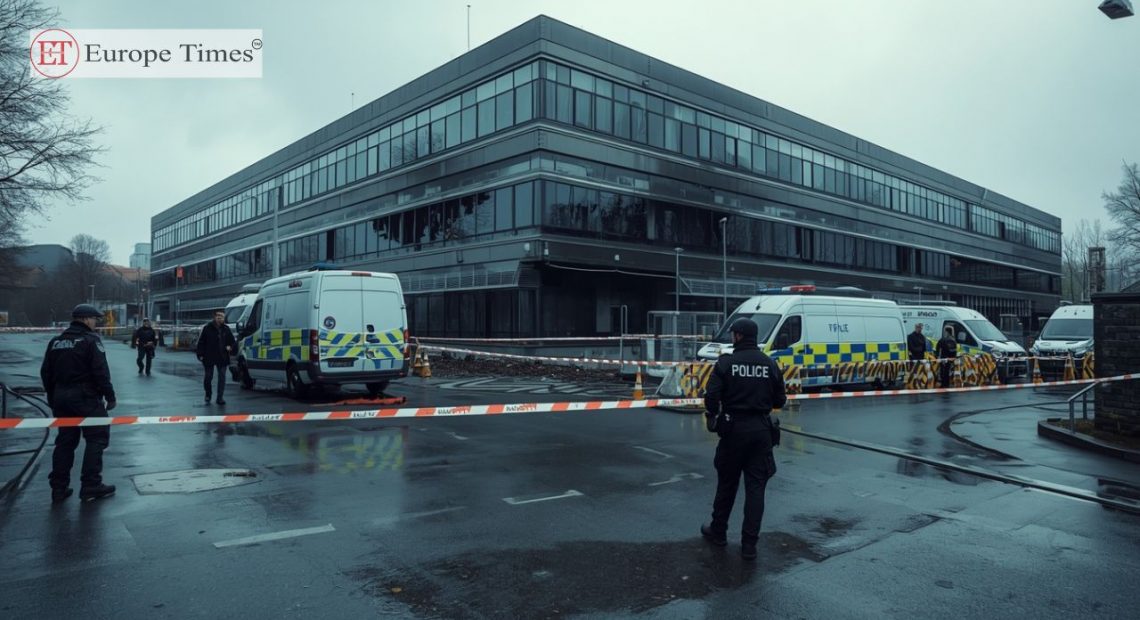
Two local trains collided head-on north of Copenhagen early Thursday morning, leaving 17 people injured, including five in critical condition. The crash occurred on a regional line, with both trains sustaining heavy front-end damage after the impact.

Emergency responders described chaotic scenes inside the carriages, with shattered glass and injured passengers. Around 38 people were believed to be on board at the time. Authorities quickly deployed dozens of rescue workers and vehicles, evacuating all passengers and transporting the injured to hospitals by ambulance and helicopter.

Police said the cause of the collision remains unclear and will be investigated thoroughly. The incident took place on the route connecting Hillerød and Kagerup. While rail accidents are rare in Denmark, officials noted past incidents, emphasizing the seriousness of ensuring rail safety.

Pic courtesy: google/ images are subject to copyright

featured News Trending

Greenland’s Prime Minister Jens-Frederik Nielsen has appointed his predecessor, Mute B. Egede, as the nation’s new foreign minister. In addition to managing international relations, Egede will oversee the critical portfolios of mineral resources and business policies. The move comes at a high-stakes moment for the island as it navigates complex diplomatic waters and seeks to stabilize its executive leadership following the recent resignation of the previous foreign minister’s party from the coalition government.

Egede’s primary challenge will be steering relations with the United States amid renewed pressure from President Donald Trump, who has repeatedly expressed a desire for U.S. control over the island for security reasons. While this stance has caused friction with European NATO allies, Egede has historically maintained a firm position on Greenlandic sovereignty. During his tenure as prime minister, which ended in mid-2025, he consistently rejected any notion of the island being “for sale,” asserting that its people alone will determine their future.

Despite the geopolitical tensions, Greenland, Denmark, and the U.S. began high-level negotiations in Washington this past January to salvage their diplomatic partnership. Egede, who previously served as finance minister, takes over the negotiating table from Vivian Motzfeldt during a period of ongoing dialogue. The international community is closely watching these scheduled meetings to see if Egede can balance the island’s economic interests in mineral resources with the need to protect its autonomy against intensifying American interest.

Pic courtesy: google/ images are subject to copyright

featured News Trending

Greenland’s Prime Minister Jens-Frederik Nielsen has strongly rejected U.S. President Donald Trump’s remarks describing Greenland as a “big, poorly run piece of ice,” calling the comments disrespectful and emphasizing the island’s sovereignty and global responsibility. Nielsen said Greenland is a proud nation of 57,000 people that respects international law and works closely with global allies, urging NATO members to stand together to protect the international order.

The comments came after Trump criticized NATO’s role in the Iran war and revived tensions over Greenland, which the U.S. has previously expressed interest in controlling due to its strategic Arctic location. Earlier this year, European nations including Germany and France sent troops to Greenland in a show of solidarity after concerns that the U.S. might consider military action, before diplomatic talks shifted the issue to negotiations.

Despite ongoing discussions between Greenland, Denmark, and the United States on defence cooperation, Nielsen warned that Trump’s ambitions regarding the island remain a concern. He stressed that Greenland supports dialogue and cooperation but remains cautious, noting that existing agreements already allow U.S. military presence on the island while maintaining Greenland’s autonomy and sovereignty.

Pic courtesy: google/ images are subject to copyright

featured News Trending

Denmark’s Prime Minister Mette Frederiksen led the Social Democrats to victory in Tuesday’s parliamentary election, but the party slumped to its weakest result since 1903 with just 21.9% of the vote. Her left-wing “red bloc” secured 84 seats—short of the 90 needed for a majority—leaving coalition talks essential for forming a government. Frederiksen expressed pride in her party’s continued popularity despite the disappointing outcome.

The election saw significant losses for the traditional right as well, with the Liberals falling to 10.1%, behind the Green Left SF. With twelve parties on the ballot, the balance of power now rests with the centrist Moderates, holding 14 seats, whose leader, former Prime Minister Lars Løkke Rasmussen, could act as kingmaker. Rasmussen indicated openness to forming a cross-center government, while the Liberals urged him to align with the right bloc.

Frederiksen’s gamble to call early elections, boosted by her handling of US President Donald Trump’s Greenland controversy, did not translate into the expected majority. Domestic issues, including the cost of living, economic stability, welfare, and environmental concerns like pesticide levels in drinking water, dominated voter priorities, signaling a more complex path ahead for Denmark’s next government.

Pic courtesy: google/ images are subject to copyright

featured News Trending

Denmark is set to hold a parliamentary election on March 24, with Prime Minister Mette Frederiksen seeking a third term in office. Although her Social Democrats are projected to secure their weakest result in over a century, she remains the frontrunner to retain power. The campaign initially took an unusual geopolitical turn due to U.S. President Donald Trump’s renewed push to assert control over Greenland, a semi-autonomous Danish territory, briefly boosting Frederiksen’s support.

As the election approaches, domestic issues have regained prominence. Voters are largely focused on the rising cost of living, inequality, and debates over immigration policy. Frederiksen has proposed reintroducing a wealth tax to fund welfare and education, signaling a shift toward more traditional left-wing policies, though critics argue the move could hurt economic growth.

Polls suggest no clear majority for either political bloc, pointing instead to a tight race. While the left-leaning alliance is expected to fall short of a majority, it may still form a government due to divisions within the right-wing bloc. The final outcome could depend on centrist parties, particularly former Prime Minister Lars Lokke Rasmussen, who may play a निर्णாயக (decisive) role in shaping the next government.

Pic courtesy: google/ images are subject to copyright

featured News Trending

Denmark’s government said on Friday it will introduce tougher deportation laws aimed at making it easier to expel foreign nationals, including criminals, even if the move risks conflict with the European Court of Human Rights. The announcement comes amid a broader hardening of attitudes across Europe toward migration and asylum, with several governments expressing frustration over court rulings that have blocked deportations.

Prime Minister Mette Frederiksen said her coalition government would move ahead without waiting for changes in how the European Convention on Human Rights is interpreted, arguing that Denmark’s approach reflects the intent of many countries signed up to the convention. Facing mounting pressure from nationalist and anti-immigration parties ahead of an election due by October, Frederiksen acknowledged the reforms could prompt legal challenges.

The proposed measures, expected to take effect from May if approved, include stricter deportation rules for foreign nationals convicted of serious crimes, electronic tagging for migrants who breach reporting requirements, and the appointment of a deportation envoy. Denmark also plans to reopen its embassy in Syria, review refugee permits more aggressively, and explore establishing an EU reception centre outside the bloc, reinforcing the country’s long-standing tough stance on immigration.

Pic courtesy: google/ images are subject to copyright

featured News Trending

Danish Prime Minister Mette Frederiksen travelled to Greenland’s capital Nuuk to show support for the Greenlandic people after a turbulent week marked by US President Donald Trump’s threats to take control of the island, followed by a sudden diplomatic climbdown. Trump ruled out military action and tariffs, claiming a vague “framework of a future deal” on Greenland after talks with Nato chief Mark Rutte, though details remain unclear. Frederiksen said the situation remains serious and that Denmark would now pursue a diplomatic and political path.

The visit comes amid continued uncertainty over US intentions. While Trump has spoken of “total access” to Greenland for security purposes and hinted at deploying missile defence infrastructure, he has stopped short of explicitly calling for ownership. Danish and Greenlandic leaders have repeatedly stressed that sovereignty is a red line, even as they signal openness to cooperation on Arctic security within Nato. Frederiksen also held talks with Rutte in Brussels, where both sides agreed to strengthen deterrence and defence in the Arctic.

Despite the softened rhetoric from Washington, Greenlandic leaders remain cautious. Lawmakers say trust has been damaged by Trump’s remarks and insist that decisions over minerals and land rest solely with Greenland. Former Danish officials note a shift toward de-escalation but warn the situation remains fragile, with negotiations likely to focus narrowly on security. Danish officials have underlined that any future arrangements must stay within Nato frameworks, with no transfer of territory or mineral rights on the table.

Pic courtesy: google/ images are subject to copyright

featured News Trending

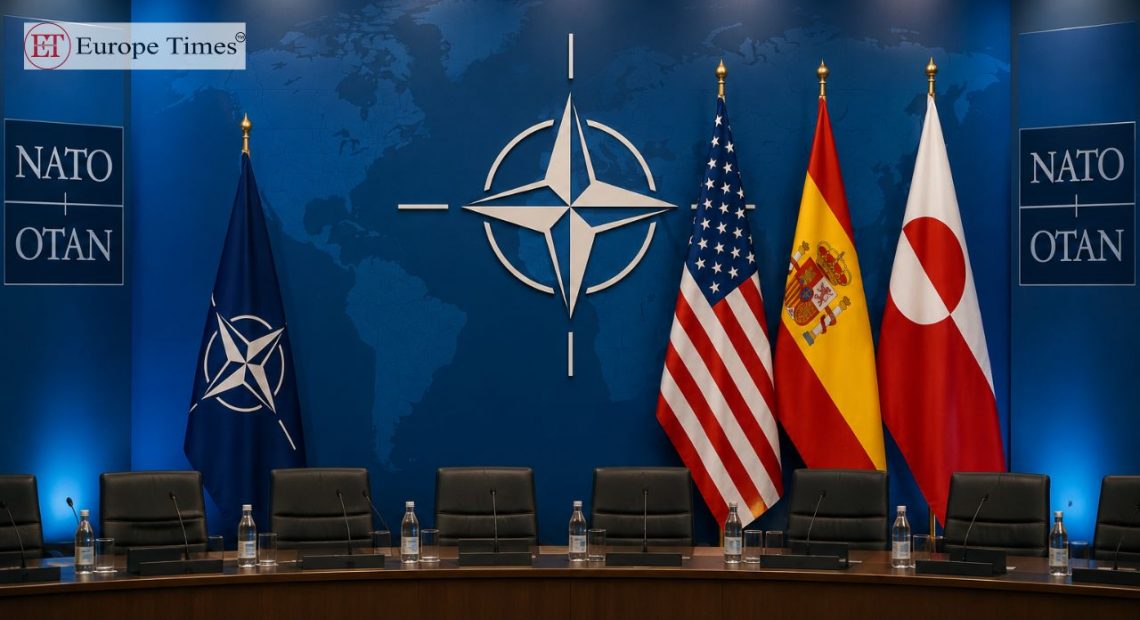
Denmark and NATO have agreed on the need to enhance security in the Arctic following renewed tensions linked to U.S. President Donald Trump’s comments about Greenland, Danish Prime Minister Mette Frederiksen said on Friday. After talks with NATO Secretary General Mark Rutte, Frederiksen stressed that defence and security in the Arctic are concerns for the entire alliance, not just countries in the region. Denmark and Greenland have firmly stated that Greenland’s sovereignty is not open for discussion, while remaining willing to engage in dialogue on other issues.

Trump said on Thursday that he had secured permanent U.S. access to Greenland following discussions with Rutte, comments that heightened attention on the strategic Arctic region. Rutte later noted that NATO allies would need to intensify efforts to counter growing challenges from Russia and China in the high north. Frederiksen echoed this view, saying NATO must increase its engagement, and Rutte confirmed he was working closely with Denmark to strengthen deterrence and defence measures.

Pic courtesy: google/ images are subject to copyright

featured News Trending

U.S. President Donald Trump told Norway’s prime minister that he no longer feels obliged “to think purely of peace,” citing his failure to win the Nobel Peace Prize, while again pressing his demand for U.S. control of Greenland. The remarks were made in a written response to a message from Norwegian Prime Minister Jonas Gahr Støre and Finnish President Alexander Stubb, who had urged de-escalation and sought talks after Trump threatened tariffs on European allies over the issue.

In his message, Trump complained that Norway had not awarded him the Nobel Peace Prize despite what he described as his role in stopping multiple wars, and said he would instead focus on what is “good and proper” for the United States. Støre responded by reiterating that the Nobel Peace Prize is decided by an independent committee, not the Norwegian government. Trump has openly campaigned for the award, which was last given to Venezuelan opposition leader Maria Corina Machado.

Trump also questioned Denmark’s sovereignty over Greenland, arguing it could not adequately protect the island and disputing its historical claims, despite longstanding treaties and U.S. recognition of Danish authority. He concluded by asserting that U.S. and global security depended on “complete and total control” of Greenland, again linking the issue to NATO burden-sharing and U.S. strategic interests.

Pic courtesy: google/ images are subject to copyright

featured News Trending

Denmark’s Prime Minister Mette Frederiksen declared that “Europe won’t be blackmailed” in response to U.S. President Donald Trump’s threat of tariffs over Greenland. Trump warned that eight U.S. allies—including Denmark, Norway, Sweden, France, Germany, the Netherlands, Finland, and the U.K.—would face new taxes starting February 1 if they opposed his proposed acquisition of the autonomous Danish territory. European leaders emphasized the importance of sovereignty and territorial integrity, issuing joint statements in solidarity with Denmark and Greenland.

Trump has justified his actions by citing Greenland’s strategic significance for U.S. security, and he has not ruled out acquiring it “the easy way” or “the hard way.” The threatened tariffs start at 10% and could increase to 25% until a deal is reached. European nations and NATO members, including the U.K., France, and Germany, condemned the coercive approach, stressing that the Arctic’s security is a shared transatlantic interest and that dialogue should be based on respect for sovereignty.

Public opposition in Denmark and Greenland has been strong, with protests calling for Greenland’s right to self-determination. Polls indicate that both Greenlanders and Americans largely oppose U.S. control of the island. European leaders, including French President Emmanuel Macron and German officials, are coordinating their responses and preparing contingency measures, including invoking EU anti-coercion instruments if the tariffs are implemented.

Pic courtesy: google/ images are subject to copyright