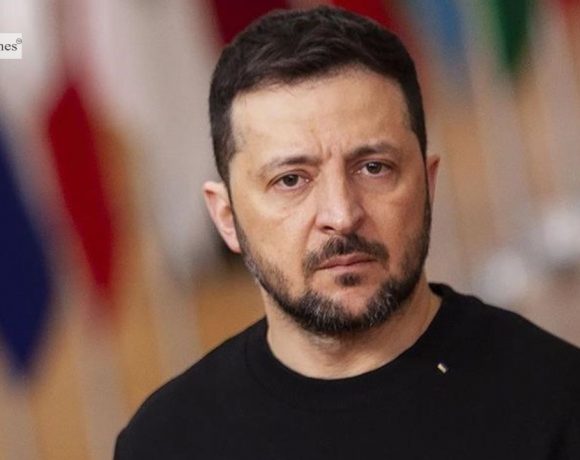
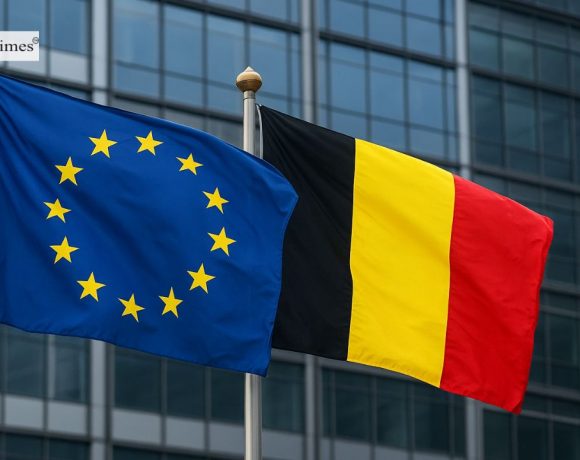
Belgium has raised strong objections to the European Union’s plan to use frozen Russian assets to provide a “reparations loan” to Ukraine. Prime Minister Bart De Wever and Foreign Minister Maxime Prévot argue that tapping €140bn of Russian state assets held in Belgium could expose the country to massive legal risks and potential bankruptcy if Russia takes action. They have called for an alternative approach, suggesting the EU borrow the necessary funds from financial markets instead.
Most EU countries, including Germany, support the proposal, viewing it as an urgent way to fund Ukraine’s defense amid ongoing Russian attacks. Chancellor Friedrich Merz and EU foreign policy chief Kaja Kallas argue that a reparations loan would strengthen Europe’s position against Moscow and could incentivize Russia to negotiate peace. However, legal experts and Belgium’s central securities depository, Euroclear, caution that lending these frozen assets carries significant financial and legal dangers.
The European Commission is preparing a legal framework to address the plan, but disagreements among member states have delayed progress. Belgium insists on legally binding guarantees to share risk with other EU countries, while Russia has threatened decades of litigation if the assets are used for Ukraine. With the EU summit approaching, a final decision on the contentious proposal remains uncertain.
Pic courtesy: google/ images are subject to copyright
Belgium witnessed major nationwide disruption on Wednesday as the third and final day of a national strike brought much of the country to a standstill. The protest, driven by the country’s main labour unions, targeted Prime Minister Bart De Wever’s coalition government over proposed pension changes and labour market reforms. Brussels Airport cancelled all departing flights and more than half of its scheduled arrivals, while Charleroi Airport also warned of severe operational delays due to staff shortages.
The strike extended far beyond aviation, affecting schools, public transport, and several private-sector operations, making it the most disruptive day of the three-day action. Unions argue that the government’s reform plans will force Belgians to “work longer and harder” with less security regarding pensions, healthcare, and purchasing power. They also criticised the government for not involving unions in budget-related negotiations.
A large protest was planned in Brussels on Wednesday afternoon, following an October demonstration that drew around 80,000 people. Despite the government finalising next year’s budget earlier this week — which includes new taxes on banks, airline tickets, and natural gas — the agreements failed to prevent the strike. Belgium’s deficit is projected to reach 4.5% of GDP this year, with debt levels significantly above EU limits, prompting the government’s push for spending cuts and new revenue measures.
Pic Courtesy: google/ images are subject to copyright

Belgium is preparing for severe disruption this week as unions launch a three-day national strike in protest against Prime Minister Bart De Wever’s austerity plans aimed at reducing the country’s high debt. The action spans multiple sectors, with teachers, healthcare workers, and waste collectors joining rolling walkouts, and public transport facing major interruptions beginning Monday. The strikes are set to culminate in a nationwide general stoppage on Wednesday.
Transport services are already heavily affected, with national rail operator SNCB running only part of its schedule and several Eurostar routes between Brussels and Paris cancelled. The country’s main airports—Bruxelles-Zaventem and Charleroi—have warned passengers of significant disruption, announcing that all departures on Wednesday will be cancelled and arrivals may also be affected due to staff participation in the strike.
Unions argue that proposed reforms to labour rules, pensions, and unemployment benefits threaten welfare security, demanding fair pensions and new taxation measures including a wealth and digital tax. Belgium’s government, which has recently reached a budget agreement, says the reforms are essential to safeguard the welfare system amid a deficit of 4.5% of GDP and debt above 104%.
Pic Courtesy: google/ images are subject to copyright

Belgian prosecutors announced on Thursday that several individuals had been detained over suspected bribery in the European Parliament, allegedly for the benefit of China’s Huawei. Authorities conducted searches across Belgium and Portugal, sealing the offices of two parliamentary assistants as part of the investigation. A suspect was also arrested in France. Prosecutors revealed that the alleged corruption had taken place discreetly since 2021 under the guise of lobbying, involving financial incentives and excessive gifts in exchange for political influence.
Huawei responded to the allegations, stating that it takes the matter seriously and will cooperate with authorities to understand the situation. The company reiterated its zero-tolerance policy towards corruption and emphasized its commitment to compliance with all laws and regulations. Meanwhile, the European Parliament confirmed that it had received a request from Belgian authorities to assist in the investigation and pledged full cooperation.
The prosecutors refrained from disclosing the names of those involved but stated that the detained individuals were being questioned over corruption, forgery, and the use of false documents. The case adds to growing scrutiny over lobbying practices within European institutions, raising concerns about foreign influence in EU policymaking.
Pic Courtesy: google/ images are subject to copyright
Catalan separatist leader Carles Puigdemont announced on Friday that he has returned to Belgium after successfully evading arrest during a brief visit to Spain, asserting he never intended to surrender. “I’m in Waterloo after extremely difficult days,” he wrote on X. Puigdemont has lived in self-imposed exile since 2017 following a failed attempt to secure Catalonia’s independence.
His return to Spain, after seven years away, was marked by defiance against an arrest warrant as he addressed supporters at a rally on Thursday. The dramatic escape unfolded like a scene from a crime film, eliciting outrage from opposition politicians and the judiciary.
Eduard Sallent, commissioner of the Catalan regional police, Mossos d’Esquadra, explained that officers waited until after the rally to avoid a public confrontation. However, after his speech, Puigdemont slipped backstage, put on a baseball cap, and jumped into a waiting car. While police rushed toward the vehicle, around 50 supporters wearing straw hats formed a barrier, allowing Puigdemont to flee.
Sallent admitted the operation to arrest Puigdemont failed but insisted the Mossos acted according to plan and did not appear foolish. He expressed skepticism about Puigdemont’s claim of being in Belgium, stating, “I do not rule out that this man is still in Barcelona,” and emphasized that they would not rely on assumptions.
The Supreme Court judge overseeing the investigation demanded explanations from the Mossos and the national government regarding the failure to apprehend Puigdemont. While the Spanish parliament has pardoned others involved in the 2017 secession attempt, the Supreme Court ruled this does not apply to Puigdemont, who faces embezzlement charges related to funding the independence referendum deemed illegal by Spanish courts. Puigdemont argues that the vote was legitimate, thus invalidating the charges.
As blame circulated over his escape, Spain faced increased political turmoil, with the opposition People’s Party (PP) calling for the dismissal of the interior and defense ministers over Puigdemont’s evasion.
Picture Courtesy: Google/images are subject to copyright
Spain’s Congress has passed a contentious Catalan amnesty law, clearing its final parliamentary hurdle before implementation. The law aims to halt legal actions against Catalan nationalists for their separatist activities, including the 2017 independence referendum and subsequent failed independence bid. The law narrowly passed with 177 votes in favor and 172 against, following a six-month parliamentary process initiated by Prime Minister Pedro Sánchez’s Socialist Party (PSOE). Although delayed by the opposition-controlled Senate, it could not be blocked entirely.
The amnesty will be published in the official gazette, giving judges two months to apply it. While potential legal challenges remain, they are unlikely to impede the law’s implementation. Around 400 Catalan nationalists, involved in separatist actions since November 2011, will benefit, including those prosecuted for organizing the illegal 2017 referendum. Police facing charges for voter assaults during the referendum are also covered.
The most notable beneficiary is Carles Puigdemont, former Catalan president, who led the 2017 secession attempt and has since been in self-exile in Belgium. Puigdemont’s party, Together for Catalonia (JxCat), and the Catalan Republican Left (ERC) secured the amnesty in exchange for supporting Sánchez’s coalition government. Puigdemont plans to return to Spain for an investiture vote in the regional parliament, despite lacking sufficient support to form a government.
Miriam Nogueras of JxCat described the amnesty as “necessary redress” rather than clemency. The PSOE, their coalition partner Sumar, JxCat, ERC, the Basque EH Bildu coalition, the Basque Nationalist Party (PNV), the Galician Nationalist Bloc (BNG), and far-left Podemos supported the law. The conservative People’s Party (PP), far-right Vox, and other regional conservatives opposed it. PP leader Alberto Núñez Feijóo condemned the amnesty as “political corruption,” accusing Sánchez of using it to secure his political position. Conversely, Artemi Rallo of the PSOE argued that the law, along with a 2022 pardon of nine jailed independence leaders, has “normalized politics in Catalonia.”
Picture Courtesy: Google/images are subject to copyright
In the Netherlands, a tragic incident occurred in Lochem where two workers lost their lives and two others were injured during the construction of a bridge. The collapse happened when cables supporting a bridge arch snapped, causing it to plummet to the ground. The deceased workers were identified as one from Belgium and the other from Poland, but further details such as their names and ages were not disclosed.
The collapse, labeled as an “industrial accident” by officials, prompted an ongoing investigation to determine its cause. Witnesses, including onlookers, were deeply affected by the sudden collapse and are receiving psychological support.
According to one witness, the collapse occurred shortly after the arch began swinging, followed by a loud bang. The bridge was intended to span a major canal as part of a new ring road project in Lochem, Gelderland.
Mayor Sebastiaan van ‘t Erve expressed shock over the incident, highlighting the extensive planning and development efforts over five years leading up to the construction. Despite this, the bridge collapsed in a single day, resulting in fatalities and injuries.
The exact cause of the collapse remains unclear, and investigations are ongoing. Local authorities confirmed that the injured workers were hospitalized but expected to recover.
Andre Meilink from the regional safety authority provided insight into the incident, explaining that the bridge began to twist as it was being lifted, leading to the collapse of a section.
Picture Courtesy: Google/images are subject to copyright
Severe flooding and strong winds have ravaged large parts of Tuscany, resulting in the loss of five lives and leaving several others missing. The River Bisenzio overflowed, sweeping away cars and forcing people to seek refuge on rooftops. The impact of the storm, named Ciarán, extended beyond Italy, causing more than 12 fatalities across Western Europe. France experienced winds reaching 207 km/h (129 mph), while Belgium reported two casualties due to falling trees, including a five-year-old child.
The havoc extended to other countries, with disruptions in transportation and power outages. Jersey’s residents were evacuated from their homes, and the storm caused chaos in various regions of Europe, including southern England, Belgium, the Netherlands, Germany, and the Atlantic coasts of Spain and Portugal.
In Tuscany, the situation was particularly dire, with Livorno, Prato, and Montemurlo being among the hardest-hit areas. Montemurlo witnessed a deluge of 200mm (7.8in) of rain in less than a day, leading to the River Bisenzio breaching its banks in multiple locations. The flooding claimed the life of an 85-year-old man who was unable to escape his submerged home. The governor of Tuscany described the rainfall as unprecedented in a century and urged people to seek safety on higher floors.
Videos captured the terrifying sight of vehicles being swept away by the floodwaters. Campi Bisenzio residents were forced to take refuge on their rooftops, while around 100 individuals sought shelter in a local shopping center. Meanwhile, the mayor of Prato lamented the devastating impact, with extensive flooding leaving vast areas underwater and the town’s Santo Stefano hospital partially inundated.
Additionally, the storm caused significant damage in Milan, leading to a second instance of flooding in a single week after the River Seveso overflowed. Veneto, in the northeast, faced similar challenges, with one person reported missing and 160mm of rainfall in just 24 hours. Further east, red weather alerts were issued in Slovenia and Croatia, warning of strong cyclones, high winds, hail, and thunderstorms.
Picture Courtesy: Google/images are subject to copyright
France is poised to implement a ban on disposable e-cigarettes, known locally as ‘puffs,’ due to concerns about their impact on the environment and public health. Prime Minister Élisabeth Borne announced this move as part of a broader anti-smoking plan developed by the government, with the ban expected to take effect by year-end. Similar bans have been announced in several other European countries, including Germany, Belgium, and Ireland, with the UK also reportedly considering such a prohibition.
These disposable vapes, available at tobacconists in France for approximately €9 (equivalent to £7.70), claim to provide around 600 puffs, roughly equivalent to 40 traditional cigarettes. However, France’s National Academy of Medicine has criticized them as a ‘deceptive lure for children and adolescents,’ arguing that they instill smoking-related behaviors in young users.
Critics accuse manufacturers, many of which are based in China, of deliberately targeting teenagers with colorful designs and a variety of flavors reminiscent of a candy store, such as marshmallow, chocolate, hazelnut, watermelon, and ice candy. According to the Alliance Against Tobacco (ACT), 13% of 13-16-year-olds in France have tried disposable e-cigarettes at least once, with most starting around the ages of 11 or 12.
Campaigners argue that the ban is a significant victory, as disposable e-cigarettes serve as a gateway to smoking for young people. Loïc Josseran, ACT president, emphasizes the tobacco industry’s role in this trend, describing it as a deliberate effort to entice children.
Environmental concerns have also been raised, as disposable e-cigarettes contribute to ecological damage. In the UK, a study by the environmental organization Material Focus found that over one million of these devices were discarded weekly. French doctors and environmentalists have called disposable e-cigarettes an ‘environmental plague,’ citing their plastic construction, non-removable lithium batteries, nicotine content, and traces of heavy metals.
Picture Courtesy: Google/images are subject to copyright
Step into the captivating world of Zomkey Tenzin as she shares her extraordinary journey as Miss Glam World 2023. Born as a refugee, Zomkey found herself indebted to Belgium for the countless opportunities it offered her. Here she invites you to witness her heartfelt gratitude, the emotions she experienced upon winning the crown, and the profound impact her family and personal experiences had on her path to success.
Being crowned Miss Glam World 2023 was an incredible honor for me, and I am humbled by the opportunity to represent Belgium. As a born refugee, Belgium provided me with countless opportunities and shaped the person I am today. This blog aims to share my emotions, experiences, and the gratitude I feel towards Belgium and the Miss Glam World organization. It also sheds light on the significance of pageants in personal development, inclusivity, and empowerment.
A Dream Come True:
When the moment arrived and my name was called as the winner, a rush of emotions overwhelmed me. From the initial countdown to the announcement, I experienced a mix of excitement, anticipation, and nostalgia. Representing Belgium as Miss Glam World 2023 was a dream come true. The feeling of being crowned was surreal, and it took time for the reality to sink in.
Family’s Reaction:
The support and love of my family have been instrumental in my journey. After the crowning, I immediately reached out to my uncle, and his emotional reaction was heartwarming. Their belief in me and the sense of belonging they provide have been a constant source of inspiration.
First Pageant Experience:
My first pageant experience was Miss Exclusives in Belgium when I was just 16 years old. It opened my eyes to a whole new world of learning, bonding with diverse cultures, and personal growth. Each pageant I have participated in since then has been a unique opportunity to meet new people, exchange cultural experiences, and continuously learn and improve.
Inspiration to Participate in Miss Glam World:
My inspiration to participate in Miss Glam World stemmed from following the organization for several years. The preparation for the finale involved maintaining punctuality, supporting fellow contestants, and adopting the mindset of a true winner—someone who never surrenders in the face of challenges.
Balancing Career and Personal Life:
Balancing my career and personal life is not easy, especially with the passion I have for beauty pageants. However, effective communication and planning have helped me manage both aspects. Openly discussing my aspirations with my workplace and ensuring clear expectations have allowed me to pursue my dreams.
Role Models and Inspirations:
The women in my household, particularly my sisters, have been my biggest inspirations and role models. Their determination and drive have helped me overcome obstacles and stay focused on my goals. They have provided me with a strong sense of belonging and support, for which I am eternally grateful.
Talent Presentation and Preparation:
For the talent round, I chose to showcase an Indian dance called “Pasoori.” I prepared for it by watching YouTube videos and practicing diligently. Consistent practice and dedication helped me deliver the performance I envisioned.
Advice for Dreamers:
To those who dream of achieving similar success but hesitate to take the first step, my advice is to embrace preparation, train hard, and seek guidance when needed. Joining pageants like Miss Glam World can be a life-changing experience, and genuine support from organizations and mentors is readily available.
Advice for Young Girls:
For young girls preparing for their first pageant, I encourage them to focus on their walk, speech, and behavior towards others. Practicing walking in heels, watching tutorial videos, and being genuine and kind to others are essential aspects. Most importantly, staying true to oneself and treating others with respect are keys to success.
Using the Platform to Inspire:
As Miss Glam World 2023, I recognize the responsibilities that come with this title. I plan to utilize my platform to inspire and empower young individuals who look up to me. Through promoting my charity which supports refugee settlements in India, I aim to inspire others to pursue their dreams while making a positive impact on society.
Evolution of Pageants:
Pageants have undoubtedly evolved to become more inclusive and empowering for all contestants. The shift towards embracing diversity in terms of physical appearance, hair, and body types has made beauty pageants a platform for celebrating uniqueness and breaking stereotypes.
Personal Development through Pageants:
Participating in beauty pageants has significantly contributed to my personal development. It has helped me overcome insecurities, become more confident, and improve my communication skills. Pageants provide a platform for growth, self-expression, and embracing one’s individuality.
Winning the Miss Glam World 2023 title has been a life-altering experience for me. The journey has taught me the value of gratitude, resilience, and embracing one’s passions. I am immensely grateful to Belgium and the Miss Glam World organization for the opportunities they have provided me. I hope my journey inspires others to pursue their dreams, celebrate diversity, and make a positive impact in their communities.
Picture Courtesy: Pegasus Photography/images are subject to copyright