featured News

Vilnius Airport in Lithuania halted flight operations for the second time on Wednesday after suspected balloons were detected in its airspace, airport authorities said. The country has witnessed repeated disruptions in recent months due to similar sightings. Officials claim the balloons are used by smugglers transporting cigarettes from neighbouring Belarus.

Lithuanian authorities have also accused Belarusian President Alexander Lukashenko of allowing the activity to continue, calling it a “hybrid attack.” Belarus, a close ally of Russian President Vladimir Putin, has repeatedly denied such claims, instead accusing Western nations of waging a hybrid war against Belarus and Russia.

Vilnius Airport, located roughly 30 kilometres from the Belarus border, has been forced to suspend operations more than ten times since early October because of balloon-related incidents. Authorities continue to monitor the situation as the disruptions affect both security and passenger travel.

Pic courtesy: google/ images are subject to copyright
featured News

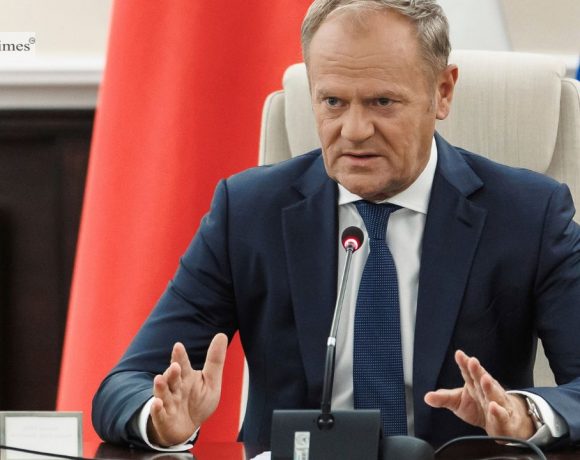
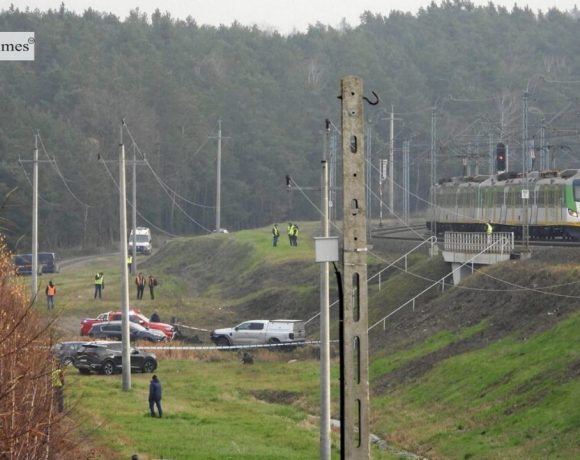
Polish Prime Minister Donald Tusk has accused Russia of orchestrating sabotage operations designed to destabilise Poland, calling the actions a form of “state terrorism”. His statement follows an explosion that damaged key railway tracks on the Warsaw–Lublin line over the weekend—a route linking Poland’s capital to the Ukrainian border. Tusk described the incident as an unprecedented assault on national security.

Authorities have identified two Ukrainian nationals as those responsible for the attack, alleging they collaborated with Russian intelligence before fleeing to Belarus. In response, Poland has requested their extradition, closed the last operating Russian consulate in Gdansk, and deployed thousands of soldiers to protect strategic infrastructure across the country.

Moscow has rejected the accusations and labelled Poland’s actions “Russophobia”, saying it will restrict Polish diplomatic presence in Russia. The explosion comes amid a broader increase in arson, sabotage, and cyberattacks across Europe since Russia launched its full-scale invasion of Ukraine in 2022, intensifying concerns about hybrid warfare tactics.

Pic Courtesy: google/ images are subject to copyright

featured News

Poland announced on Wednesday that it will close Russia’s last remaining consulate on its territory, escalating its response to a railway explosion that Warsaw has blamed on Moscow. The blast, which occurred over the weekend on the Warsaw-Lublin line leading to the Ukrainian border, was allegedly carried out by two Ukrainians working with Russian intelligence. Polish authorities say the suspects fled to Belarus, a close ally of Russia.

Foreign Minister Radoslaw Sikorski said the closure of the Russian consulate in Gdansk is the first step, following earlier closures of Russian consulates in Krakow and Poznan in response to similar sabotage concerns. Calling the railway incident “an act of state terrorism,” Sikorski added that Poland would also pursue non-diplomatic measures. Moscow, which denies any involvement, accused Poland of “Russophobia” and indicated it would restrict Poland’s diplomatic presence in Russia.

Warsaw is now urging its EU partners to curb the movement of Russian diplomats within the Schengen zone, warning that further actions may follow. Poland and other EU states have repeatedly accused Russia and Belarus of destabilizing the region, including by fueling migration at the borders. Polish intelligence officials say several additional people have been detained in connection with the blast, amid a wider surge in sabotage, arson and cyberattacks across Europe since Russia’s full-scale invasion of Ukraine in 2022.

Pic Courtesy: google/ images are subject to copyright
featured News

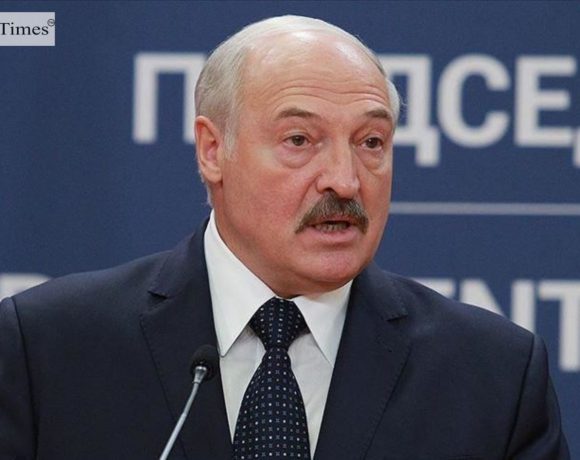
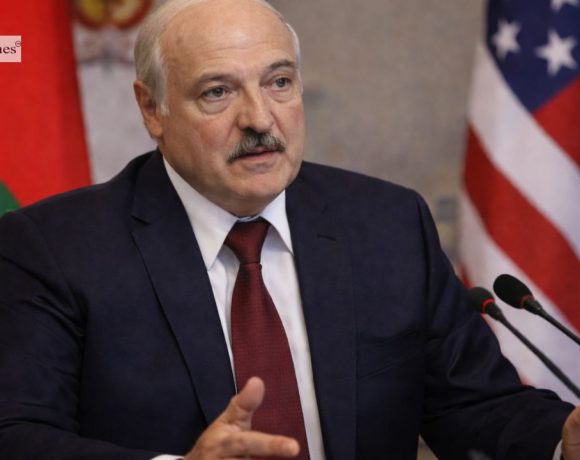
Belarus is set for a presidential election on Sunday, with five candidates appearing on the ballot. However, Alexander Lukashenko, who has ruled for 31 years, is assured of victory in what the exiled opposition has labeled a sham election. Opposition leaders have urged voters to reject all candidates as Lukashenko, 70, claims he is too focused on governance to campaign. Critics argue the election lacks genuine competition, as independent media is banned, and around 1,250 political prisoners remain detained, according to human rights groups.

Lukashenko’s tenure has been marked by protests and international condemnation, especially after mass demonstrations against alleged election fraud in 2020. Security forces cracked down on dissent, jailing opposition leaders or forcing them into exile. While recent prisoner releases suggest an attempt to mend ties with the West, opposition figures like Sviatlana Tsikhanouskaya say these moves are strategic, aiming to secure sanctions relief amid the ongoing Russia-Ukraine conflict.

As a close ally of Russian President Vladimir Putin, Lukashenko allowed Belarus to serve as a launchpad for Russia’s 2022 invasion of Ukraine. Analysts suggest that a potential end to the war could open opportunities for Lukashenko to balance relations between Russia and the West, as he has done in the past. However, exiled opposition leaders, including Ivan Kravtsov, admit to struggling to remain relevant as Belarusians prioritize survival over politics.

Pic Courtesy: google/ images are subject to copyright
News Trending

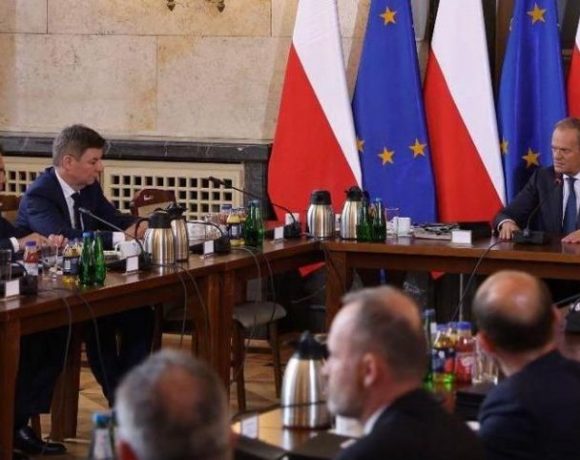
Special services in Poland uncovered and removed listening devices in a room where cabinet ministers were scheduled to convene. The regular cabinet meeting, typically held in Warsaw, was relocated to Katowice due to the attendance of several ministers, including Prime Minister Donald Tusk, at an economic conference there.

The increased spying activity in Poland is attributed to its role as a hub for military and humanitarian aid to Ukraine following Russia’s invasion in 2022. The State Protection Service, in collaboration with the Internal Security Agency, detected and dismantled the eavesdropping devices during a routine security sweep of the room. The Internal Security Agency is currently investigating the matter further.

Despite the discovery, the cabinet meeting proceeded as planned in the building. A spokesperson for the Silesia regional authorities suggested that the device may have been part of the room’s old communication system.

In a separate development, a Polish judge sought asylum in Belarus, citing concerns over Poland’s policies towards Belarus and Russia. The judge’s actions have raised suspicions of espionage, particularly as he was due to preside over cases involving security clearance for NATO-related information.

Polish Foreign Minister Radoslaw Sikorski condemned the judge’s actions, referring to him as a traitor. Prime Minister Tusk has called for a meeting of the Secret Services College to discuss potential Russian and Belarusian influence in Polish politics. He emphasized concerns about the judge’s long-standing relationship with Belarusian authorities and its implications for national security.

This incident comes after the previous year’s arrest of several members of an alleged Russian spy network in Poland, accused of planning sabotage near the Ukrainian border.

Picture Courtesy: Google/images are subject to copyright
News Trending

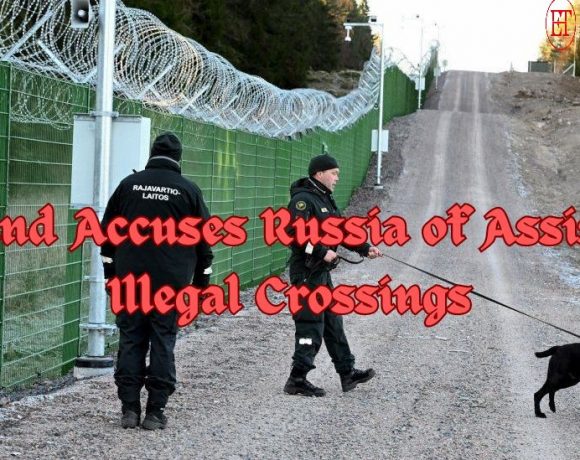
Finnish Prime Minister Petteri Orpo has accused Russia of aiding migrants in entering Finland illegally, alleging that some have received assistance from Russian border guards. The number of unauthorized crossings has increased this week, with around 89 incidents recorded in two days, compared to 91 in the preceding four months. Finnish officials reveal that migrants, including individuals from Iraq, Yemen, and Syria, are arriving legally in Russia but lack authorization to enter Finland, an EU member state.

Colonel Matti Pitkaniitty of the Finnish border guard noted a change in Russian policy, asserting that Russian guards traditionally prevented people without proper documents from reaching the Finnish border. The migrants are exploiting an agreement allowing cycling across the border, prompting Finland to recently ban bicycle crossings. Most activity is concentrated around the Nuijamaa and Vaalimaa border crossings in south-eastern Finland. Prime Minister Orpo claimed that Russian authorities are facilitating these illegal crossings, emphasizing the assistance provided by border guards.

In 2021, a significant number of migrants from the Middle East and Africa entered EU member states Poland and Lithuania by flying to Belarus, a close Russian ally. The EU accused Belarusian leader Alexander Lukashenko of using migration as a tool of “hybrid warfare” to destabilize the bloc. Colonel Pitkaniitty, while acknowledging the manageable current numbers, stated that Finnish authorities are prepared to react if crossings increase.

Interior Minister Mari Rantanen announced plans to enhance border security, emphasizing the government’s commitment to addressing the situation. Colonel Pitkaniitty noted that the route into the EU via Russia is considered safer than other options, such as crossing the Mediterranean by sea. He expressed concern that word of this route’s safety might attract more migrants, potentially leading to a rapid increase in numbers, emphasizing the unpredictability of when the opportunity might end.

Picture Courtesy: Google/images are subject to copyright

News Trending

Amid growing concerns about the presence of Wagner forces in the region, Poland is making preparations to deploy approximately 10,000 troops to its eastern border with Belarus. The Wagner troops, affiliated with Russia and stationed in Belarus, were reportedly involved in a brief rebellion. Poland’s Defense Minister, Mariusz Blaszczak, revealed that out of the total troop count, 4,000 soldiers will directly support border guards, while the remaining 6,000 will be in reserve.

Blaszczak cited alleged instances of Polish airspace violations by Belarusian military aircraft as a justification for the deployment. Belarus dismissed these accusations, labeling them as unfounded. Blaszczak emphasized the significance of such airspace violations and termed them a provocative act.

Blaszczak further asserted that events in Belarus are closely coordinated with Russia’s actions. Additionally, Russian Defense Minister Sergei Shoigu discussed plans to bolster Russian forces along its western borders, attributing the decision to increased militarization in Poland.

Poland has recently raised concerns about Wagner forces within Belarus. Notably, heightened activity has been observed in the Suwalki gap, a narrow land strip between Poland and Lithuania. Wagner forces appear to be moving in that direction, possibly to exert pressure on NATO and EU member states. Polish Prime Minister Mateusz Morawiecki even warned about the possibility of Wagner fighters disguising themselves as migrants to cross the border.

Lithuania, another neighboring country of Belarus, has also fortified its borders, citing the threat posed by Wagner fighters.

Picture Courtesy: Google/images are subject to copyright

News Trending War

Head of Wagner Mercenary Group, Yevgeny Prigozhin, announced in an audio message released by a Wagner-linked Telegram account that the group will continue its operations in Africa and Belarus but is currently not actively recruiting new fighters. Prigozhin stated that the majority of Wagner fighters are currently on leave due to a period of intense work. The group is in the process of determining its future objectives, which will be undertaken for the benefit of Russia.

While the group remains operational in Africa and maintains training centers in Belarus, Prigozhin did not provide specific details. Wagner is known for its presence in various African regions and its involvement in training Belarusian territorial defense forces. However, he emphasized that they do not plan to recruit new personnel at present. Nonetheless, if the country requires a new group to safeguard its interests, Wagner will initiate recruitment.

Prigozhin also mentioned that some fighters from the group have opted to transfer to other Russian power structures, a move that the group does not restrict. In June, Wagner fighters participated in a short-lived mutiny against Russia’s military leadership, and in the aftermath of the failed mutiny, President Vladimir Putin invited non-participating Wagner fighters to sign contracts with the Russian defense ministry.

In recent developments, on Monday morning, four people were killed in Kryvyi Rih, Ukraine, following Russian missile strikes. A drone attack was also reported in Russia’s border region of Bryansk, with a police station being hit. Moscow Mayor Sergei Sobyanin accused Ukraine of the drone attack on the Russian capital, resulting in damage to two office blocks. In response, Ukrainian President Volodymyr Zelensky warned that war was returning to Russia, and attacks on Russian territory were a natural consequence of the ongoing conflict between the two countries.

Picture Courtesy: Google/images are subject to copyright

News Trending War

Poland has become increasingly cautious of its neighbor Belarus due to the possibility of Russian Wagner group mercenaries relocating there as part of a deal to end their mutiny. In response, Poland has fortified its border with miles of fencing, thermal cameras, and spotlights, which were initially installed after Belarus encouraged migrants to cross into Poland.

Poland is deploying extra officers as reinforcements ahead of the NATO summit, expressing concerns that the Wagner forces could instigate further trouble. The unpredictability of Belarus is seen as the biggest threat, with uncertainties surrounding the motives and preparations of the Wagner group. Despite the intended disbandment and exile of the mercenaries to Belarus, there are indications that the group is still operating within Russia.

Online contacts with Wagner revealed that recruitment was ongoing, and detailed instructions were provided to find the mercenaries’ training camp in southern Russia. However, the whereabouts and future plans of the Wagner group remain unclear. While some Belarusians express concerns about the group’s potential arrival, others see their recent mutiny as a sign of weakness within the Kremlin, fueling hopes for change.

There are doubts that Wagner will relocate to Belarus in large numbers or that their leader, Yevgeny Prigozhin, would settle there due to potential scrutiny from the Russian FSB security service. Polish worries and warnings about Wagner’s presence in Belarus could be influenced by domestic politics, with some suggesting it as a political tool to enhance the government’s security credentials ahead of upcoming elections.

The situation surrounding the Wagner mutineers remains shrouded in mystery, leading Poland to maintain heightened border patrols and surveillance.

Picture Courtesy: Google/images are subject to copyright

News Trending War

Belarusian leader Alexander Lukashenko has stated that Yevgeny Prigozhin, the leader of the Wagner Group and former participant in a brief armed rebellion in Russia, is currently in Russia and not in Belarus. Prigozhin’s whereabouts had been unknown after he was spotted in southern Russia during the mutiny.

However, as part of a negotiated agreement to resolve the situation, charges against Prigozhin were dropped, allowing him and his fighters to potentially relocate to Belarus. Lukashenko, who played a role in brokering the deal, initially claimed that Prigozhin had arrived in Belarus when a private jet associated with him landed in Minsk on June 27.

However, Lukashenko recently informed reporters that Prigozhin is actually in St. Petersburg and not present in Belarus. Despite this, Lukashenko reiterated that the offer for Wagner fighters to station themselves in Belarus, a prospect raising concerns among neighboring NATO countries, remains open.

Lukashenko believes there is no risk to Belarus and does not anticipate Wagner fighters taking up arms against his country. The Wagner Group is a private mercenary army that has fought alongside the Russian military in Ukraine. Prigozhin’s mutiny involved Wagner mercenaries crossing the border into Russia from field camps in Ukraine and seizing control of certain security facilities in the southern city of Rostov-on-Don. They then proceeded toward Moscow, leading to increased security measures implemented by the Kremlin in various regions, including the capital.

While Vladimir Putin accused the group of treason, the mutiny’s resolution resulted in Prigozhin receiving security assurances and the dropping of the Russian criminal case against Wagner. The fighters were given the option to sign regular army contracts, return home, or relocate to Belarus.

Lukashenko had previously stated that Wagner mercenaries were offered an abandoned military base if they chose to join their leader. Recent satellite imagery has shown the potential establishment of tents at a former military base near Minsk, but no concrete evidence of their occupation has been observed yet.

Picture Courtesy: Google/images are subejct to copyright