featured News Trending

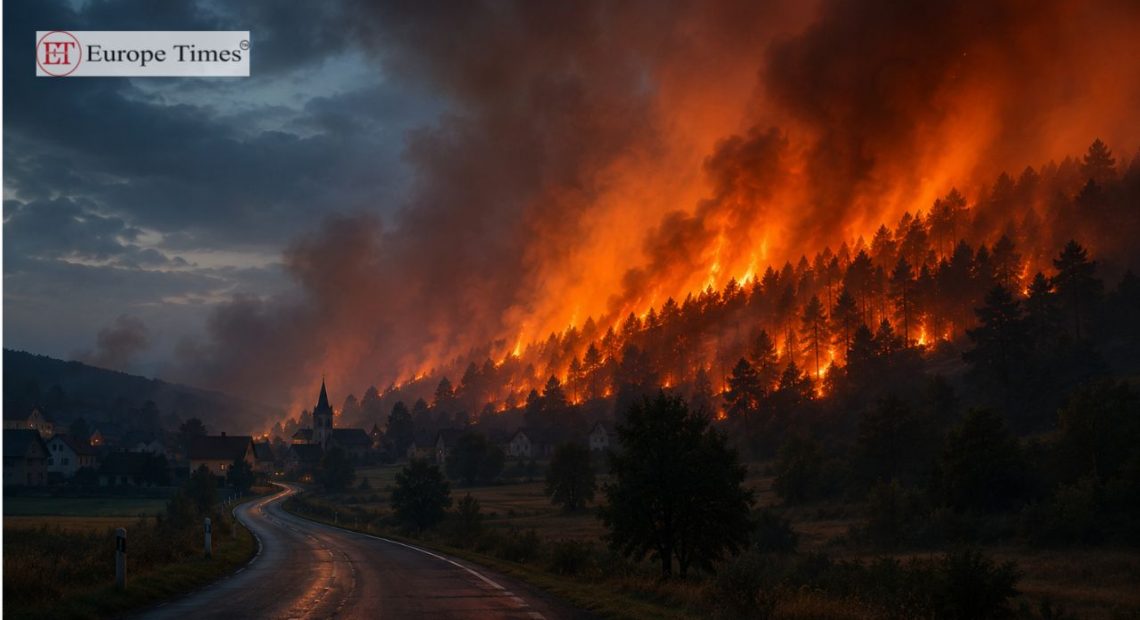
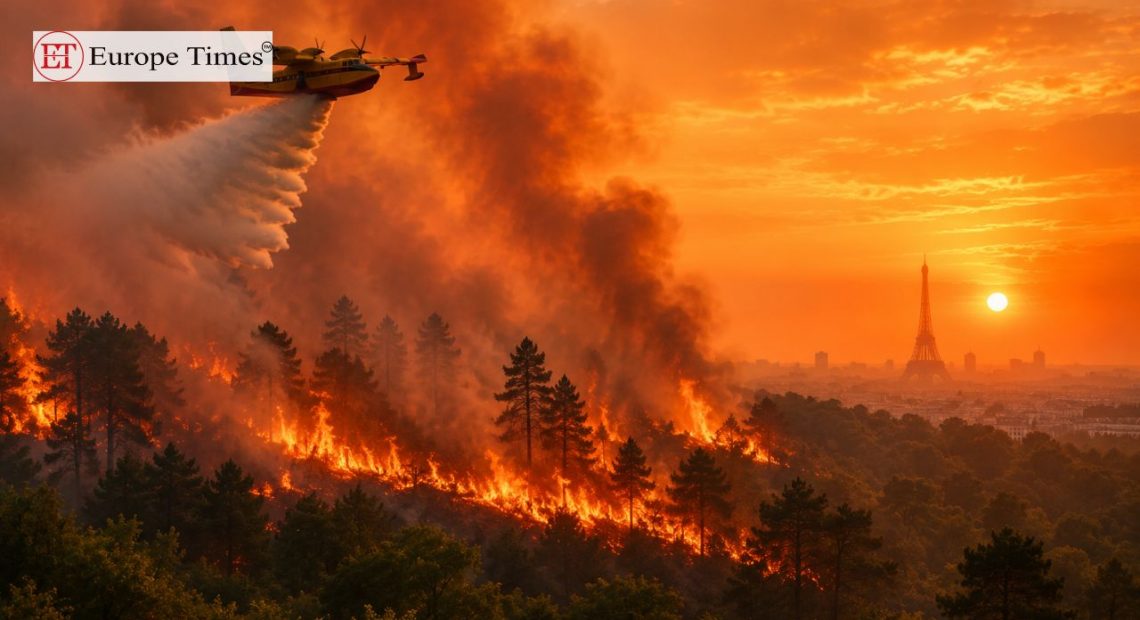
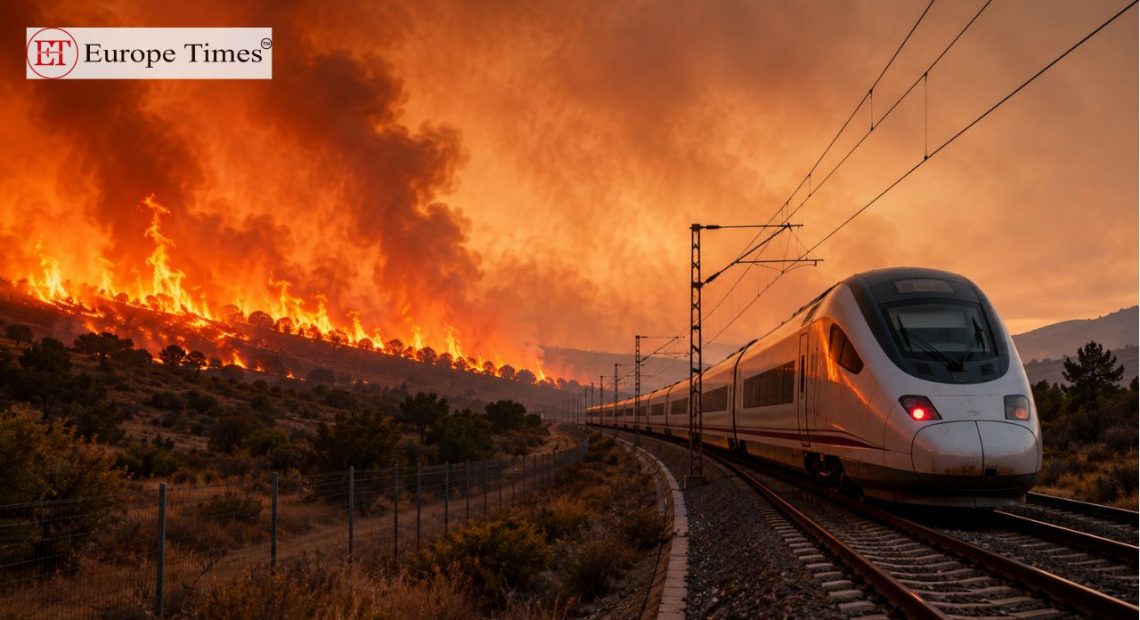
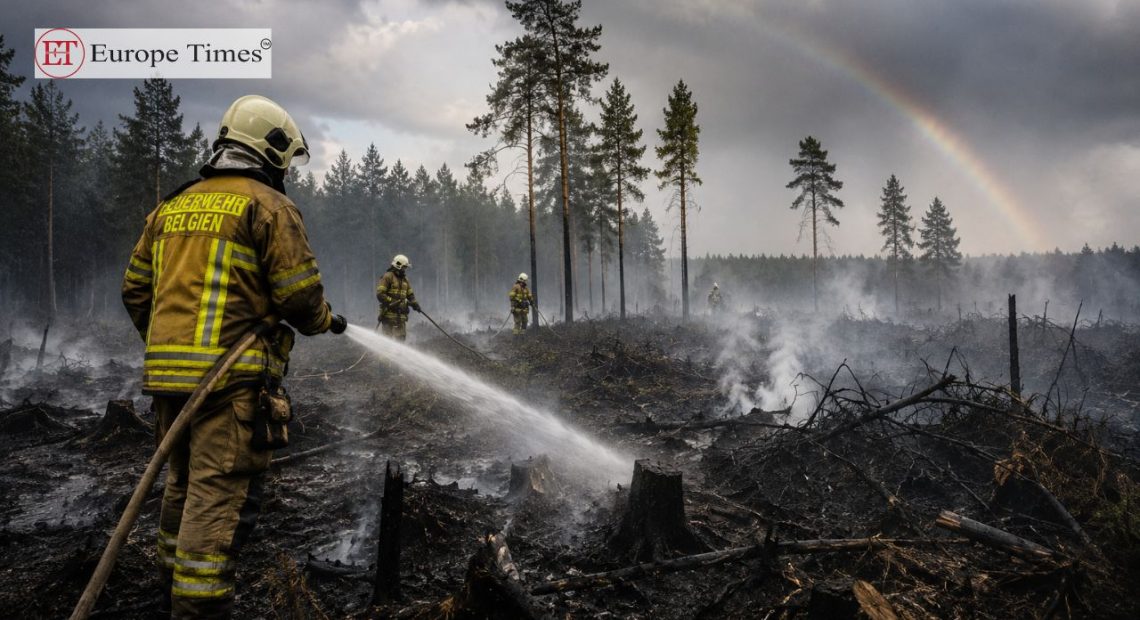
A massive wildfire swept through the historic Fontainebleau forest near Paris on Monday, forcing the closure of the A6 highway and disrupting high-speed rail services. Hundreds of firefighters, supported by water-bombing aircraft, were deployed to contain the blaze as France faced its third major heatwave of the summer. Authorities said the fire appeared suspicious, with multiple ignition points suggesting it may have been deliberately started.

The extreme heat has also worsened wildfire conditions across southern Europe. In Spain, the death toll from a devastating wildfire in Almeria has risen to 13 after a 93-year-old British woman died from burn injuries, while several people remain missing. France has placed around 26 million people under a red heatwave alert, and Italy is preparing for another prolonged spell of high temperatures, with some regions expected to reach 43°C.

Scientists warn that climate change is increasing the frequency and intensity of heatwaves and wildfires across Europe. The latest heatwave has already been linked to thousands of excess deaths, particularly among older adults, while extreme weather has disrupted agriculture, transport and energy production across several countries. Health experts have cautioned that further heatwaves could bring even greater risks in the coming weeks.

Pic courtesy: google/ images are subject to copyright

featured News Trending

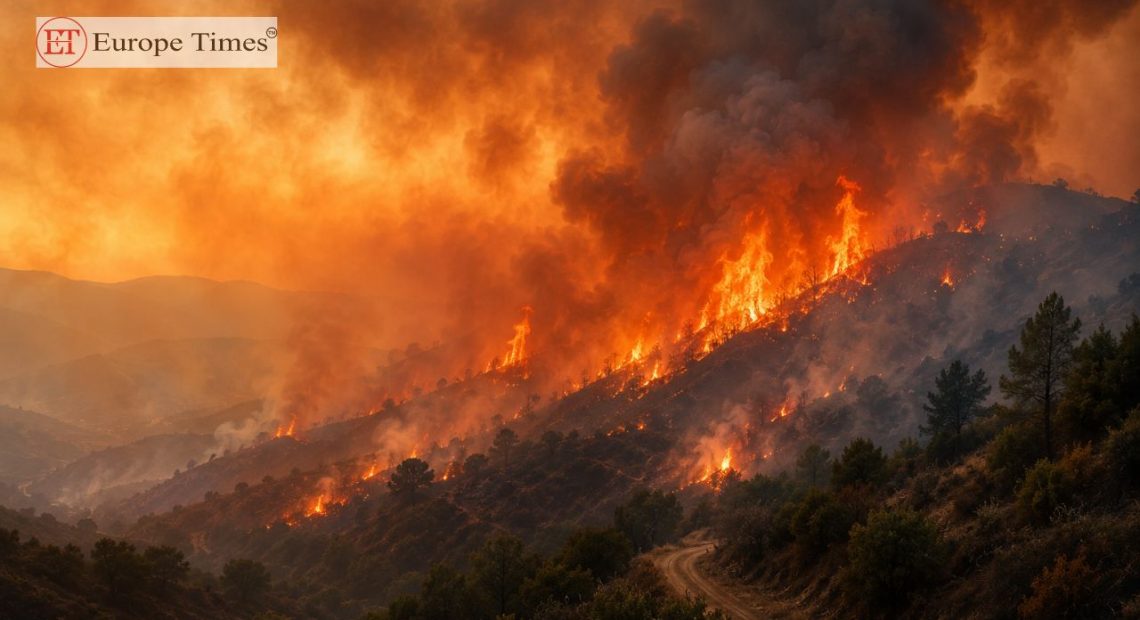
Firefighters in Spain’s southeastern Almería province have intensified efforts to contain one of the country’s deadliest wildfires after shifting from defensive operations to directly attacking the blaze. The fire, fueled by strong winds, has claimed at least 12 lives and destroyed around 6,600 hectares of land. Authorities said the situation remains complex, though crews successfully prevented the flames from spreading toward densely populated coastal areas.

Officials confirmed that autopsies have been completed on the 12 victims, but their identities have not yet been established. DNA samples have been sent to Madrid for further analysis, while authorities said seven people have been formally reported missing. Eight others were injured in the wildfire, including four who remain in critical condition at a hospital in Seville. Most of the victims are believed to be British and Belgian nationals, along with one Spanish citizen.

More than 1,400 residents have been evacuated as a precaution, with over 500 firefighters, emergency personnel, soldiers, and aerial support working to contain the blaze. Emergency teams are focusing on the western front, where the fire remains most active. Local residents described the wildfire’s rapid spread, recalling how flames engulfed the mountains within minutes and left entire communities scrambling to escape.

Pic courtesy: google/ images are subject to copyright

featured News Trending

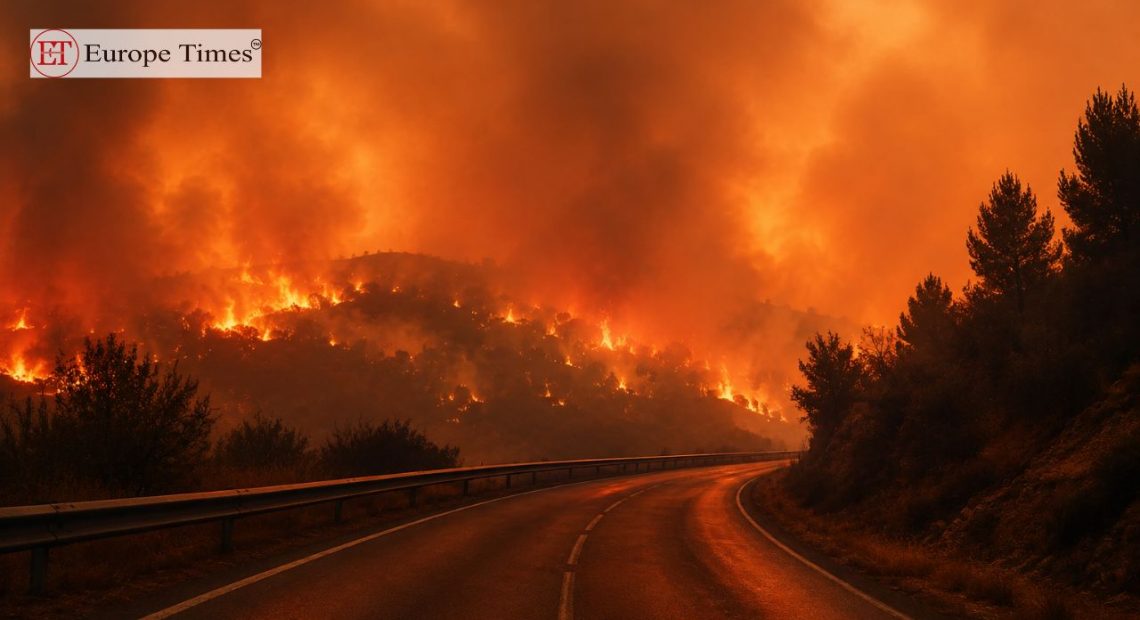
A devastating wildfire in southern Spain’s Andalusia region has claimed at least 11 lives, with authorities confirming that 19 people remain missing as firefighters continue battling the blaze. Officials said many victims died while attempting to flee the fast-moving fire, which spread rapidly around the villages near Los Gallardos, filling the area with thick smoke and cutting off escape routes.

According to emergency officials, four people died inside a car after taking an unapproved evacuation route, while seven others were found dead after abandoning their vehicles and trying to escape on foot. Authorities said residents had been advised either to use designated evacuation routes or shelter in place, warning that alternative paths had become deadly traps as the fire advanced.

Officials believe most of the victims were foreign nationals, and emergency teams are continuing search and rescue operations while working to identify the deceased. Regional leaders urged residents to strictly follow official evacuation instructions during wildfires, stressing that attempting to escape through unfamiliar routes can prove fatal in rapidly changing conditions.

Pic courtesy: google/ images are subject to copyright

featured News Trending

A wildfire in northeastern Spain disrupted high-speed rail services between Madrid and Barcelona on Thursday after flames broke out near a railway section in Catalonia. Authorities temporarily suspended train operations in the affected area to allow firefighters to tackle the blaze safely.

The disruption comes as Spain prepares for its first major heatwave of the summer. Weather officials have warned that temperatures will rise significantly over the weekend, with several inland regions expected to experience highs above 40°C and some areas potentially reaching 42°C early next week.

Forecasters also cautioned that wildfire risks will increase due to dry conditions and limited rainfall. The warning follows last year’s record-breaking heatwave across Spain and Portugal, which contributed to severe forest fires and highlighted growing concerns over the impact of climate change on extreme weather events.

Pic courtesy: google/ images are subject to copyright

News Trending

Around 3,000 individuals have been forced to evacuate their residences on Spain’s Tenerife island due to a rekindled wildfire. This fire, originally ignited on Wednesday, has now affected communities in the island’s northeast, situated away from the primary tourist zones. High temperatures and strong winds have caused the same fire that ravaged the area in August to flare up once again.

To assist in firefighting efforts, Spain’s military has been deployed. Rosa Davila, president of the Tenerife Council, expressed hope that the deployment of multiple helicopters on Thursday would aid in stabilizing the fire. As a precautionary measure, most people have been evacuated from the towns of Santa Ursula and La Orotava, according to local authorities.

The Canary Islands, including Tenerife, have been on high alert for wildfires due to unusually high temperatures. Although the August blaze was brought under control, it was never completely extinguished. That wildfire persisted for several days and caused extensive damage to thousands of hectares of forest surrounding Mount Teide, Spain’s highest peak.

The increased frequency and intensity of heatwaves are attributed to human-induced climate change, which has caused global temperatures to rise by approximately 1.1 degrees Celsius since the start of the industrial era. Without significant reductions in emissions, temperatures will continue to climb.

Picture Courtesy: Google/images are subject to copyright

News Trending

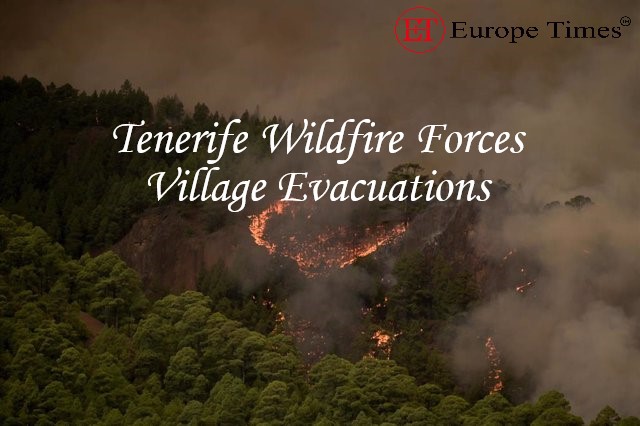
A significant wildfire on the Spanish island of Tenerife has resulted in the mandatory evacuation of five villages. The fire, which originated in a nature reserve on the island’s northeastern coast, has expanded to cover approximately 800 hectares since it ignited on Tuesday night. Access to the forest encompassing Mount Teide, Spain’s highest peak, has been restricted by local authorities. Additional outbreaks of secondary fires have also been reported. Helicopters equipped with water have been deployed to the area, and the main blaze is proving challenging to combat due to its spread through wooded areas and ravines in Candelaria and Arafo. Rosa Davila, the head of Tenerife Council, emphasized the necessity of aircraft in navigating the steep terrain and acknowledged the blaze’s significant potential.

Villages including Arrate, Chivisaya, Media Montaña, Ajafoña, and Las Lagunetas were evacuated on Wednesday morning. Tenerife’s emergency services leader, Pedro Martinez, reported multiple secondary fires breaking out. Images reveal substantial flames consuming parts of the forest, accompanied by thick plumes of smoke rising into the sky. Despite the wildfire’s impact, Tenerife’s South and North airports appeared to be operating without disruptions as of Wednesday evening.

This wildfire incident follows a recent heatwave in the Canary Islands, leaving numerous areas parched and elevating the wildfire risk. In the preceding month, La Palma, an adjacent island within the Canary Islands archipelago, witnessed evacuations due to a wildfire during a period of extreme heat. This summer, wildfires have surged across various regions worldwide, including Southern Europe, Northern Africa, Canada, and Hawaii.

The heightened frequency, intensity, and duration of heatwaves are attributed to human-induced climate change. Global temperatures have already risen by around 1.1°C since the commencement of the industrial era, and further increases are anticipated unless concerted emissions reductions are enacted by governments across the globe.

Picture Courtesy: Google/images are subject to copyright

News Trending

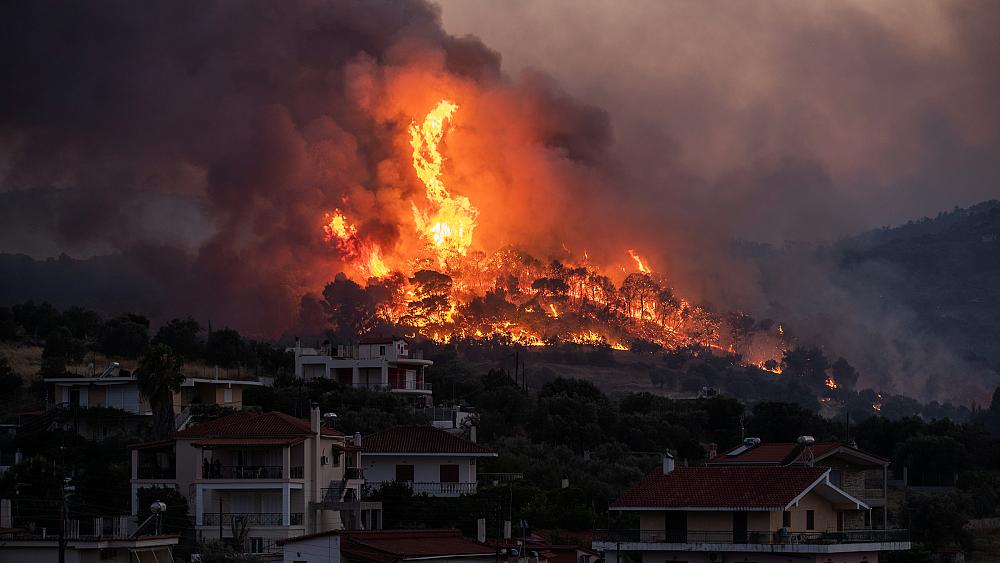
On Wednesday at least six Greek villages and two monasteries were evacuated night due to a major forest fire on the coast of the Gulf of Corinth, about 90 km west of Athens, fire officials said.

“The fire is raging on a wide front near the village of Skinos, a fire brigade spokesman said. According to some sources, several homes were damaged but no casualties were reported immediately.


“This is the first major fire of 2021 villages have been evacuated as a precaution,” fire service spokesman Vassilis Vathrakogiannis told Skai TV. As per the reports some 180 firefighters, supported by 17 planes and three helicopters, are involved in the extinguishing operations.

Pic Courtesy: google/ images are subject to copyright