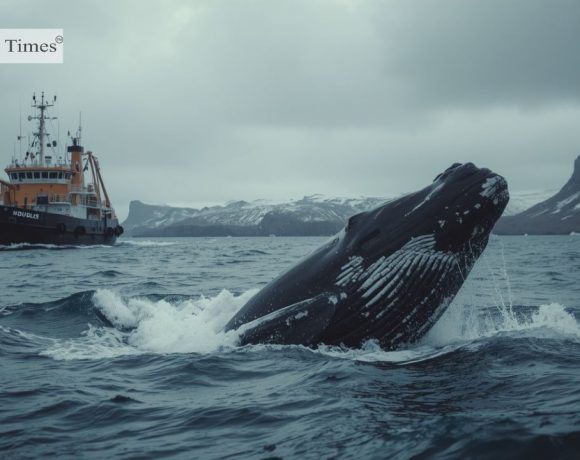
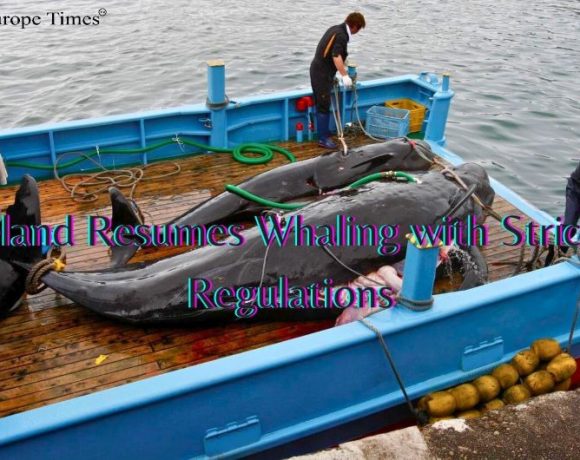
Iceland’s government has ended its summer pause on whaling and granted permission for hunting to recommence, subject to stringent new regulations. The sole company engaged in whale hunting, Hvalur, will be affected as the whaling season nears its conclusion. This decision has sparked anger among opponents of whaling.
Svandis Svavarsdottir, the Minister of Fisheries and Foods, acknowledged the majority sentiment of Icelanders who wish to halt whaling. She, however, cited the legal framework established by her predecessor’s earlier license as the basis for her decision. Iceland is now the only nation practicing large-scale whale hunting, performed solely by one company.
Svavarsdottir highlighted that Iceland’s values have evolved over time, suggesting that further discussions on the matter should occur within parliament and society. While Norway and Japan engage in commercial whaling, only Iceland allows the hunting of longer fin whales.
The traditional summer whaling season in Iceland concludes in September due to worsening weather and darkness. Sigursteinn Masson from the International Fund for Animal Welfare in Iceland expressed optimism, believing this could be the final year of whaling due to growing government unity against the practice.
The suspension in June stemmed from a report indicating that the time taken to kill whales exceeded welfare laws. The new regulations now dictate that fin whales can only be hunted within 25 meters of the boat, during daylight hours, without electricity, and with trained personnel using appropriate methods.
Financial returns from whaling have diminished, and the stricter regulations will amplify the costs and challenges of hunting. While polls suggest that 51% of Icelanders oppose whaling, numerous lawmakers may still support it.
The Left-Greens party, to which the food minister belongs, backs a ban, while others see continuing the tradition as a matter of sovereignty. Some groups have even pursued legal action to prevent the resumption of hunting.
There is growing concern that Iceland could face a Hollywood boycott due to the decision to resume whaling. Filmmakers have joined a petition against the practice. Annual quotas allow for the killing of 209 fin whales and 217 smaller minke whales.
Picture Courtesy: Google/images are subject to copyright