
featured News Trending

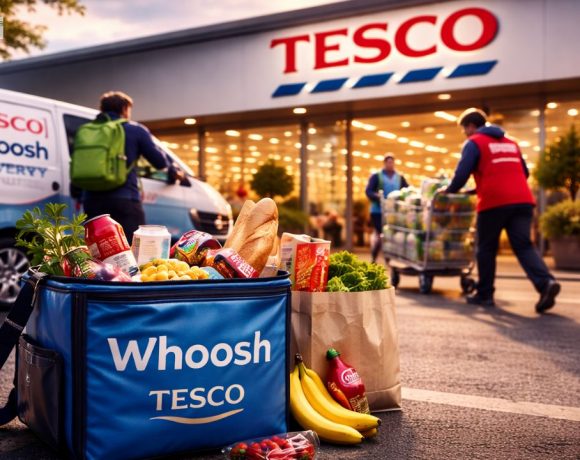
Tesco has transformed the once-feared threat of rapid-delivery startups into a competitive advantage, as its Whoosh service gains pace and strengthens the retailer’s online business. Five years after warning that fast grocery apps could chip away at supermarket dominance, Tesco now delivers groceries in as little as 20 minutes from its own stores. The retreat of loss-making quick-commerce players has left Tesco well positioned to capture demand, using its scale, store network and marketing power.

Whoosh now operates from about 1,600 Tesco stores and reaches over 70% of UK households, with staff picking orders and delivery handled by partners such as Uber Eats and Just Eat. Sales through the service rose 47% year-on-year in the 19 weeks to early January, adding more than 250,000 new customers, while Tesco’s overall online sales grew 11.2%. Industry estimates show the UK quick-commerce market growing steadily through 2030, reinforcing rapid delivery as a meaningful growth channel.

The success of Whoosh supports Tesco’s broader ambition to regain a 30% share of the UK grocery market, up from 28.7% currently. Investors see the target as achievable if Tesco maintains execution discipline and avoids costly missteps. Despite recent share price gains, Tesco still trades at a valuation discount to global peers, with analysts and shareholders viewing its strong market position and dominance in profits as key strengths going into 2026.

Pic courtesy: google/ images are subject to copyright

featured

Marks & Spencer (M&S) is overhauling its fashion supply chain from “factory to floor” as part of a major strategy to double its annual online fashion, home, and beauty sales to nearly £3 billion ($4 billion). John Lyttle, who took charge as Managing Director for Fashion, Home, and Beauty in March, said the revamp aims to make M&S a fully omnichannel retailer by modernizing how products are sourced, stored, and delivered to customers. The move follows a strong recovery after an April cyberattack that disrupted online operations and caused around £300 million in losses.

The 141-year-old retailer is investing £120 million in automation to improve efficiency and resilience across its operations. Lyttle emphasized that simplifying logistics and strengthening supply chain partnerships—particularly with factories in Asia and Europe—will help reduce costs and ensure smoother product flow. He noted that M&S has already improved its reputation for value, quality, and style, with fashion, home, and beauty sales rising 9% over the past three years and its market share climbing to 10.5%.

M&S plans to deepen long-term supplier relationships to secure consistent product availability amid global trade challenges. The company also aims to increase online’s share of total non-food sales from 34% to 50% in the coming years. Investors see the shift as a major growth opportunity, with experts saying the modernized supply chain could enhance margins and cement M&S’s position as a leading online and in-store fashion retailer in the UK.

Pic Courtesy: google/ images are subject to copyright