featured News

Ukrainian President Volodymyr Zelensky is set to meet UK Prime Minister Sir Keir Starmer, along with French President Emmanuel Macron and German Chancellor Friedrich Merz, at Downing Street. The discussion comes amid a US-driven push for Ukraine to accept concessions in peace talks with Russia. The meeting follows negotiations in Florida, where Zelensky’s team pushed to amend a White House plan that Ukraine believes leans too heavily toward Russian demands.

The talks aim to ensure that any peace deal comes with strong security guarantees capable of deterring future Russian aggression. The UK and France have been spearheading efforts to build a “coalition of the willing” to support Ukraine’s long-term defence, though the role of a future reassurance force in Ukraine remains unclear. Some European countries, including Germany, have expressed reservations about deploying troops on Ukrainian soil, fearing escalation.

Key sticking points in the US-led peace initiative include Ukrainian troop withdrawal from contested eastern regions and the future of the Zaporizhzhia nuclear power plant, currently under Russian control. While US officials claim progress is being made, Russia shows little sign of compromise and continues to insist on retaining occupied territories and blocking Ukraine’s NATO ambitions. European leaders fear the proposed terms could prioritise a quick end to the war over long-term European security.

Pic courtesy: google/ images are subject to copyright

featured News

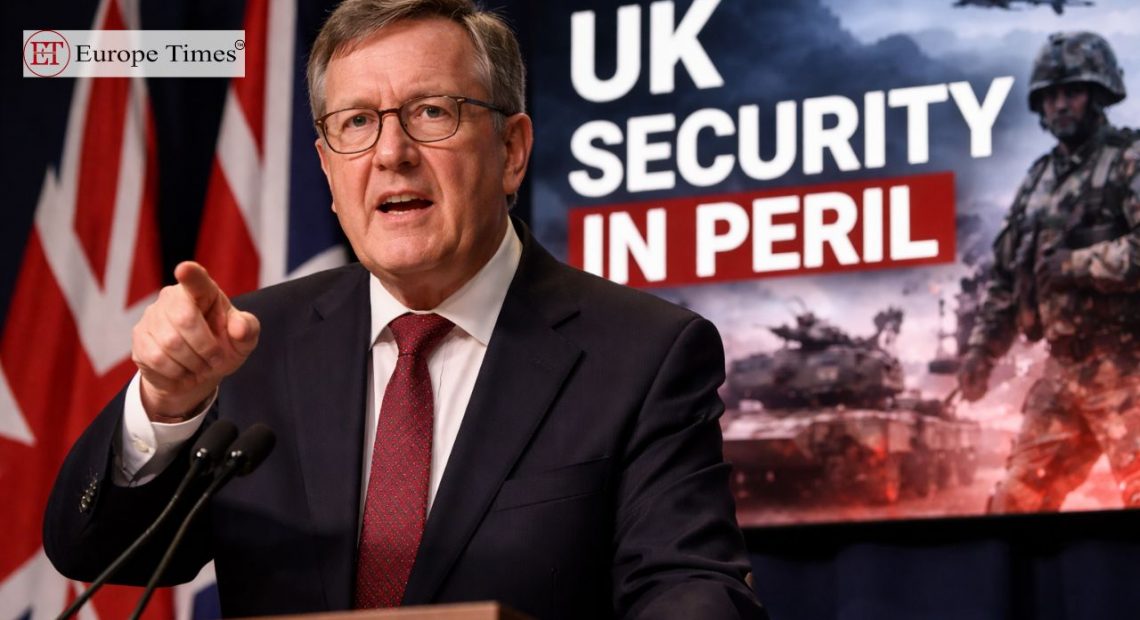
The Royal Navy has launched a new Atlantic strategy featuring advanced underwater drones and surveillance systems to protect vital subsea infrastructure from Russia’s growing presence. A key component, the SG-1 Fathom submarine glider, is being trialled to autonomously patrol for months, detect hostile submarines and support the Atlantic Bastion programme — a network of drones, warships and aircraft. Officials say the rising activity of Russian vessels near British waters, including suspected attempts to map cables and pipelines, has prompted faster deployment of new technology.

Defence Secretary John Healey says the move is a direct response to a 30% surge in Russian submarine activity in the past two years. The government recently highlighted risks after a Russian research vessel, Yantar, allegedly shone lasers at RAF pilots monitoring its route near the UK. Healey stressed that Russia continues to invest heavily in its submarine fleet and warned that protecting undersea infrastructure, including telecom and energy links, is now a national security priority.

Despite ambitious plans, critics argue the UK lacks sufficient naval resources and is relying on drones to fill gaps. Experts warn the Royal Navy has neglected its historic role in guarding the western Atlantic, forcing it to “play catch-up” even as threats grow. First Sea Lord Gen Sir Gwyn Jenkins acknowledged the urgency, urging allies such as Norway to join the UK in countering Russian undersea strategy before the technological gap narrows further.

Pic courtesy: google/ images are subject to copyright

featured News

King Charles welcomed German President Frank-Walter Steinmeier to Britain on Wednesday, marking the start of a three-day state visit aimed at reinforcing ties between the two nations. This is the first state visit by a German president in nearly three decades and follows Charles’ own inaugural overseas tour to Germany in 2023 after becoming king. The visit highlights a renewed effort to strengthen UK–EU relations in the post-Brexit era.

The king and Queen Camilla greeted President Steinmeier and his wife, Elke Büdenbender, in Windsor before joining a ceremonial carriage procession to Windsor Castle, accompanied by Prince William and Princess Kate. Steinmeier is also scheduled to meet Prime Minister Keir Starmer at Downing Street, followed by a state banquet at the castle later in the day. The trip comes shortly after German Chancellor Friedrich Merz’s visit in July, during which he signed a new treaty with Britain aimed at resetting diplomatic ties.

During the rest of the visit, Steinmeier will lay flowers at the tomb of the late Queen Elizabeth, view the historic State Sleigh designed by Prince Albert, and deliver an address to British lawmakers. He will also meet German footballers playing in the Premier League. On Friday, the German president and his wife will travel to Coventry—devastated by bombings during World War Two—where he will lay a wreath at the ruins of the old cathedral alongside the Duke of Kent, commemorating shared history and reconciliation.

Pic courtesy: google/ images are subject to copyright

featured News

The UK’s Financial Conduct Authority (FCA) has announced an investigation into potential conflicts of interest at firms managing private assets, warning of possible adverse impacts on investors. As money managers shift focus to private markets—such as infrastructure and credit funds—amid declining interest in actively-managed stocks, the regulator aims to ensure that investor interests are not compromised. Unlike publicly-traded assets, private market investments lack liquidity and price transparency, heightening risks for investors.

In a letter to market participants, the FCA highlighted concerns over firms operating in overlapping business lines, which could lead to conflicts of interest. The regulator will evaluate how firms implement their conflict-of-interest frameworks and expects updated procedures to manage these risks as private markets expand. The FCA emphasized that governance bodies must oversee these frameworks effectively to protect investor outcomes.

Additionally, the FCA published a speech by its executive director, Sarah Pritchard, addressing leverage-related risks in private markets. Speaking at an Investment Association roundtable, Pritchard acknowledged that leverage supports well-functioning markets but warned of vulnerabilities when poorly managed. She cautioned that excessive leverage, lack of transparency, or concentrated risks could amplify instability and erode confidence during economic shocks.

Pic Courtesy: google/ images are subject to copyright

featured News

More than 1,000 musicians, including Kate Bush and Cat Stevens, have released a silent album titled Is This What We Want? to protest proposed changes to Britain’s copyright laws. The UK government is considering allowing artificial intelligence developers to train their models on any legally accessible material unless creators explicitly opt out, a move that artists argue undermines copyright protections and threatens their livelihoods. The album features recordings of empty studios and performance spaces to symbolize the potential consequences for musicians.

The proposal, part of Prime Minister Keir Starmer’s vision to make Britain an AI superpower, has sparked widespread criticism from the creative community. Opponents, including Annie Lennox, Hans Zimmer, and The Clash, warn that the changes would allow AI companies to use artists’ work for free, making it harder for human creators to compete. Ed Newton-Rex, founder of the nonprofit Fairly Trained, stated that while the UK can lead in AI, it should not come at the expense of its world-renowned creative industries.

A government spokesperson defended the proposal, stating that the current copyright and AI regulations were limiting the potential of creative industries, media, and the AI sector. They emphasized that no final decisions had been made and that extensive consultations with stakeholders would continue. The public consultation on the legal changes closed on Tuesday, with many in the music industry urging the government to reconsider its approach.

Pic Courtesy: google/ images are subject to copyright

News Trending

US President Joe Biden has reportedly authorized Ukraine to utilize American-supplied weaponry to target specific sites within Russia, particularly in the vicinity of the Kharkiv region. This directive aims to enable Ukraine to retaliate against Russian forces attacking or preparing to attack them.

Recent advances by Russian forces in the Kharkiv region, close to the Russian border, have prompted this decision. Despite this, the United States maintains its stance against allowing the use of long-range strikes or the Army Tactical Missile System (ATACMS) within Russian territory.

Regarding the possibility of targeting Russian aircraft, US officials stated that Ukraine has not been prohibited from defending itself against Russian planes flying over Russian soil. While the UK and some European leaders have expressed openness to relaxing restrictions on the use of Western-supplied weapons by Ukraine, the US has previously been hesitant due to concerns about escalation.

However, recent events have prompted a shift in this approach, as indicated by US Secretary of State Antony Blinken during a visit to Moldova. Russian forces have taken advantage of opportunities to advance further into Ukrainian territory, particularly in Kharkiv, amid delays in the arrival of additional Western weapons to Ukraine.

Recent attacks, including the bombing of a supermarket and a residential building, have resulted in civilian casualties and extensive damage, with Ukrainian officials accusing Russian forces of targeting civilian infrastructure.

Picture Courtesy: Google/images are subject to copyright

News Trending

UK Foreign Secretary Lord Cameron, during his visit to Kyiv, reiterated the UK’s commitment to supporting Ukraine with £3 billion annually for defense purposes. He emphasized Ukraine’s sovereign right to defend itself and acknowledged the necessity of striking back at Russia in response to aggression. However, this stance was met with criticism from Russia, which condemned it as a dangerous escalation that could jeopardize European security. Despite this, Lord Cameron maintained the UK’s position in supporting Ukraine’s defensive actions.

The United States reportedly advised Ukraine against targeting Russian oil refineries out of concern that such actions could provoke further escalation in the conflict. This caution reflects broader international efforts to mitigate tensions and prevent the situation from deteriorating into a full-scale war. The delicate balance of power in the region underscores the importance of diplomatic dialogue and strategic restraint in managing the crisis.

Meanwhile, Russian advancements in eastern Ukraine have heightened fears of an impending summer offensive. Ukrainian intelligence officials warn of potential Russian offensives in the northeastern regions of Kharkiv and Sumy. The Ukrainian military remains vigilant, anticipating further incursions and preparing to defend key strategic positions. Despite these challenges, Ukraine maintains its determination to resist Russian aggression and safeguard its territorial integrity.

In response to Lord Cameron’s statements, Russian officials criticized what they perceive as Western involvement in a “hybrid war” against Moscow. This rhetoric underscores the deep-seated geopolitical tensions between Russia and the West, which continue to shape the dynamics of the conflict in Ukraine. As diplomatic exchanges intensify and military maneuvers unfold, the situation remains fluid, with the risk of escalation ever-present.

Amidst the ongoing conflict, Ukrainian Prime Minister Denis Shmyhal has sought assistance from Lord Cameron to help restore the country’s energy infrastructure, which has been severely damaged by repeated Russian missile strikes. This plea underscores the urgent humanitarian needs of the Ukrainian people and the importance of international support in rebuilding the country’s infrastructure and ensuring its long-term stability.

Picture Courtesy: Google/images are subject to copyright

News Trending

Recent headlines in the UK have stirred up concerns over the possibility of Germany banning sausage dogs, prompting attention from both domestic and international media. However, the reality behind these sensational headlines is less severe.

The cause of the alarm stems from the German Kennels Association’s objections to a proposed law designed to address breeding practices that cause animals to suffer. While there are worries about the potential impact on specific breeds like dachshunds, the German government has clarified that there are no plans to ban any breeds outright.

Instead, the focus of the proposed law is on preventing breeding practices that lead to health issues in dogs, particularly those that result in skeletal abnormalities or other forms of suffering. The aim is to establish clear guidelines to eliminate what is termed “torture breeding” and ensure the overall welfare of animals.

For instance, dachshunds are known to be susceptible to spinal problems due to their elongated bodies. Responsible breeding practices are being encouraged to mitigate such health issues and promote the well-being of future generations of dogs.

While some animal rights organizations advocate for bans on certain breeds, the government’s emphasis remains on prioritizing animal welfare and addressing concerns related to breeding practices. The proposed law will undergo further legislative processes, with debates expected to reflect broader political tensions and considerations of animal welfare.

Picture Courtesy: Google/images are subject to copyright

News Trending

In Paris, a defamation lawsuit against the long-standing filmmaker Roman Polanski was scheduled to commence on Tuesday, brought forward by British actress Charlotte Lewis.

The lawsuit stems from Polanski’s remarks to Paris Match magazine in 2019, where he accused Lewis of fabricating a sexual assault allegation against him from four decades ago. Polanski, now 90, had fled the United States in 1978 after admitting to unlawful sexual activity with a thirteen-year-old girl. Despite numerous allegations of abuse from other women, Polanski has consistently denied any wrongdoing.

Polanski, residing in Paris, has opted not to attend the trial personally, with his legal representation handling the proceedings. On the other hand, Lewis, currently living in the UK, was expected to be present.

Lewis initiated the legal action four years ago, expressing her readiness for the trial despite the prolonged and distressing process. In 2010, she had accused Polanski of assaulting her at the age of 16 during a casting trip to Paris in 1983, although she later appeared in one of his films.

Polanski’s defense in the defamation case refers to a 1999 article in a now-defunct British tabloid, where Lewis allegedly expressed admiration for him. However, Lewis maintains that the quotes attributed to her were inaccurate.

The defamation complaint led to automatic charges against Polanski under French law. The filmmaker, celebrated for works like “Chinatown” and “The Pianist,” has remained a controversial figure, evading extradition attempts by US authorities due to his French and Polish citizenship.

Picture Courtesy: Google/images are subject to copyright

News Trending

Citigroup plans to cut approximately 20,000 jobs, equivalent to about 10% of its global workforce, within the next two years as part of a broader restructuring initiative led by CEO Jane Fraser. This move is aimed at streamlining operations and reducing layers of bureaucracy within the bank. Fraser, who assumed leadership in 2021, envisions 2024 as a pivotal year for the company.

Citi has already divested some of its overseas operations and initiated the listing of its Mexican unit as a standalone entity. Despite reporting a $1.8 billion loss in the last quarter of 2023, attributed to specific factors such as the devaluation of the Argentine peso and a government fee imposed on US banks, Fraser emphasized the progress made in implementing the bank’s strategic plan.

The restructuring is expected to cost around $1 billion in the current year, in addition to the $800 million incurred in the recent quarter. However, the bank anticipates saving $2.5 billion over the medium term. While specific details about job cuts in the UK and affected units were not disclosed, Citi’s workforce is projected to decrease from about 240,000 at the beginning of 2023 to approximately 180,000 by 2025 or 2026.

Citi, one of the largest banks in the US, has faced investor pressure to improve its performance, with profits trailing behind its peers. The recent quarterly loss was influenced by unique circumstances, and for the full year, revenue increased by 4% to $78.5 billion, while profits declined by 38% to $9.2 billion. In comparison, competitors like Wells Fargo and JP Morgan reported revenue growth of 11% and 23%, respectively, with corresponding profit increases. Following the announcement, Citi’s shares experienced a 1.4% decline.

Picture Courtesy: Google/images are subject to copyright