featured News Trending

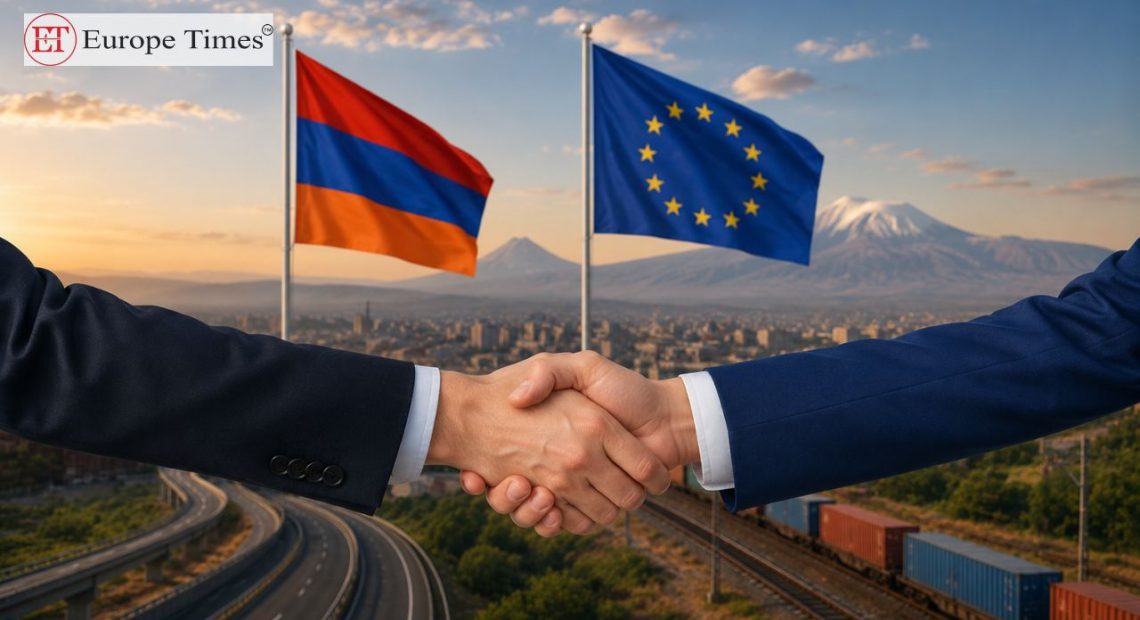
The European Union has announced an additional €18 million in economic assistance for Armenia and eased export rules for Armenian goods as part of efforts to strengthen ties with the South Caucasus nation. The support comes as Armenia faces increasing trade restrictions from Russia, which have affected key exports including fresh produce, flowers, fish, and alcoholic beverages. The latest funding forms part of a broader €52 million assistance package unveiled earlier this year.

During a visit to Yerevan, European Commission President Ursula von der Leyen assured Armenian Prime Minister Nikol Pashinyan that the EU would stand by Armenia despite external economic pressure. She said the bloc would remove tariffs on nearly 80% of Armenian exports, giving businesses easier access to the European Union’s market of around 450 million consumers. Von der Leyen emphasised that the EU would continue supporting partners facing economic challenges.

The announcement reflects Armenia’s growing efforts to strengthen relations with the European Union while maintaining its position in the Russian-led economic union. Russia remains Armenia’s largest trading partner, accounting for about 35% of its foreign trade, while the EU represents around 11%. The EU also reaffirmed its commitment to promoting peace and regional connectivity in the South Caucasus through investments in transport, energy, and digital infrastructure.

Pic courtesy: google/ images are subject to copyright

featured News Trending

France’s private sector remained in contraction during June, but the pace of decline eased significantly, according to the latest S&P Global Flash PMI survey. The Composite Output Index rose to 47.6 from 44.9 in May, indicating that business activity is still shrinking but showing signs of stabilization. Economists viewed the improvement as a positive signal after France’s first-quarter GDP was revised to reflect an economic contraction.

The manufacturing sector showed encouraging progress, with the Manufacturing PMI climbing to 50.7, returning to growth territory. Manufacturing output also improved, while the services sector remained weak but contracted at a slower rate than in previous months. The Services PMI rose to 47.4, marking its highest level in three months.

Despite the improvement, demand remained subdued as new orders declined for a seventh consecutive month and export orders continued to fall sharply. Employment levels stabilized after a significant drop in May, while business confidence improved for the first time since January. Cooling cost pressures and softer pricing trends suggested easing inflation, although uncertainties surrounding shipping routes through the Strait of Hormuz continue to pose risks to the outlook.

Pic courtesy: google/ images are subject to copyright

featured News Trending

German Chancellor Friedrich Merz said he would currently discourage his children from studying or working in the United States, pointing to what he described as a worsening social climate and shrinking opportunities even for highly educated professionals. Speaking at a Catholic convention in Wuerzburg, Merz said Germany now offers stronger prospects for young people.

His remarks come amid growing tensions between the United States and its European allies under President Donald Trump. Disagreements over trade, the wars in Ukraine and Iran, and NATO relations have strained ties between Washington and Berlin. Merz recently criticized the United States over the Iran conflict, while Washington responded with plans for partial troop withdrawals from Germany and increased tariffs on European Union car imports.

Although Merz described himself as a longtime admirer of America, he admitted that his opinion was changing. He said many highly educated Americans are struggling to find jobs and suggested the country’s environment has shifted rapidly. Trump has also criticized Germany under Merz, saying the chancellor should focus on fixing his own country before commenting on the United States.

Pic courtesy: google/ images are subject to copyright

featured News Trending

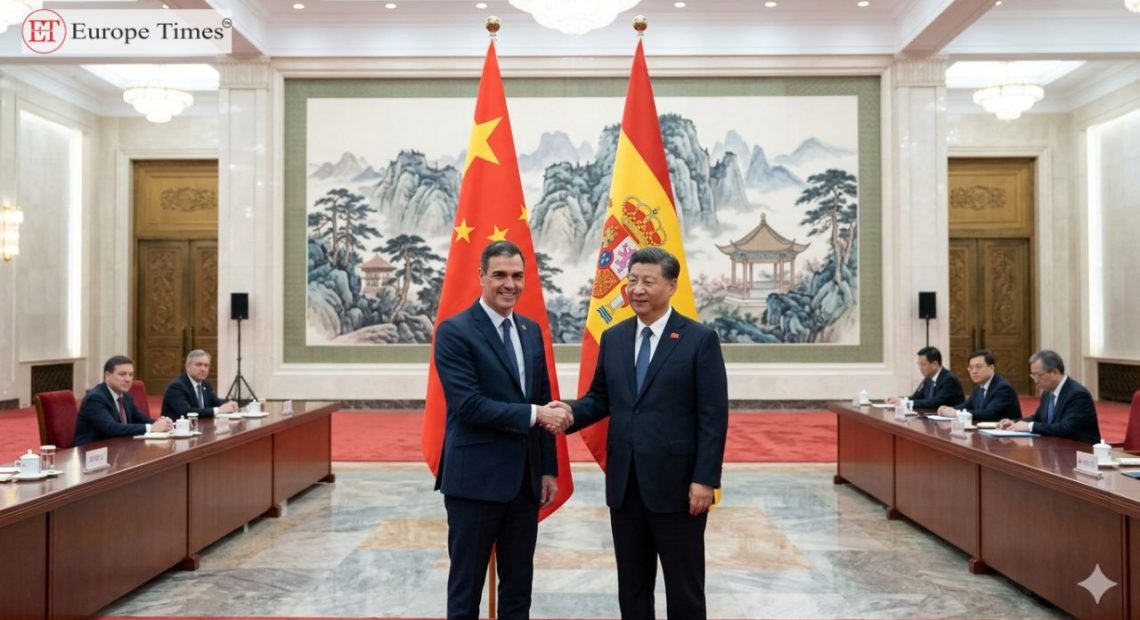
Pedro Sanchez and Xi Jinping met in Beijing to reinforce bilateral relations, emphasizing the need for stronger cooperation as the global order faces increasing instability. During the talks, Xi described the international system as “crumbling,” while Sanchez stressed that closer ties between Spain and China are essential to safeguard multilateralism.

Sanchez’s visit reflects a broader trend of Western leaders engaging with China despite ongoing geopolitical and trade tensions, particularly with the United States. Spain has positioned itself as a proponent of deeper economic collaboration with Beijing, advocating for China to play a more active role in global challenges such as climate change, security, and inequality.

During the visit, both sides agreed on measures to reduce Spain’s trade deficit and expand cooperation in agriculture, transport, and infrastructure. Sanchez also highlighted global conflicts, including situations in the Middle East and Ukraine, while reiterating Spain’s stance on upholding international law and diplomatic engagement.

Pic courtesy: google/ images are subject to copyright

featured News Trending

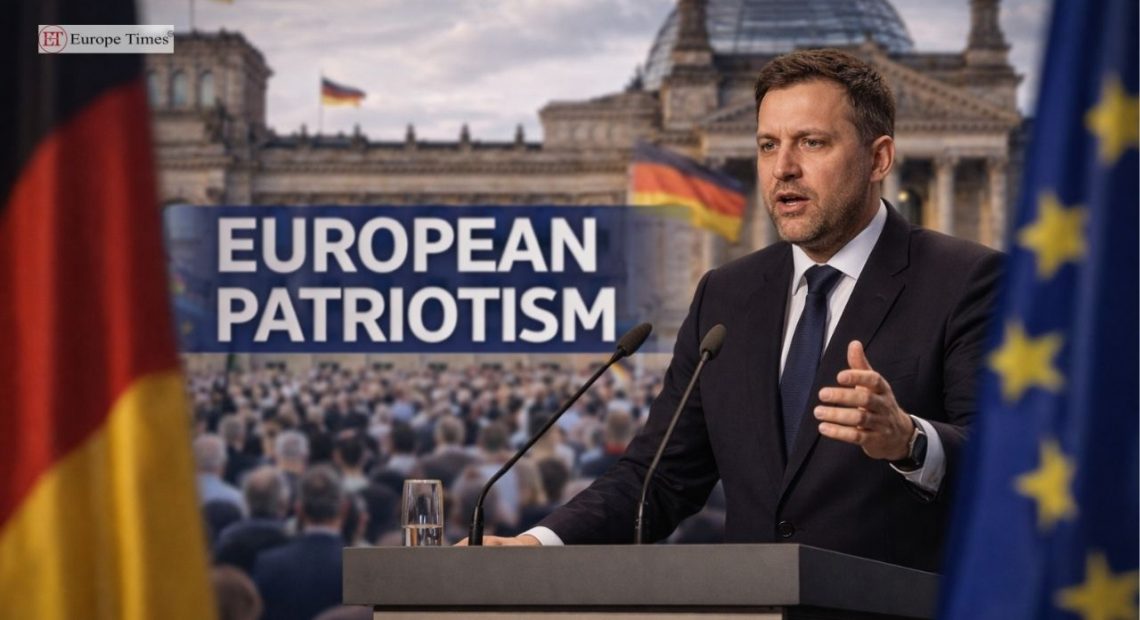
Germany’s finance minister Lars Klingbeil has called for a new era of “European patriotism” to protect the continent’s economic interests amid rising global tensions. Speaking at a lecture in Berlin, Klingbeil proposed that companies receiving state aid should be required to keep jobs within Europe and that public procurement policies should prioritise goods produced in the region.

Klingbeil said Europe must fundamentally rethink its economic strategy as traditional alliances weaken and trade becomes increasingly politicised. He argued that the transatlantic relationship is changing, pointing to signs that the United States is turning away from Europe both politically and culturally. At the same time, he warned that trade is being weaponised through subsidies, tariffs, export controls and industrial overcapacity, placing strain on Germany’s export-driven economy.

To address these challenges, Klingbeil outlined a strategy focused on strengthening European unity, diversifying trade ties beyond the United States and shielding European markets from unfair competition. He said Europe must become more sovereign and resilient, cautioning that relying solely on exports is no longer sufficient in a rapidly shifting global economic order.

Pic courtesy: google/ images are subject to copyright