

featured News Trending

Despite strained relations between U.S. President Donald Trump’s administration and the French government, American tourism to France surged in 2025. According to the French tourism ministry, visits from the United States rose 17% compared to the previous year, with more than 5 million Americans travelling to the country. The increase came even as the U.S. dollar weakened by over 10% against the euro, reversing years of favorable exchange rates for American travellers.

France welcomed a record 102 million foreign tourists in 2025, up from 100 million in 2024 when Paris hosted the Olympics. Tourism Minister Serge Papin said visitor spending also climbed 9% to 77.5 billion euros ($91.34 billion), driven by higher demand for premium hotels and experiences. He described France as a destination that continues to inspire global travellers despite geopolitical tensions.

The rise in U.S. visitors suggests many Americans remained undeterred by political friction, including trade disputes with the European Union, disagreements over digital regulation, and tensions surrounding global security issues. However, the European Travel Commission forecasts a potential dip in U.S. travel to Europe in 2026, while expecting growth from Chinese and Indian tourists to offset any slowdown. Early 2026 flight booking data from markets such as Mexico and China has been encouraging, though comparable U.S. data has not yet been released.

Pic courtesy: google/ images are subject to copyright
News Trending

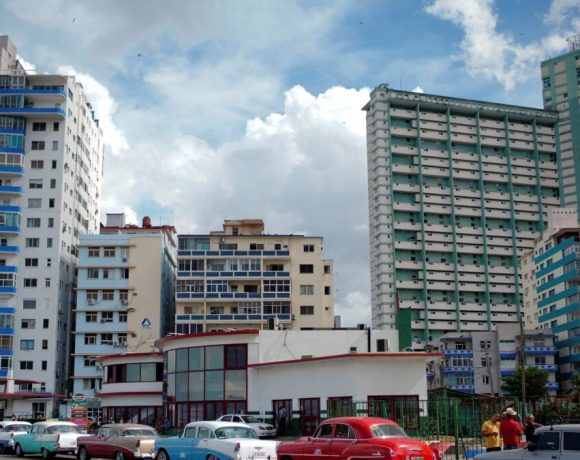
Cuba’s current fuel crisis has prompted the country to seek assistance from its historical ally, Russia. Cuban taxi driver Jorge Lloro, who drives a Soviet-era Lada, is reminded of the strong ties between the two nations. During the Cold War, around 100,000 Lada cars were imported to Cuba as a way to circumvent the long-standing US economic embargo. Now, facing a severe fuel shortage and a grim economic outlook, Cuba’s leadership has once again turned to Russia for support.

For drivers like Jorge, maintaining their vehicles has become a constant struggle due to the scarcity and high cost of spare parts. Even obtaining petrol has become a lengthy ordeal, with long queues at petrol pumps. To manage the situation, the state has organized drivers into WhatsApp groups, assigning them numbers and notifying them when it’s their turn to fill up. However, the system has been inefficient and lacking in proper organization and infrastructure, leading to frustration among drivers.

The fuel crisis is just one of the many challenges Cuba has faced recently, including food insecurity, inflation, and electricity blackouts. These longstanding issues stem from government mismanagement and the US economic embargo, aggravated further by the collapse of the tourism industry during the COVID-19 pandemic. Seizing this opportunity, some Russian companies have signed agreements with Cuba to revitalize tourism infrastructure, improve agriculture, and invest in industries such as rum and steel production.

Of particular interest to Jorge and other drivers is an agreement for Russia to supply approximately 30,000 barrels of crude oil per day. This would help compensate for the reduction in oil exports from Venezuela, Cuba’s oil-rich socialist ally, which decreased from 80,000 barrels per day in 2020 to around 55,000. The Cuban state media portrays this cooperation as evidence of the enduring ties between the two nations. However, independent economist Omar Everleny believes that closer relations with Moscow offer only a short-term solution for Cuba.

While Russia’s assistance may stabilize the current crisis, Mr. Everleny points out that Russian firms will expect timely and full payment for their investments, which could potentially burden Cuban families. He warns against relying on a single benefactor, citing historical examples of dependence on Spain, the US, the Soviet Union, and Venezuela. Instead, Everleny suggests that Cuba should develop its own production strategy, with a key role for small and medium-sized Cuban businesses.

As the day outside the petrol station comes to an end, Jorge Lloro manages to fill up his Lada. However, like the Cuban Revolution itself, the country’s situation remains precarious, relying on Russian assistance while desperately needing significant reforms in the years to come.

Picture Courtesy: Google\images are subject to copyright