featured News Trending

Tesla Inc., led by Elon Musk, likely saved hundreds of millions in U.S. taxes through offshore financial arrangements, despite Musk’s public criticism of tax loopholes. A review of corporate filings suggests the company shifted around $18 billion in profits to subsidiaries in the Netherlands and Singapore, reducing its U.S. tax burden by at least $400 million.

Experts say these overseas entities likely acted as conduits for profit shifting, a common strategy where companies move earnings to low-tax jurisdictions. The arrangement appears linked to transferring intellectual property rights abroad, allowing profits that would normally be taxed in the United States to be recorded elsewhere. While such practices are legal, they remain controversial and widely debated in global tax policy.

The findings contrast with Musk’s earlier remarks dismissing tax avoidance schemes as “shady.” Although there is no evidence Tesla broke any laws, the case highlights how multinational corporations use complex structures to minimize taxes. Recent filings hint the company may have adjusted its offshore setup, but the financial benefits from past arrangements are expected to remain significant.

Pic courtesy: google/ images are subject to copyright

featured News Trending

Tesla has filed a criminal complaint against a member of Germany’s IG Metall union for allegedly recording a non-public works council meeting at its Gruenheide plant near Berlin. According to an internal memo confirmed by the company, the external union representative attended the meeting as a guest but began recording proceedings on a computer, prompting legal action.

Plant manager Andre Thierig said in the memo that works council meetings are confidential and that recording them constitutes a criminal offence under German law. The move marks another escalation in tensions between the U.S. electric vehicle maker and IG Metall, whose relationship has been strained in recent years.

IG Metall rejected Tesla’s claims, calling the accusation a “calculated lie” ahead of works council elections scheduled for March. The union has previously accused plant management of resisting union influence, while in the last election two years ago, most Tesla employees opted for non-union representatives instead of IG Metall-backed candidates.

Pic courtesy: google/ images are subject to copyright

featured News Trending

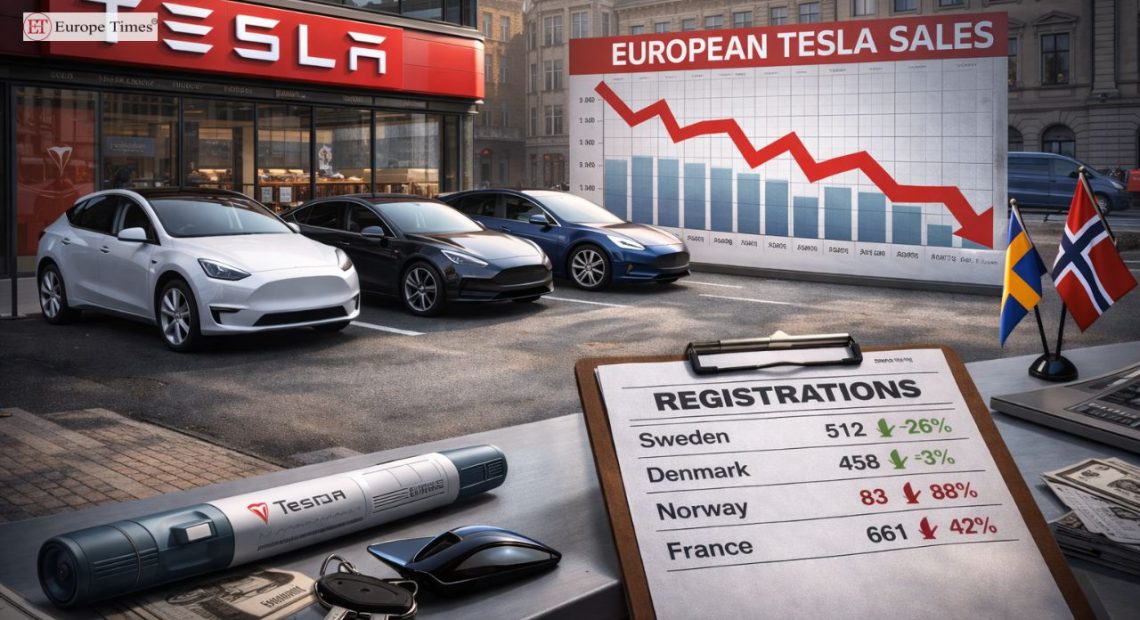
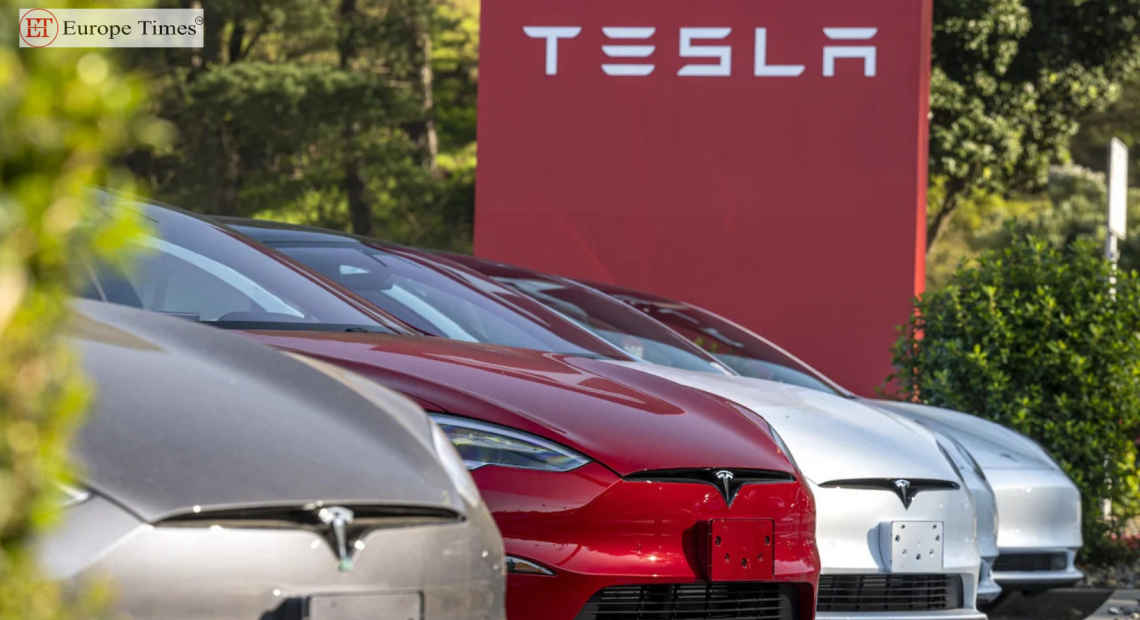
Tesla’s car registrations across key European markets showed little sign of a strong recovery in January, traditionally a slow sales month. While registrations increased in Sweden and Denmark compared to the same period last year, they fell sharply in France and Norway, highlighting uneven demand across the region.

In Sweden, Tesla registrations rose 26% to 512 vehicles, and in Denmark they edged up 3% to 458 units. However, sales dropped steeply in Norway—down 88% to just 83 vehicles—and declined 42% in France to 661 registrations. These figures come after Tesla’s European market shrank by 27% in 2025.

Despite launching cheaper versions of the Model Y and Model 3 to counter an ageing lineup and rising competition from rivals like China’s BYD, Tesla has struggled to regain momentum. Analysts say reputational issues linked to CEO Elon Musk’s political affiliations in Europe may also be weighing on the brand’s recovery, even as overall electric vehicle sales in the region improve.

Pic courtesy: google/ images are subject to copyright

featured News Trending

Tesla’s vehicle registrations fell sharply in several major European markets in December, underscoring a difficult year for the U.S. electric carmaker across much of the region. Sales dropped 66% in France and 71% in Sweden during the month, while declines were also recorded in Portugal and Spain. The weak performance reflects intensifying competition, an aging model lineup and reputational headwinds linked to Elon Musk’s political statements.

Despite the rollout of cheaper versions of the Model Y and Model 3, Tesla’s European business has yet to recover. For 2025 as a whole, registrations fell 37% in France, 70% in Sweden, 22% in Portugal and 4% in Spain. By November, Tesla’s market share across Europe, Britain and the European Free Trade Association slipped to 1.7% from 2.4% a year earlier, even as overall electric vehicle adoption continued to rise.

In contrast, Tesla enjoyed a standout performance in Norway, where registrations jumped 89% in December to 5,679 vehicles, helping the brand set a new annual sales record in 2025. Tesla captured more than 19% of the market in the country, where nearly all new car sales are electric. The company is due to report its global fourth-quarter delivery figures later on Friday.

Pic courtesy: google/ images are subject to copyright

featured News

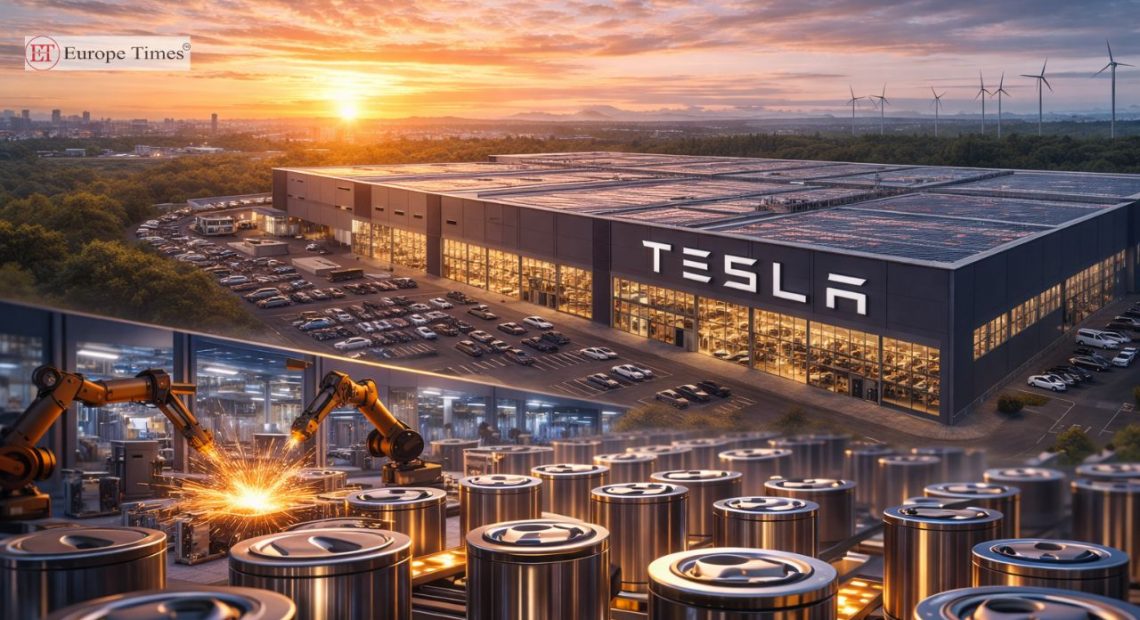
Tesla has announced fresh investments to scale up battery cell production at its Gigafactory in Gruenheide near Berlin, aiming to produce up to 8 gigawatt hours of battery cells annually from 2027. The U.S. electric vehicle maker said it will invest an additional three-digit million euro amount, taking total investment in the local battery cell factory to nearly €1 billion.

The company said the expansion is part of a strategy to deepen vertical integration at the site, allowing everything from battery cells to complete vehicles to be manufactured at a single location. Tesla described this as a unique setup in Europe that will help strengthen supply chain resilience and reduce dependency on external suppliers.

Tesla also noted that producing battery cells economically in Europe remains challenging amid competition from China and the United States. The Gruenheide facility, Tesla’s only gigafactory in Europe, currently employs about 11,500 people and plays a critical role as the automaker works to stabilise its position in the European electric vehicle market.

Pic courtesy: google/ images are subject to copyright

News Trending

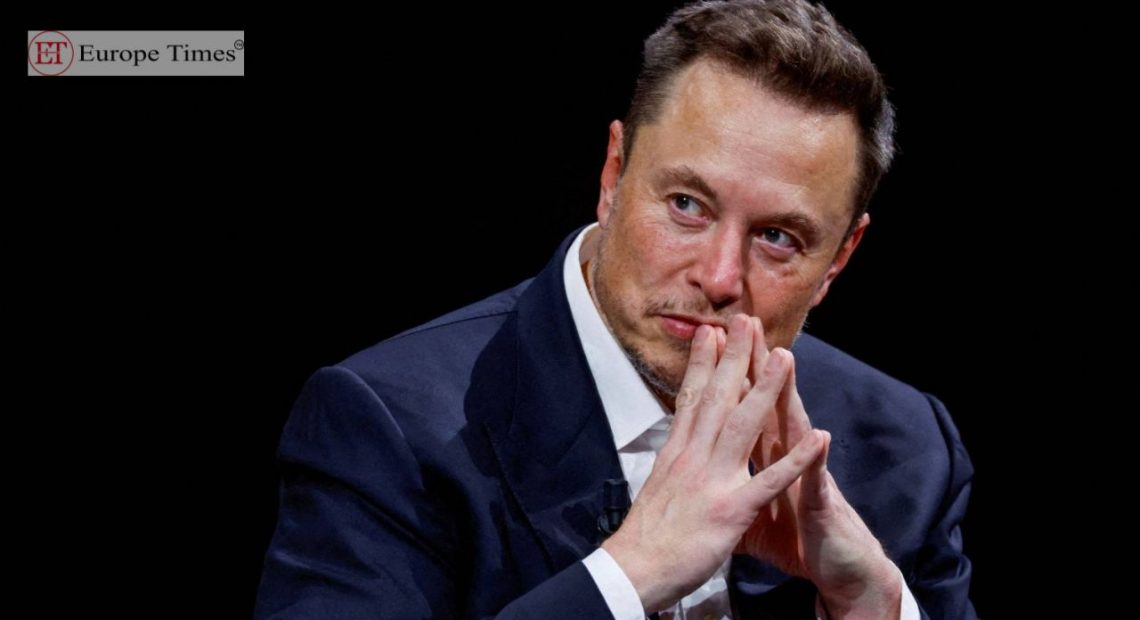
Tesla shareholders have approved a record $1 trillion pay package for Elon Musk, betting on his ability to transform the company into an $8.5 trillion enterprise over the next decade. Under the agreement, Musk will forgo a salary and receive payment only if he meets ambitious performance targets, including producing 20 million vehicles, developing one million robots, and rolling out a fleet of self-driving robotaxis. The decision underscores shareholder confidence that Musk’s leadership remains vital to Tesla’s long-term innovation and success.

Despite controversy over his outspoken political views and open support for President Donald Trump, Musk continues to command a devoted following among investors. Analysts argue that much of Tesla’s $1.4 trillion valuation is driven by what they call the “Musk premium,” a reflection of market faith in his creative and risk-taking approach. Supporters compare him to historical visionaries like Einstein and Edison, saying that without him, Tesla risks losing its innovative edge, particularly in artificial intelligence.

Still, Musk’s unpredictability poses challenges for Tesla’s board. Critics warn that his outside ventures and political involvements could distract him from the company’s complex goals. Legal experts note that the targets set for Musk may be flexible enough to secure his payout even under shifting conditions. Whether or not he achieves them, Tesla’s gamble signals how deeply intertwined Musk’s identity remains with the company’s brand and future direction.

Pic Courtesy: google/ images are subject to copyright

featured News

British motorists can now lease a Tesla electric vehicle for just over half the price compared to last year, The Times reported on Monday, citing industry sources. The price cuts come as Tesla offers discounts of up to 40% to leasing companies in an effort to clear excess inventory.

The move is reportedly driven by a lack of storage space for Tesla vehicles in the UK, forcing the automaker to take aggressive measures to move stock. Reuters could not immediately verify the report, and Tesla has not yet responded to a request for comment.

According to the Society of Motor Manufacturers and Traders (SMMT), Tesla’s UK sales fell nearly 60% in July to 987 units, while overall new car registrations across the country dropped 5% year-on-year. Despite the decline, battery electric vehicles are projected to make up 23.8% of new registrations by 2025, slightly higher than the previous forecast of 23.5%.

Pic Courtesy: google/ images are subject to copyright

featured News

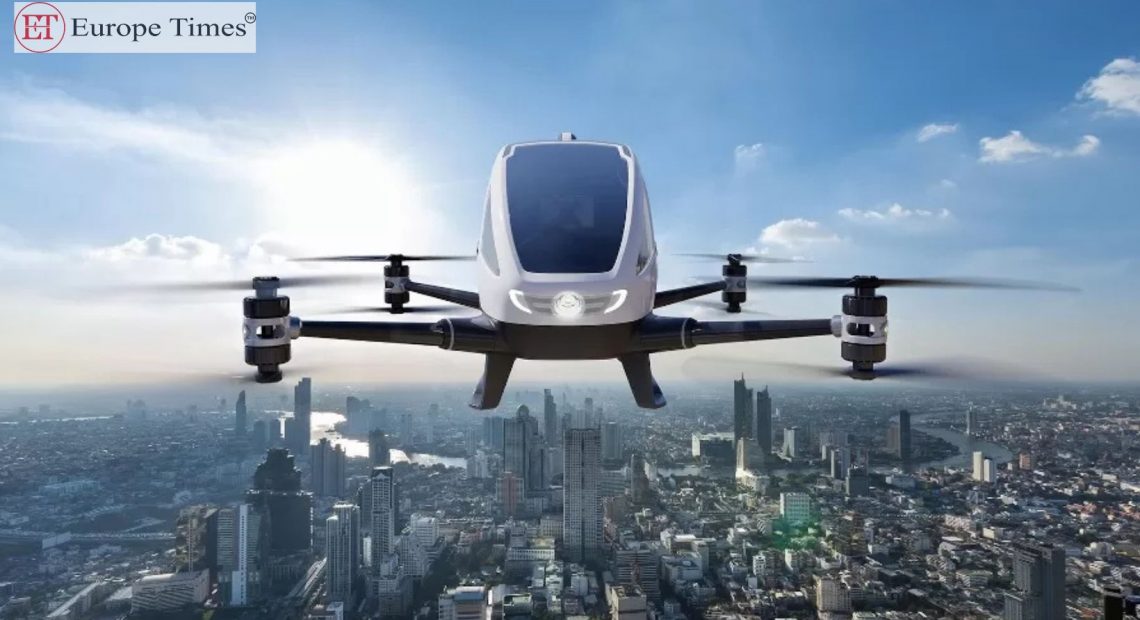
The promise of electric vertical take-off and landing (eVTOL) aircraft transforming urban mobility has hit significant hurdles, as leading innovators struggle with funding and technical setbacks. Germany’s Volocopter, which aimed to showcase its VoloCity air taxi at the Paris Olympics, failed to launch passenger services and is now relying on a potential $95 million investment from China’s Geely, which could shift manufacturing to China. Similarly, German eVTOL pioneer Lilium has entered insolvency proceedings after failing to secure crucial loans, casting doubt on its ambitious plans to build radical electric jets.

In the UK, Vertical Aerospace has made progress with its VX4 aircraft, including recent piloted tests. However, financial instability has led to a $50 million rescue investment by US-based Mudrick Capital, leaving the creditor with a 70% stake in the company. Meanwhile, Airbus’s CityAirbus NextGen appears more stable, with its four-seater design progressing as a technology project backed by ample funding and expertise.

Despite enthusiasm for the industry’s potential, concerns remain over profitability, particularly due to operational costs like pilot wages and battery replacements. While startups like Joby and Archer in the US continue to push forward, the sector faces a long road before proving its commercial viability, with investors hoping to emulate the success of transformative companies like Tesla.

Pic Courtesy: google/ images are subject to copyright

featured News Trending

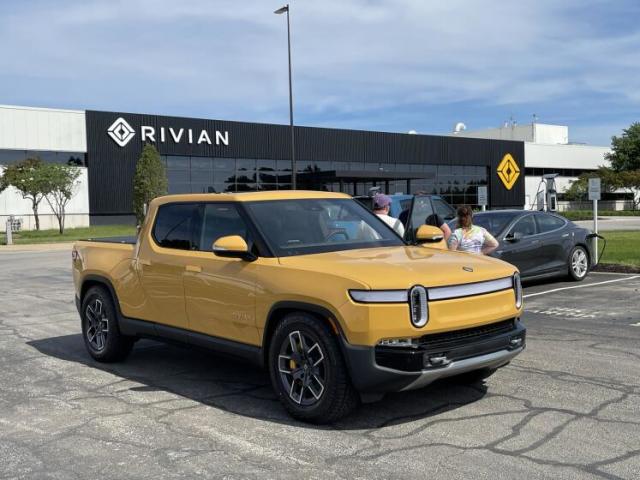
Volkswagen (VW), the German automotive giant, has announced an investment of up to $5 billion (£3.94 billion) in Rivian, a competitor to Tesla. This partnership forms a joint venture allowing both VW and the US-based electric vehicle (EV) manufacturer to share technology. Following the announcement, Rivian’s stock surged nearly 50%.

The collaboration comes amid increasing competition among EV manufacturers and the imposition of tariffs on Chinese imports by Western nations. VW will start with an initial $1 billion investment in Rivian, with an additional $4 billion planned by 2026.

Founded in 2009, Rivian has yet to achieve a quarterly profit, reporting a net loss of over $1.4 billion in the first quarter of 2024. VW, facing pressure from competitors like Tesla and China’s BYD, is working to transition from fossil fuel-powered vehicles to EVs.

The partnership provides VW with immediate access to Rivian’s software, which it can integrate into its vehicles. The deal also comes as Chinese EV manufacturers expand globally, increasing competition. The European Union (EU) recently announced plans to raise tariffs on Chinese EV imports by up to 38%, following an investigation that found Chinese EV companies had been unfairly subsidized. China criticized these tariffs as violating international trade rules and labeled the investigation as protectionist.

The tariff increase by the EU follows the United States’ decision to raise import duties on Chinese EVs from 25% to 100%. Canada is also considering similar measures to align with its allies.

Separately, Tesla announced a recall of over 11,000 Cybertrucks sold in the US due to issues with windscreen wipers and exterior trim. The Cybertrucks were first released at the end of November last year.

Picture Courtesy: Google/images are subject to copyright

News Technology Trending

Tesla’s car factory in Berlin came to a standstill on Tuesday following a suspected arson attack in the vicinity. The incident occurred when an electricity pylon near the plant caught fire, resulting in power disruptions within the factory premises and neighboring towns. Despite ongoing protests by environmental activists against the factory’s expansion, they denied any involvement in the fire incident.

Although the fire did not reach Tesla’s factory itself, it caused damage to the electricity pylon and high-voltage wires nearby. The company took precautions by sending its workers home, ensuring the safety of its building. Authorities, including Brandenburg’s Interior Minister, emphasized the seriousness of the act of sabotage but urged against premature speculation regarding the perpetrators.

The situation has escalated against the backdrop of environmental concerns, with around 100 activists camping in the adjacent forest to protest against the factory’s expansion plans. Their primary objection revolves around the potential deforestation required for the expansion project. Despite assertions from environmental groups like Robin Wood denying any involvement in the fire, tensions remain high.

Tesla’s ambition to double the size of its only European plant is met with resistance from environmental activists. Currently, the factory produces approximately 500,000 cars annually, with plans for expansion aimed at doubling this output. However, the disruption caused by the recent incident has left production in limbo, with uncertainty surrounding when operations will resume.

Picture Courtesy: Google/images are subject to copyright