featured News Trending

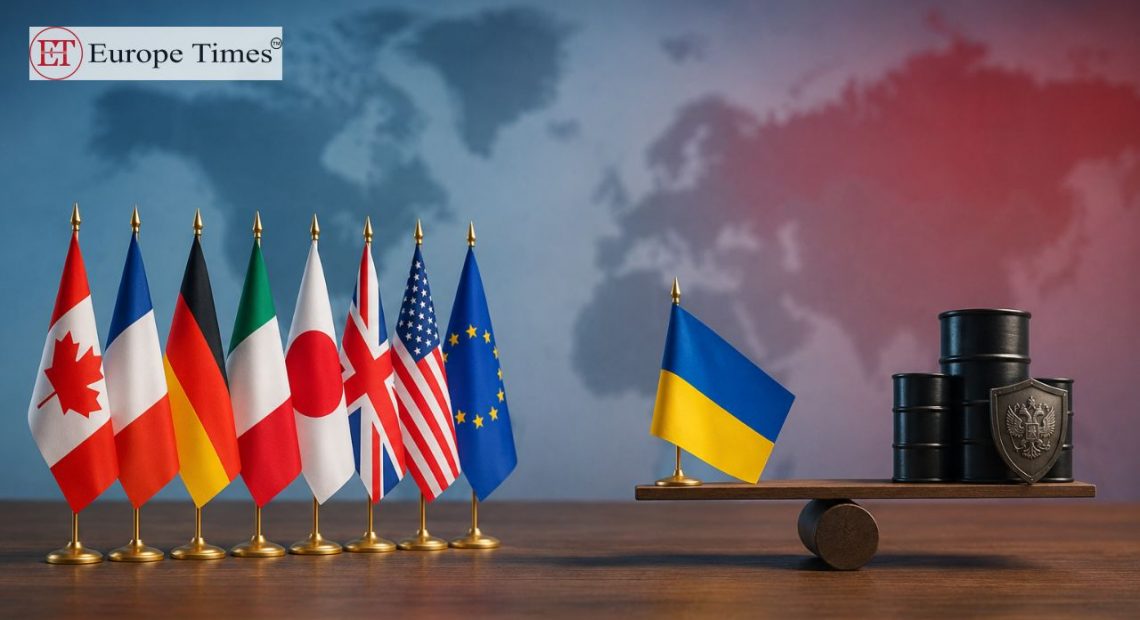
The United Kingdom is set to begin talks to join the European Union’s £78 billion ($105.9 billion) loan programme for Ukraine, signalling closer defence and financial cooperation. Prime Minister Keir Starmer is expected to announce the move at the European Political Community summit in Yerevan, highlighting Britain’s intent to support Ukraine with critical military resources.

The EU-backed loan, approved last month, aims to cover a significant portion of Ukraine’s financial and defence needs over the next two years, with a large share directed toward military spending amid its ongoing war with Russia. The UK government said participation could also open opportunities for British defence firms to contribute to Ukraine’s urgent requirements.

Alongside the funding initiative, Britain plans to introduce further sanctions targeting Russian companies to disrupt military supply chains. The move reflects growing European efforts to strengthen defence cooperation, particularly as the United States urges allies to take greater responsibility for regional security, pushing the UK and EU toward deeper strategic alignment post-Brexit.

Pic courtesy: google/ images are subject to copyright

featured News Trending

China has announced a ban on exports of dual-use items to seven European entities, accusing them of involvement in arms sales to Taiwan. The affected companies include Germany’s Hensoldt AG, Belgium’s FN Browning, and several Czech defence firms, with Beijing placing them on its export control list. China said the move targets organisations that “colluded with Taiwan,” which it considers part of its territory.

The restrictions apply to goods, software, and technologies with both civilian and military uses, such as components used in drones and semiconductors. Beijing stated that all related transfers must stop immediately, though it may grant case-by-case approvals in exceptional situations. China also said it had informed the European Union through its export control dialogue mechanism before announcing the measures.

European and Czech officials have sought clarification, with some companies saying they do not expect major business impacts. The Czech government has instructed its embassy in Beijing to seek explanations, while firms like Excalibur Army said they do not directly rely on Chinese dual-use imports. The move comes amid growing geopolitical tensions over Taiwan, which China claims as its own but which Taiwan’s government rejects.

Pic courtesy: google/ images are subject to copyright

featured News Trending

Russian billionaires increased their combined wealth by 11% over the past year to a record $696.5 billion, according to Forbes. The rise comes despite ongoing war-related pressures and sweeping Western sanctions, highlighting the resilience of Russia’s resource-driven economy.

Much of the wealth growth is tied to Russia’s vast natural resources, with higher global commodity prices boosting fortunes. Alexei Mordashov topped the list as the richest individual with an estimated $37 billion, followed by Vladimir Potanin and Vagit Alekperov. Leonid Mikhelson and his family ranked fourth, reflecting continued dominance by energy and metals tycoons.

While Russia’s wealthiest have seen gains, their fortunes remain smaller compared to global tech leaders. Elon Musk continues to lead the global rich list, far ahead of others such as Larry Page, underscoring the gap between resource-based wealth and technology-driven fortunes.

Pic courtesy: google/ images are subject to copyright

featured News Trending

Russia is witnessing a sharp rise in visitors from Gulf nations as closer diplomatic and economic ties translate into a tourism boom. From husky sledding near Moscow to hot air balloon rides over snow-covered landscapes, tourists from Oman, the United Arab Emirates, Qatar and Saudi Arabia are embracing winter experiences unfamiliar in their desert homelands. Attractions around the capital have added Arabic signage and tailored services to cater to the growing influx.

The surge comes amid Moscow’s strategic pivot away from the West during its war in Ukraine, strengthening engagement with Gulf states that have played diplomatic roles in prisoner exchanges and humanitarian efforts. Increased direct flights, visa-free arrangements and warmer political ties have supported the growth. Saudi Arabia ranked second among foreign visitors last year with nearly 75,000 tourists — a 36% annual increase — while arrivals from the UAE exceeded 59,000. Tour operators say some markets, including Saudi Arabia, have expanded nearly fifteenfold compared with pre-pandemic levels.

Despite sanctions and logistical hurdles, including airport disruptions and cash payment limitations due to suspended Western card services, Gulf tourists are spending heavily on luxury hotels, shopping and premium experiences. Russia recorded 1.64 million foreign visitors in 2025, a modest increase from the previous year though still below pre-pandemic peaks. Industry leaders say demand from Arab countries continues to grow, even as security checks and geopolitical tensions present ongoing challenges.

Pic courtesy: google/ images are subject to copyright

featured News Trending

Estonia’s foreign intelligence service has reported that Russia is rebuilding its military forces in response to Europe’s rearmament, though it does not plan to attack any NATO state in the near term. According to the report, Moscow aims to delay and hinder Europe’s ability to conduct independent military action, viewing European rearmament over the next two to three years as a significant concern.

The intelligence service highlighted Russia’s rapid expansion of ammunition production, which allows for stockpiling supplies for potential future conflicts while continuing operations in Ukraine. Any hypothetical attack on Estonia could involve coordinated drone operations across land, air, and sea. Estonia emphasized the need for the continent to invest in defense and internal security to deter potential aggression.

The report also noted Russia’s continued view of the U.S. as its main adversary while attempting to use diplomatic channels to ease sanctions and influence the Ukraine conflict. It highlighted Moscow’s strategic alignment with China, which could use Russian cooperation to challenge Western influence globally, particularly in the context of energy and military technology collaboration.

Pic courtesy: google/ images are subject to copyright

featured News Trending

The European Union has added Iran’s Islamic Revolutionary Guard Corps (IRGC) to its list of terrorist organisations, citing the group’s central role in a deadly crackdown on anti-government protests. EU foreign policy chief Kaja Kallas said the move was a response to widespread repression, placing the IRGC alongside groups such as al-Qaeda and Islamic State. Iran condemned the decision, calling it a “strategic mistake”, while human rights groups say thousands of protesters were killed during unrest in December and January.

France, which had previously been cautious over the move due to concerns about severing diplomatic ties with Tehran, backed the decision this week, alongside Italy and other EU states. The bloc also imposed new sanctions on six Iranian entities and 15 senior officials accused of involvement in violent repression, including Iran’s interior minister and senior judicial figures. Those listed face travel bans and asset freezes under EU rules.

The decision comes amid rising tensions between Iran and the West, as the US increases its military presence in the region and pushes Tehran to negotiate over its nuclear programme. US President Donald Trump said he hoped to avoid military action but warned Iran to engage in talks, while Iranian officials said their forces were ready to respond to any aggression. Independent groups estimate the death toll from the protests could exceed 20,000, though Iran disputes those figures.

Pic courtesy: google/ images are subject to copyright

featured News Trending

Italy will press its European Union partners this week to designate Iran’s Revolutionary Guard (IRGC) as a terrorist organisation, marking a significant shift in Rome’s stance, Foreign Minister Antonio Tajani said. Italy had previously resisted such a move, but Tajani said Iran’s violent crackdown on recent street protests, which reportedly left thousands dead, demanded a firm response. He said the issue would be raised at a meeting of EU foreign ministers in Brussels.

Tajani said the civilian toll from the protests required decisive action, proposing both the inclusion of the IRGC on the EU’s terrorist list and targeted sanctions against those responsible for what he described as “heinous acts.” A terrorist designation would impose far-reaching legal, financial and diplomatic restrictions on the powerful force, which was established after Iran’s 1979 Islamic Revolution and plays a central role in the country’s military, economy, and missile and nuclear programmes.

The proposal could strain EU–Iran relations, as some member states fear such a step could sever diplomatic ties, undermine efforts to revive nuclear negotiations and complicate the release of EU nationals held in Iran. While the IRGC is already subject to EU human rights sanctions, listing it as a terrorist group would require unanimity among member states, and objections from countries such as France could block the move. Tajani said Italy’s top priority remained the safety of its citizens, adding that staff at Italy’s embassy in Tehran would be sharply reduced.

Pic courtesy: google/ images are subject to copyright

featured News Trending

The French navy, with support from allied forces including the United Kingdom, has seized an oil tanker in the western Mediterranean Sea suspected of being part of Russia’s sanction-busting “shadow fleet”, officials announced on Thursday. The vessel, named Grinch, was intercepted between Spain and Morocco while sailing from Russia’s northern port of Murmansk under what authorities say was a false or irregular flag.

President Emmanuel Macron said the operation was carried out in accordance with international law and aimed at enforcing sanctions intended to curb revenue that helps finance Russia’s war against Ukraine. The tanker was boarded and diverted for further inspection after French maritime authorities confirmed doubts over its documentation. France’s maritime prosecutor in Marseille has launched a judicial investigation into the incident.

The UK provided key tracking and monitoring support through its naval assets as part of a broader effort to disrupt “shadow fleet” operations, which involve ageing tankers used to evade Western sanctions. Ukrainian President Volodymyr Zelensky welcomed the action and urged further measures to ensure sanctioned oil no longer funds Russia’s military operations. This marks another high-profile enforcement against vessels linked to sanctions evasion following similar actions by Western countries.

Pic courtesy: google/ images are subject to copyright

featured News

Belarusian President Alexander Lukashenko has said relations with the United States could improve if Washington acknowledges that efforts to overturn his 2020 re-election had failed. In an interview with U.S. outlet Newsmax, Lukashenko suggested that such an admission could serve as a starting point for renewed dialogue between the two countries.

Official results declaring Lukashenko re-elected to a sixth term in 2020 triggered mass protests in Belarus, with demonstrators alleging electoral fraud. Western nations refused to recognise the result, while Russia backed Lukashenko. The Belarusian leader responded to the unrest with widespread arrests, deepening tensions with the West.

The United States and its allies later imposed sanctions on Belarus over the election, human rights concerns and Minsk’s role in allowing Russia to use its territory to launch the invasion of Ukraine. Despite this, U.S. officials have engaged Belarus in recent years, including efforts to secure the release of detainees. Lukashenko said Belarus wanted constructive relations with Washington and even suggested the two sides could cooperate on international issues such as Venezuela.

Pic courtesy: google/ images are subject to copyright

featured News

Alphabet-owned Google is facing a temporary freeze on around €110 million ($129 million) of its assets in France after orders obtained by the administrator of its defunct Russian business. According to documents seen by Reuters, the move follows rulings issued by Russian arbitration courts between 2024 and 2025 and marks an unusual attempt by Russian authorities to pursue Western corporate assets overseas through legal channels.

The freeze targets shares linked to Google International and was requested by the judicial administrator of Google Russia. The action was executed by a French bailiff, though neither Google, its Russian administrator, nor the French government commented on the matter. A lawyer representing the Russian liquidator said a Moscow tribunal had found Google guilty of making an illegal dividend payment in 2021 worth roughly 10 billion roubles, forming the basis of the claim.

Under French law, the asset freeze is temporary and requires formal court recognition within a month to remain in effect. The Paris Judicial Court will decide whether to enforce the Russian rulings, a process that could take more than a year. Google retains the right to challenge the freeze, and if enforcement is approved, the funds could ultimately be seized to satisfy the Russian court judgments.

Pic courtesy: google/ images are subject to copyright