News Trending War

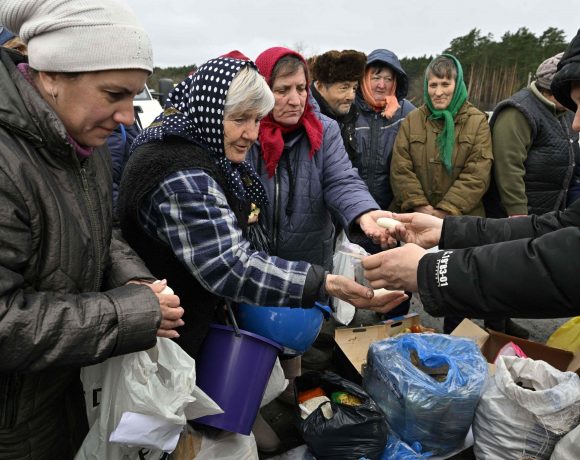
According to the head of the World Trade Organization, a food crisis sparked by the Ukraine war could last for years if no action is taken. Wheat and fertiliser shortages could be particularly damaging to African countries, according to WTO Director General Ngozi Okonjo-Iweala.

Because of the war, millions of tonnes of grain are sitting in warehouses and Ukrainian ports, unable to be exported. As grain prices rise, she described it as “really sad.” Ukraine is a major global wheat exporter, accounting for 9% of the global market. It also controls 42 percent of the global sunflower oil market and 16 percent of the global maize market.

Between 20 and 25 million tonnes of wheat are stuck in Ukraine due to gridlock caused by a Russian blockade of Black Sea ports and Russian and Ukrainian mines along the coast, while global grain prices continue to rise. Wheat prices were up 59 percent from last year, sunflower oil was up 30%, and maize was up 23 percent, according to Ms Okonjo-Iweala.

The UN is leading efforts to establish a “grain corridor” for tankers leaving Odessa and other Ukrainian ports, with a Turkish naval escort. Russian Foreign Minister Sergei Lavrov, on the other hand, has stated that Ukraine must clear mines from its Black Sea ports.

Meanwhile, Ukraine has stated that it requires “effective security guarantees” before it can begin shipments, citing concerns that Moscow could use the potential corridor to launch a sea attack on Odessa. Ukraine produces enough food to feed 400 million people on a regular basis, but Russia is accused of turning it into a stealth missile, with blockaded ports reducing exports to a trickle.

Several countries in the Middle East and Africa, in particular, will be affected by supply shortages. Libya and Eritrea import more than 40% of their wheat from Ukraine, while Lebanon imports more than 60%.

Picture Courtesy: google/images are subject to copyright
News Trending War

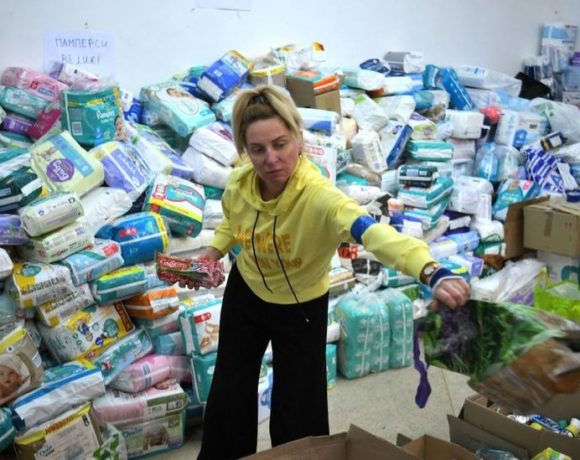
As reports of rape rise, charities are working to get emergency contraception into Ukrainian hospitals.

Nearly 3,000 packets of morning-after pills have been delivered to areas of the country hardest hit by the Russian invasion. The pills were provided by the International Planned Parenthood Federation (IPPF), and volunteers are delivering them.

Caroline Hickson, a member of the group, says that when it comes to distribution, timing is crucial. “[The morning-after pill] is effective in preventing pregnancy for a window of five days,” she told.

“If you’ve been a victim of gender-based violence, it’s critical that you get help as soon as possible, because becoming pregnant as a result of rape is extremely traumatic.”

Medical abortion pills, which can be used up to 24 weeks of pregnancy, have also been sent by the organisation.

Ms Hickson explained that the pills are available to assist women in a variety of situations, including those who are having consensual sex but believe it is not the right time to start a family.
“Emergency contraception was available in Ukraine prior to the war, but supply chains have been disrupted, and it’s critical for women to have access to this,” she said.

Because there are so many people displaced across Ukraine, it’s difficult for aid workers to determine how many supplies are needed in which areas.

Last week, Ukrainian troops pleaded for food and medicine for Mariupol, which has been cut off from humanitarian aid by Russian troops.

The IPPF has been collaborating with the UN Population Fund and the International Medical Corps to bring tablets into Ukraine.

“The UN agencies, civil society organisations, and the Ministry of Health have come together to identify the needs, and they’ve been communicated to all of us working in support,” Ms Hickson said.

Emergency contraception is included in UN kits sent to women and girls involved in conflicts around the world.

In Ukraine, they’ve done the same thing, as well as sending supplies for family planning and childbirth.

The BBC has discovered evidence of Ukrainian women being raped by invading soldiers in villages just outside of Kyiv during the war.

Similar stories have been reported by other media outlets from Bucha, a city north-west of Kyiv.

Picture Courtesy: Google/Images are subject to copyright

News Trending War

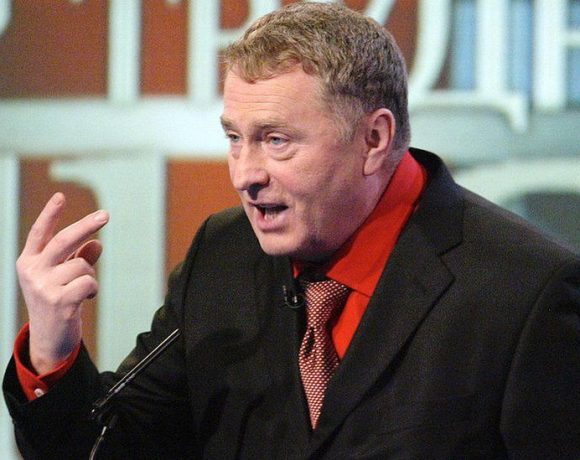
Vladimir Zhirinovsky, a Russian ultranationalist politician, died at the age of 75, after a career marked by fiery remarks and absurd antics.

He ran for president six times and was a member of the official opposition that President Vladimir Putin tolerated. He appeared to predict Russia’s attack on Ukraine in December. He claimed to have received eight doses of Covid-19 vaccine. After being admitted to the hospital with pneumonia, he contracted coronavirus and died a few weeks later.

After two earlier reports had been discounted, parliament speaker Vyacheslav Volodin finally confirmed his death on Wednesday.

“A man who deeply understood how the world works and foresaw a lot,” he said of Zhirinovsky, who was always in the thick of things. During his more than 30-year political career, Zhirinovsky’s brand of clownish ultranationalism shocked and entertained Russians.

He claimed in the early 1990s that he fantasised about the day “when Russian soldiers will be able to wash their boots in the warm waters of the Indian Ocean.” In one of his final appearances before MPs, he predicted that Russia would invade Ukraine and predicted the date almost to the minute.

From the Baltics and Germany to Japan and the Middle East, he faced similar threats throughout his career. When he threw juice in the face of a political rival, Boris Nemtsov, during a TV debate, he became famous around the world.

He ran a Soviet state-approved Jewish cultural organisation before entering politics. His Liberal Democratic Party of Russia was the country’s first official post-communist political party, and he was widely regarded as a Soviet stooge at the time. When his party won Russia’s first democratic elections in 1993, Russians and the rest of the world were stunned.

Picture Courtesy: Google/Images are subject to copyright

News Trending War

The drone footage shows three cars speeding along an empty main road just outside Kyiv, Ukraine, before turning around and racing back – all but one.

This white car makes a U-turn, but then comes to a complete stop. A man takes a step forward and raises his hands. His body then collapses to the ground. Russian soldiers appear a short time later. A soldier walks an elderly woman and her child away from the car. Maksim Iovenko was the man on the ground. Russian forces stationed along the roadside shot and killed the 31-year-old. His wife, Ksenia, was also killed in the vehicle.

Their six-year-old son and an elderly family friend who was with them managed to flee, though she was injured and remains hospitalised. On March 7, Maksim and his family were part of a convoy of about ten cars of civilians attempting to reach Kyiv from the city’s western outskirts, which had become a conflict zone.

It was filmed and widely shared by a Ukrainian territorial defence group conducting aerial reconnaissance. Sergiy says he knew something was wrong when a friend of Maksim’s who was in the convoy called him to tell him the news. When he picked up the phone, there was silence, until the friend finally said, “Stay strong, your son and daughter-in-law are gone.” Maksim worked for a travel agency in Kyiv, and it was there that he met Ksenia. Sergiy describes his son as a loving family man who enjoys singing karaoke. But, he claims, his most important hobby was spending time with his family. “He adored his son, and this was his life’s work.”

Sergiy and his family, like many other Ukrainians, did not believe Russian President Vladimir Putin would invade. Maksim assumed that once Putin did, Kyiv would be one of the first cities to be shelled.

Picture Courtesy: Google/images are subject to copyright
News Trending

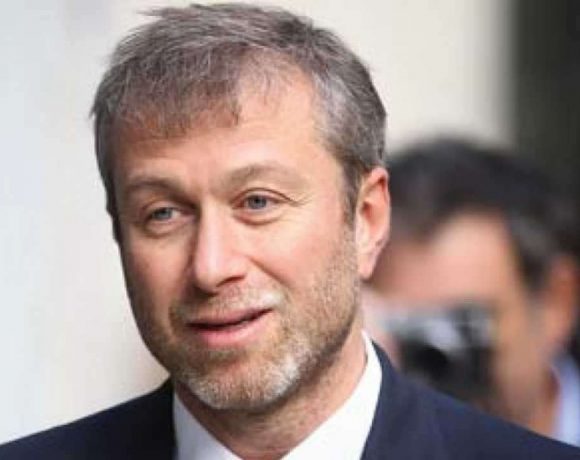
According to sources close to Roman Abramovich, he experienced symptoms of suspected poisoning while attending peace talks on the Ukraine-Belarus border earlier this month.

The Chelsea FC owner reportedly suffered from sore eyes and peeling skin, but has since recovered. According to reports, two Ukrainian peace negotiators were also harmed.

According to one report, the alleged poisoning was planned by Russian hardliners who wanted to derail the talks.

Shortly after the allegations surfaced, Reuters quoted an unnamed US official as saying that intelligence indicated the men’s symptoms were caused by “environmental” factors rather than poisoning. Later, Ihor Zhovkva, a spokesman for Ukraine’s president, told the BBC that while he hadn’t spoken to Mr Abramovich, members of the Ukrainian delegation were “fine” and one had said the storey was “false.”

However, as BBC security correspondent Frank Gardner points out, it’s not surprising that the US would want to downplay claims that anyone – particularly Russia – used a chemical weapon in Ukraine, as this could lead to retaliatory action that the US is hesitant to take.

According to the Wall Street Journal, Mr. Abramovich’s and the Ukrainian negotiators’ conditions have improved since the March 3 incident, which included Ukrainian MP Rustem Umerov. According to a source close to Mr Abramovich, he has recovered and is continuing to negotiate to end the war in Ukraine. The incident sheds light on Mr. Abramovich’s alleged role as a middleman in Ukraine-Russia talks. His exact role is unknown, but a spokesman for the oligarch previously stated that his influence was “limited.”

Mr. Abramovich was sanctioned by the European Union and the United Kingdom earlier this month for alleged ties to Russian President Vladimir Putin, which he denies.

Mr Zelensky, on the other hand, is said to have asked the US to hold off on sanctioning Mr Abramovich because he could help negotiate a peace deal with Moscow.

Mr Abramovich played an early role in peace talks, according to the Kremlin, but the process is now in the hands of the two countries’ negotiating teams.

Picture Courtesy: Google/Images are subject to copyright

News Trending War

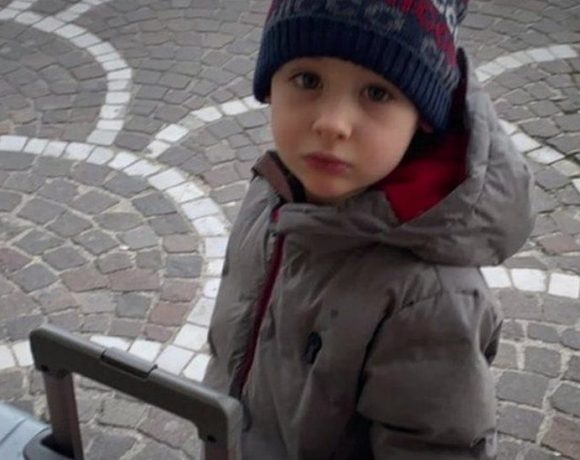
According to his family, a four-year-old Ukrainian refugee was denied entry to the UK because his passport had recently expired.

Inesse Gwynne, Platan’s great-aunt who wants to bring him to Stockport, said his visa application was denied. After the Russian invasion of Ukraine, the youngster and his mother Ruslana fled to Italy, but only made it that far.

The Home Office stated that it is “moving as quickly as possible” to ensure that Ukrainians can find safe haven in the United Kingdom. Ms Gwynne wanted to bring her relatives to her Greater Manchester home, but they “don’t know what to do” after being told “they can’t come.”

“We’d like to have them as part of our family. We want to take care of them “she stated “We’d like to send Platan to nursery, but we won’t be able to.” Ruslana, who graduated from Manchester Metropolitan University with a degree in art in 2009, still has friends and connections in the city, according to Ms Gwynne.

“Surely, this minor detail in a child’s passport can be overlooked,” she added.

“It had only been a few weeks since it had expired. What difference does it make?” The government launched the Ukraine family scheme earlier this month, allowing Ukrainians to join family members in the UK or extend their stay. The application process is free, and those who are accepted will be able to live, work, and study in the United Kingdom while also having access to government funds.

“We are moving as quickly as possible to ensure that those fleeing horrific persecution in Ukraine can find safety in the UK, setting up both the Ukraine family scheme and now the Homes for Ukraine scheme, which allows those without family connections to come here,” a spokesperson for the Home Office said.

Picture Courtesy: Google/Images are subject to copyright

News Trending War

In the Ukrainian capital of Kyiv, a Russian journalist was killed during shelling by Russian forces.

Oksana Baulina had been reporting for investigative website The Insider from Kyiv and the western city of Lviv, the outlet said in a statement. It added that she died while filming damage in the city’s Podil district. Baulina had previously worked for Russian opposition leader Alexei Navalny’s anti-corruption foundation before leaving the country.

The foundation was declared illegal and extremist by the authorities last year, forcing many of its employees to flee to other countries. Another person was killed and two others were injured in the shelling, according to reports. Baulina had previously sent several reports from Kyiv and Lviv in western Ukraine.

To the reporter’s family and friends, the publication expressed its “heartfelt condolences.” In a month of war, Baulina is one of five journalists known to have been killed. During shelling of the TV transmission tower in Kyiv in early March, Yevhenii Sakun, a camera operator for Ukrainian TV channel LIVE who also worked for the Spanish news agency EFE, was killed.

Brent Renaud, a 50-year-old American journalist and filmmaker, was shot and killed while filming in the town of Irpin outside of Kyiv two weeks later. Two days later, on the outskirts of Kyiv, two Fox News journalists, cameraman Pierre Zakrzewski, 55, and Oleksandra Kuvshinova, 24, were killed when their vehicle was hit by incoming fire.

Picture Courtesy: Google/Images are subject to copyright

News Trending

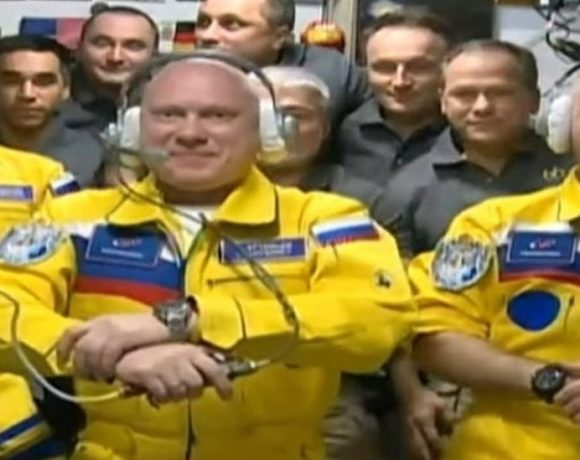
Three Russian cosmonauts allegedly boarded the International Space Station wearing Ukrainian flags as a possible statement against the war, according to Russia’s space agency.

The first arrivals were dressed in bright yellow suits with blue trimmings, as has been the case since Russia’s war began. They were greeted with hugs and greetings from their fellow American, Russian, and German crew members. The Roscosmos space agency stated, “Sometimes yellow is just yellow.”

The International Space Station (ISS) is a joint project involving Russia, the United States, Canada, Japan, and several European countries. It is led by a US-Russian partnership that has lasted two decades despite tensions between the two world powers fluctuating. After a three-hour flight from a Russian-owned facility in Kazakhstan, Russian cosmonauts Denis Matveyev, Oleg Artemyev, and Sergey Korsakov docked at the International Space Station.

A voice from Russia’s mission control said, “Congratulations on the successful docking.” Two sets of hatches were opened a few hours later, and the three smiling men in their yellow suits floated into the space station one by one. Before takeoff, at least one of the men was seen wearing the standard-issue Russian uniform, which is plain blue. Roscosmos and Nasa, the American space agency, both broadcast the event live.

People all over the world have used the colours of Ukraine’s national flag to show solidarity and support since the invasion. The reports were dismissed by Roscosmos’ press service as a “funny invention” by foreign bloggers and media.

“The new crew’s flight suits are designed in the colours of the Bauman Moscow State Technical University emblem, from which all three cosmonauts graduated… It’s insane to see the Ukrainian flag everywhere and in everything.”

Dmitry Rogozin, the head of Roscosmos, is a strong supporter of the invasion, and he claimed that the claims that the cosmonauts were wearing Ukrainian flags were made by Ukrainian nationalists.

Later, Roscosmos published another photo of Oleg Artemyev dressed in a clearly Russian suit.

The three Russians will embark on a six-month science mission aboard the International Space Station.

They will take the place of three current crew members who will return to Earth on March 30.

The colours are certainly trendy, but what is the real reason for wearing them? Is it a show of support for Ukraine or a show of opposition? After all, the suits have Russian flags on them.

Maybe neither point of view is correct.The colours are said to be a reflection of the fact that all three cosmonauts attended Bauman Moscow State Technical University, which has a similar colour scheme. The university has been touting the fact that it is a “Bauman crew.”

Picture Courtesy: Google/Images are subject to copyright

News Trending War

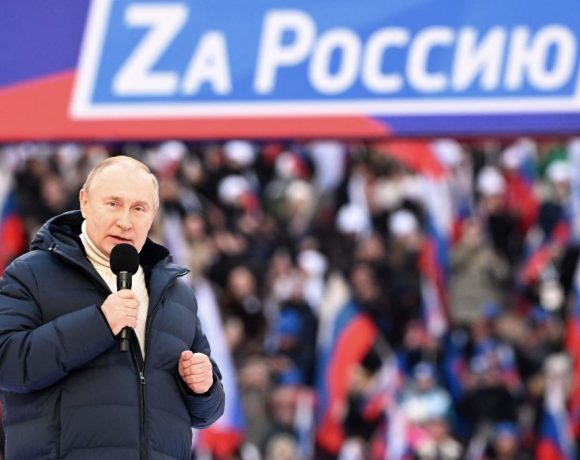
Eight years after Russian troops seized Ukraine’s Crimean peninsula, the event is being commemorated in Moscow’s Luzhniki stadium with flag-waving crowds and special lessons in schools. In front of the crowd, President Vladimir Putin made a special appearance.

Workers for the state claimed they had been ordered to participate. Teachers held lessons in schools to commemorate the “Crimean spring.” The Russian army has seized towns and cities along Ukraine’s south coast from its bases in Crimea. Mr. Putin has used the anniversary to emphasize his love for the motherland on several occasions.

Officials claimed that over 200,000 people had gathered at the stadium, but the figures could not be confirmed. The stadium holds an official capacity of 81,000 people, but there were large crowds outside as well. President Putin praised the military for demonstrating Russian unity, saying: “When necessary, they act as brothers, shielding each other from bullets with their bodies. We haven’t seen such unity in a long time.” He also repeated the lie that Russian troops were preventing genocide in eastern Ukraine.

In what the Kremlin later described as a technical glitch, his address on almost every major state TV channel abruptly cut to singer Oleg Gazmanov belting out the words “Forward, Russia” as he spoke on stage. Sergei Sobyanin, the mayor of Moscow, spoke at the event, as did Margarita Simonyan, a top state television journalist, and Maria Zakharova, a spokeswoman for the foreign ministry.

Picture Courtesy: Google/Images are subject to copyright

News Trending War

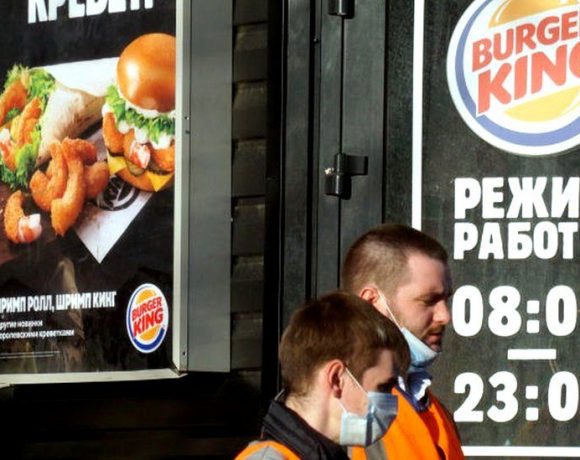
Despite demands to close the 800 Burger King locations in Russia, the company’s owner said the operator “refused” to do so. Following Russia’s invasion of Ukraine, Restaurant Brands said it had contacted its local partner, Alexander Kolobov, to close the stores.

However, it stated that “complicated” contracts with overseas partners prevent it from “walking away” from these agreements. Many Western companies have shut down or suspended operations in Russia. However, a small number of companies, including Burger King and UK retailer Marks and Spencer (M&S), have been unable to do so due to “complex” legal arrangements involving franchise partners. “We contacted the main operator of the business and demanded the suspension of Burger King restaurant operations in Russia,” Restaurant Brands International president David Shear wrote in a letter to employees. “He has steadfastly refused to do so.” Mr. Shear went on to say that any changes to the local Burger King would “ultimately require the support of Russian authorities on the ground, which we know will not happen anytime soon.”

Burger King first arrived in Russia ten years ago. It trades there through a joint venture with Mr Kolobov, who is the business’s main day-to-day operator, as well as VTB Capital of Russia and a Ukrainian investment firm. VTB Capital is a subsidiary of VTB Bank, Russia’s second-largest bank, which has been sanctioned by the United States, the United Kingdom, and other European countries. Restaurant Brands owns a minority 15 percent stake in the Russian joint venture, which is currently being wound down, according to Mr. Shear. “While we would like to do this right away, the terms of our existing joint venture agreement make it clear that it will take some time,” he said. Meanwhile, Restaurant Brands has ceased to support Russia’s supply chain, operations, and marketing. It will also turn down new investment and expansion proposals in Russia.

Following Russia’s attack on Ukraine, Western companies are still under pressure to leave the country. A group of four Ukrainian MPs told UK Prime Minister Boris Johnson on Thursday that M&S is still open in Russia. Meanwhile, German automaker Audi has warned that the conflict in Ukraine will disrupt supply chains “significantly.”

“We will see tremendous interference with all supply chains, not just the chip business, but any international supply chains,” said Hildegard Wortmann, an Audi executive.

Picture Courtesy: Google/Images are subject to copyright