featured News Trending

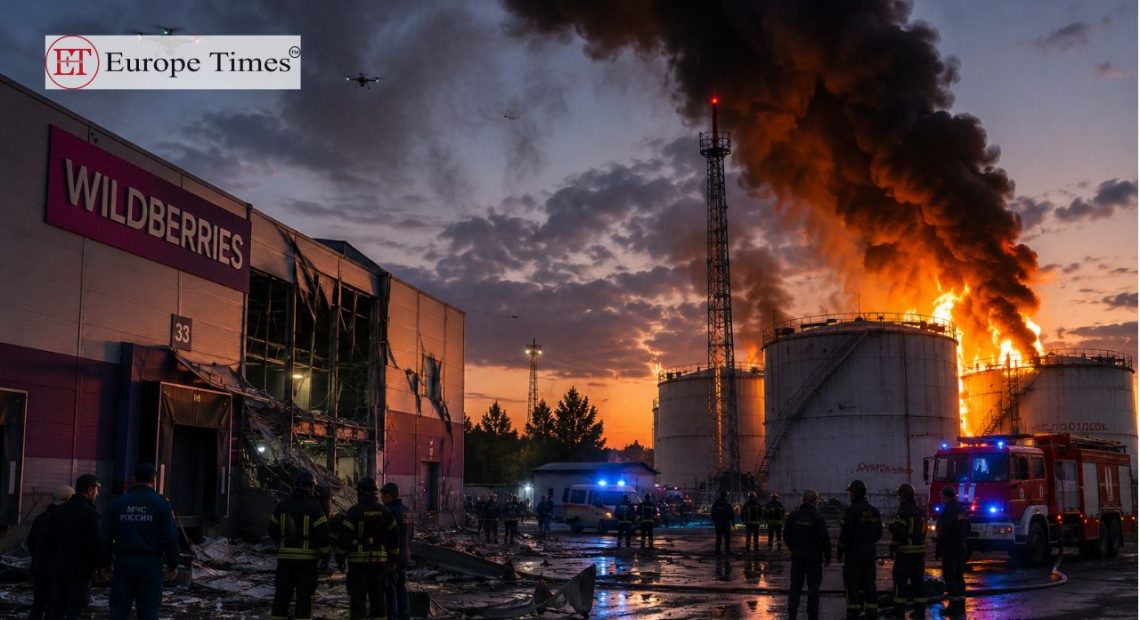
U.S. Ambassador to NATO Matthew Whitaker has cast doubt on Russia’s claim that Ukraine carried out a drone attack on President Vladimir Putin’s residence, saying it remains unclear whether such an incident even occurred. Speaking in an interview, Whitaker said he was waiting for confirmation from U.S. and allied intelligence services, noting that Ukraine has firmly denied any involvement in the alleged attack.

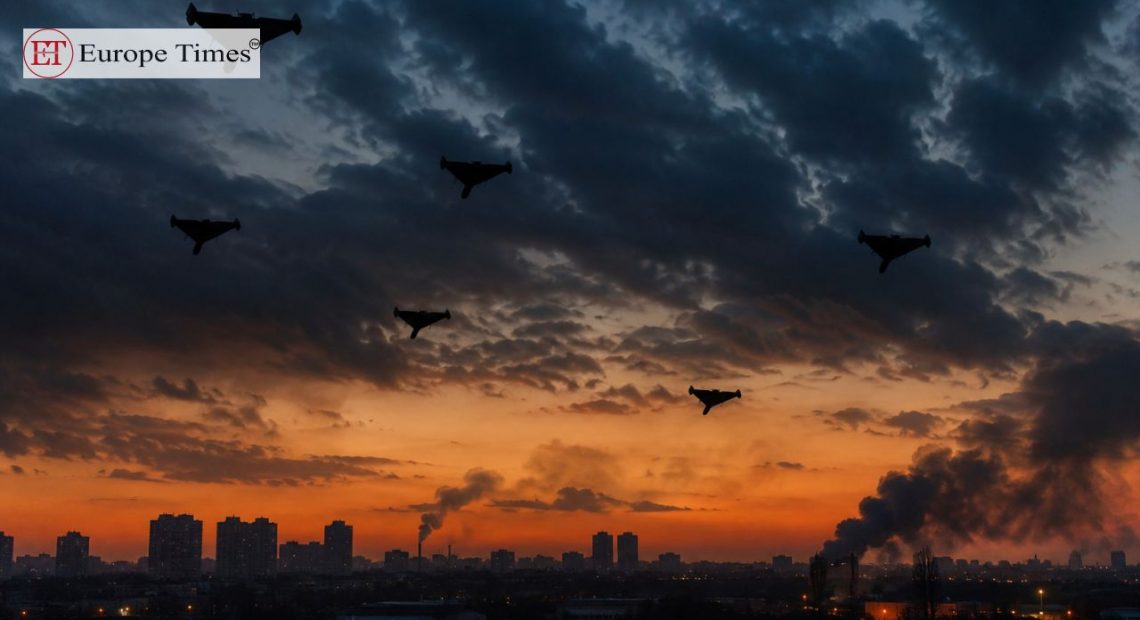
Russia alleged that Ukraine launched 91 long-range drones at a presidential residence in the Novgorod region and warned that it would retaliate and harden its negotiating position in peace talks. Ukraine dismissed the accusation as false and said Moscow has produced no evidence to support its claims. Ukrainian officials described the allegation as an attempt to justify further Russian attacks and avoid meaningful steps toward ending the war.

U.S. President Donald Trump said Russian President Vladimir Putin raised the issue during a phone call, adding that he was angry about the reported incident but acknowledged that the facts were still being verified. The White House and U.S. intelligence agencies declined to comment further. Whitaker stressed that any conclusions would depend on intelligence assessments, as diplomatic efforts continue amid signs that Washington and Kyiv may be close to a broader peace agreement despite unresolved territorial disputes.

Pic courtesy: google/ images are subject to copyright

featured News Trending

Pope Leo has expressed deep sadness over Russia’s refusal to agree to a Christmas ceasefire in its nearly four-year-long war with Ukraine. Speaking to journalists outside his residence in Castel Gandolfo, Italy, the pontiff said the decision was particularly disheartening given the symbolic importance of Christmas as a time for peace and reflection.

The Pope appealed once again to global leaders and “people of good will” to respect at least Christmas Day as a pause in hostilities. He urged all sides involved in conflicts to consider a temporary ceasefire, even if only for 24 hours, as a gesture of humanity and compassion during the Christian holy period.

Pope Leo, the first pontiff from the United States, said he hoped his renewed appeal would be heard and lead to a brief moment of peace, not only in Ukraine but across the world. His comments come amid continued fighting and international calls for restraint during the festive season.

Pic courtesy: google/ images are subject to copyright

featured News Trending

The Kremlin said on Sunday that recent changes proposed by Europe and Ukraine to U.S.-drafted plans aimed at ending the war in Ukraine have not improved the prospects for peace. Russian President Vladimir Putin’s top foreign policy aide, Yuri Ushakov, said Moscow remains unconvinced that the revised proposals would help achieve a lasting settlement, reflecting Russia’s continued scepticism toward European and Ukrainian involvement in shaping the peace framework.

The original U.S. proposals, which were leaked last month, sparked concern among European and Ukrainian leaders who feared they were overly favourable to Russia and could pressure Kyiv into excessive concessions. In response, European and Ukrainian negotiators have held talks with envoys from U.S. President Donald Trump’s administration to introduce their own amendments, though the precise details of the updated proposals have not been made public. Ushakov said he had not yet seen the full documents but was confident the changes would not enhance the chances of long-term peace.

His remarks came after Putin’s special envoy Kirill Dmitriev held talks in Florida with U.S. special envoy Steve Witkoff and Trump’s son-in-law Jared Kushner. Dmitriev is expected to report back to Putin on the discussions, after which Moscow will decide its next steps in contacts with Washington. The talks underscore the high stakes surrounding whether the war—the deadliest in Europe since World War Two—can be brought to an end, the future of Ukraine, and whether any U.S.-brokered deal would be durable.

Pic courtesy: google/ images are subject to copyright

featured News Trending

Russian President Vladimir Putin has said Russia would not launch any new wars after Ukraine if Western countries treat Moscow with respect and acknowledge its security interests. Speaking during his annual “Direct Line” televised marathon, Putin dismissed claims that Russia plans to attack Europe as “nonsense” and said further military operations could be avoided if the West stopped what he described as deception, particularly over Nato’s eastward expansion.

Answering questions from the BBC and other international journalists, Putin repeated that Russia was open to ending the war in Ukraine “peacefully,” but only on its own terms. He reiterated demands that Ukrainian forces withdraw from regions partially occupied by Russia and abandon efforts to join Nato. Putin also claimed Russian forces were advancing on the battlefield and insisted that responsibility for blocking peace lay with Western governments and Ukraine’s European backers, not Moscow.

The lengthy broadcast, which mixed foreign policy with domestic concerns, came as fighting in Ukraine continued, with Ukrainian officials reporting deadly Russian missile strikes hours after the event. Putin acknowledged economic pressures at home, including rising prices and higher taxes, while portraying Russia as resilient. He concluded by saying Russia was ready to cooperate with the US, Europe, and the UK as equals, provided its long-term security was guaranteed, accusing the West of deliberately turning Russia into an enemy.

Pic courtesy: google/ images are subject to copyright

News Trending

Two individuals suspected of espionage and sabotage activities targeting German military support for Ukraine have been apprehended in Bavaria, Germany. Described as dual German-Russian nationals, they were arrested in Bayreuth on suspicion of spying for Russia, including scouting potential targets such as US military facilities in Germany. The main suspect, Dieter S, is accused of various offenses, including planning explosions, arson, and maintaining contact with Russian intelligence. He is also alleged to have participated in a Russian proxy armed force in eastern Ukraine from 2014 to 2016.

The second suspect, Alexander J, is accused of assisting Dieter S in identifying potential targets. Germany, as the second largest donor of military aid to Ukraine after the US, has earmarked significant funds for this purpose. The suspects are accused of discussing sabotage operations to undermine Germany’s support for Ukraine, particularly targeting military and industrial infrastructure. The arrests are seen as a significant success in combating Russian espionage networks, according to German officials.

These developments come amidst ongoing efforts by Germany to bolster Ukraine’s air defenses, with plans to provide additional Patriot systems. The arrests follow other notable espionage cases in Germany, including a German national suspected of passing information to Russian diplomats and the former CEO of Wirecard, who is believed to have fled to Moscow and is now suspected of being a Russian spy.

Picture Courtesy: Google/images are subject to copyright

News Trending War

Ukraine’s President Volodymyr Zelensky has announced the removal of Defense Minister Oleksii Reznikov from his position. Reznikov had been in charge of the defense ministry since before Russia’s full-scale invasion in February 2022. President Zelensky cited the need for “new approaches” in the defense ministry and nominated Rustem Umerov, head of Ukraine’s State Property Fund, as Reznikov’s successor.

Reznikov, who had developed strong relationships with senior politicians in London, is rumored to become Ukraine’s new ambassador to the United Kingdom. While he was internationally recognized for his role in lobbying for additional military equipment, his dismissal had been anticipated, with Reznikov himself exploring other positions within the Ukrainian government.

The cabinet reshuffle is not expected to bring significant changes to Ukraine’s battlefield strategy, as General Valery Zaluzhny continues to oversee the campaign as the commander of Ukraine’s armed forces. Reznikov’s dismissal is part of a broader anti-corruption effort in President Zelensky’s administration, as Ukraine aims to address corruption issues to join Western institutions like the EU.

Although Reznikov himself is not personally accused of corruption, the Ministry of Defense had faced scandals related to the procurement of goods and equipment for the army at inflated prices. Earlier this year, Reznikov’s deputy resigned amidst such allegations.

In addition to the anti-corruption drive, Ukraine is engaged in a slow and bloody counter-offensive with advanced weapons received from Western allies. Ukrainian forces have reported breaking through key Russian defenses in the south of the country, while Russia has reported attempted drone attacks on its territory and launched an attack on the Izmail port, one of Ukraine’s major grain-exporting ports on the Danube River.

Picture Courtesy: google/images are subject to copyright

News Trending War

A Hong Kong-flagged merchant ship named Joseph Schulte, which had been stuck in the Ukrainian port of Odesa due to Russia’s invasion of Ukraine in February 2022, has departed the port. Despite concerns that Russia might target vessels in the Black Sea, the ship left after Kyiv announced a “humanitarian corridor” for ships in the Black Sea. This corridor was established following the collapse of a previous deal that allowed Ukraine to export grain. The ship’s departure comes after Russian air strikes reportedly damaged grain storage facilities in Reni, a port on the Danube river.

Ukrainian officials released images showing the destruction of storage facilities and crops in Reni. Despite the attacks, the port is said to be operational. Russia has not commented on these latest developments. Previously, Russia withdrew from an agreement that guaranteed safe passage for ships in the Black Sea, suggesting that ships heading to Ukrainian ports could be considered military targets.

Ukraine, a significant exporter of grain and oilseeds, has faced challenges due to the blockade, leading to global increases in food prices. In response to these threats, Ukraine established a humanitarian corridor in the Black Sea to facilitate the departure of ships from its ports. The Joseph Schulte was carrying over 30,000 tonnes of cargo, including food, and was headed to Istanbul, Turkey. The corridor is intended to help evacuate ships that have been trapped in Black Sea ports since the start of Russia’s invasion.

Meanwhile, Ukrainian forces have been conducting a counter-offensive to retake territory from Russian forces in the eastern Donetsk region. Despite receiving military equipment from Western countries, their advances have been limited. Recent clashes have led to the evacuation of many residents in the country’s east. Russia has also reported downing drones near Moscow in a series of attacks on Russian cities.

Picture Courtesy: Google/images are subject to copyright

News Trending

The Russian ruble has reached its lowest point in 16 months, dropping below 100 against the US dollar.

This decline is a result of mounting pressures on the Russian economy, marked by a faster increase in imports compared to exports and heightened military expenditures due to the conflict in Ukraine.

Following Russia’s invasion of Ukraine in February 2022, Western nations imposed sanctions on Russia. Although the ruble initially plummeted during the onset of the conflict, it received some support from capital controls and exports of oil and gas.

Since the war began, the ruble’s value has been fluctuating, but it has overall lost around 25% of its value against the US dollar since the invasion of Ukraine.

On a recent Monday, the ruble’s exchange rate was 101.04 per US dollar. A higher number of rubles needed to buy a dollar indicates the currency’s weakening, given the dollar’s status as a dominant global currency.

Russia’s central bank has suggested the possibility of a key interest rate increase but maintains that the country’s financial stability is not under threat. In response to the invasion, the bank had raised rates from 9.5% to 20%, subsequently reducing them.

Jane Foley, Managing Director at Rabobank London, noted the progressive weakening of the ruble throughout the year, with the pace accelerating since late July. She attributed this trend to Russia’s challenging economic fundamentals, such as budget deficits and export pressures.

Russ Mould, Investment Director at AJ Bell, indicated that Western sanctions, particularly concerning oil and gas, were negatively impacting Russia’s trade and economy. The EU countries heavily reliant on Russian energy sources pledged to decrease their dependence and explore alternative suppliers.

The imposition of a price cap by G7 and EU leaders in December 2022, aimed at limiting Russia’s oil export revenue by maintaining oil prices below $60 per barrel, contributed to the reduction in Russia’s oil-related exports.

The interruption of gas supplies to Europe by Russia also played a role. Germany, a significant importer, announced its reduced reliance on Russian fossil fuels for energy.

Mould stated that the exclusion of Russia from Swift, a global payment system, had further impacted Moscow.

He pointed out that the ruble’s depreciation should also be considered alongside the strength of the US dollar. The dollar’s gain against emerging currencies was partly attributed to the robust US economy, prompting the Federal Reserve to raise interest rates while many emerging central banks were cutting rates.

The attractiveness of holding dollars or dollar-denominated assets was further enhanced due to higher cash returns in dollars compared to other currencies.

Picture Courtesy: Google/images are subject to copyright

News Trending

Moscow authorities have introduced a new educational textbook aimed at rationalizing the war in Ukraine and attributing blame to Western nations for Russia’s predicament. As per extracts disclosed by Russian media, the school material asserts that humanity’s survival was at stake if Vladimir Putin hadn’t initiated his “special military operation” against Ukraine. The textbook, titled “Russian History, 1945 – early 21st century,” was co-written by Vladimir Medinsky, a former Russian culture minister and current presidential adviser.

Notably, this marks the first officially sanctioned history book in Russian schools covering events as recent as the complete invasion of Ukraine, which commenced in February 2022. Beginning September, it will be taught in the final year of Russian secondary education, attended by 17 to 18-year-old students.

The textbook argues that Western powers are dedicated to destabilizing Russia and disseminating “unconcealed Russophobia.” It contends that the West is deliberately dragging Russia into conflicts, with the ultimate goal of dismantling the nation and gaining control over its mineral resources. The book also relies on familiar Kremlin narratives, depicting Ukraine as an aggressive state led by nationalist extremists manipulated by the West to act against Russia.

The textbook distorts historical facts. For instance, it frames Russia’s initial involvement in Ukraine in 2014 as a response to a popular uprising in eastern Donbas, without mentioning Russia’s military involvement in the region. The book cites the possibility of Ukraine joining NATO as a key reason for the full-scale invasion in 2022, suggesting that such an event would have prompted Russia to wage war against the entire NATO alliance, potentially leading to catastrophic consequences.

The textbook also inaccurately claims that Ukraine planned to turn Sevastopol into a NATO base and pursue nuclear weapons. Additionally, it misrepresents the linguistic demographics of Ukraine’s population, asserting that 80% spoke Russian as their mother tongue before 2014, when the actual figure was much lower.

In the context of mounting evidence linking Russian forces to atrocities in Ukraine, the textbook warns students about the proliferation of staged media content and fake imagery. The book critiques Western sanctions against Russia following the invasion, depicting them as efforts to undermine Russia’s economy and wrongly asserting that they violate international law.

Furthermore, the exodus of Western businesses from Russia post-invasion is depicted in a positive light, being characterized as a “fantastic opportunity” for Russian entrepreneurs.

Picture Courtesy: Google/images are subject to copyright