featured News Trending

Germany’s private sector activity has contracted for the second consecutive month in May, as the broader economic recovery faces severe headwinds from the ongoing war involving Iran. The HCOB flash Composite Purchasing Managers’ Index (PMI) for Germany, compiled by S&P Global, ticked up marginally to 48.6 from April’s 48.4, slightly beating analyst expectations but firmly remaining below the crucial 50.0 threshold that separates growth from contraction. Economists warn that this persistent downturn puts Europe’s largest economy on a direct course to contract in the second quarter of the year.

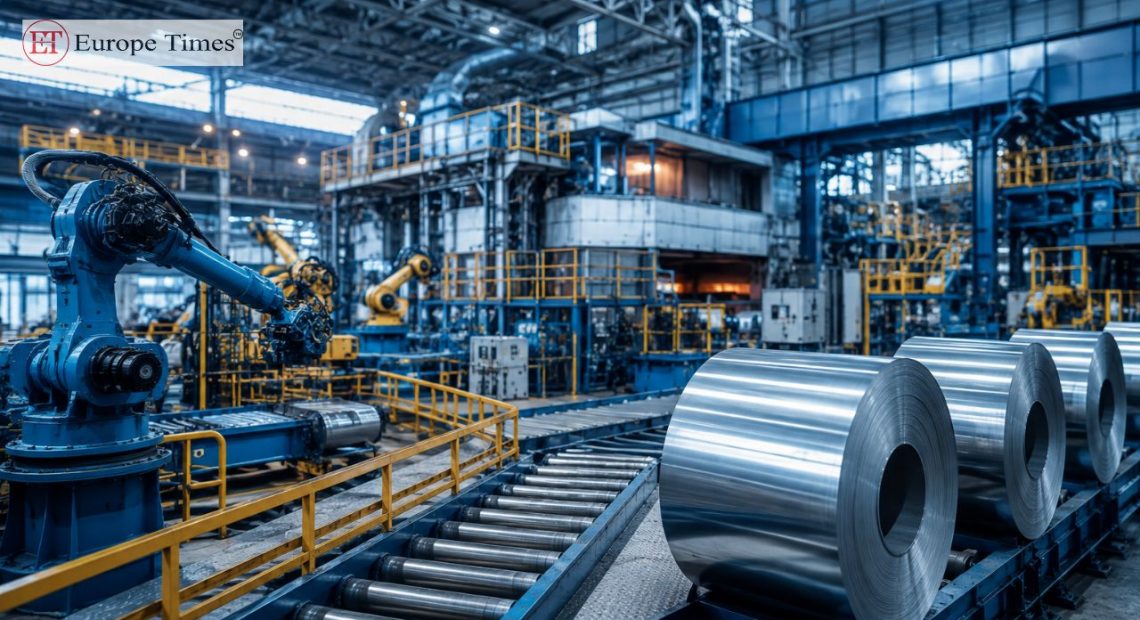
The economic slump was primarily driven by the services sector, which registered its second consecutive monthly drop in business activity, although the pace of decline slowed slightly with the sector’s PMI rising to 47.8 from 46.9. Meanwhile, Germany’s manufacturing sector experienced a complete stalling, plummeting to an index reading of 49.9 from 51.4 in April. Experts note that the temporary boost manufacturers previously enjoyed from stockpiling goods to outrun supply shortages and price hikes has effectively fizzled out.

Compounding these sector declines, German businesses are grappling with an intensification of cost pressures and accelerating input price inflation. Disruptions stemming from the effective closure of the crucial Strait of Hormuz continue to impact the economy, triggering supply chain shortages and driving up energy costs. Consequently, firms are reporting a sharp reduction in overall demand, as customers pull back on spending due to squeezed purchasing power and heightened geopolitical uncertainty.

Pic courtesy: google/ images are subject to copyright

featured News Trending

Manufacturers across the Eurozone accelerated purchases of raw materials in April, building up inventories amid fears of supply disruptions and rising costs linked to tensions in the Middle East. The S&P Global Eurozone Manufacturing PMI rose to 52.2, indicating growth, as both producers and customers rushed to secure supplies before prices climb further.

Despite the uptick in activity, business confidence weakened significantly. Future output expectations fell to their lowest level in 17 months, reflecting growing uncertainty about the economic outlook. While new orders grew at their fastest pace in four years, economists noted that much of this demand was driven by precautionary buying rather than genuine long-term growth.

Rising input costs and supply chain disruptions added further pressure, with delivery times slowing and inflationary trends intensifying. The European Central Bank has signalled concerns over persistent inflation, raising expectations of upcoming interest rate hikes. Although manufacturing activity expanded across all monitored countries, employment continued to decline, highlighting underlying fragility in the sector.

Pic courtesy: google/ images are subject to copyright

featured News Trending

Economic growth across the euro zone slowed sharply in March as rising energy costs and supply chain disruptions weighed on business activity. According to data from S&P Global, the composite Purchasing Managers’ Index (PMI) for the region fell to 50.7 from 51.9 in February, marking its lowest level in nine months, though still marginally indicating expansion.

The slowdown was largely driven by weakening demand, with new business declining for the first time in eight months. Analysts from S&P Global Market Intelligence highlighted that the ongoing Middle East conflict has pushed up energy prices and disrupted supply chains, erasing earlier signs of recovery. Export orders also dropped, with international demand for services seeing its steepest fall in six months.

Business confidence and employment levels weakened, raising concerns about future growth. While countries like Spain showed resilience, major economies such as France and Italy contracted, and Germany’s growth slowed significantly. Rising input costs, now at a three-year high, have forced companies to increase prices, pushing inflation above the European Central Bank target and complicating the balance between controlling inflation and sustaining economic growth.

Pic courtesy: google/ images are subject to copyright

featured News

Euro zone manufacturing activity expanded at its fastest pace in nearly four years in March, according to a survey by S&P Global, with the Manufacturing Purchasing Managers’ Index rising to 51.6 from 50.8 in February. While the headline figure signaled growth, analysts noted that supply chain disruptions linked to the Middle East conflict temporarily inflated output figures. As reported by Reuters, delays in supplier deliveries and logistics bottlenecks contributed to the uptick, masking underlying weak demand conditions.

The ongoing geopolitical tensions have significantly impacted manufacturing costs, with input price inflation climbing to its highest level since October 2022. Joe Hayes highlighted that rising oil and energy prices, combined with disrupted maritime logistics, are placing renewed pressure on producers. Although production increased for the third consecutive month and export orders stabilized after prolonged contraction, demand growth remained modest, and firms continued to cut jobs at an accelerated pace.

Despite some positive signals—such as rising backlogs and improved output—business confidence slipped to a five-month low as uncertainty persists. Among major economies, Germany and Italy recorded strong recoveries, while Spain remained in contraction and France showed stagnation. With manufacturers passing on rising costs to consumers at the fastest rate in over three years, concerns are mounting that inflationary pressures could weaken the euro zone’s global competitiveness and derail its fragile recovery.

Pic Courtesy: google/ images are subject to copyright

featured News

Germany’s private sector growth lost more momentum in December, marking the second straight month of deceleration, according to a PMI survey. The HCOB flash composite Purchasing Managers’ Index fell to 51.5 from 52.4 in November, its lowest level in four months, though it remained above the 50 mark that signals expansion for a seventh consecutive month.

The slowdown was driven by weaker performance in both services and manufacturing. Services activity eased to its weakest pace since September, with slower growth in new business, while manufacturing output and new orders declined more sharply. The manufacturing PMI slipped further into contraction at 47.7, weighed down by falling export demand and reduced factory activity.

Business confidence dropped to an eight-month low amid economic and geopolitical concerns, even as manufacturing sentiment improved slightly on hopes linked to government infrastructure projects, bureaucracy reforms, and defence expansion. Employment in the private sector continued to fall, though at a slower pace, as job gains in services partly offset softer staffing levels in manufacturing.

Pic courtesy: google/ images are subject to copyright

featured News

Germany’s private sector lost momentum in November, with manufacturing unexpectedly contracting and the services sector expanding at a slower pace, according to the latest HCOB flash composite Purchasing Managers’ Index (PMI) compiled by S&P Global. The index slipped to 52.1 from 53.9 in October, marking a two-month low. Despite the decline, the reading stayed above the 50-point threshold for the sixth consecutive month, signaling continued but weakening growth.

The manufacturing PMI fell deeper into contraction territory at 48.4, compared with 49.6 in October and below expectations for a slight improvement. The sector saw sharp drops in new orders, particularly export sales, which experienced their fastest decline since January. The downturn led to falling backlogs and a rise in job losses. Meanwhile, the services PMI also weakened to 52.7 from 54.6, missing forecasts and contributing to a subdued overall outlook.

“This is a major setback for Germany,” said Cyrus de la Rubia, chief economist at Hamburg Commercial Bank, noting that hopes for stronger service sector expansion have faded. He warned that the economy is “limping towards marginal growth” in the fourth quarter. While government investment in defence and civil engineering has boosted optimism for future output, the finance ministry recently stated that only a moderate recovery is likely by year-end.

Pic Courtesy: google/ images are subject to copyright