
featured News Trending

Spain is preparing for a major tourism surge during the total solar eclipse on August 12, 2026, with officials expecting nearly 10 million foreign visitors to travel beyond the country’s crowded Mediterranean beaches into lesser-known inland and northern regions. Many tourists, including repeat visitors to Spain, are choosing rural destinations such as Galicia and Teruel to experience the rare celestial event while exploring new parts of the country.

The Spanish government sees the eclipse as an opportunity to ease overtourism pressure on coastal hotspots and promote “empty Spain” — sparsely populated rural areas that rarely benefit from mass tourism. Hotel bookings in smaller towns along the eclipse route have jumped sharply, with travel companies reporting a strong rise in international reservations. Businesses ranging from observatories and wineries to rural cottages are preparing for a large influx of visitors.

Local communities are also investing in long-term astrotourism projects by creating dark-sky viewing points and reducing light pollution. The eclipse, which will coincide with the Perseids meteor shower, is expected to generate hundreds of millions of euros in tourism spending. Residents and tourism operators hope the global attention will permanently place these remote Spanish regions on the travel map.

Pic courtesy: google/ images are subject to copyright

News Trending

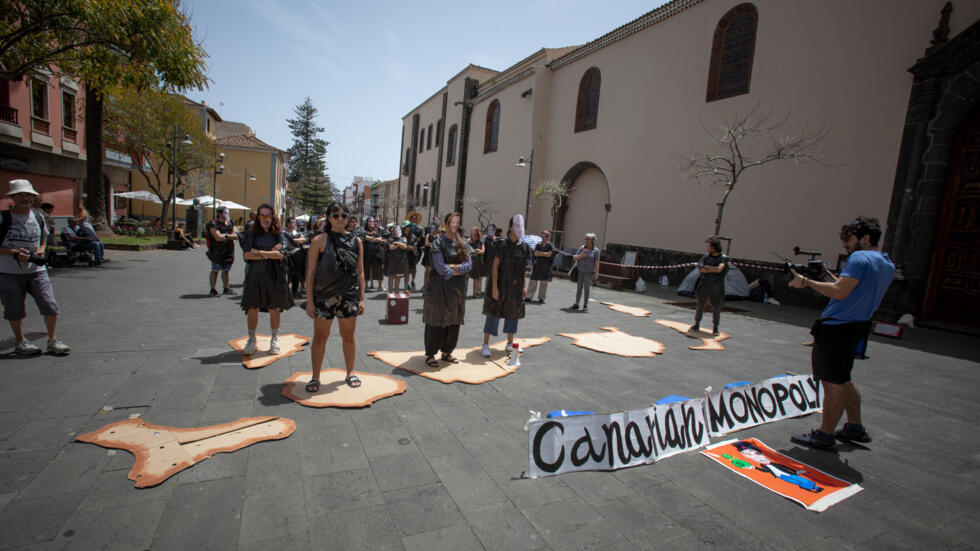
Protests are set to erupt across the Canary Islands this Saturday, with demonstrators calling for a reevaluation of the region’s tourism industry and a halt to the influx of tourists. The movement, named “Canarias tiene un límite” (The Canaries have a limit), is supported by various environmental organizations such as Greenpeace, WWF, and Friends of the Earth.

The protests are fueled by concerns that the current tourism model, which has been in place for decades, is financially burdensome and environmentally unsustainable for locals. Víctor Martín, a spokesperson for the coordinating collective “Canarias se Agota” (The Canaries Have Had Enough), highlighted the strain on resources and the rise in poverty and social exclusion among locals.

Martín emphasized that the focus on tourism persists despite challenges like water scarcity and housing crises. He noted that low wages and high living costs exacerbate the situation, leaving many workers struggling to make ends meet. Martín stressed that the issue lies with the tourism model itself and not with the tourists, many of whom are warmly welcomed by locals.

The protestors demand an immediate halt to large-scale luxury developments and a reassessment of tourism’s impact on the islands. They call for a comprehensive study to determine the carrying capacity of each island and advocate for a transition towards sustainable tourism practices. Martín believes that addressing these issues could position the Canary Islands as a global example of sustainable tourism development.

In response, Fernando Clavijo, the regional president, stated that the government is already taking steps to address the concerns. He acknowledged the need for refinement in the tourism model but defended its overall success.

Overtourism has become a pressing issue not only in the Canary Islands but also in various Spanish cities and regions, prompting protests and discussions on sustainable tourism management.

Picture Courtesy: Google/images are subject to copyright