featured News Trending

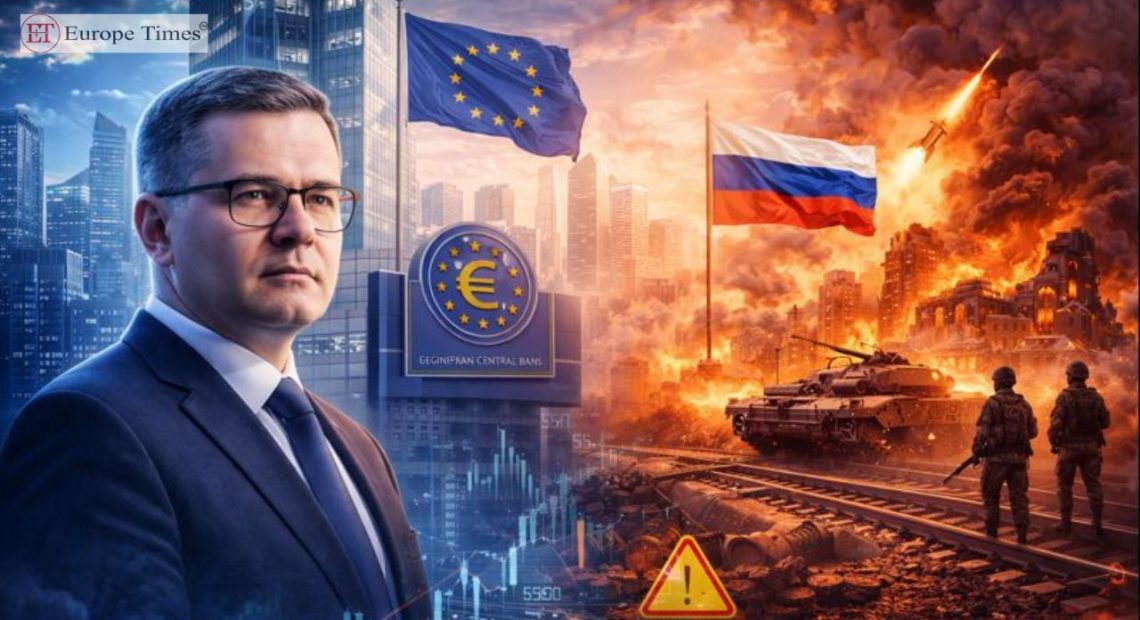
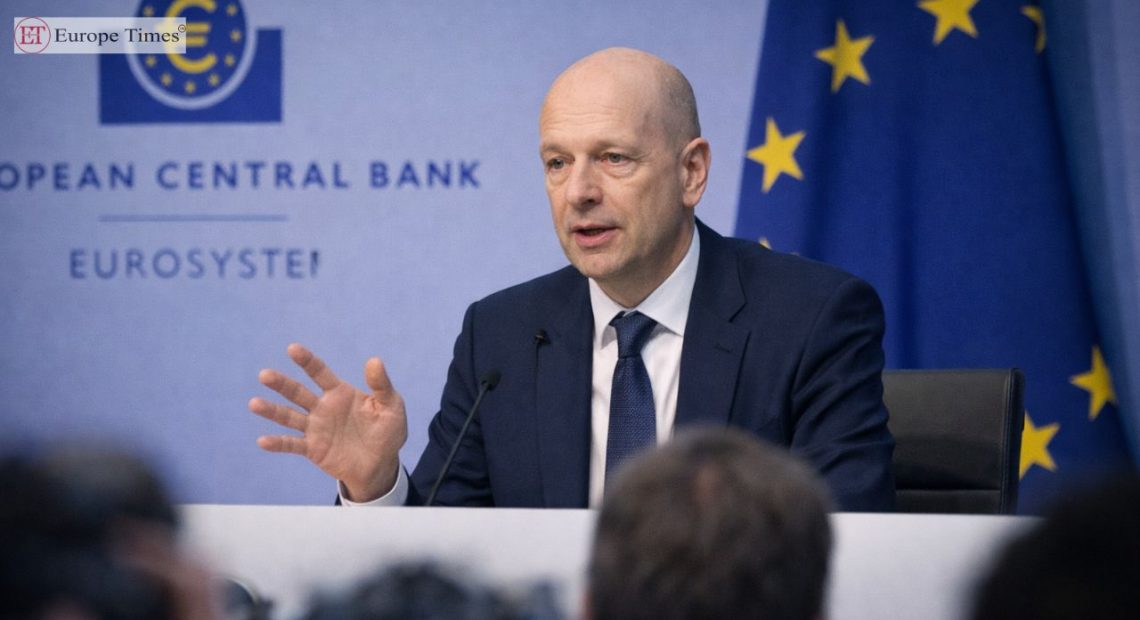
European Central Bank policymakers have downplayed the likelihood of an interest rate hike in April, emphasizing the need for more economic data before making any decision. European Central Bank officials noted that while inflation has risen above the 2% target due to higher energy costs, the timing of any policy move is less important than ensuring the decision is well-supported by evidence.

Key voices, including Philip Lane and Francois Villeroy de Galhau, stressed patience. Villeroy said that betting on an April hike would be premature, as policymakers still need clarity on how inflation is affecting underlying prices and economic demand. Markets have also scaled back expectations, now assigning only a small probability to an April move, though a rate increase is still widely anticipated by mid-year.

Other policymakers echoed similar caution, highlighting limited signs that energy-driven inflation is spreading across the broader economy. Officials such as Martins Kazaks indicated that even a small rate hike would mostly serve as a signal rather than a strong policy shift. Overall, the ECB appears inclined to wait for clearer signs of sustained inflation before taking action.

Pic courtesy: google/ images are subject to copyright

featured News Trending

A European Central Bank policymaker has warned that inflation expectations in the euro zone could climb faster than previously seen, urging the ECB to remain ready to raise interest rates if price pressures persist. Dimitar Radev said rising energy costs linked to the Iran conflict have pushed inflation above the ECB’s 2% target, increasing risks that higher prices could spread across the broader economy.

Radev noted that the balance of economic risks has shifted in an unfavorable direction, with the likelihood of a more adverse scenario increasing due to ongoing uncertainty and energy market disruptions. Policymakers are concerned that consumers and businesses, still influenced by the inflation surge following Russia’s invasion of Ukraine, may quickly adjust wage and pricing behavior, potentially triggering a self-reinforcing inflation cycle.

While inflation expectations remain broadly anchored and no strong second-round effects are visible yet, the ECB cannot assume stability will continue, Radev said. Financial markets already expect multiple rate hikes this year, though it remains too early to determine whether action will come at the April meeting. The ECB will closely monitor wages, energy prices, economic sentiment, and the duration of geopolitical tensions before making policy decisions.

Pic courtesy: google/ images are subject to copyright

featured News Trending

European Central Bank policymaker and Lithuanian central bank governor Gediminas Simkus said the ECB’s current policy stance is appropriate, with inflation at target and interest rates in a neutral zone, but warned that fresh shocks could disrupt this balance. Speaking to Reuters, Simkus highlighted persistent global uncertainty driven by geopolitical tensions, particularly the risk of Russian military aggression in eastern Europe, alongside trade frictions and other external pressures.

Simkus stressed that the ECB must ensure its systems are resilient to such risks, including safeguarding cash distribution and payment infrastructure in case of heightened security threats. He noted that countries bordering Russia face unique challenges, ranging from cyberattacks to airspace incursions, and argued that central banks must remain operationally prepared. He also added that banks need to be ready for longer-term risks such as climate change.

On monetary policy, Simkus said interest rates are firmly on hold at the ECB’s February meeting, as modest inflation fluctuations around 2% are normal. However, he cautioned against signalling future moves, saying the next rate change could equally be a hike or a cut. Emphasising flexibility, he said the ECB should avoid overreacting to short-term data swings and instead focus on broader economic trends, as shocks tend to affect growth before feeding into inflation.

Pic courtesy: google/ images are subject to copyright

featured News Trending

The European Central Bank (ECB) should be careful about taking preemptive policy action in response to rising uncertainty, Austrian central bank chief Martin Kocher said in an interview with German outlet Platow. Kocher noted that while geopolitical risks have intensified recently, central banks should avoid committing to policy moves before risks clearly materialise.

Kocher pointed to heightened global uncertainty driven partly by fresh geopolitical tensions, including threats of new U.S. trade measures. However, he cautioned that acting too early—especially when inflation risks are not clearly tilted in one direction—could lock policymakers into a difficult position and complicate communication. “Some risks can be addressed in advance, but many cannot,” he said.

He added that over the past six months, risks had shifted “slightly to the positive,” with modestly improved euro zone growth expectations and stable financial markets. While acknowledging recent developments, Kocher said it was too soon to reassess the broader outlook. Financial markets currently expect the ECB to keep interest rates unchanged through 2026.

Pic courtesy: google/ images are subject to copyright