featured News Trending

Iran launched drone attacks on Kuwait’s Mina Al-Ahmadi oil refinery, causing fires and further straining global energy supplies, while Israel killed a spokesperson for Iran’s Revolutionary Guards in a targeted strike in Tehran. The ongoing U.S.-Israeli conflict with Iran has already disrupted oil and LNG flows through the Strait of Hormuz, affecting roughly 12% of global demand and sending Brent crude prices to $108 per barrel.

Air raids and missile barrages have shaken cities in Israel and Iran, with Israel targeting Iranian government facilities and Iran retaliating with strikes on multiple energy assets in the Gulf. The conflict has displaced millions and killed thousands, heightening tensions in the region and drawing warnings from European allies who emphasize de-escalation and the protection of international shipping lanes.

Despite U.S. and Israeli efforts to disable Iran’s missile and nuclear capabilities, Iran continues production and attacks, highlighting a complex war with no clear end. The crisis has severe economic implications, as energy disruptions are expected to impact supply chains for months or even years, prompting U.S. considerations for deploying additional troops to the region.

Pic courtesy: google/ images are subject to copyright

featured News Trending

British travellers are rebooking Easter holidays away from Dubai and other Middle Eastern destinations due to the ongoing Iran war and travel disruptions across the region. Airlines such as British Airways have temporarily suspended flights to Dubai, Bahrain, Tel Aviv, and Amman, prompting holidaymakers to seek “reassuring” alternatives that avoid regional instability.

This shift has driven a surge in bookings to destinations in Spain, Portugal, Italy, the Caribbean, Mauritius, and the US. Popular European spots like the Balearic and Canary Islands, Tuscany in Italy, and Cape Verde have seen notable increases in demand, while flights to these regions are filling faster than last year. Travel firms note that affordability and easy access are key factors in holidaymakers’ destination choices.

Meanwhile, countries closer to the Middle East, including Turkey, Cyprus, Egypt, and parts of Greece, have experienced a slowdown in bookings. Rising jet fuel prices and potential fare hikes due to the conflict are expected to impact travel costs, but experts believe holiday demand will remain strong for safe, warm-weather locations far from geopolitical tensions.

Pic courtesy: google/ images are subject to copyright
featured News Trending

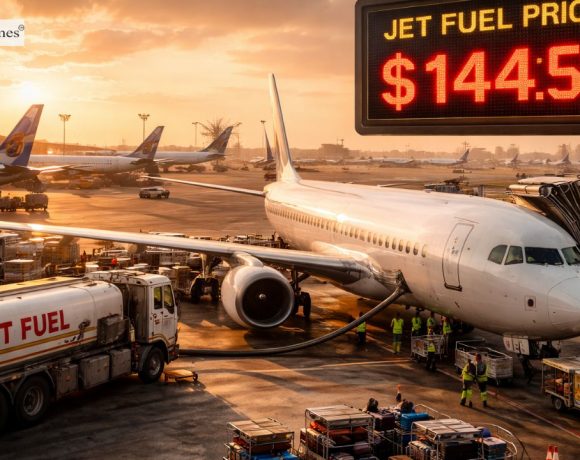
Airlines worldwide are struggling to cope with soaring jet fuel prices that have risen far faster than crude oil costs amid escalating Middle East tensions. Despite using hedging contracts to protect against oil price volatility, many carriers remain exposed because most hedges are tied to crude oil rather than refined jet fuel. The sharp increase in refining margins since the conflict involving Iran has forced airlines to raise ticket prices, introduce fuel surcharges, and cut flight capacity to manage rising operating costs.

Jet fuel prices have nearly doubled since the conflict began, compared with a roughly one-third increase in crude oil prices, squeezing airline profit margins globally. Industry executives said hedging provides only partial protection, while carriers without hedging arrangements — particularly in the United States and China — face full exposure to rising fuel costs. Analysts warned that low-cost airlines are especially vulnerable because their price-sensitive customers limit how much fares can be increased.

In Europe and Asia, airlines are already adjusting strategies as sustained fuel price increases threaten profitability. Some carriers remain heavily hedged, but coverage declines in future periods, leaving them exposed if high prices persist. Analysts estimate that Asian airline profits could fall significantly with prolonged refining margin increases, highlighting how volatile fuel markets and limited jet fuel hedging options continue to challenge the aviation industry.

Pic courtesy: google/ images are subject to copyright

featured News Trending

Pope Leo XIV on Wednesday expressed deep sorrow over the deaths of civilians, including children, in the ongoing Iran war and called on pilgrims in St. Peter’s Square to pray for peace across the Middle East. Highlighting the humanitarian toll, he emphasized the need to end violence that could escalate further, appealing repeatedly for calm and reconciliation.

The pontiff also extended his condolences to Lebanon, currently facing Israeli strikes targeting Hezbollah. He lamented the death of Rev. Pierre El Rahi, a priest who was killed while assisting injured parishioners, calling him a “true shepherd.” Pope Leo reiterated his closeness to the Lebanese people, noting the country is undergoing a “great trial” amid regional conflict.

Pope Leo’s remarks come amid escalating tensions in the region, including a reported strike on a girls’ school in Minab, southern Iran, during the initial U.S. and Israeli attacks, which Iranian officials claim killed 150 students. While details are still under investigation, the pontiff’s call for prayers and solidarity underscores the Vatican’s humanitarian concern and ongoing engagement with affected communities.

Pic courtesy: google/ images are subject to copyright
featured News Trending

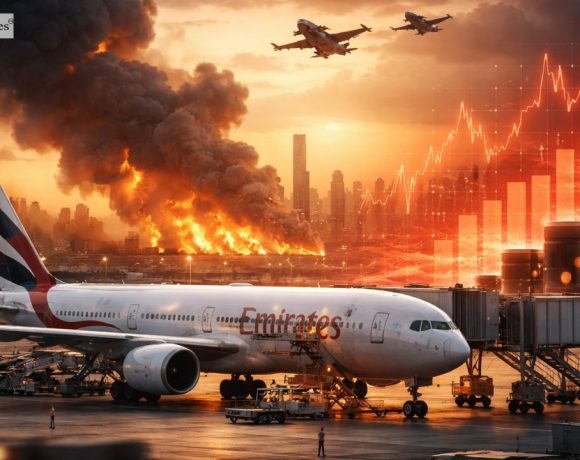
Airline shares across Asia tumbled on Monday as soaring oil prices and the escalating U.S.-Israeli war with Iran disrupted travel and raised operating costs. Crude oil jumped 20% to its highest level since July 2022, driving up jet fuel prices and intensifying financial pressure on carriers already struggling with limited airspace and supply chain challenges. Analysts warned that uncertainty for airlines has surged further amid the geopolitical crisis.

Travel disruptions have left tens of thousands of passengers stranded, with many paying premium rates for last-minute flights, overland journeys, or private charters. Since February 28, more than 37,000 flights to and from the Middle East have been cancelled. Airlines such as Qantas, Cathay Pacific, Japan Airlines, Korean Air, China Southern, and China Eastern saw share declines ranging from 4% to over 10%, while Indian carriers IndiGo and SpiceJet fell 7.5% and 5.6%, respectively.

Airlines are forced to reroute flights, carry extra fuel, and make additional refueling stops to navigate the restricted airspace safely. Governments and airports, including Australia, Oman, and Turkey, have issued travel advisories and restricted certain flights. Meanwhile, pilots report increased mental stress due to prolonged conflicts, shrinking air corridors, and military drone threats, compounding operational challenges for carriers across the region.

Pic courtesy: google/ images are subject to copyright

featured News Trending

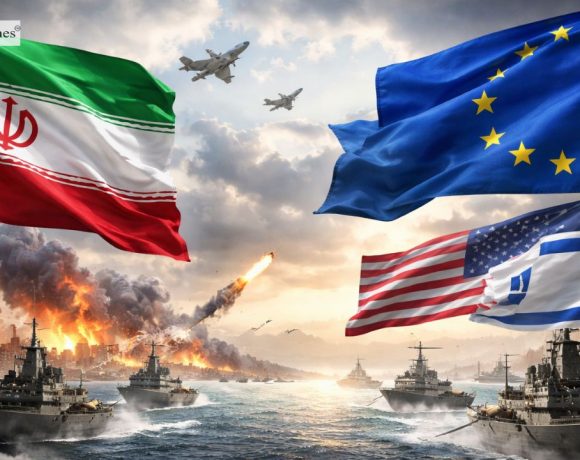
Iran has warned that any European Union country joining military attacks by the United States and Israel would be considered a “legitimate target” for retaliation. Iran’s Deputy Foreign Minister Majid Takht-Ravanchi made the statement during an interview with France 24, stressing that countries supporting the aggression would face direct consequences from Iran.

His comments come as tensions continue to escalate in the Middle East. Several EU nations, including France, Greece, and Italy, have deployed warships to the region. While many European leaders have criticized Iranian actions, they have also called for de-escalation and a diplomatic resolution to the conflict.

Meanwhile, German Chancellor Friedrich Merz said Germany is working with international partners to find ways to end the fighting. However, he noted that Berlin shares strategic goals with the United States and Israel regarding the situation with Iran.

Pic courtesy: google/ images are subject to copyright
featured News Trending

Israeli Prime Minister Benjamin Netanyahu said the war against Iran would be decisive and not drag on for years, describing it as potentially lasting weeks rather than becoming an “endless war.” Speaking in a televised interview, Netanyahu stressed that while the conflict may take some time, it would not mirror the prolonged wars of the past. The joint U.S.-Israeli air campaign began over the weekend, with Donald Trump initially suggesting a timeline of four to five weeks, though later remarks signalled a broader and open-ended approach.

The conflict has rapidly expanded beyond Iran and Israel, with Tehran launching missile and drone strikes targeting Israel, U.S. forces, and Gulf states hosting American bases. Israel has struck Iranian-linked targets in Lebanon, including Hezbollah positions, and reinforced troop deployments along its northern border. Iranian attacks have reportedly hit U.S. facilities in the region, including drone strikes near Riyadh and claims of damage to a U.S. base in Bahrain. Casualties have mounted across Iran, Israel, Lebanon and neighbouring states as exchanges intensify.

The escalating war has disrupted global aviation and energy markets, with thousands of Gulf flights cancelled and major hubs such as Dubai temporarily shut. Shipping through the Strait of Hormuz — a key artery for global oil trade — has been severely affected, driving oil prices and tanker rates sharply higher. Washington has ordered non-essential personnel to leave several regional countries, while U.S. Secretary of State Marco Rubio warned that stronger American military action could still follow. Diplomatic tensions remain high as global powers react to one of the most significant Middle East escalations in decades.

Pic courtesy: google/ images are subject to copyright
featured News

Germany has announced that it will lift its suspension on certain weapons sales to Israel starting November 24, a pause that had been in place since August due to the Gaza war. The suspension covered arms and systems that could be used in Gaza, though equipment deemed essential for Israel’s external defence was still allowed. Berlin, one of Israel’s key arms suppliers after the United States, had faced strong domestic pressure over its decision to halt exports.

The German government said the resumption of sales depends on Israel maintaining the current ceasefire with Hamas and ensuring the continued large-scale delivery of humanitarian aid to Gaza. Officials stressed that all future arms deals will be reviewed on a case-by-case basis and closely monitored in line with developments on the ground. Germany reaffirmed its commitment to supporting long-term peace efforts and backing reconstruction in Gaza under a two-state framework.

The reversal drew mixed reactions: Israeli Foreign Minister Gideon Saar praised the move and urged other nations to follow, while German Chancellor Friedrich Merz previously faced criticism from his own conservative bloc for the partial suspension. Germany has historically been one of Israel’s strongest supporters due to its responsibilities stemming from the Holocaust and supplied around 30% of Israel’s major arms imports between 2019 and 2023, including naval frigates used in the Gaza conflict.

Pic Courtesy: google/ images are subject to copyright