featured News Trending

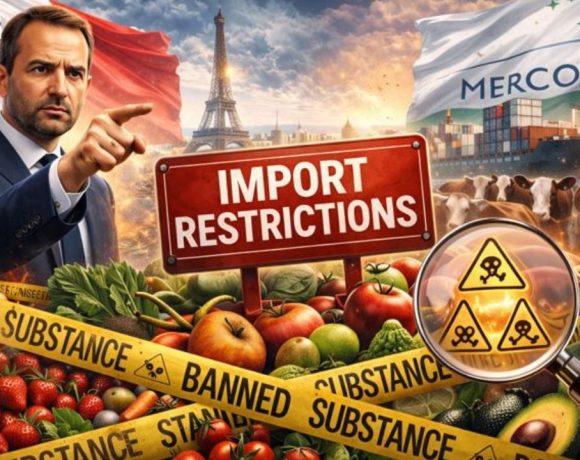
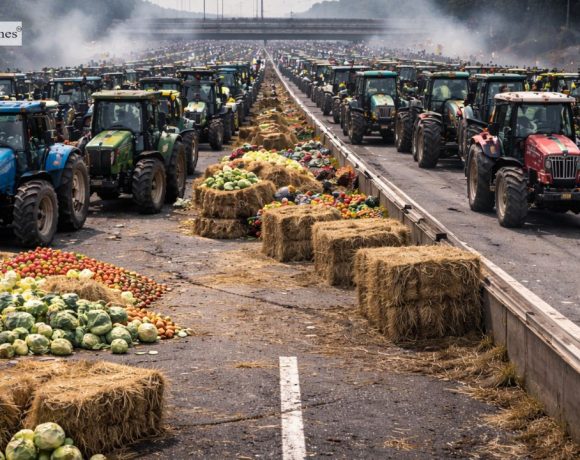
France has announced stricter checks on a range of food imports in response to protests by farmers who argue they face unfair competition from countries with weaker agricultural regulations. The move comes as opposition grows in France to a proposed European Union trade agreement with the South American Mercosur bloc, as well as concerns over livestock disease controls.

Agriculture Minister Annie Genevard said the new measures aim to ensure imported food meets EU standards, particularly regarding the use of banned pesticides and fungicides. France will soon issue a decree suspending imports of products found to contain prohibited substances, including mancozeb, glufosinate, thiophanate-methyl and carbendazim. Fruits and vegetables such as melons, apples, cherries, strawberries, grapes and potatoes will only be sold if they show no traces of these chemicals.

Prime Minister Sebastien Lecornu said any imported product failing to meet these standards would be barred from entering France. While Germany and Spain support the Mercosur deal, critics in France fear it would lead to cheaper imports, especially beef, that do not comply with EU environmental and food safety rules. The government said protecting farmers, public health and fair competition is non-negotiable and urged the European Commission to extend similar rules across the EU.

Pic courtesy: google/ images are subject to copyright
featured News

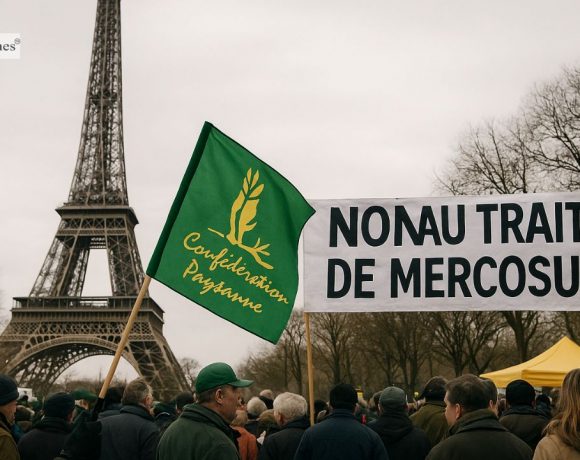
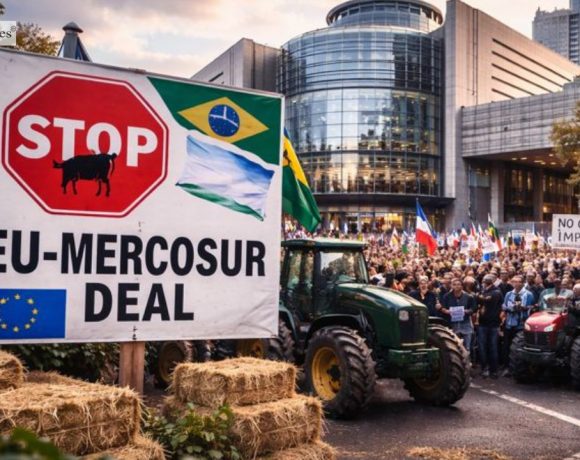
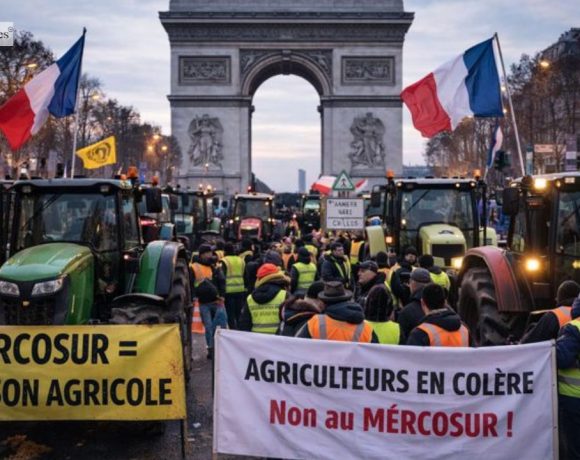
France is urging the European Union to delay a vote on ratifying the EU–Mercosur free trade agreement, citing strong opposition from farmers and recent protests across the country. The deal with Argentina, Brazil, Paraguay and Uruguay, signed a year ago but not yet ratified, aims to open new markets for European exporters facing pressure from U.S. tariffs and Chinese competition. However, French farmers fear an influx of cheaper agricultural imports produced under less stringent environmental standards.

As Europe’s largest agricultural producer, France is trying to build a blocking minority of EU member states to halt or postpone the vote in Brussels. While the European Commission has proposed safeguard measures for farmers, Paris has dismissed them as insufficient. Prime Minister Sebastien Lecornu has called for delaying the vote until after Commission President Ursula von der Leyen’s planned visit to Brazil later this month, arguing that farmers’ concerns have not been adequately addressed.

The debate has exposed divisions within the EU, with countries such as Poland, Hungary, Austria and Ireland expressing sympathy for France’s stance, while Germany and business groups warn against missing a strategic trade opportunity. Italy’s position could prove decisive, as its industrial sector supports the deal but its farming community opposes it. At home, resistance in France is being fuelled by political pressure, livestock disease outbreaks and broader discontent in rural areas, making the Mercosur agreement a highly sensitive issue.

Pic courtesy: google/ images are subject to copyright
featured News

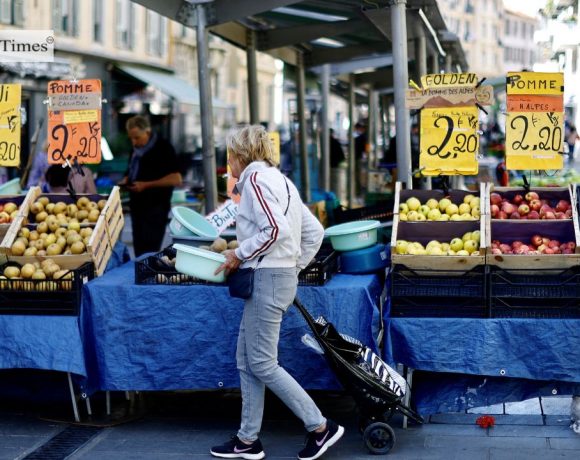
France is on the verge of recording its first annual food and agricultural trade deficit in almost five decades, driven by new foreign tariffs on wine exports and soaring global prices for cocoa and coffee. The country, long considered an agri-food export powerhouse thanks to the EU’s largest farming base, has seen its competitiveness steadily erode amid intensifying global and intra-EU competition. The decline has fueled strong opposition among farmers toward trade agreements like the proposed pact with the Mercosur bloc.

Customs data from the French Agriculture Ministry shows a cumulative deficit of 351 million euros for January to September 2025, following last year’s sharp surplus drop to its lowest level since the 1980s. Despite a significantly stronger harvest this year boosting cereal exports, the sector still posted a trade deficit in September. Analysts warn that temporary challenges, including tariffs from the U.S. and China and a spike in import costs for cocoa and coffee, are only part of the picture.

Industry leaders say deeper structural issues—such as high production costs, regulatory burdens, and slower global marketing efforts compared to competitors like Spain and Italy—have further weakened France’s trade position. As France grapples with these pressures, agricultural organisations argue for urgent reforms to revive competitiveness and rebuild the country’s historic strength in global food trade.

Pic Courtesy: google/ images are subject to copyright