featured News Trending

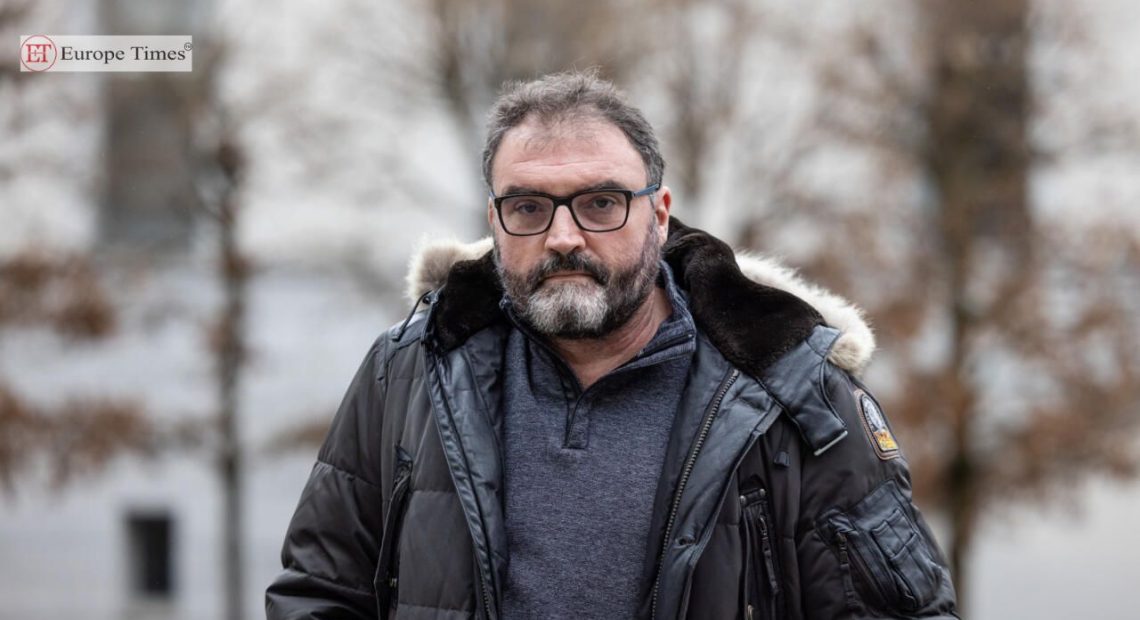
A German court has sentenced a 41-year-old palliative care doctor to life imprisonment after finding him guilty of murdering 15 patients between September 2021 and July 2024. The victims, aged between 25 and 94, were seriously ill but were not considered to be at immediate risk of death. Prosecutors said the doctor administered lethal doses of medication without the patients’ consent and, in some cases, allegedly set fires to conceal the crimes.

During the year-long trial, the doctor admitted to killing 12 patients, claiming he believed he was ending their suffering. However, relatives of the victims rejected that justification, telling the court that their loved ones still had plans for the future and wanted to continue living. The court described his crimes as particularly serious and imposed a lifetime ban on practising medicine, along with preventive detention after his prison term.

Authorities are now investigating 76 additional suspected cases, raising the possibility that the convicted doctor could become one of Germany’s most prolific serial killers if more charges are proven. Prosecutors believe the confirmed murders may represent only a fraction of the alleged crimes.

Pic courtesy: google/ images are subject to copyright

featured News Trending

A German court has sentenced a Saudi psychiatrist to life in prison for driving a rented BMW into a crowded Christmas market in Magdeburg in December 2024, killing six people and injuring hundreds. The victims included five women aged between 45 and 75, as well as a nine-year-old boy. Prosecutors said the attack lasted just over a minute and had been planned over several weeks.

The defendant, identified as Taleb A. under German privacy laws, was convicted on charges including murder, attempted murder and dangerous interference with road traffic. Authorities described him as having a history of anti-Islamic rhetoric and far-right sympathies. Prosecutors said he acted alone, motivated by frustration over the outcome of a civil legal dispute and unsuccessful criminal complaints.

The attack shocked Germany and reignited debate over immigration ahead of the country’s February 2025 general election. The life sentence brings an end to one of Germany’s most devastating attacks in recent years, with the court holding the defendant fully responsible for the deadly rampage.

Pic courtesy: google/ images are subject to copyright

featured News

A French court has sentenced former anaesthetist Frédéric Péchier, 53, to life imprisonment for deliberately poisoning 30 patients, 12 of whom died. The verdict was delivered at the end of a four-month trial in Besançon, marking one of the most serious medical crime cases in France’s history. Péchier will serve a minimum of 22 years in prison and has 10 days to appeal the ruling.

The court found that Péchier secretly injected substances such as potassium chloride or adrenaline into patients’ infusion bags, triggering cardiac arrests or severe haemorrhaging during routine surgeries. In several cases, he intervened during emergencies to present himself as a lifesaver, but in 12 instances the victims could not be saved. Prosecutors argued that his actions were driven by personal grudges against colleagues, whom he sought to discredit.

Investigators uncovered a disturbing pattern of unexplained medical emergencies at clinics where Péchier worked between 2008 and 2017, with incidents stopping whenever he left and resuming upon his return. Despite denying wrongdoing throughout the trial, Péchier admitted there must have been a poisoner at the clinics, insisting it was not him. Survivors and families of victims welcomed the verdict, calling it the end of a long and painful ordeal.

Pic courtesy: google/ images are subject to copyright

News Trending

Austrian sex offender Josef Fritzl, notorious for imprisoning his daughter for 24 years and fathering seven children with her, may be relocated from a high-security prison, as reported by local media. Now 88 and diagnosed with dementia, a recent psychiatric evaluation suggests that he no longer poses a threat to the public. This development opens the possibility for a court to decide whether he should be moved to a standard prison.

Fritzl is currently held in a high-security institution for mentally disturbed offenders, situated in Stein Prison in the town of Krems an der Donau. Having been sentenced to life in 2009, he becomes eligible for parole this year under Austrian law, which allows those with life sentences to apply for conditional release after serving 15 years. Legal experts speculate that conditional release or placement in a care home are potential outcomes for Fritzl, who has also changed his name.

Despite a regional court’s 2022 ruling that Fritzl was “no longer a danger” and could be transferred to a regular jail, the Higher Regional Court in Vienna had previously blocked a similar decision. The Fritzl case, which came to light in 2008 in Amstetten, is considered one of Austria’s most heinous criminal incidents. Fritzl was convicted of charges including murder, rape, incest, and enslavement of his daughter. In response to the traumatic events, Fritzl’s daughter and her children have assumed new identities for their protection.

Picture Courtesy: Google/images are subject to copyright

News Trending

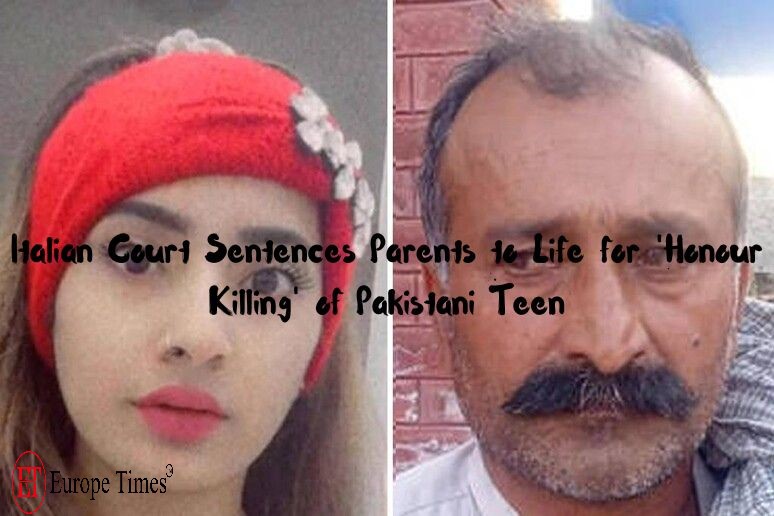
An Italian court has sentenced a Pakistani couple to life in prison for the murder of their 18-year-old daughter, Saman Abbas. She was killed because she refused an arranged marriage, and her body was discovered at a farmhouse in northern Italy in November 2022, 18 months after she went missing.

Saman’s father, Shabbar Abbas, was arrested in Pakistan and extradited for trial in August. He pleaded his innocence, expressing disbelief at the idea of killing his daughter. Saman’s mother, Nazia Shaheen, was convicted in absentia as she is believed to be in hiding in Pakistan.

The court also sentenced Saman’s uncle, Danish Hasnain, to 14 years in jail for his involvement in the murder. However, two of her cousins were acquitted. Saman Abbas’s murder, labeled an “honour killing,” shocked Italy, leading to a fatwa against forced marriages by Italy’s union of Islamic communities.

Saman had moved with her family from Pakistan to Novellara in 2016. Her relationship with a young man drew her parents’ anger, and they wanted her to undergo an arranged marriage in Pakistan in 2020, which she refused. After living under social services’ protection, she returned home in April 2021, only to disappear shortly afterward.

CCTV footage showed family members carrying tools on the night of her disappearance. Saman’s body was found near the family’s home after her uncle revealed the burial location. The autopsy indicated a broken neck, suggesting strangulation.

While her father and uncle were apprehended in 2022, her mother remains at large in Pakistan. The court convicted both parents, despite Shabbar Abbas’s claims of innocence, stating that the trial is incomplete, and he wants to know who killed his daughter.

“Honour killings” are rooted in tribal customs where allegations against a woman bring dishonour to the family. These crimes are often committed when a woman refuses an arranged marriage or faces accusations of inappropriate behavior. In Pakistan, “honour killings” of women occur frequently, while a smaller number involve men. Recently, another similar incident occurred in the Kohistan district, where an 18-year-old woman was killed by her father and uncle based on doctored photos showing her with a man.

Picture Courtesy: Google/images are subject to copyright

News Trending

In a recent case in Uppsala, Sweden, four teenage brothers and a 15-year-old girl have been sentenced by the court for the murder of a taxi driver. The victim had been reported for rape by the girl, and the court found that he was lured to a nature reserve with the promise of sexual favors due to the earlier allegations. The taxi driver was overpowered, and his body was discovered a week later, hanging from a tree in what appeared to be a staged suicide.

The eldest brother, who was 18 at the time, received a life sentence, while the four younger individuals, who were minors during the events, were sentenced to three to four years in a young offenders’ institution. The three older brothers were convicted of murder, while the girl and her boyfriend, both 15 at the time, were found not to be at the scene but were convicted of aiding and abetting the murder.

Despite the teenagers denying their involvement, the court relied on circumstantial evidence presented by prosecutors. Messages exchanged between them were used as evidence of a murder plot. Four days before the victim disappeared, the girl messaged a friend about her rapist, stating, “His brothers are going to meet my rapist.” Subsequent messages discussed the timing of the murder, with one brother suggesting, “We should do Friday,” and another agreeing.

After the killing, one of the brothers used the victim’s phone to transfer money from his bank account. The girl claimed she was unaware of the brothers’ intention to kill the man, stating she thought they would only beat him up. However, the court, led by Lars Holmgard, the president of the Uppsala District Court, ruled that the brothers had planned the murder, evident from the time they purchased the rope used in the crime. Holmgard stated, “The plan must have been for [the victim] to be hanged from the rope, in our opinion.”

Picture Courtesy: Google/images are subject to copyright

News Trending

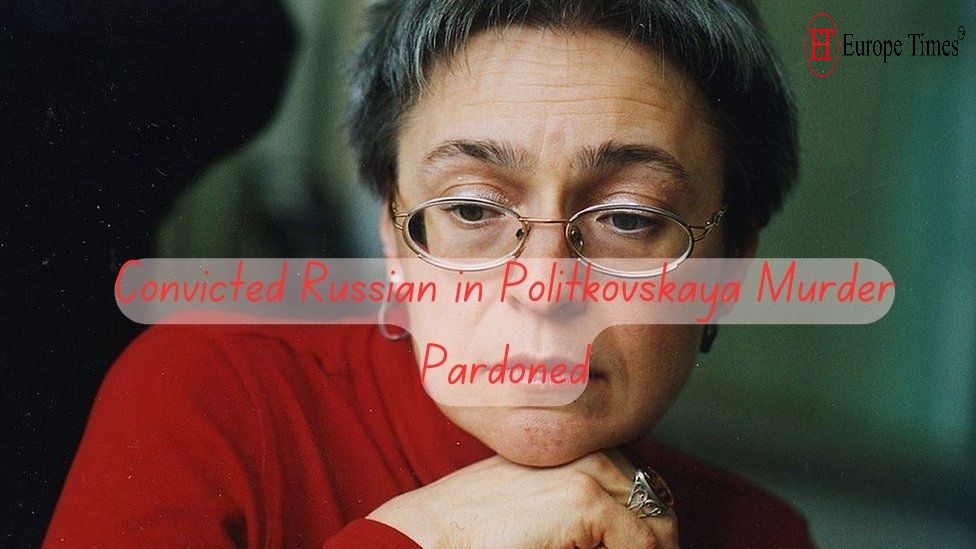
Sergei Khadzhikurbanov, one of the individuals convicted in connection with the 2006 murder of Russian journalist Anna Politkovskaya, has been pardoned, according to his lawyer. Khadzhikurbanov, a former Moscow police officer, was sentenced to 20 years in 2014 for providing logistical support for the crime.

His lawyer stated that he received a presidential pardon after completing a six-month military contract, during which he served as a special forces fighter.

The murder of Politkovskaya, an investigative reporter critical of Russia’s actions in Chechnya, remains unsolved in terms of who ordered the killing. The Russian defense ministry has reportedly been recruiting prisoners for military operations in Ukraine, following the precedent set by the Wagner mercenary group. In the 2014 trial, Rustam Makhmudov, the triggerman, received a life sentence, while others involved, including Khadzhikurbanov, faced varying prison terms.

Picture Courtesy: Google/images are subject to copyright