News Trending

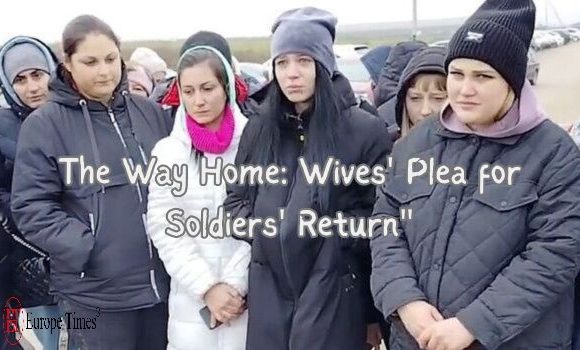
In a Moscow function room, a group of women, known as The Way Home, publicly criticizes the Russian authorities for keeping their husbands, part of the 300,000 reservists mobilized for the war in Ukraine, away from home. The women, who met through social media, have different views on the war but share the belief that their husbands have fulfilled their military duty and should return.

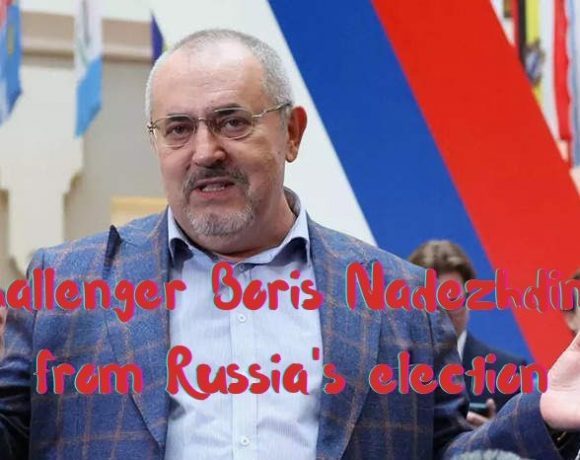
The women express frustration with the government and its lack of consideration for the soldiers’ well-being. They meet with local councillor Boris Nadezhdin, a rare government critic who has been allowed on national television. Nadezhdin, critical of the military operation, believes the war has damaged Putin’s domestic popularity.

Critics of the war blame the mobilized men, while Kremlin supporters label the women as Western puppets. Russian MP Andrei Kartapolov suggests that calls for demobilization are orchestrated by Russia’s enemies, linking it to World War Two. The women find such comparisons insulting, emphasizing that the current conflict is different.

Maria Andreeva, a member of The Way Home, not only advocates for her family’s return but also aims to prevent further call-ups. The group stages peaceful protests by laying flowers at the Tomb of the Unknown Soldier.

Despite their efforts, the women feel a lack of support from society. Antonina, whose partner was drafted, shares her disappointment in the changing perception of her husband among friends. She emphasizes the desire for the return of husbands who did not volunteer for the front line, questioning Putin’s attitude towards citizens who once supported him. The women fear the possibility of a second wave of mobilization, despite Putin’s earlier assurances.

Picture Courtesy: Google/images are subject to copyright
News Trending

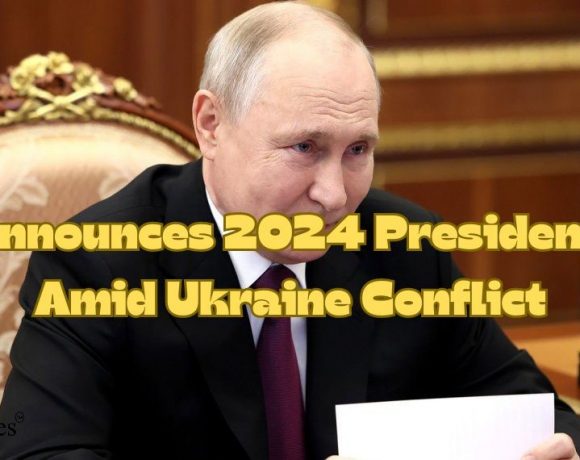
Russian President Vladimir Putin has officially announced his candidacy for a fifth term in office during an awards ceremony honoring participants in the 2022 war against Ukraine. The presidential election is slated for March 15-17, 2024, following a constitutional amendment in 2020 that extended the presidential term from four to six years. Given the limited opposition and the tight control Putin exercises over Russian media, his victory is widely perceived as inevitable.

The re-election of the 71-year-old Putin would mark a continuation of his extensive political career, having previously served as president from 2000-2008 and returning to the role in 2012 after a stint as prime minister. This extended period in power surpasses that of any ruler in Russia since Soviet dictator Josef Stalin. The constitutional amendment in 2020 effectively canceled out Putin’s previous terms, allowing him a clean slate to run again in 2024. A successful victory would keep him in the presidency until 2030, and if he decides to stand for re-election, potentially until 2036.

Despite facing significant challenges stemming from the invasion of Ukraine and the ensuing standoff with the West, Putin is unlikely to encounter substantial opposition. Genuine opponents have been marginalized, with many either deceased, imprisoned, or in exile. The announcement of the election dates by the Federation Council was swiftly followed by Putin’s declaration, emphasizing the apparent widespread support for his continued leadership.

Putin’s firm grip on power has only strengthened throughout his tenure, and his decision to run again underscores the lack of any significant contenders on the political landscape. The Kremlin’s official spokesperson, Dmitry Peskov, noted an “astonishing” number of people expressing a desire for Putin to continue as the leader of Russia. The announcement was made during an informal gathering after a ceremony in the Kremlin where Ukraine war veterans were awarded the Hero of Russia medal, highlighting Putin’s role in the conflict and the political backdrop against which his candidacy is unfolding.

Picture Courtesy: Google/images are subject to copyright
News Trending

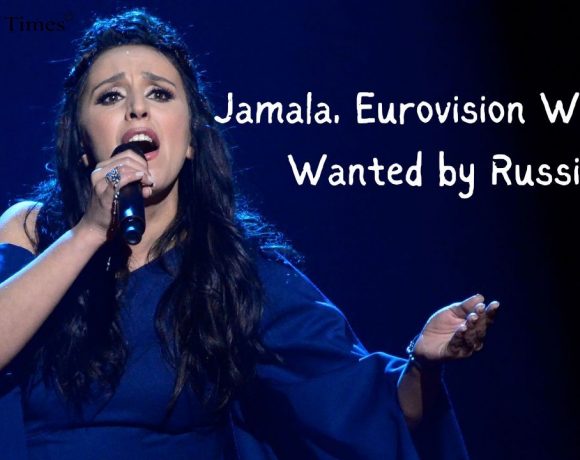
Ukrainian Eurovision song contest winner Jamala, whose real name is Susana Jamaladinova, has been added to Russia’s wanted list, according to state media. The accusations against her include spreading fake information about the Russian armed forces, a charge often used by the Kremlin against those critical of Russia’s actions. Jamala, known for openly criticizing Russia’s invasion of Ukraine, was placed on the wanted list last month. The independent Russian human rights website Mediazona reported this, and details of the listing became widely known on Monday.

Russian breaking news Telegram channel Shot claimed that Jamala was added to the list for posting alleged “fakes” about atrocities in the Ukrainian town of Bucha in 2022. The Kremlin has denied responsibility for the Bucha massacre, despite evidence indicating Russian forces’ involvement. Jamala, currently in Australia after fleeing Ukraine with her family following the invasion, responded to the news by posting a photo of herself in front of the Sydney Opera House with a link to an article about it and a facepalm emoji.

Jamala won Eurovision in 2016 with the song “1944,” inspired by the forced deportation of her people, the Crimean Tatars, by Russia during that year. The song, perceived as addressing Russia’s illegal annexation of Crimea in 2014, caused controversy for allegedly breaking the competition’s rule against overtly political songs. However, organizers allowed it, and it ultimately won, defeating Russia. Jamala, in her 40s, has been vocal about using her music to give a strong voice to her homeland, Crimea, and to counter the historical narratives propagated by the Russian Empire and Soviet Union. She emphasized the importance of revealing the truth through her songs in her latest folk album, Qirim.

Picture Courtesy: Google/images are subject to cooyright

News Trending War

Moscow’s atmosphere is heavily influenced by Russia’s imperial history. The imposing Kremlin walls and towers create a sense of insignificance among visitors on Red Square.

A similar feeling arises five miles away at Victory Park, a vast complex of museums and memorials honoring the Soviet Union’s triumph over Nazi Germany. Its centerpiece, a colossal square with a 141.8-meter obelisk, pays tribute to each day of World War Two.

During my visit, the National Day of the Russian Flag is celebrated, marked by the unfolding of a massive tricolor flag, reportedly the nation’s largest. Ringed by Russian soldiers, the flag unfurls to the tune of patriotic music. The museum director’s speech underscores the unifying power of such events.

In the wake of the full-scale invasion of Ukraine, the Kremlin has actively promoted such patriotic gatherings.

Inside the Victory Museum, an exhibition glorifies the “heroes” of the “special military operation,” likening Russian involvement in Ukraine to the Soviet efforts in WW2.

Andrei Afanasiev, a pro-Kremlin blogger and academic, believes that patriotism gains importance during wartime, asserting that Russia is facing a Western-led conflict that necessitates self-reliance and unity. He maintains that patriotism has surged and that the Russian people are mobilized and united by the war.

Russian state TV portrays “successes” and “progress,” but the actual situation contrasts starkly. A military analyst reveals that the Russian military acknowledges being in a tough spot, having lost territory and with morale low due to their unpreparedness for modern warfare.

The analyst indicates that information about the battlefield situation is distorted as it moves up the chain of command, including to the president.

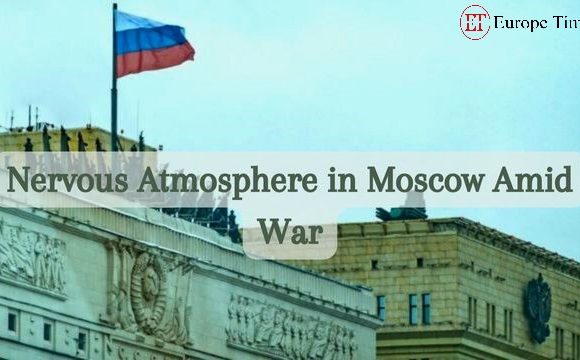
The overall atmosphere in Moscow exudes apprehension. Recent events, such as Yevgeny Prigozhin’s mutiny and the devaluation of the ruble, contribute to a sense of unease. The city’s skyline is juxtaposed with an anti-aircraft system atop the Russian Defence Ministry, symbolizing the coexistence of beauty and apprehension.

While individuals might not be perturbed by individual occurrences, there’s a prevailing sentiment of concern about the present and fear for the future.

In Gorky Park, a picturesque scene unfolds, with families enjoying the surroundings. Nearby, the Russian Defence Ministry stands, topped by an anti-aircraft system. This contrast doesn’t alarm locals, with some expressing approval for the military stance.

Fear has taken root in Moscow. Opposition activists convene in inconspicuous spaces, with Yulia Galyamina leading the meeting. She laments the frequent arrests of activists but remains committed to her cause. Other activists, using pseudonyms due to fear, underscore the presence of anti-war sentiment in Russia and their dedication to the cause.

Despite the challenges, they believe in humanity’s ultimate triumph and vow to persevere.

Picture Courtesy: Google/images are subject to copyright
News Trending War

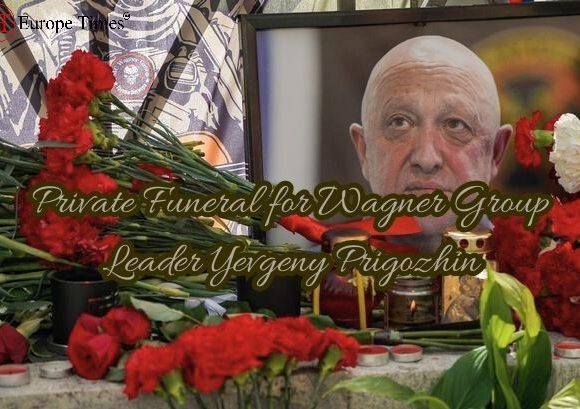
Yevgeny Prigozhin, the head of the Wagner Group, has been quietly buried in a private ceremony in his hometown of St. Petersburg, according to his press service. The ceremony, held in a restricted format, was conducted in St. Petersburg, allowing those who wanted to pay their respects to visit the Porokhovskoe cemetery. Russian authorities confirmed Prigozhin’s death following genetic analysis of ten bodies recovered from a plane crash near Moscow on August 23. The Kremlin has refuted claims of responsibility for the crash. Speculation had mounted about Prigozhin’s fate since an aborted armed uprising he led in June, leading many to refer to him as a “dead man walking.”

All ten individuals on board the crashed plane, including Prigozhin’s associate Dmitry Utkin, lost their lives in the incident in the Tver region. The Wagner press service communicated the details of Prigozhin’s funeral in a concise statement via Telegram. No additional information was provided. Prigozhin had maintained an air of mystery during his life, often disguising his identity using wigs and fake beards. Even in death, the enigma persists.

Throughout the day in St. Petersburg, rumors circulated about the location of Prigozhin’s final resting place, as no advance notice or official announcement was given regarding the timing and location of the burial. Several cemeteries were speculated upon on social media, but the actual location was different from all of them. Prigozhin’s representatives eventually disclosed that he had been laid to rest at Porokhovskoe Cemetery on the outskirts of St. Petersburg, next to his deceased father. The funeral lacked military honors and reportedly had only a small attendance.

The cemetery was closed to the public for the day, heavily guarded by law enforcement. The perimeter was lined with police, sniffer dogs, anti-drone units, and riot police, indicating the seriousness of the security measures in place. Given that the Wagner mutiny orchestrated by Prigozhin was considered a betrayal by the Kremlin, minimal attention was preferred by Russian authorities.

Cemetery officials cited Prigozhin’s family wishes in confirming the timing of the funeral, which reportedly took place at 16:00 local time on Tuesday. Reports indicated that Prigozhin’s black-yellow-red Wagner flag was displayed at the burial site. Metal detectors were set up at the entrance of the cemetery in anticipation of a potential influx of visitors. The funeral of Valery Chekalov, Prigozhin’s chief deputy who was also on the crashed plane, occurred on the same day at St. Petersburg’s Severnoe Cemetery. Chekalov, 47, was believed to oversee Prigozhin’s non-military business interests, which Western governments assert are used to fund the mercenary group.

Despite Wagner fighters’ pivotal role in Russia’s full-scale invasion of Ukraine in February 2022, President Vladimir Putin’s spokesperson Dmitry Peskov confirmed that Putin would not attend Prigozhin’s funeral.

Picture Courtesy: Google/images are subject to copyright
News Trending War

Moscow’s Mayor Sergei Sobyanin has reported a second drone attack on a skyscraper in the city’s Moskva City complex within two days. Multiple drones were shot down during the overnight incident, but one managed to hit the same tower that was targeted on Sunday. The attack caused damage to the building’s glass facade, but fortunately, no injuries have been reported.

Russia’s defense ministry has attributed the latest attack to Ukraine, although Kyiv has not made any official comments on the matter. The tensions have escalated further, as Russia also claimed that three Ukrainian unmanned boats were destroyed while attempting to attack Russian naval ships in the Black Sea.

The IQ-Quarter Tower 1 building suffered over 150 sq m of destroyed glazing during the drone attack. Additionally, two more Ukrainian drones were reportedly shot down by anti-aircraft systems in other parts of the Moscow region, with Russia’s defense ministry claiming to have thwarted a “terrorist attack” from Ukraine.

This incident adds to the growing accusations by Moscow, alleging that Ukraine has been conducting drone strikes on Russian territory in recent months. Ukrainian President Volodymyr Zelensky has not claimed responsibility for specific attacks but has expressed that such actions on Russian territory are seen as an “inevitable, natural, and absolutely fair process.”

The conflict between Russia and Ukraine has been ongoing since Russia’s full-scale invasion of Ukraine in February 2022. In the wake of these recent incidents, there have been casualties and damages on both sides, further escalating the tensions in the region.

Picture Courtesy: Google/images are subject to copyright
News Trending

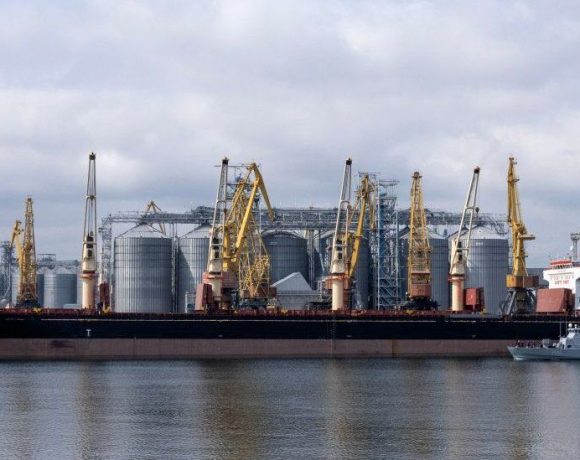
Russia has informed the United Nations, Turkey, and Ukraine that it will not extend a crucial grain deal that allowed Ukraine to export grain through the Black Sea. Kremlin spokesperson Dmitry Peskov stated that the agreements had effectively ended on Monday. The deal permitted cargo ships to pass through the Black Sea from the Ukrainian ports of Odesa, Chornomorsk, and Yuzhny/Pivdennyi. However, Russia stated that it would reconsider the agreement if certain conditions were met.

Russian President Vladimir Putin had previously expressed dissatisfaction with parts of the deal, claiming that the export of Russian food and fertilizers had not been fulfilled. He specifically mentioned that grain had not been supplied to poorer nations, which was a condition of the agreement. Russia also complained about Western sanctions limiting its agricultural exports and repeatedly threatened to withdraw from the deal.

On Monday, the Russian foreign ministry reiterated these concerns, accusing the West of “open sabotage” and prioritizing commercial interests over humanitarian goals. Turkish President Recep Tayyip Erdogan expressed his belief that Putin still wanted to continue the agreement and stated that they would discuss its renewal during their upcoming meeting.

The grain deal is significant because Ukraine is one of the world’s largest exporters of sunflower, maize, wheat, and barley. Following Russia’s invasion in February 2022, Ukrainian ports were blockaded, trapping 20 million tonnes of grain and causing a sharp increase in global food prices. The blockade also posed a threat to food supplies in Middle Eastern and African countries heavily reliant on Ukrainian grain.

Nikolay Gorbachev, the president of the Ukrainian Grain Association, mentioned that alternative methods of exporting grain had been identified, including through Danube River ports. However, he acknowledged that these ports would be less efficient, leading to reduced grain exports and increased transportation costs.

Western leaders swiftly criticized Russia’s decision, with EU Commission President Ursula von der Leyen condemning it as a “cynical move” and emphasizing the EU’s efforts to ensure food security for vulnerable populations.

Russia’s announcement coincided with Ukraine claiming responsibility for an attack on a bridge in Crimea that resulted in the deaths of two civilians. Peskov stated that Russia’s decision to let the deal expire was unrelated to the attack, as President Putin had already declared the position before the incident.

Picture Courtesy: Google/images are subject to copyright
News Trending

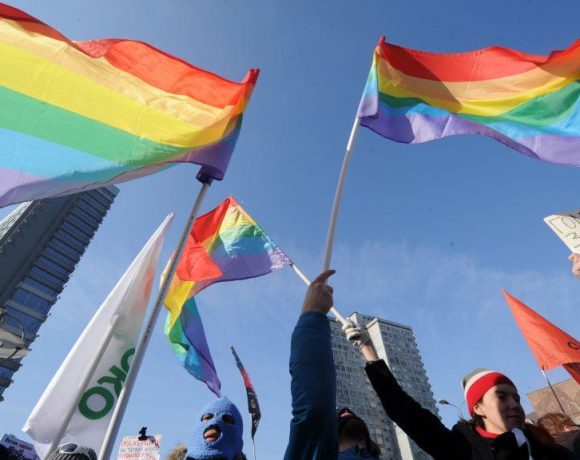
Russia’s lower house of parliament has passed a law that bans gender reassignment surgery and prevents individuals from changing their genders on state documents. The bill, which also needs approval from the upper house and President Vladimir Putin, was justified by the Speaker of the Duma, Vyacheslav Volodin, as a means to protect citizens and children and preserve traditional values.

The legislation includes additional amendments such as prohibiting individuals who have undergone gender changes from adopting children and annulling marriages where one party has undergone gender reassignment. LGBT rights groups have criticized the law, stating that it will negatively impact the health and rights of transgender individuals.

Critics view the law as an infringement on basic human rights and an attempt to further discriminate against an already marginalized group. This law follows previous legislation passed last year that banned the public expression of LGBT culture and propaganda of non-traditional sexual relations. President Putin has expressed opposition to LGBT lifestyles, aligning with the Orthodox Church’s conservative social views.

Additionally, a transgender rights activist was recently arrested on charges of treason for supporting Ukraine, further raising concerns about human rights in the country.

Picture Courtesy: Google/images are subject to copyright
News Trending War

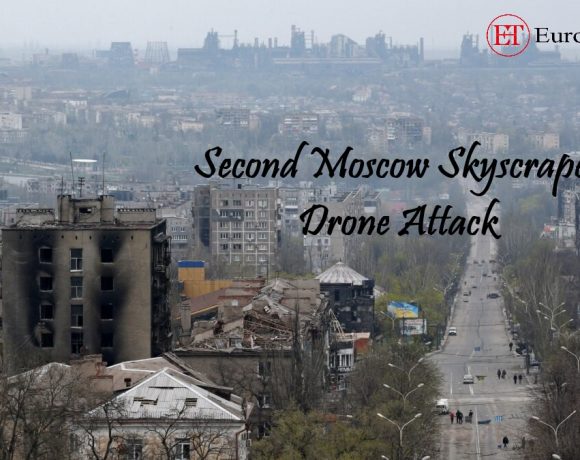
Poland has become increasingly cautious of its neighbor Belarus due to the possibility of Russian Wagner group mercenaries relocating there as part of a deal to end their mutiny. In response, Poland has fortified its border with miles of fencing, thermal cameras, and spotlights, which were initially installed after Belarus encouraged migrants to cross into Poland.

Poland is deploying extra officers as reinforcements ahead of the NATO summit, expressing concerns that the Wagner forces could instigate further trouble. The unpredictability of Belarus is seen as the biggest threat, with uncertainties surrounding the motives and preparations of the Wagner group. Despite the intended disbandment and exile of the mercenaries to Belarus, there are indications that the group is still operating within Russia.

Online contacts with Wagner revealed that recruitment was ongoing, and detailed instructions were provided to find the mercenaries’ training camp in southern Russia. However, the whereabouts and future plans of the Wagner group remain unclear. While some Belarusians express concerns about the group’s potential arrival, others see their recent mutiny as a sign of weakness within the Kremlin, fueling hopes for change.

There are doubts that Wagner will relocate to Belarus in large numbers or that their leader, Yevgeny Prigozhin, would settle there due to potential scrutiny from the Russian FSB security service. Polish worries and warnings about Wagner’s presence in Belarus could be influenced by domestic politics, with some suggesting it as a political tool to enhance the government’s security credentials ahead of upcoming elections.

The situation surrounding the Wagner mutineers remains shrouded in mystery, leading Poland to maintain heightened border patrols and surveillance.

Picture Courtesy: Google/images are subject to copyright
News Trending War

It seems that you are sharing a blog post or an article discussing recent events in Russia, specifically regarding the Wagner rebellion and its implications for President Vladimir Putin. While I can provide some context and analysis, please note that the information I provide is based on knowledge available up until September 2021, and I cannot provide real-time updates on current events.

The events described in the blog post indicate a sense of uncertainty and shifting perceptions surrounding President Putin and his leadership. The author highlights the contradictory messages coming from the Kremlin and suggests that these mixed signals may weaken Putin’s image. The dropping of criminal charges against the Wagner leader, despite earlier strong rhetoric condemning the rebellion, is seen as a significant shift.

The author also suggests that these events, along with other challenges faced by Russia, such as economic problems and cross-border incidents near Ukraine, may contribute to instability within the country. The speculation about potential changes in leadership and discussions among the Russian elite about the upcoming 2024 presidential election indicate that there may be a growing desire for alternative leadership among certain circles.

However, it is important to note that predicting political changes and leadership transitions is challenging, especially in the case of Russia. Vladimir Putin has demonstrated political survival skills throughout his long tenure, and it is uncertain how these recent events will ultimately impact his position.

Without further information on recent developments, it is difficult to predict President Putin’s next move accurately. The quoted exchange from an old Putin interview about forgiveness and treachery may provide some insight into his mindset, but it is ultimately open to interpretation.

It is essential to follow reliable news sources and analysis to stay updated on the latest developments in Russia and the implications for President Putin’s leadership.

Picture Courtesy: Google/images are subject to copyright