featured News Trending

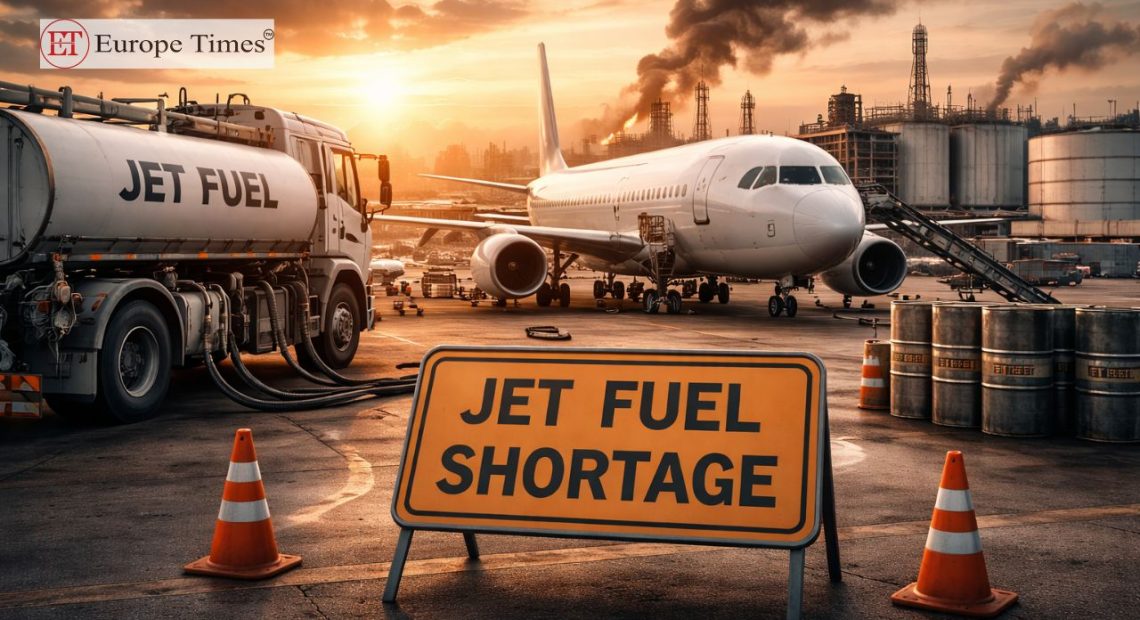
Europe could face a severe jet fuel shortage within weeks as disruptions in Middle East supply chains intensify, according to the International Energy Agency. The closure of the Strait of Hormuz has sharply reduced exports, pushing prices to record highs and raising concerns that stocks could hit critical levels by June if alternative supplies are not secured.

The IEA warned that even with increased shipments from countries like the US and Nigeria, Europe may only be able to replace just over half of its lost imports. Since the region typically relies on the Middle East for around 75% of its jet fuel, analysts say shortages could begin to affect airports, potentially leading to flight cancellations, especially during the busy summer travel season.

While officials and industry groups say there is no immediate disruption, they acknowledge growing risks ahead. Airlines and governments are exploring contingency measures as rising fuel costs already impact operations. If supply constraints persist, smaller airports could be hit hardest, even as major hubs are prioritized for limited fuel availability.

Pic courtesy: google/ images are subject to copyright

featured News Trending

Global airlines are raising ticket prices and reducing flight capacity as soaring oil prices sharply increase operating costs, creating uncertainty for the industry’s profitability. The sudden spike in jet fuel prices, triggered by geopolitical tensions in the Middle East, has forced carriers to rethink pricing strategies and route planning, even as higher travel costs threaten to weaken consumer demand.

Before the conflict-driven fuel surge, airlines had projected record global profits of $41 billion in 2026. However, the doubling of jet fuel prices has disrupted those expectations, prompting airlines such as United Airlines, Air New Zealand, and SAS to introduce fare hikes, fuel surcharges, and capacity cuts. Analysts warn airlines face a difficult balance — raising fares to offset costs while potentially lowering prices later to stimulate demand if travelers cut back on spending.

Despite record passenger traffic in recent years, supply-chain issues and delayed aircraft deliveries limit airlines’ ability to reduce costs through fleet upgrades. Low-cost carriers may be hit hardest as price-sensitive travelers shift to cheaper transport alternatives. Experts say financially stronger airlines with solid balance sheets are better positioned to withstand the ongoing oil shock, while weaker carriers could face mounting financial pressure.

Pic courtesy: google/ images are subject to copyright