News Trending

A government spokesperson in Japan has expressed the country’s welcome to the European Union (EU) potentially lifting restrictions on food imports that were imposed after the 2011 nuclear accident caused by an earthquake and tsunami. According to a report in the Nikkei newspaper, the EU is in the final stages of removing all restrictions on Japanese food, although the sources for this information were not disclosed.

The bans on food imports have been in effect since the Fukushima Dai-ichi nuclear plant was damaged by the earthquake and tsunami, resulting in multiple meltdowns. The spokesperson, Mr Hirokazu Matsuno, stated during a Tokyo press conference that the Japanese government appreciates the positive steps toward lifting the restrictions. It is hoped that easing the restrictions will contribute to the reconstruction efforts in the areas devastated by the nuclear disaster.

The 2011 earthquake and tsunami tragically claimed the lives of nearly 20,000 people along Japan’s Pacific coast. The meltdowns at the Fukushima nuclear plant led to the evacuation of tens of thousands of residents.

This news about the potential lifting of restrictions comes just before the visit of Rafael Mariano Grossi, the chief of the International Atomic Energy Agency (IAEA), to Japan. During his visit, Grossi will present the findings of the IAEA’s safety review regarding Japan’s plan to release water from the Fukushima nuclear power plant into the ocean. The Japanese government intends to release 1.3 million metric tons of water that has been exposed to radiation inside the damaged power plant after removing most of its radioactive elements.

The water to be released contains traces of tritium, an isotope that is difficult to remove from water and has primarily been used to cool the damaged reactors. The IAEA plans to establish an office at the Fukushima plant during Grossi’s visit, indicating its ongoing involvement and oversight of the situation.

Picture Courtesy: Google/images are subject to copyright

News Trending

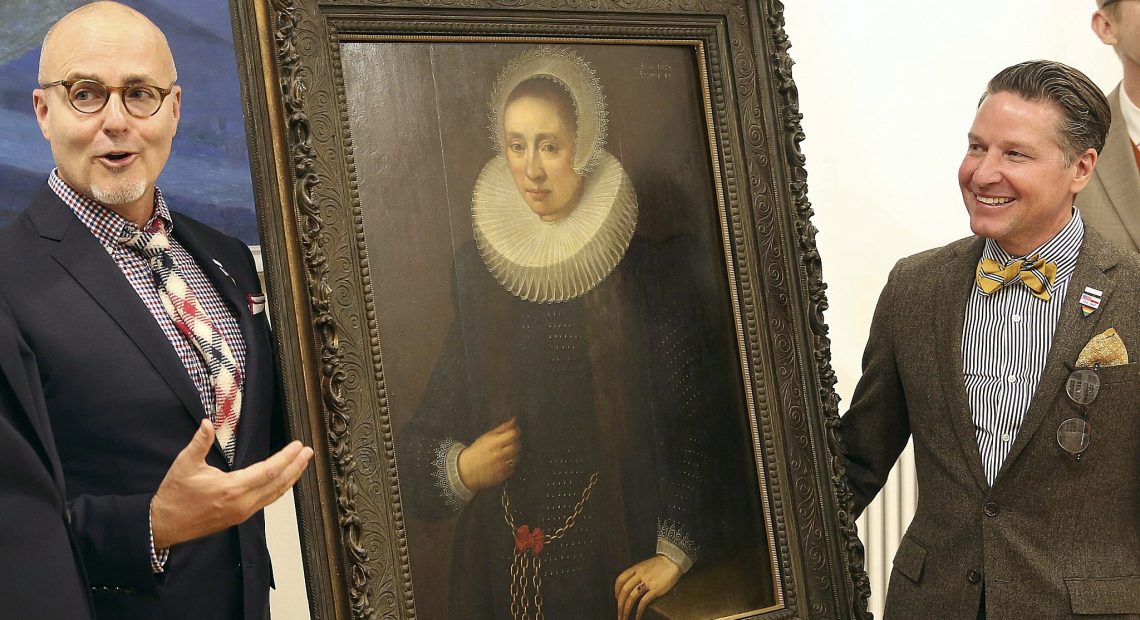
During the Nazi occupation of Poland in World War Two, numerous valuable artworks were stolen. Among them was Madonna with Child, a 16th-century painting attributed to Alessandro Turchi. Recently, the painting was discovered in Japan and returned to Polish authorities in a ceremony held in Tokyo. This is part of Poland’s ongoing effort to retrieve looted artworks, with Madonna with Child being one of the 600 successfully recovered so far. However, there are still over 66,000 war losses yet to be found. Poland has launched a campaign to seek the return of hundreds of thousands of missing artworks and cultural items, as well as reparations from Germany for the damages caused by the occupying Nazis.

Art experts anticipate that more looted artworks will be uncovered as time passes, especially as heirs attempt to sell these pieces without awareness of their history. Madonna with Child was believed to have been transferred to Germany in 1940 during the Nazi occupation, as the Nazis frequently looted art from Jewish families before their execution. The painting appeared again in the 1990s when it was sold at an auction in New York. However, the sale was halted in January last year after Polish authorities identified the artwork, and it was subsequently agreed upon by the auction house and the owner to be returned to Poland. The official handover ceremony took place in Tokyo.

The return of masterpieces like Madonna with Child helps restore pride in Poland’s art heritage and highlights the significance of Polish collections. Polish art historian Natalia Cetera stated that reclaiming these artworks showcases the country’s focus on remembering its cultural heritage and rebuilding its strength in art. There has been a shift in recent years towards recognizing cultural heritage as a common good. As looted artworks are inherited by the next generation, the unaware heirs may unknowingly sell these pieces, leading to their discovery.

Efforts to locate stolen artworks from Poland involve recording them in international databases and the work of art historians who are researching looted artworks and identifying them. The advancement of technology and online platforms used by auction houses allow for increased visibility and more eyes searching for looted objects. Furthermore, there seems to be a generational shift in attitudes toward stolen masterpieces, with some individuals willingly returning the artworks rather than facing legal issues.

The return of Madonna with Child is a source of pride for Poland, but it remains uncertain whether the passion for retrieving stolen artwork will continue with future generations. The digitization of art collections may impact the interest in physical artworks, as access to digital versions becomes more prevalent. While the successful retrieval of physical artworks is currently important, the advancement of technology might reduce the necessity of physically reclaiming artworks in the future.

Picture Courtesy: Google/images are subject to copyright