featured News Trending

Italy’s national statistics bureau ISTAT has slightly lowered its economic growth forecast for 2026, projecting gross domestic product (GDP) growth of 0.7%, down from the 0.8% estimate issued in December. The agency also expects the economy to expand by 0.7% in 2027, supported by stronger-than-expected performance in the first quarter, when GDP rose 0.3% from the previous three months.

Despite the downgrade, ISTAT’s outlook remains somewhat more optimistic than forecasts from the European Commission, IMF, OECD and the Bank of Italy, all of which expect growth between 0.5% and 0.6% over the next two years. Prime Minister Giorgia Meloni’s government also revised its projections lower in April, citing rising energy costs and ongoing tensions in the Middle East.

ISTAT warned that geopolitical uncertainty continues to pose risks to the economy, particularly developments related to the conflict in the Middle East. The statistics bureau also improved its labour market outlook, forecasting an average unemployment rate of 5.5% this year and in 2027, lower than its previous estimate of 6.1%. Italy’s economy grew 0.5% in 2025, marking a third consecutive year of growth below 1%.

Pic courtesy: google/ images are subject to copyright

featured News Trending

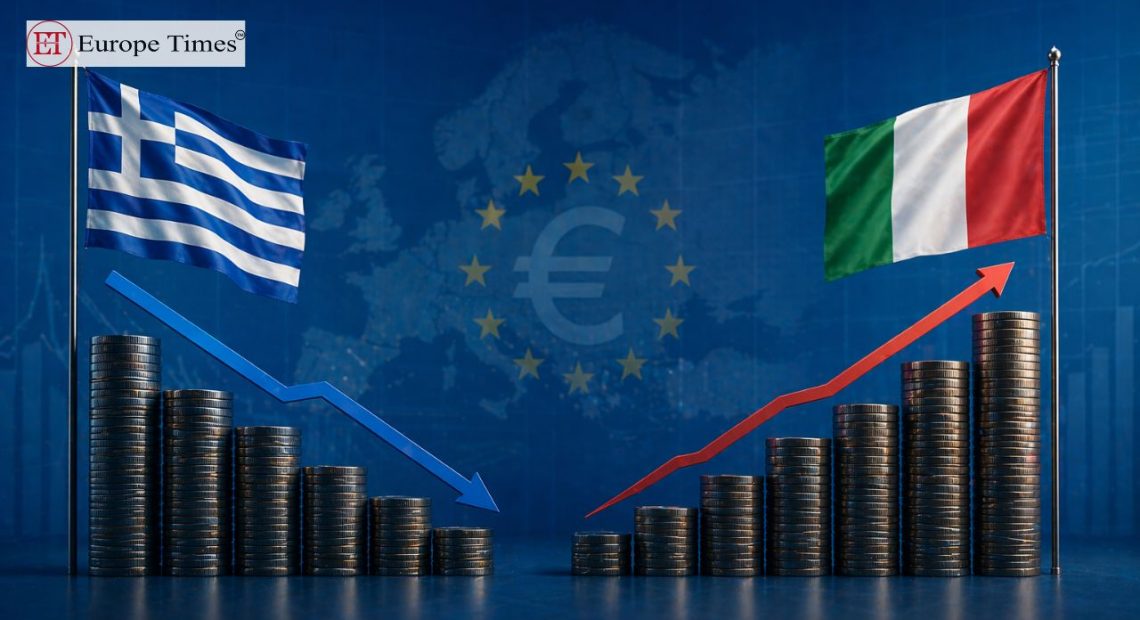
Greece is expected to lose its position as the euro zone’s most indebted country by the end of 2026, with its public debt ratio projected to fall below that of Italy. Greek debt is forecast to decline to around 137% of GDP this year, down from 145% in 2025, reflecting steady fiscal improvement following years of economic recovery efforts.

In contrast, Italy’s debt is projected to rise from 137.1% of GDP in 2025 to about 138.6% in 2026, according to its latest multi-year budget plan. This shift will place Italy at the top of the euro zone’s debt rankings, although its debt levels are expected to stabilize and gradually decline in the following years. Greek officials say the updated figures will be included in the country’s fiscal plan to be submitted to the European Commission.

Greece has significantly reduced its debt burden over the past few years, cutting it by more than 45 percentage points since 2020 after enduring a prolonged financial crisis and multiple bailout programs. The country now plans to repay about €7 billion in bailout loans ahead of schedule, signaling stronger economic footing. Meanwhile, Italy has made slower progress in reducing its debt, narrowing the gap between the two economies.

Pic courtesy: google/ images are subject to copyright