
featured News Trending

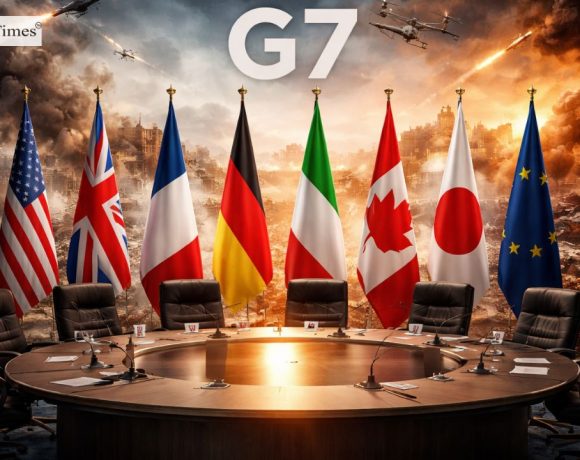
Foreign ministers of the G7 nations have called for an immediate halt to attacks on civilians and civilian infrastructure amid the ongoing Iran war, following a high-level meeting in France. In a joint statement, the ministers stressed the urgent need to reduce harm to civilian populations and protect critical infrastructure affected by the conflict.

The leaders highlighted the importance of coordination and global partnerships to limit the wider impact of the war, including disruptions to energy, trade, fertilizer supplies, and global supply chains. They warned that continued instability could trigger economic shocks and affect countries far beyond the conflict region.

The G7 also emphasized the need to ensure safe and uninterrupted navigation through the Strait of Hormuz, a key global energy route, while reaffirming their commitment to regional stability and international cooperation. The group includes the United States, Britain, Canada, France, Germany, Italy, Japan, and the European Union.

Pic courtesy: google/ images are subject to copyright
featured News Trending

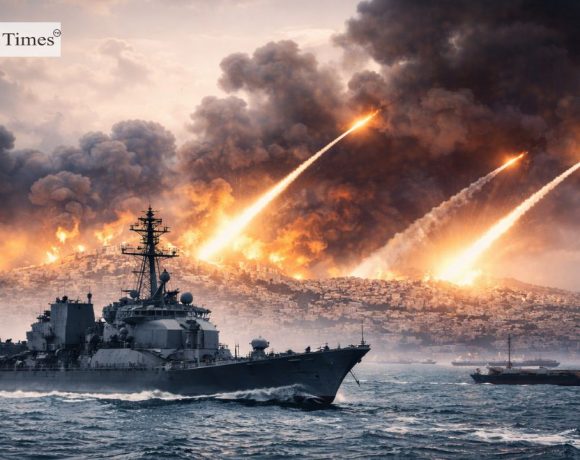
German Chancellor Friedrich Merz has expressed doubts about whether the military actions by United States and Israel against Iran will achieve lasting success. Speaking at a conference in Berlin, Merz said he was unconvinced that there was a clear endgame to the conflict, which began with joint strikes on February 28 and has since escalated across the region.

Iran has responded with attacks on Israeli territory, U.S. bases, and Gulf states, while also disrupting vital oil shipments through the Strait of Hormuz. European countries, including Germany, have largely avoided direct involvement, a stance that has reportedly frustrated U.S. President Donald Trump. Merz emphasized ongoing diplomatic efforts through the G7 and regional talks but admitted limited influence over Israeli decisions.

Merz also clarified that the conflict is not a mission for NATO, noting he conveyed this position in a recent call with Trump. While Germany may consider future roles such as securing maritime routes or clearing mines in the Strait of Hormuz, he stressed that any such involvement would depend on international approval and would only be considered after hostilities end.

Pic courtesy: google/ images are subject to copyright
featured News Trending

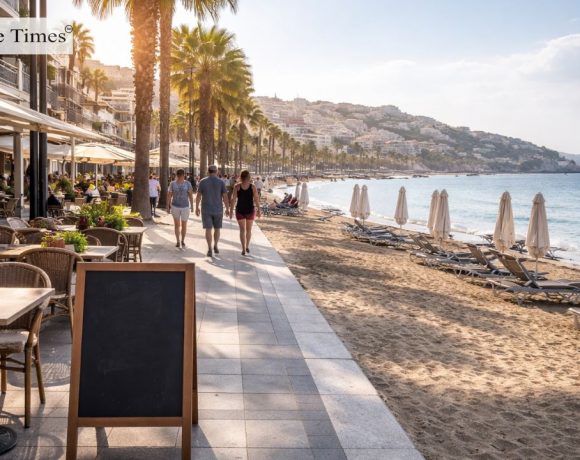
The ongoing Iran conflict has begun to impact tourism in Cyprus and Greece, with rising cancellations and a slowdown in new bookings ahead of the crucial summer season. The situation escalated after military strikes in late February and subsequent counterattacks, including a drone strike near a British base in Cyprus, triggering concerns among travellers and leading to a sharp drop in visitor interest.

In Cyprus, cancellations for short-term rentals surged dramatically, at one point reaching nearly 100% in the days following the escalation, before easing to around 45% by late March. The country’s hospitality sector has reported significant declines in bookings for March and April, prompting the central bank to cut its 2026 economic growth forecast. Airlines and travel operators have also noted reduced demand, with tourists shifting preferences to destinations like Spain.

Greece has also seen a slowdown, particularly in pre-bookings, although the impact has been less severe. Major carriers report declining demand from key markets such as Israel and Gulf countries, while tourism officials remain cautiously optimistic. Industry stakeholders warn that if the uncertainty continues into peak summer months, it could pose a serious risk to economies heavily reliant on seasonal tourism.

Pic courtesy: google/ images are subject to copyright

featured News Trending

British travellers are rebooking Easter holidays away from Dubai and other Middle Eastern destinations due to the ongoing Iran war and travel disruptions across the region. Airlines such as British Airways have temporarily suspended flights to Dubai, Bahrain, Tel Aviv, and Amman, prompting holidaymakers to seek “reassuring” alternatives that avoid regional instability.

This shift has driven a surge in bookings to destinations in Spain, Portugal, Italy, the Caribbean, Mauritius, and the US. Popular European spots like the Balearic and Canary Islands, Tuscany in Italy, and Cape Verde have seen notable increases in demand, while flights to these regions are filling faster than last year. Travel firms note that affordability and easy access are key factors in holidaymakers’ destination choices.

Meanwhile, countries closer to the Middle East, including Turkey, Cyprus, Egypt, and parts of Greece, have experienced a slowdown in bookings. Rising jet fuel prices and potential fare hikes due to the conflict are expected to impact travel costs, but experts believe holiday demand will remain strong for safe, warm-weather locations far from geopolitical tensions.

Pic courtesy: google/ images are subject to copyright

featured News Trending

Pope Leo XIV on Friday suggested that Christian political leaders who engage in armed conflicts should examine their conscience and go to confession, emphasizing adherence to Jesus’ teachings without naming specific leaders or wars. Speaking to priests at a Vatican conference on the practice of confession, he highlighted the importance of humility and moral reflection for those bearing grave responsibilities in conflicts.

The pope’s remarks come amid his repeated calls for an end to the ongoing Iran war, which began with joint U.S.-Israeli airstrikes on February 28. While the Catholic Church generally opposes war, it evaluates conflicts through the just war tradition, assessing whether actions like repelling an unjust invasion are morally justifiable. Cardinal Robert McElroy recently criticized the U.S.-Israeli strikes as failing to meet these criteria.

Pope Leo stressed that the sacrament of confession not only allows individual Catholics to seek forgiveness but also fosters peace and unity in society. By encouraging self-examination and repentance, the pope linked spiritual reflection with broader ethical responsibility, urging leaders and faithful alike to align their actions with Christian teachings on non-violence.

Pic courtesy: google/ images are subject to copyright

featured News Trending

Italian Prime Minister Giorgia Meloni on Wednesday strongly criticised the U.S.-Israeli air strikes on Iran, calling them part of a dangerous global trend of unilateral interventions “outside the scope of international law.” Speaking to parliament, Meloni highlighted growing instability in the international system and compared the Middle East conflict to Russia’s 2022 invasion of Ukraine, warning that such interventions could have wider destabilising effects on global security.

Meloni emphasised that Iran must not be allowed to develop nuclear weapons, citing the potential collapse of the international non-proliferation framework and the dramatic security risks it would pose to Italy and Europe. While most European nations have largely refrained from criticising the U.S. and Israel directly, Meloni’s remarks signal a firmer stance by Rome amid ongoing air strikes that have disrupted around one-fifth of global oil and gas supplies.

To protect strategic interests and Italian citizens in the region, Meloni noted that Italy is providing air-defense assets to Gulf allies affected by Iranian strikes. She stressed that the deployment also safeguards approximately 2,000 Italian soldiers stationed in the Gulf, reflecting Rome’s dual concern for regional security and the safety of its nationals abroad.

Pic courtesy: google/ images are subject to copyright

featured News Trending

Pope Leo XIV on Wednesday expressed deep sorrow over the deaths of civilians, including children, in the ongoing Iran war and called on pilgrims in St. Peter’s Square to pray for peace across the Middle East. Highlighting the humanitarian toll, he emphasized the need to end violence that could escalate further, appealing repeatedly for calm and reconciliation.

The pontiff also extended his condolences to Lebanon, currently facing Israeli strikes targeting Hezbollah. He lamented the death of Rev. Pierre El Rahi, a priest who was killed while assisting injured parishioners, calling him a “true shepherd.” Pope Leo reiterated his closeness to the Lebanese people, noting the country is undergoing a “great trial” amid regional conflict.

Pope Leo’s remarks come amid escalating tensions in the region, including a reported strike on a girls’ school in Minab, southern Iran, during the initial U.S. and Israeli attacks, which Iranian officials claim killed 150 students. While details are still under investigation, the pontiff’s call for prayers and solidarity underscores the Vatican’s humanitarian concern and ongoing engagement with affected communities.

Pic courtesy: google/ images are subject to copyright
featured News Trending

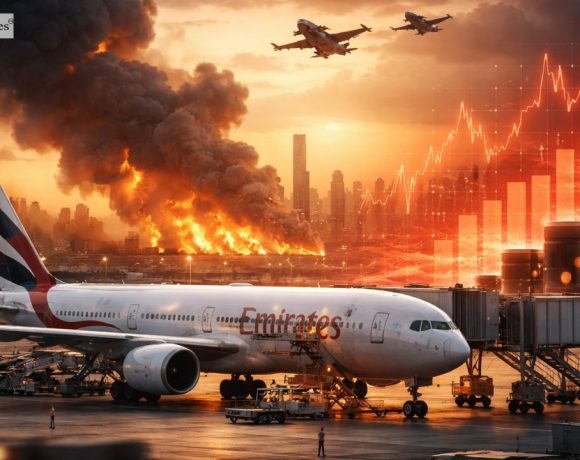
Airline shares across Asia tumbled on Monday as soaring oil prices and the escalating U.S.-Israeli war with Iran disrupted travel and raised operating costs. Crude oil jumped 20% to its highest level since July 2022, driving up jet fuel prices and intensifying financial pressure on carriers already struggling with limited airspace and supply chain challenges. Analysts warned that uncertainty for airlines has surged further amid the geopolitical crisis.

Travel disruptions have left tens of thousands of passengers stranded, with many paying premium rates for last-minute flights, overland journeys, or private charters. Since February 28, more than 37,000 flights to and from the Middle East have been cancelled. Airlines such as Qantas, Cathay Pacific, Japan Airlines, Korean Air, China Southern, and China Eastern saw share declines ranging from 4% to over 10%, while Indian carriers IndiGo and SpiceJet fell 7.5% and 5.6%, respectively.

Airlines are forced to reroute flights, carry extra fuel, and make additional refueling stops to navigate the restricted airspace safely. Governments and airports, including Australia, Oman, and Turkey, have issued travel advisories and restricted certain flights. Meanwhile, pilots report increased mental stress due to prolonged conflicts, shrinking air corridors, and military drone threats, compounding operational challenges for carriers across the region.

Pic courtesy: google/ images are subject to copyright