
featured News Trending

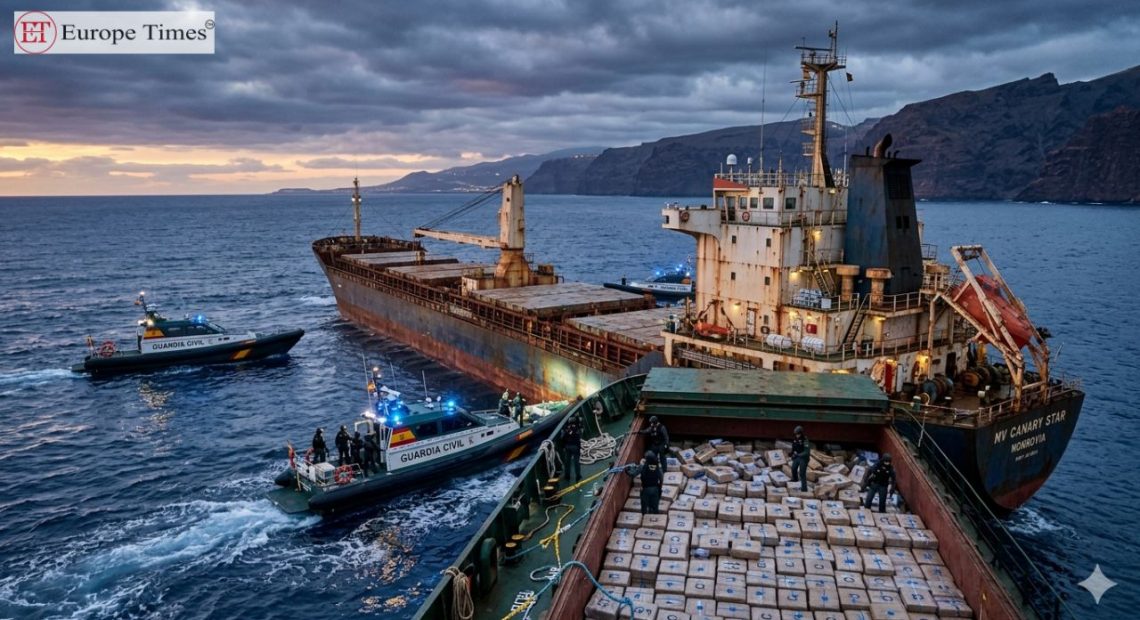
Spanish authorities have intercepted a freighter in international waters, seizing an estimated 30,000 to 45,000kg of cocaine in what is being described as a national record. The vessel was intercepted off Spain’s Canary Islands on Friday, leading to the arrest of approximately 20 individuals. Interior Minister Fernando Grande-Marlaska characterized the operation as one of the largest seizures both nationally and internationally, dealing a “historic blow” to global drug trafficking networks.
The freighter originated from Sierra Leone and was officially destined for Libya. However, investigators believe the cargo was intended to be offloaded onto smaller vessels for final distribution across Europe, following a common smuggling pattern. While the Civil Guard has declined to provide specific details regarding the ongoing investigation for legal reasons, they shared images on social media showing the illicit substances packed into the hold of the intercepted ship.

This massive operation significantly surpasses previous records, including a major seizure in January when authorities confiscated nearly 10 tonnes of cocaine at sea. The AUGC, the main union for the Civil Guard, hailed the event as a landmark moment for their Maritime Service. This latest discovery underscores the intensified efforts by Spanish law enforcement to disrupt major maritime drug corridors in the Atlantic.

Pic courtesy: google/ images are subject to copyright

featured News Trending

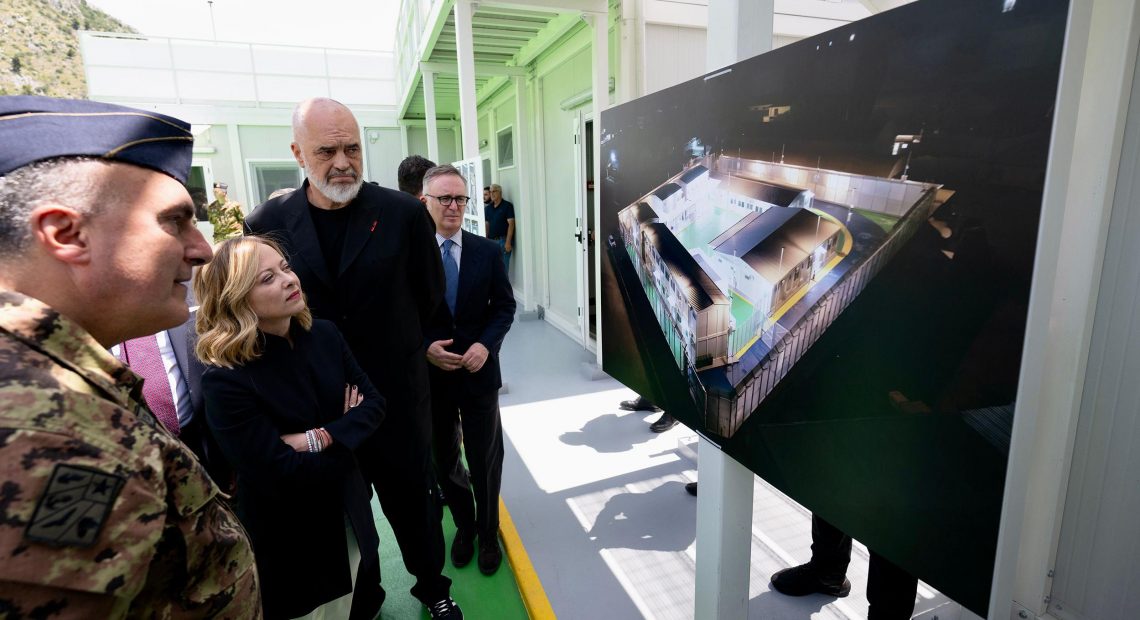
Italy, the European Union’s top destination for migrants, is beginning a new chapter in its migration policy by opening its first camp in Albania, part of a plan to “offshore” the migrant challenge. This initiative allows Italy to house up to 3,000 migrants per month who are rescued while attempting to reach its shores. The Shengjin camp, now operational, is set to manage migrants picked up in international waters, though it excludes women, children, and vulnerable individuals.

The Italian government has fully funded the construction of these facilities, which will operate under Italian and European legislation, according to Fabrizio Bucci, Italy’s ambassador in Albania. Once in the camp, migrants can apply for asylum in Italy; those whose requests are denied will be sent back to countries considered safe.

The agreement between the Italian and Albanian governments is set for five years, with the possibility of extension if successful in alleviating Italy’s migration burden. This year, Italy has seen about 31,000 sea arrivals, down over 50% from 2023, signaling a shift in migration trends. Prime Minister Giorgia Meloni, who campaigned on strict migration policies, has made the Albania initiative a cornerstone of her administration.

However, the plan has faced scrutiny over its estimated cost of over €650 million (£547), with critics like MP Riccardo Magi calling it excessive for detaining a limited number of migrants. Concerns have also been raised about the ability to adequately screen rescued individuals for vulnerabilities.

Despite criticism, the initiative has garnered support from 15 EU member states, who see it as a potential model for addressing migration. As Albania seeks EU membership, the agreement could bolster its international standing, though some remain skeptical about the motivations behind it. If successful, this model may pave the way for similar arrangements with other countries in the future.

Picture Courtesy: Google/images are subject to copyright