featured News Trending

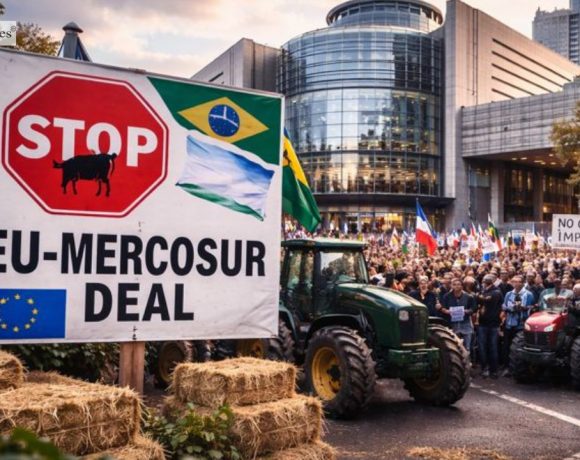
EU lawmakers are set to vote on Wednesday whether to refer the European Union’s free trade agreement with Mercosur—comprising Argentina, Brazil, Paraguay, and Uruguay—to the EU Court of Justice. A legal challenge by 144 lawmakers could delay the deal by up to two years and potentially block its implementation. The agreement, the EU’s largest-ever trade pact, still requires approval from member states before taking effect.

Opponents, led by France, argue the deal will increase imports of cheap beef, sugar, and poultry, threatening domestic farmers. The legal challenge seeks a court ruling on whether the pact can be provisionally applied before full ratification and whether it limits the EU’s ability to enforce environmental and consumer health standards. Court opinions typically take around two years to be delivered.

Supporters, including Germany and Spain, stress the pact’s importance in offsetting trade disruptions caused by U.S. tariffs and reducing dependency on China by securing access to critical minerals. They also note that Mercosur governments are growing impatient after decades of negotiations, making timely EU approval crucial.

Pic courtesy: google/ images are subject to copyright
featured News Trending

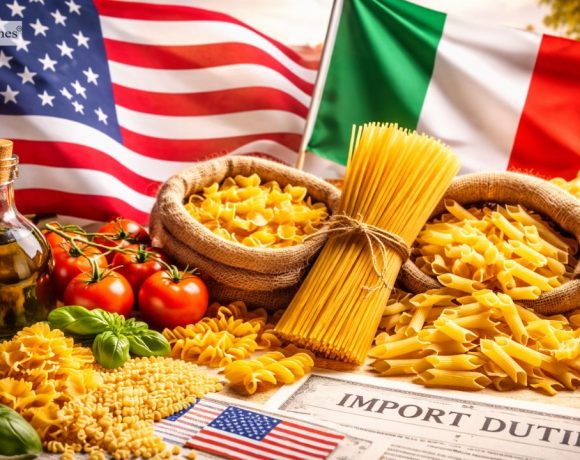
The US government has sharply reduced proposed tariffs on Italian pasta, easing pressure on producers that had faced the prospect of levies as high as 92%. Following a review by the US Department of Commerce, the duties have been cut to a range of between 2% and 14%, offering relief to major brands such as Barilla, La Molisana and Pastificio Lucio Garofalo, which were accused of selling pasta at unfairly low prices.

The revised tariffs will apply in addition to a separate 15% duty imposed on most EU goods imported into the US, although a final decision on the pasta levies has not yet been made. The Department of Commerce said its preliminary analysis showed Italian producers had addressed many of its concerns, with final results and definitive tariff levels due to be announced on March 12.

Italy exports an estimated $770 million worth of pasta to the US each year, with the 13 targeted companies accounting for around 16% of those shipments. Italy’s government and industry groups welcomed the move, warning earlier that steep tariffs would severely damage the sector, while the European Commission said it stood ready to intervene if needed.

Pic courtesy: google/ images are subject to copyright
featured News Trending

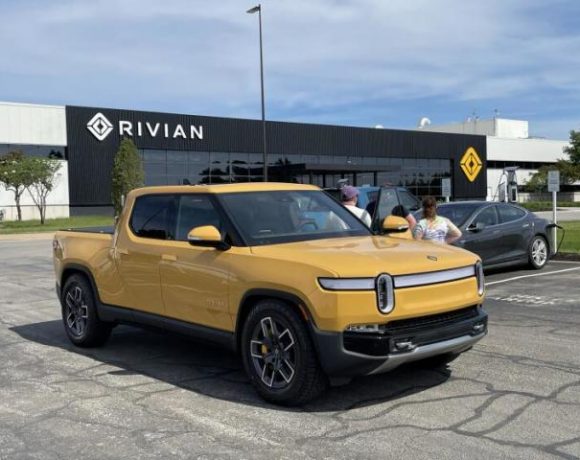
Volkswagen (VW), the German automotive giant, has announced an investment of up to $5 billion (£3.94 billion) in Rivian, a competitor to Tesla. This partnership forms a joint venture allowing both VW and the US-based electric vehicle (EV) manufacturer to share technology. Following the announcement, Rivian’s stock surged nearly 50%.

The collaboration comes amid increasing competition among EV manufacturers and the imposition of tariffs on Chinese imports by Western nations. VW will start with an initial $1 billion investment in Rivian, with an additional $4 billion planned by 2026.

Founded in 2009, Rivian has yet to achieve a quarterly profit, reporting a net loss of over $1.4 billion in the first quarter of 2024. VW, facing pressure from competitors like Tesla and China’s BYD, is working to transition from fossil fuel-powered vehicles to EVs.

The partnership provides VW with immediate access to Rivian’s software, which it can integrate into its vehicles. The deal also comes as Chinese EV manufacturers expand globally, increasing competition. The European Union (EU) recently announced plans to raise tariffs on Chinese EV imports by up to 38%, following an investigation that found Chinese EV companies had been unfairly subsidized. China criticized these tariffs as violating international trade rules and labeled the investigation as protectionist.

The tariff increase by the EU follows the United States’ decision to raise import duties on Chinese EVs from 25% to 100%. Canada is also considering similar measures to align with its allies.

Separately, Tesla announced a recall of over 11,000 Cybertrucks sold in the US due to issues with windscreen wipers and exterior trim. The Cybertrucks were first released at the end of November last year.

Picture Courtesy: Google/images are subject to copyright

News Trending

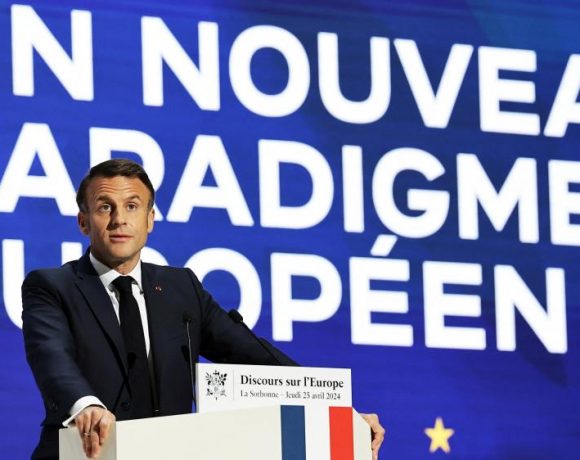
In a significant speech at Sorbonne University, French President Emmanuel Macron issued a stark warning to Europe, stating that the continent must shed its self-imposed naivety or risk its demise. Macron emphasized the urgent need for Europe to adapt to a rapidly changing global landscape, highlighting challenges such as Russian hostility, diminishing US interest, and Chinese competition that could marginalize the EU.

Macron urged European leaders to make decisive moves toward bolstering defense and the economy, advocating for increased protectionism and the development of an independent defense capability. He stressed the importance of Europe asserting itself in international trade, particularly as major players like China and the US disregard established norms.

Addressing concerns over Russia’s actions, Macron defended his stance of strategic ambiguity regarding potential military involvement in Ukraine, emphasizing the need for Europe to assert its independence from the US and reject a bipolar world order.

Macron also warned against Europe’s internal demoralization, urging a reconnection with the values that distinguish the continent. He highlighted the dangers of online disinformation and advocated for stricter regulations, including imposing a minimum age for social media access.

While Macron’s speech aimed to position France at the forefront of European leadership and boost his party’s electoral prospects, it also underscored concerns about the party’s dependence on Macron’s leadership.

Picture Courtesy: Google/images are subject to copyright