featured News Trending

The government of France has announced plans to offset the financial impact of the ongoing Iran crisis by freezing public spending. Rising energy prices and increased borrowing costs linked to the crisis are expected to cost the country between €4 billion and €6 billion. Authorities say the spending freeze will match these projected losses, helping stabilize public finances.

Finance Minister Roland Lescure stated that higher bond yields alone could add €3.6 billion to France’s borrowing costs. Meanwhile, the government is preparing targeted support measures to help households cope with surging energy prices. These measures are expected to prioritize workers who rely heavily on fuel, reflecting growing concerns over the cost-of-living impact.

Despite the planned response, the government faces mounting political pressure for broader relief measures. While some groups are calling for fuel tax cuts, others are pushing for caps on energy prices. However, with one of the largest budget deficits in the eurozone, officials insist that any support must remain limited and carefully targeted to avoid further straining public finances.

Pic courtesy: google/ images are subject to copyright

featured News Trending

European Central Bank policymakers have downplayed the likelihood of an interest rate hike in April, emphasizing the need for more economic data before making any decision. European Central Bank officials noted that while inflation has risen above the 2% target due to higher energy costs, the timing of any policy move is less important than ensuring the decision is well-supported by evidence.

Key voices, including Philip Lane and Francois Villeroy de Galhau, stressed patience. Villeroy said that betting on an April hike would be premature, as policymakers still need clarity on how inflation is affecting underlying prices and economic demand. Markets have also scaled back expectations, now assigning only a small probability to an April move, though a rate increase is still widely anticipated by mid-year.

Other policymakers echoed similar caution, highlighting limited signs that energy-driven inflation is spreading across the broader economy. Officials such as Martins Kazaks indicated that even a small rate hike would mostly serve as a signal rather than a strong policy shift. Overall, the ECB appears inclined to wait for clearer signs of sustained inflation before taking action.

Pic courtesy: google/ images are subject to copyright

featured News Trending

Italy is set to lower its economic growth forecasts as rising energy prices continue to pressure its economy, Economy Minister Giancarlo Giorgetti said. The government is expected to trim this year’s GDP growth estimate to around 0.5%–0.6%, down from 0.7%, while next year’s outlook may also be reduced slightly. The slowdown is largely attributed to external and temporary factors, particularly the ongoing energy crisis.

The weaker growth outlook complicates Italy’s efforts to reduce its budget deficit below the European Union’s 3% threshold. With the deficit already projected at 3.1% in 2025, slower expansion could limit fiscal room and make it harder to meet agreed targets. Despite these challenges, officials maintain that recent data does not indicate any structural weakness in the economy.

Italy has urged the European Union to consider temporarily easing its budget rules if geopolitical tensions, especially involving Iran, worsen further. While existing mechanisms allow flexibility during severe downturns, current conditions do not yet meet that threshold. Meanwhile, Italy remains under EU scrutiny for its deficit, restricting its ability to introduce major relief measures.

Pic courtesy: google/ images are subject to copyright

featured News Trending

Economic growth across the euro zone slowed sharply in March as rising energy costs and supply chain disruptions weighed on business activity. According to data from S&P Global, the composite Purchasing Managers’ Index (PMI) for the region fell to 50.7 from 51.9 in February, marking its lowest level in nine months, though still marginally indicating expansion.

The slowdown was largely driven by weakening demand, with new business declining for the first time in eight months. Analysts from S&P Global Market Intelligence highlighted that the ongoing Middle East conflict has pushed up energy prices and disrupted supply chains, erasing earlier signs of recovery. Export orders also dropped, with international demand for services seeing its steepest fall in six months.

Business confidence and employment levels weakened, raising concerns about future growth. While countries like Spain showed resilience, major economies such as France and Italy contracted, and Germany’s growth slowed significantly. Rising input costs, now at a three-year high, have forced companies to increase prices, pushing inflation above the European Central Bank target and complicating the balance between controlling inflation and sustaining economic growth.

Pic courtesy: google/ images are subject to copyright

featured News

Euro zone manufacturing activity expanded at its fastest pace in nearly four years in March, according to a survey by S&P Global, with the Manufacturing Purchasing Managers’ Index rising to 51.6 from 50.8 in February. While the headline figure signaled growth, analysts noted that supply chain disruptions linked to the Middle East conflict temporarily inflated output figures. As reported by Reuters, delays in supplier deliveries and logistics bottlenecks contributed to the uptick, masking underlying weak demand conditions.

The ongoing geopolitical tensions have significantly impacted manufacturing costs, with input price inflation climbing to its highest level since October 2022. Joe Hayes highlighted that rising oil and energy prices, combined with disrupted maritime logistics, are placing renewed pressure on producers. Although production increased for the third consecutive month and export orders stabilized after prolonged contraction, demand growth remained modest, and firms continued to cut jobs at an accelerated pace.

Despite some positive signals—such as rising backlogs and improved output—business confidence slipped to a five-month low as uncertainty persists. Among major economies, Germany and Italy recorded strong recoveries, while Spain remained in contraction and France showed stagnation. With manufacturers passing on rising costs to consumers at the fastest rate in over three years, concerns are mounting that inflationary pressures could weaken the euro zone’s global competitiveness and derail its fragile recovery.

Pic Courtesy: google/ images are subject to copyright

featured News Trending

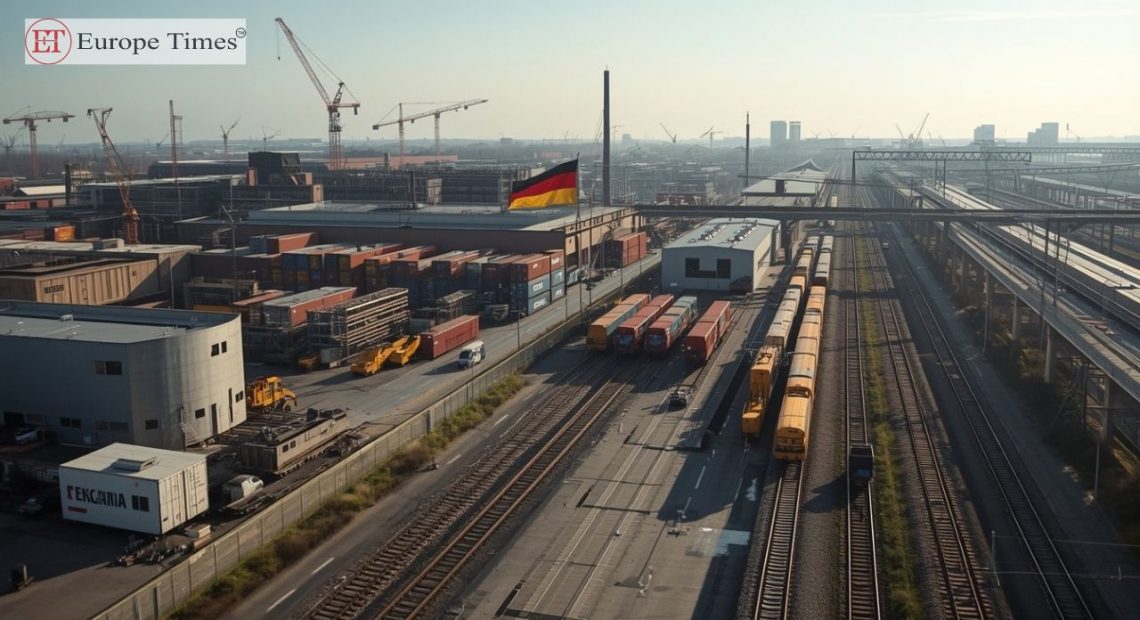
Inflation increased to at least 2.5% across four German states in March, driven largely by rising energy prices linked to the ongoing U.S.-Israeli conflict with Iran. In North Rhine-Westphalia, Germany’s most populous state, annual inflation climbed to 2.7% from 1.8% in February. Similar increases were recorded in Bavaria, Baden-Wuerttemberg and Lower Saxony, signalling a likely nationwide rise in inflation figures expected later in the day.

Economists surveyed by Reuters predict Germany’s harmonised inflation rate will reach 2.8% in March, up from 2.0% the previous month. Analysts warn that while energy costs are currently the main driver, broader price increases may follow. Berenberg Bank chief economist Holger Schmieding said higher transport costs and potential fertiliser shortages could push food prices higher, with inflation possibly exceeding 3% if the conflict continues.

A survey by the Ifo institute showed German companies increasingly expect to raise prices due to rising production and transport expenses. The data comes ahead of eurozone inflation figures, with markets anticipating further monetary tightening by the European Central Bank. Investors now expect up to three interest rate hikes this year as policymakers respond to mounting inflation pressures.

Pic courtesy: google/ images are subject to copyright

featured News Trending

European retailers are warning of rising prices and weakening consumer demand as the ongoing Middle East conflict drives up energy and transportation costs. Companies across the sector say prolonged disruption could fuel inflation, with oil prices already climbing above $100 per barrel and increasing pressure on global supply chains.

Major retailers including H&M and Next have signalled potential price increases in the coming months. While short-term hikes may remain modest, executives caution that prolonged conflict could push prices significantly higher, particularly as manufacturing and freight costs rise. Firms are relying on flexible supply chains to manage uncertainty but acknowledge growing risks.

At the same time, consumer confidence across Europe is weakening, with falling retail sales and declining sentiment in countries such as the UK, Germany, and Italy. Retailers like Co-op warn that households are becoming more cautious amid rising living costs, and further escalation of the conflict could intensify inflationary pressures, dampening spending and slowing economic growth.

Pic courtesy: google/ images are subject to copyright

featured News Trending

Europe’s retail industry is bracing for renewed pressure as rising energy prices linked to the ongoing U.S.-Israeli conflict with Iran threaten to push operating costs higher. Retail stocks, including Zara owner Inditex and Britain’s Marks & Spencer, fell as investors warned that higher fuel and gas prices could hurt an already fragile sector. The industry has barely recovered from the inflation shock caused by soaring energy costs following Russia’s invasion of Ukraine, while consumer demand across the euro zone and the UK remains weak.

Retailers are particularly vulnerable because energy costs directly affect supply chains and store operations. Transport expenses, which account for about 5% to 10% of a retailer’s operating costs, are expected to rise as fuel prices climb. Supermarkets and shopping centres also face higher electricity expenses for refrigeration, heating, air conditioning and lighting. At the same time, rising oil prices are pushing fertiliser costs higher, adding further pressure on food producers and ultimately driving up prices across the supply chain.

Analysts warn that the sector may struggle to pass on higher costs to consumers because household spending power has already been weakened by years of inflation. Clothing retailers could be especially exposed, as fashion spending is often the first to be cut when essential costs rise. With Europe’s retail and consumer goods sector already among the most financially distressed industries, industry groups are calling on governments to limit additional inflationary pressures and protect consumers from further cost increases.

Pic courtesy: google/ images are subject to copyright

featured News Trending

Germany’s unemployment total remained above three million in February, underscoring persistent strain in Europe’s largest economy after two consecutive years of contraction. Labour office data showed 3.07 million people out of work, slightly down from the previous month but 81,000 higher than a year earlier. On a seasonally adjusted basis, unemployment rose by 1,000 to 2.977 million, while the jobless rate held steady at 6.3%, matching forecasts.

Labour office head Andrea Nahles said the market was still struggling to regain momentum following the winter period. The figures pose a challenge for Chancellor Friedrich Merz, who has pledged to revive growth through increased infrastructure and defence spending. Analysts said that with the economy stagnating for years and industry facing structural pressures, a gradual weakening in the labour market was largely unavoidable, with no clear turning point yet in sight.

Other data offered mixed signals. Inflation dipped below 2% in several German states in February, pointing to easing price pressures nationally, in line with a broader slowdown across the euro zone. Real wages continued to recover, rising 1.9% in 2025 and 2.9% in 2024, though they remain below pre-2019 levels after inflation shocks linked to the pandemic and Russia’s 2022 invasion of Ukraine eroded purchasing power.

Pic courtesy: google/ images are subject to copyright

featured News Trending

Nvidia is set to release its quarterly earnings next week, a highly anticipated event as investors assess the strength of artificial intelligence-driven growth and its impact on global markets. The chipmaker, currently the world’s most valuable company, has seen its shares surge since the rise of AI technologies, but momentum has slowed in 2026 amid concerns about returns on massive AI investments. Investors will also monitor results from major software firms like Salesforce and Intuit, as AI disruptions reshape the broader technology sector.

Beyond corporate earnings, geopolitical tensions continue to influence market sentiment, particularly as the fourth anniversary of Russia’s invasion of Ukraine approaches. Ongoing conflict, uncertainty over ceasefire efforts, and rising tensions involving Iran have contributed to volatility in oil prices, defence stocks, and gold. Global investors are increasingly concerned about overlapping geopolitical risks, including conflicts in multiple regions and their potential economic consequences.

At the same time, key economic data and political developments are expected to shape central bank policies and investor outlooks worldwide. Inflation data in Australia and Tokyo will be closely watched for clues on future interest rate hikes, while leadership uncertainty in the European Central Bank and political pressure on UK Prime Minister Keir Starmer could influence bond markets and currencies. Together, corporate earnings, economic indicators, and political events are set to play a decisive role in shaping global financial markets in the coming weeks.

Pic courtesy: google/ images are subject to copyright