

featured News Trending

The International Monetary Fund’s upcoming growth forecasts are expected to show that the global economy remains resilient to trade disruptions, with overall performance still “fairly strong,” IMF Managing Director Kristalina Georgieva said in an interview with Reuters. Speaking during a visit to Kyiv, Georgieva indicated the IMF could slightly raise its projections again, following a recent upgrade by the World Bank.

In its October outlook, the IMF lifted its 2025 global growth forecast to 3.2%, citing a smaller-than-expected drag from U.S. tariffs, while keeping its 2026 estimate at 3.1%. Georgieva said the January update, due on January 19, would likely reinforce the message that trade shocks have not derailed global growth, even though risks remain tilted to the downside.

She cautioned that geopolitical tensions, rapid technological shifts and heavy investment in artificial intelligence pose potential threats if productivity gains fail to materialise. Georgieva also warned that many countries have not built sufficient financial buffers to handle future shocks, noting that the IMF is already running 50 lending programmes and may see demand rise if global conditions worsen.

Pic Courtesy: google/ images are subject to copyright
featured News

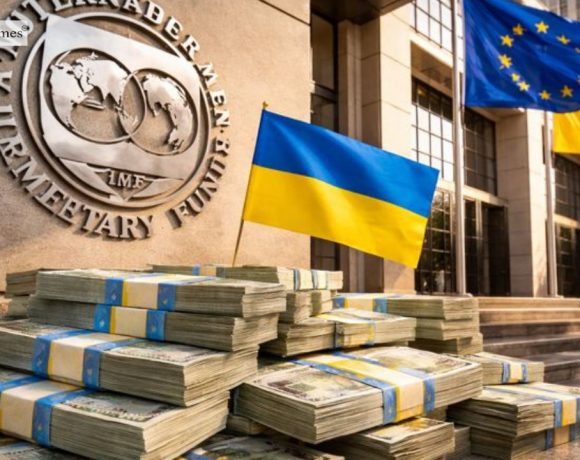
The International Monetary Fund (IMF) welcomed the European Union’s decision to lend €90 billion ($105 billion) to Ukraine over the next two years, calling it a key step toward closing financing gaps and restoring debt sustainability. The EU opted to borrow funds for this loan rather than use frozen Russian assets, providing crucial support to Ukraine, which has relied heavily on donor aid since Russia’s full-scale invasion in 2022 disrupted its economy.

The IMF has highlighted that additional measures are needed before approving Ukraine’s new $8.1 billion lending programme. These include implementing a program-consistent budget for 2026, broadening the tax base, promoting anti-corruption reforms, and securing financing assurances from international donors. The Fund estimates Ukraine will need around €135 billion ($158.57 billion) for 2026–2027, with the interest-free EU loan covering roughly two-thirds of these needs.

Despite the new financial support, Ukraine faces ongoing economic pressures as the war continues to drain resources. Finance Minister Sergii Marchenko emphasized the importance of implementing a Reparations Loan, while the country plans to allocate about 27% of its GDP, or 2.8 trillion hryvnias, to defence spending in 2026. The IMF reaffirmed its commitment to working with international donors to ensure sustainable financing for Ukraine.

Pic courtesy: google/ images are subject to copyright
featured News

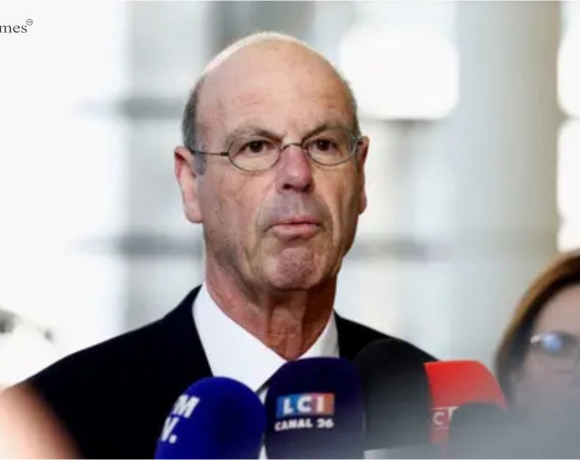
French Finance Minister Eric Lombard on Tuesday warned that France could face the risk of International Monetary Fund (IMF) intervention if Prime Minister Francois Bayrou’s minority government collapses next month. His remarks come amid mounting political uncertainty, with Bayrou set to face a crucial confidence vote on September 8 tied to his proposed sweeping budget cuts.

Bayrou’s government, which already lacks a parliamentary majority, appeared increasingly vulnerable after three main opposition parties announced they would not support the vote. The move significantly raises the likelihood of his administration being ousted, deepening financial and political instability.

“We are right in the thick of the battle,” Lombard told France Inter radio, stressing he was not resigned to a defeat. Acknowledging concerns voiced by other politicians, he said an IMF bailout is a “risk in front of us,” one the government is determined to avoid but cannot entirely rule out.

Pic Courtesy: google/ images are subject to copyright